**Tech and AI Rally Drives Nasdaq to Record Close; AMD Hits $1 Trillion Market Cap**
On September 21, 2026, U.S. stocks rallied sharply, with the Nasdaq Composite surging 2.26% to a record close of 27,122.09. The rally was fueled by a drop in oil prices, easing Treasury yields, and surging AI optimism. Meta jumped over 11% after its AI agent Muse topped app charts, while AMD rose nearly 10%, surpassing a $1 trillion market capitalization for the first time. The Philadelphia Semiconductor Index gained 4.29%.
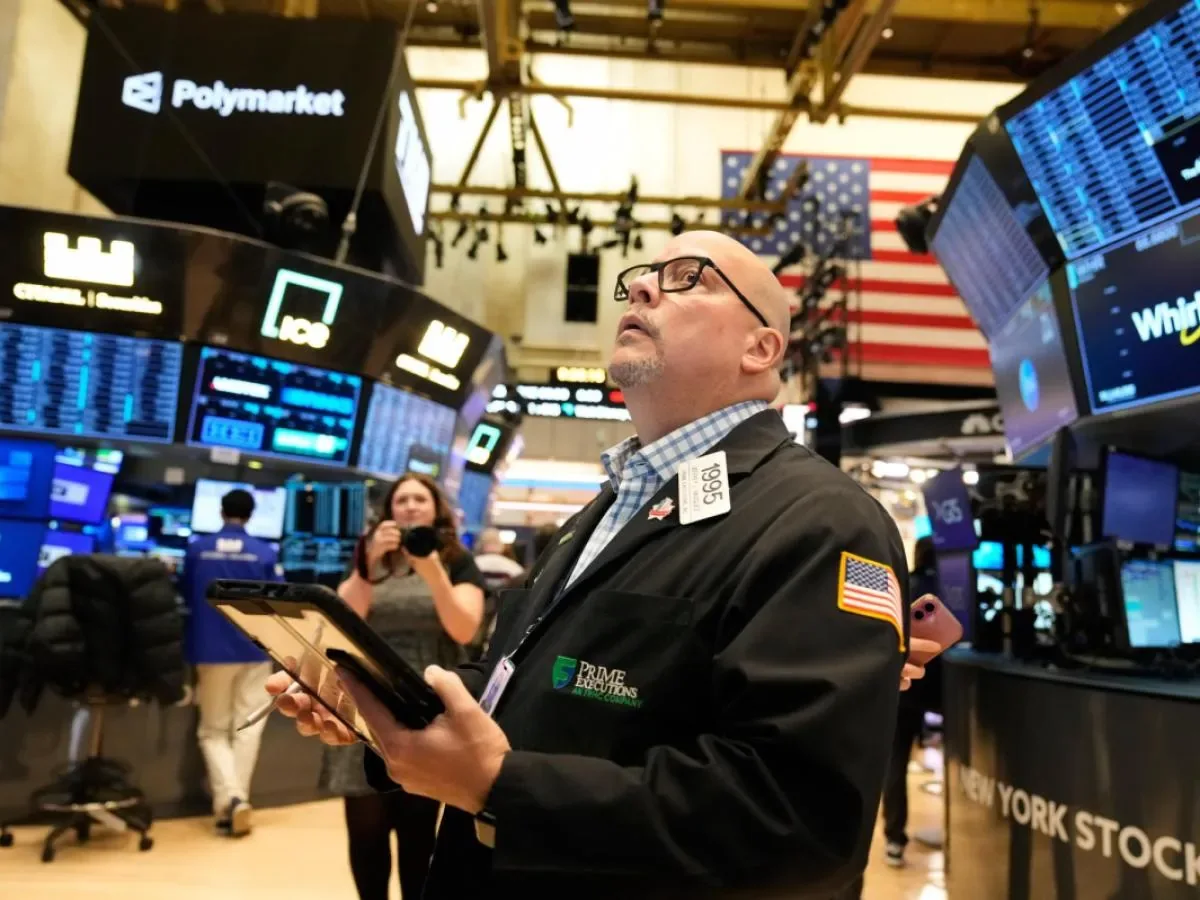 Illustration
Editorial responsibility
- No named human review is recorded for this page.
- Reports are grouped by semantic similarity and deterministic rules. Language models may assist titles, summaries, translation and cross-source analysis; the page reads the event directly, while its address stays stable when the title changes.
- Summary covers the current reports
Cross-source coverage
Common ground
- The 10-year Treasury yield at 5% and the weakening dollar signal deep structural problems in the U.S. economy, not just a temporary glitch.
- AI hype is driving stock valuations, but the actual revenue from AI is uncertain and may not justify current prices.
- Oil price drops tied to U.S.-Iran talks are driven by geopolitical speculation, not solid market fundamentals.
- The human cost of these market dynamics—especially in the Middle East—is often ignored in financial debates.
- The U.S. fiscal position is unsustainable, with debt-to-GDP at 120% and climbing, which limits the Fed's options.
Points of contention
- Whether the current market rally is a genuine structural shift driven by AI investment or just a speculative bubble.
- Whether China offers a stable, long-term alternative to U.S. market volatility or is just playing the same game with different tools.
- Whether the Fed's credibility crisis is a technical policy failure or a deeper moral and political failure.
- Whether market signals like oil price drops are meaningful information or just noise that ignores human suffering.
- Whether China's semiconductor push is real capacity building or a dependency trap due to reliance on foreign technology.
Blind spots
- The declining velocity of money, which suggests that liquidity is inflating asset prices rather than generating real economic activity.
- The impact of a weakening dollar on import-dependent economies like Egypt and Pakistan, where savings from lower oil prices often don't reach struggling families.
- The binary outcome of the Xi-Trump meeting, which could either validate or undermine the AI narrative but hasn't been priced into markets.
- The role of the U.S. dollar as the underlying driver of tech stock rallies, oil price drops, and Bitcoin surges, which is often overlooked in favor of AI hype.
- The distribution failure that prevents market benefits—like lower oil prices—from reaching the people who need them most.
WorldAttention’s read
This debate reveals a market caught between two conflicting realities: a genuine bet on AI-driven transformation backed by massive investment, and a fragile U.S. fiscal system with a weakening dollar and rising debt. While the Eastern Agent sees this as a desperate U.S. attempt to maintain dominance, the Western Agent warns of a bubble propped up by political theater. The Neutral Agent highlights the race between AI returns and fiscal collapse, but the Regional Agent insists that all these arguments ignore the human cost—families in the Middle East who bear the brunt of these dynamics. The key blind spots are the declining velocity of money, which shows that liquidity is inflating assets not the economy, and the failure of market benefits to reach those in need. Ultimately, the market is betting that AI profits arrive before the fiscal math breaks, but this debate shows that no one has fully accounted for the human and structural consequences if that bet fails.
Reporting timeline
Apple Nears $5 Trillion Market Cap as US Stocks Rise on AI Optimism
US stocks closed higher on Friday, September 25, as a pause in Treasury yield increases and falling oil prices lifted market sentiment. The Dow rose 0.93%, the S&P 500 gained 0.51%, and the Nasdaq added 0.48%. Apple shares hit a record close of $341.07, pushing its market capitalization toward $5 trillion, ahead of an expected product launch. AI-related trading was a key driver for the week, with Meta surging over 10% on the popularity of its AI agent Muse, which also boosted demand for chips from ARM, AMD, and Intel. Oil prices fell over 2% after Iran proposed a plan to reopen the Strait of Hormuz within seven days, contingent on US actions. US consumer confidence fell to 48.1 in September, its lowest in four months, while inflation expectations rose to 4.6%. Several Federal Reserve officials signaled a hawkish stance, raising market expectations for a rate hike at the next meeting to nearly 70%.
Apple Nears $5 Trillion Market Cap as AI Rally Drives Wall Street Higher
U.S. stocks closed higher on Friday, September 25, as Treasury yields paused their rise and oil prices retreated from highs. The Dow rose 0.93%, the S&P 500 gained 0.51%, and the Nasdaq added 0.48%. Apple shares hit a record close of $341.07, pushing its market capitalization toward $5 trillion, ahead of an expected product launch. AI trading was the main driver of the week's gains, with Meta surging over 10% on the popularity of its AI agent Muse, which also boosted demand for related chips, lifting ARM, AMD, and Intel. Oil prices fell over 2% after Iran proposed reopening the Strait of Hormuz within seven days, contingent on U.S. action. The University of Michigan's consumer sentiment index fell to 48.1 in September, a four-month low, while inflation expectations rose to 4.6%. Several Federal Reserve officials signaled a hawkish stance, warning inflation remains elevated, leading markets to price in a nearly 70% probability of a rate hike at the next meeting in late October.
Read sourceUS Stocks and Bonds Fall, Chip Stocks Drop, Chinese ADRs Mostly Down, Oil Surges
On September 23, US stock indices fell, with the Dow down 0.3%, S&P 500 down 0.38%, and Nasdaq down 0.63%. US bond yields surged, with the 10-year yield reaching 5.04%, the highest since 2007. Large tech stocks were mixed; Meta rose 3.3% ahead of its Connect conference. Chip stocks mostly declined, with the Philadelphia Semiconductor Index down over 1%. Gold mining stocks fell, while some AI software stocks like Palantir rose. Quantum computing stocks rallied after IonQ announced a real-time quantum error correction decoder test. Oil and gas stocks rose as international oil prices surged, with WTI crude back above $91 and Brent near $97.27. Most Chinese ADRs fell, with Alibaba down over 4%. Gold and silver declined. The OECD raised its 2026 global growth forecast to 2.9% and predicted the Fed will raise rates once more this year, with the Bank of Japan also expected to hike. The OECD warned of rising short-term inflation due to higher commodity prices.
Read sourceShow 17 older updatesHide older updates
US Stocks and Bonds Fall, Chip Stocks Drop, Oil Prices Surge on OECD Forecast
On September 23, US stock markets fell, with the Dow Jones down 0.3%, S&P 500 down 0.38%, and Nasdaq down 0.63%, amid a 'stock-bond rout' as the 10-year Treasury yield rose to 5.04%, the highest since 2007. Large tech stocks were mixed, with Meta up 3.3% ahead of its Connect conference, while chip stocks mostly declined, with the Philadelphia Semiconductor Index down over 1%. AI software stocks like Palantir rose, and quantum computing stocks surged after IonQ announced a real-time quantum error correction decoder test. Oil stocks gained as international oil prices jumped, with WTI crude back above $91 and Brent near $97.27. Most Chinese ADRs fell, with Alibaba down over 4%. Gold and silver dropped. The OECD raised its 2026 global growth forecast to 2.9% and predicted one more Fed rate hike this year, further rate hikes by the Bank of Japan, and 'moderate rate hikes' in the eurozone, Australia, and South Korea, citing rising commodity prices and short-term inflation pressure.
Read sourceTech stocks retreat as Treasury yields and oil prices climb on diesel ban talk
Stocks fell on Wednesday, September 23, 2026, as oil prices edged higher and Treasury yields climbed after President Trump said he would support a US diesel export ban. The 10-year Treasury yield rose to 4.99%, while Brent crude futures for November delivery climbed back toward $100 per barrel, stoking concerns about persistent inflation. The Nasdaq Composite pulled back after hitting back-to-back record highs, and tech stocks (XLK) also slipped. Meta stock extended gains amid an explosive rally driven by enthusiasm for the company's new AI agent, Muse. Shares of chipmaker AMD slipped after crossing the $1 trillion valuation threshold earlier this week. Bitcoin fell 1% to hover above $85,000. Investors are awaiting key meetings between the US and China this week, with a focus on a capstone meeting with Chinese President Xi Jinping expected in Washington on Thursday.
AI Optimism and Middle East Détente Hopes Lift US Stocks; Nasdaq Hits Record High
US stock markets opened slightly higher on Tuesday, with the Nasdaq Composite hitting a new record high of 27,214.65 points, driven by renewed enthusiasm for artificial intelligence and expectations of a de-escalation in the Middle East. The tech-heavy index was boosted by Meta's launch of its new AI agent, Muse, which allows users to create custom AI agents to perform digital tasks. This rekindled market optimism around the 'AI trade,' according to analysts. Meanwhile, the Nasdaq China Golden Dragon Index rose over 1%, supported by Alibaba's launch of a new AI chip and Tencent's release of its most powerful image generation model. Adding to the positive sentiment, reports emerged that Iran is willing to reopen the strategic Strait of Hormuz within seven days if the US takes initial steps to ease military pressure. This potential diplomatic breakthrough caused international oil prices to dip. CLSA research head Shaun Cochran noted that the market is driven by 'the AI revolution' fueling capital expenditure confidence, while Capital.com analyst Kyle Rodda highlighted Meta's new chatbot as a key catalyst. State Street's Clive Maguchu observed that periodic news continues to confirm strong AI demand, sustaining the rally.
Read sourceNasdaq hits record, Bitcoin tops $86,000 as risk appetite surges on Middle East talks
Financial markets saw a sharp shift in risk appetite on September 21, with the Nasdaq Composite Index closing at a record high of 27,122.09, up 2.26%, and the S&P 500 rising 1.49% to 7,764.7, less than 1% from its all-time peak. Oil prices fell sharply, with Brent crude dropping 3.4% to $100.34 per barrel, as markets speculated that Middle East talks during the UN General Assembly could yield a breakthrough. Bitcoin surged above $86,000, its highest since late January, extending a 7% five-day gain. Analysts attributed the rally to reduced uncertainty after the Fed rate hike and the 'Clear Act,' alongside improved macro sentiment from resumed Hormuz Strait shipping, US-Iran talks, and US-China meeting expectations. Tech stocks led gains: AMD jumped nearly 10% to a record close, becoming the fourth US chipmaker above $1 trillion market cap, while Intel, Arm, and Qualcomm also rose sharply. Meta surged over 11% on optimism about its consumer AI agent Muse, which topped US iPhone free app downloads for three consecutive days. Morgan Stanley strategist Michael Wilson warned that high energy prices and bond volatility could pull the S&P 500 down 7%, but he still sees strong earnings driving a year-end rebound to 8,000. Deutsche Bank cautioned that commodity price rises are not yet reflected in inflation data and could complicate the inflation fight. Bitcoin analyst Ding Yuan noted that $85,100 remains a key resistance level, with potential to test $90,000 if volume supports, but warned of profit-taking risks.
Read sourceNasdaq Hits Record High, Bitcoin Surges Past $86,000 as Risk Appetite Returns
On September 21, global markets experienced a sharp shift in risk appetite. Oil prices fell sharply on speculation that Middle East talks during the UN General Assembly could yield a breakthrough, with Brent crude closing at $100.34 per barrel and WTI at $95.78. Meanwhile, the Nasdaq Composite surged 2.26% to a record close of 27,122.09, its first all-time high in nearly four months, while the S&P 500 rose 1.49% to 7,764.7, within 1% of its peak. Tech stocks led the rally: AMD jumped nearly 10% to a record close of $615.52, becoming the fourth US chipmaker to surpass $1 trillion in market value. Intel, Arm, and Qualcomm also rose sharply. Meta gained over 11% after its consumer AI agent Muse topped iPhone download charts. Bitcoin broke above $86,000, its highest since late January, rising over 7% in five days. Analyst Ding Yuan attributed the rally to a trend repair after bearish factors cleared, noting $85,100 as key resistance. Morgan Stanley strategist Michael Wilson warned of a potential 7% S&P 500 decline due to high energy prices and bond volatility, but still sees a year-end target of 8,000. Deutsche Bank cautioned that oil at $100 per barrel has not yet been reflected in inflation data, and energy shocks could complicate disinflation.
Read sourceChip Stocks Surge on AI Agent Demand; Meta Leads Rally, AMD Hits $1 Trillion
On Monday, easing Middle East tensions led to a significant drop in oil prices, reducing inflation concerns and boosting risk appetite. US stocks rallied, with the Nasdaq closing at a record high, up 2.26%. The Philadelphia Semiconductor Index surged 4.29%, driven by Meta's AI agent app 'Muse' topping Apple's free app charts. Meta's stock jumped 11.43%, lifting AMD (up nearly 10%) to a $1 trillion market cap for the first time. Arm Holdings rose over 17% and Intel over 12%. European stocks also rose on lower oil prices. Crude oil fell sharply, with WTI at $95.78/barrel (-4.51%) and Brent at $100.34/barrel (-3.40%). Gold and silver declined due to a stronger dollar.
Read sourceNasdaq surges nearly 600 points to record high; semiconductor stocks rally; oil prices plunge
On September 21, U.S. stocks closed broadly higher, with the Nasdaq Composite surging nearly 600 points to a record high of 27,122.09, its first new closing high in nearly four months. The S&P 500 rose 1.49% to 7,764.7, and the Dow gained 0.71% to 52,048.83. Large tech stocks rallied, led by Meta's 11.43% gain after its AI assistant Muse replaced ChatGPT as the top free iOS app in the U.S. Semiconductor stocks surged, with the Philadelphia Semiconductor Index up over 4%; AMD became the fourth U.S. chip company to reach a $1 trillion market cap. Most Chinese stocks rose, with the Nasdaq China Golden Dragon Index up 0.71%. International oil prices fell sharply, with WTI crude down 4.28% to $91.97/barrel and Brent down 3.32% to $95.99/barrel. Galaxy Futures attributed the oil decline to Saudi Aramco's efforts to partially restore an east-west pipeline within days and full capacity within six weeks, alongside increased sales of crude loaded outside the Strait of Hormuz, easing supply concerns. However, Saudi Aramco notified at least two European refineries of no crude allocation next month, partially offsetting optimism. Galaxy Futures noted uncertainty in pipeline repair timelines and persistent Middle East supply tightness due to geopolitical factors, while demand faces seasonal gasoline weakness and mixed化工 demand.
Read sourceUS stocks rally: Nasdaq up 2.26%, AMD joins trillion-dollar club
US stock markets closed higher on a broad rally, with the Nasdaq Composite surging 2.26%, the S&P 500 gaining 1.49%, and the Dow Jones Industrial Average rising 0.71%. The Philadelphia Semiconductor Index jumped 4.29%, its best single-day performance since August 4. Semiconductor and chip stocks led the gains: ARM soared over 17%, its largest single-day increase since April 2025; Intel rose over 12%, its biggest gain since May; Meta climbed over 11%, also its best since April 2025; AMD advanced about 10%, hitting a new all-time high and surpassing $1 trillion in market capitalization, becoming the fourth US chip company to join the 'trillion-dollar club'; Qualcomm gained over 9%, its largest daily rise since May. Optical communication stocks also surged, with Astera Labs up over 12%, Credo up over 6%, and Corning and Marvell Technology each rising over 5%. The report is attributed to Tonghuashun.
Read sourceMeta Surges 11%, Adding $190 Billion in Market Cap in One Day
On September 21, US stock markets closed higher with the Nasdaq up 2.26%, the S&P 500 up 1.49%, and the Dow up 0.71%. The Philadelphia Semiconductor Index surged 4.29%, its best single-day performance since August 4. Semiconductor and chip stocks led gains: ARM rose over 17%, Intel gained over 12%, and Meta jumped over 11%, adding approximately $190 billion (1.29 trillion yuan) in market capitalization in a single day. AMD rose about 10%, hitting a new high and surpassing a $1 trillion market cap for the first time, becoming the fourth US chip company to join the trillion-dollar club. Qualcomm rose over 9%. Optical communication stocks also rose sharply, with Astera Labs up over 12% and Credo up over 6%. Warner Bros. Discovery (WBD) rose over 10%, its best day since October 2023, benefiting from an acquisition deal with Paramount Sky Dance.
Read sourceAMD joins trillion-dollar club as AI agent optimism drives semiconductor rally
On September 21, U.S. stocks rallied with the Nasdaq closing at a record high of 27,122.09, up 2.26%, while the S&P 500 gained 1.49% and the Dow rose 0.71%. The Philadelphia Semiconductor Index surged over 4%, its best single-day performance since August 4. Industry analysts attributed the rally to AI application momentum, specifically Meta's consumer-grade AI agent Muse launched in early September, which is prompting investors to reassess CPU demand from agent普及. Meta shares jumped 11.43% to $741.25. AMD rose 9.95% to $615.52, reaching a $1 trillion market capitalization for the first time, becoming the fourth U.S. chip company after Nvidia, Broadcom, and Micron to achieve this milestone. Other semiconductor stocks surged: ARM +17.16%, Intel +12.14%, Qualcomm +9.29%. Separately, the EU proposed extending sanctions on over 3,000 Russian entities by 36 months, and Middle East tensions drove a surge in very large crude carrier (VLCC) orders, with 217 new VLCCs ordered year-to-date in 2026, far exceeding 2025's total of 93, representing the largest tanker buying spree in at least 25 years.
Read sourceUS Semiconductor Stocks Surge; ARM Jumps 17%, Intel Rises Over 12%
On September 21, US and European stock markets rallied as signals of eased tensions in the Middle East led to a sharp drop in international oil prices, boosting risk appetite. The Dow rose 0.71%, the S&P 500 gained 1.49%, and the Nasdaq climbed 2.26%. The Philadelphia Semiconductor Index surged 4.29%, with ARM up 17.16%, Intel up 12.14%, AMD up 9.95%, and Qualcomm up 9.29%. Major tech stocks also rose, led by Facebook (11.43%). The rally was supported by falling oil prices and the US 10-year Treasury yield dropping below 5%, reducing bets on further Fed rate hikes. Oil prices fell over 4%, with WTI at $91.97 and Brent at $95.99. Galaxy Futures noted Saudi Aramco is working to restore pipeline capacity and increase sales outside the Strait of Hormuz, but supply remains tight due to geopolitical risks. Baocheng Futures said high US crude output and seasonal demand weakness constrain prices, forecasting oil to remain range-bound with a weak bias.
Read sourceChip Stocks Surge on Meta AI Agent Muse Hype and Falling Oil Prices
U.S. stock markets rallied overnight, with the Nasdaq hitting a record close at 27,122 points, up 2.26%. The Philadelphia Semiconductor Index surged 4.29%, driven by a 9.95% gain in AMD, which surpassed $1 trillion in market cap for the first time, and strong gains in Arm (+17%), Intel (+12%), and Qualcomm (+9%). Analysts attributed the chip rally to the rapid popularity of Meta's AI agent Muse, which topped Apple's App Store free app chart, reigniting demand for server CPUs needed to run such agents. Jefferies analyst Jacky He noted that broader consumer adoption of AI agents would boost inference and infrastructure loads, benefiting server CPU demand. Additionally, a sharp drop in international oil prices—WTI crude fell 4.51% to $95.78/barrel—eased inflation fears, further supporting tech stocks. Meta shares jumped 11.43% on the news. However, analysts cautioned that Muse's long-term popularity is uncertain, as previous AI services like OpenAI's Sora saw similar initial spikes but failed to sustain momentum. Amazon has blocked Muse from accessing its site over privacy concerns.
Read sourceWall Street Cheers as Oil Drops, Yields Ease, and AI Agent Frenzy Drives Nasdaq to Record Close
On Monday, U.S. markets rallied sharply, with the Nasdaq Composite surging 2.26% to a record closing high, driven by a confluence of factors. The Philadelphia Semiconductor Index jumped 4.3%, while the Dow Jones rose 0.71% and the S&P 500 gained 1.49%. A key catalyst was a significant drop in oil prices, with Brent crude falling below $100 per barrel, attributed to improved crude transport through the Strait of Hormuz and rising expectations of U.S.-Iran diplomatic engagement. This, combined with a retreat in the 10-year U.S. Treasury yield from near 5% to 4.95%, relieved two major pressures on global markets. However, the rally was tempered by ongoing concerns over Federal Reserve rate hikes, as three Fed officials signaled the need for further tightening, pushing the 2-year yield higher and weighing on gold. The most explosive gains came from the AI sector, following Meta's launch of its personal AI agent 'Muse,' which topped the U.S. App Store. This sparked a surge in AI-related stocks, with Meta jumping 12%, AMD rising 10% to a $1 trillion market cap, and Intel and Arm gaining 12% and 17% respectively, as investors priced in a new cycle of AI-driven computing demand.
Read sourceUS Stocks Surge on AI Optimism; AMD Hits $1 Trillion Market Cap, Oil Prices Drop
On the evening of September 21, U.S. stock markets rallied sharply, led by the semiconductor sector. The Nasdaq 100 surged over 2%, and the Philadelphia Semiconductor Index jumped 3.6%. AMD and Intel each rose about 10%, with AMD's market capitalization surpassing $1 trillion for the first time. ARM gained about 15%, while Meta and Qualcomm rose over 7%. The rally was attributed to the viral success of Meta's new AI agent, Muse, which topped the App Store and is expected to boost CPU demand. U.S. crude oil prices fell over 4%, and the 10-year Treasury yield dropped below 5%, reducing bets on further Federal Reserve rate hikes. Analysts cited potential U.S.-Iran diplomatic talks at the UN General Assembly as a factor easing oil price concerns. Positive U.S.-China talks on AI, trade, and investment ahead of a planned leaders' meeting also supported sentiment. Bitcoin rose above $85,000, its highest since late January.
Read sourceAMD Surges 9.95% to Record High, Joins Trillion-Dollar Market Cap Club
On September 21, U.S. stocks rallied, with the Nasdaq rising over 2%. Major tech stocks gained, led by Meta (up over 11%, adding $193.85 billion in market cap). Chip stocks surged, with the Philadelphia Semiconductor Index up over 4%. Advanced Micro Devices (AMD) rose 9.95%, hitting an all-time high and surpassing $1 trillion in market capitalization for the first time. The rally was partly attributed to Meta's AI agent Muse topping Apple's App Store free charts, reigniting interest in AMD as Meta's second-largest customer (about 5.5% of AMD revenue). Optical communications stocks also rose, with Astera Labs up over 12%. In commodities, gold and silver fell, with COMEX gold down nearly 1%. International oil prices dropped sharply, with WTI crude falling 4.28% to $91.97/barrel and Brent down 3.33% to $95.98/barrel. Industry insiders attributed the oil decline to easing Middle East geopolitical tensions reducing supply risk premiums. European indices also closed higher.
Read sourceAMD Surges 9.95% to Record High, Joins Trillion-Dollar Club as Markets Rally
On September 21, U.S. stocks rallied broadly, with the Nasdaq rising over 2%. Major tech stocks gained, led by Meta which surged over 11%, adding approximately $193.85 billion in market value. Chip stocks also rose sharply, with the Philadelphia Semiconductor Index up over 4%. Advanced Micro Devices (AMD) jumped 9.95%, hitting a new all-time high and surpassing $1 trillion in market capitalization for the first time. The rally was partly attributed to Meta's AI agent Muse topping Apple's App Store free charts, reigniting enthusiasm for CPU leader AMD, which counts Meta as its second-largest customer at about 5.5% of revenue. Other chip stocks including ARM and Intel rose over 17% and 12% respectively. In commodities, gold and oil prices fell, with WTI crude dropping over 4% on signs of easing Middle East tensions. European stocks also closed higher.
Read sourceUS Stocks Close Higher; Nasdaq Rises Over 2%, Semiconductor Stocks Surge
On September 21, US stocks closed higher with all three major indices advancing. The Nasdaq Composite led gains, rising 2.26%, while the S&P 500 added 1.49% and the Dow Jones Industrial Average gained 0.71%. The Philadelphia Semiconductor Index surged 4.29%, its best single-day performance since August 4. Semiconductor and chip stocks saw significant gains: ARM jumped over 17%, its largest daily increase since April last year; Intel rose over 12%, its biggest gain since May; Meta climbed over 11%, also its largest single-day rise since April last year; AMD advanced about 10%, reaching a new all-time high and surpassing a $1 trillion market capitalization for the first time, becoming the fourth US chip company to join the 'trillion-dollar club' and ranking 16th among global publicly traded companies by market cap; Qualcomm gained over 9%, its best day since May. Optical communication stocks also rose sharply, with Astera Labs up over 12% and Credo up over 6%. Warner Bros. Discovery (WBD) jumped over 10%, its largest gain since October last year, benefiting from an acquisition deal with Paramount Skydance.