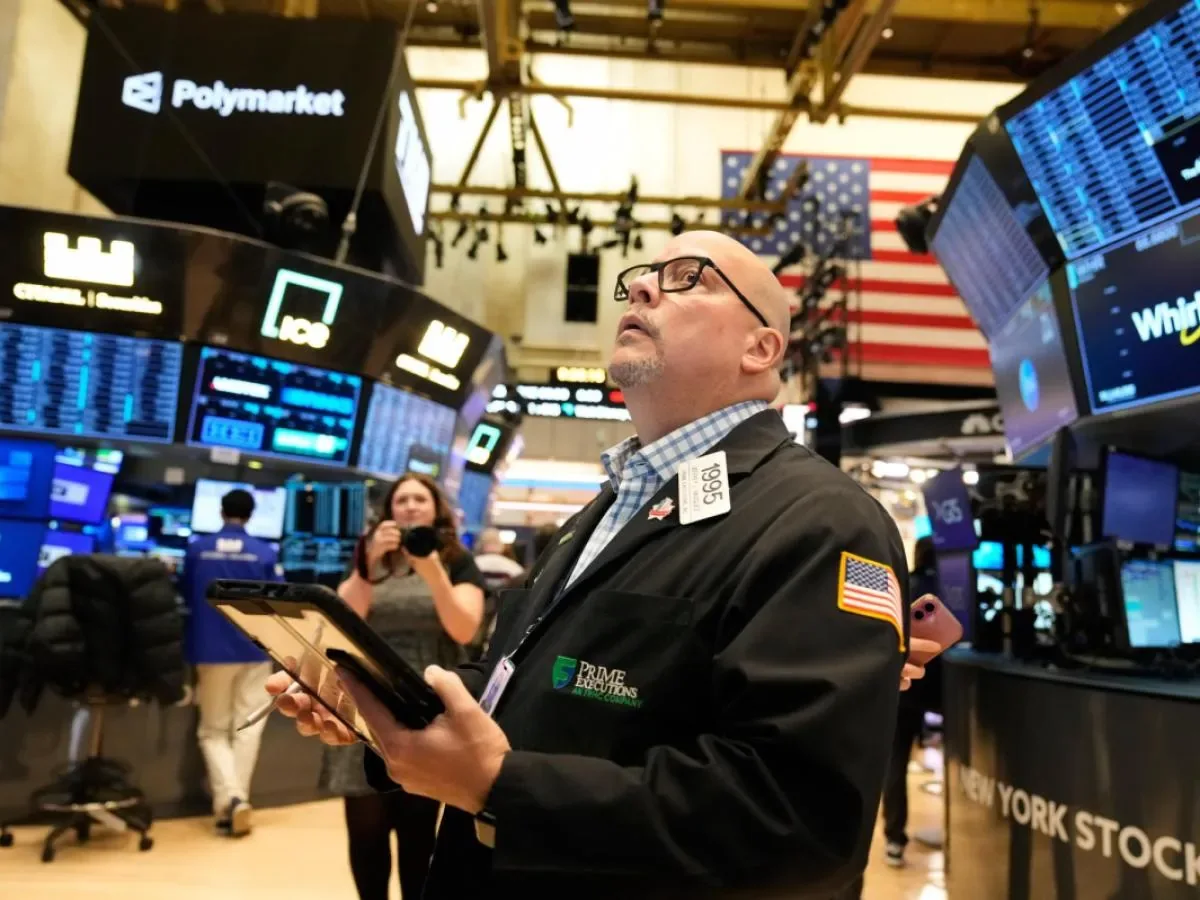
US technology stocks fell sharply on October 30, 2026, with the Nasdaq dropping 2.86% for its largest one-day decline since June 5 after disappointing results from Intel and Amazon intensified investor concerns about massive AI-related spending. Intel plunged 28.6% on a weak outlook and higher AI investment plans, while Amazon fell after reporting negative free cash flow and committing to about $220 billion in 2026 capital expenditures. The selloff erased hundreds of billions in market value and left the Nasdaq with its worst monthly slide since March 2025.
On September 21, 2026, U.S. stocks rallied sharply, with the Nasdaq Composite surging 2.26% to a record close of 27,122.09. The rally was fueled by a drop in oil prices, easing Treasury yields, and surging AI optimism. Meta jumped over 11% after its AI agent Muse topped app charts, while AMD rose nearly 10%, surpassing a $1 trillion market capitalization for the first time. The Philadelphia Semiconductor Index gained 4.29%.
The U.S. Senate failed to advance the CLARITY Act, a crypto market-structure bill, in a procedural vote on September 15, 2026, receiving 50 votes for and 49 against, short of the 60 needed. Bitcoin initially fell below $76,000, but by September 21 it surged to an eight-month high of $86,282.09, driven by a short squeeze liquidating $454 million in Bitcoin shorts. The Trump administration responded with several pro-crypto regulatory moves, including SEC and CFTC actions and House committee bills.
On September 21, cryptocurrency prices surged, with Bitcoin briefly reaching $85,000, its highest since late January, and Ethereum rising above $2,700. The rally followed the U.S. SEC's September 17 "Innovation Exemption" rule, allowing qualified platforms to trade tokenized stocks under a five-year exemption. Coinglass data showed 136,000 traders liquidated in 24 hours, totaling $750 million, with $650 million in short liquidations. Bitcoin ETFs also saw $160 million in net inflows. Analysts noted the exemption is temporary and conditional, and comprehensive crypto legislation remains pending.
The U.S. Securities and Exchange Commission (SEC) approved a five-year "Innovation Exemption" on September 17, 2026, allowing trading venues to offer tokenized stocks with 24/7 trading and faster settlement. The order requires tokenized shares to carry the same rights as traditional stocks, including dividends and voting, and gives issuers a 30-day notice period to object. The decision follows the Senate's failure to advance the Clarity Act. Robinhood and Coinbase stocks rose 5% and 6% respectively.
Coinbase Derivatives has filed an application with the U.S. Commodity Futures Trading Commission (CFTC) to list single-stock perpetual futures contracts on major U.S. equities, including Apple, Tesla, Nvidia, and Microsoft. If approved, the exchange plans to launch 50 to 60 such contracts later this year, offering U.S. investors leveraged exposure without holding the underlying stocks. The move follows Coinbase’s earlier authorization as the first U.S. platform for regulated crypto perpetual futures. Trading awaits final CFTC authorization.
The U.S. Senate voted 50-49 on a motion to proceed with the Digital Asset Market Clarity Act, a 600-page bill to establish the first federal regulatory framework for digital assets and clarify SEC and CFTC jurisdiction. The vote fell short of the 60-vote threshold needed to advance. Opposition centered on insufficient investor protections and ethics concerns over President Trump’s $1.4 billion in crypto earnings. The bill remains on the Senate calendar for potential future negotiations.
7 reports · 3 sources · Updated
Periodic recap
What changed for this subject in each tracking window — generated from matched events, delta-first.
· 1 event in window
No events directly involving Coinbase were matched this period; the sole event was the October 30 US tech selloff after disappointing Intel and Amazon results, with the Nasdaq falling 2.86%. This contrasts with the prior period's crypto rebound driven by the SEC tokenized-stocks exemption, but the event itself does not mention Coinbase or crypto assets. The signal is thin and reflects only the broader tech selloff backdrop.
The Nasdaq Composite fell 2.86% on October 30, its largest one-day decline since June 5, as Intel plunged 28.6% and the chip index lost 7.2%.
Disappointing quarterly results from Intel and Amazon deepened investor concerns over AI-related capital spending, and the S&P 500 and Nasdaq logged monthly losses.
The event did not mention Coinbase or crypto assets; no reports directly involving Coinbase appeared this period.
Earlier recaps
· 2 events in window
The market environment surrounding Coinbase reversed sharply this period. Driven by the SEC's new Innovation Exemption for tokenized stocks, Bitcoin surged past $85,000, lifting the broader crypto market in a significant rebound. The pessimistic sentiment from the prior regulatory setback eased, with risk appetite clearly returning.
· 1 event in window
Coinbase was hit hard this period by a major setback in U.S. crypto legislation. The Digital Asset Market CLARITY Act failed to clear a procedural vote in the Senate, dashing hopes for near-term regulatory clarity. Bitcoin fell below $76,000, Coinbase shares dropped 6%, and spot Bitcoin ETFs saw their largest single-day outflows in months.
· 1 event in window
Coinbase itself had no new business or regulatory developments this period; the main signal came from the macro market. Bitcoin surged past $72,000 in a massive short squeeze, driven by the U.S. Treasury's bond buyback announcement and President Trump's pro-crypto pledges during a White House meeting with industry executives. As a leading exchange, Coinbase's stock and business outlook are typically correlated with broad crypto market movements.
· 1 event in window
Coinbase itself had no new business or regulatory developments this period; the main signal came from the secondary market. Cathie Wood's Ark Invest made significant purchases of Coinbase shares amid a market downturn while reducing other crypto-related holdings, reflecting a capital rotation strategy within its portfolio.
· 2 events in window
Coinbase itself had no new direct developments this period, but the competitive landscape shifted. Morgan Stanley launched low-fee spot Ethereum and Solana ETFs, potentially drawing further crypto trading demand away through traditional brokerage channels. Meanwhile, veteran derivatives exchange BitMEX announced its shutdown, as industry consolidation continues.
Tracked events
Events matched to this subject by the tracking pipeline, with signal scores.
Cathie Wood's Ark Invest purchased $43.5 million in Coinbase and Circle shares over three days as crypto stock prices fell, funding the buys by selling Bitmine, Block, Robinhood, and Bullish. The firm also sold $4.4 million in crypto stocks on July 29-30, 2026, to buy $14.5 million in SpaceX shares. These moves reflect Wood's strategy of rotating capital within her innovation-focused portfolio amid declining digital asset prices and weak crypto revenue reports.
Morgan Stanley Launches Low-Fee Ethereum and Solana Spot ETFs
On July 28, 2026, Morgan Stanley launched two spot crypto ETFs on NYSE Arca: the Morgan Stanley Ethereum Trust (MSSE) and Solana Trust (MSOL), each with a 0.14% expense ratio—the lowest in their categories. Both trusts offer direct exposure to ETH and SOL, generate income through staking (distributing 95% of rewards), and are distributed via Morgan Stanley’s wealth-advisor network and E*TRADE. The launch follows the success of its Bitcoin Trust, which attracted $430 million in inflows, but comes amid significant crypto market drawdowns.
 Illustration