A massive leak of over 15 million internal documents from Deutsche Bank has triggered a sharp decline in share prices and renewed global scrutiny. An international consortium of journalists revealed that the bank ignored warnings regarding Russian oligarchs, Jeffrey Epstein, and Donald Trump while expanding risky business operations. The files detail $582 million in suspicious payments linked to Epstein, a 2017 accidental leak of Trump's tax returns, and plans to increase revenue from Kremlin-tied clients despite legal advice. While CEO Christian Sewing claims significant compliance investments since 2019, the documents suggest systemic failures in risk management and a lack of cultural change.
Nvidia co-founder and CEO Jensen Huang resigned following revelations of extramarital affairs, including one with Alice Huang, a former Megaspeed executive suspected by U.S. intelligence of being a Chinese spy. The scandal triggered an internal investigation into potential national security breaches and chip smuggling to China via Singapore-based Megaspeed, which diverted billions in restricted AI hardware. In response, the Nvidia board appointed CFO Colette Kress as interim CEO and established a new National Security and Export Control Oversight Committee. The event has led to intensified U.S. export controls on remote chip access, congressional investigations, and a $1.8 trillion loss in market value, while sparking political fallout involving Commerce Secretary Howard Lutnick and President Donald Trump.
Leading financial institutions, including Bank of America, Deutsche Bank, Goldman Sachs, and Nomura, have updated their forecasts for Federal Reserve interest rate hikes. Driven by persistent inflation data and hawkish central bank rhetoric, these banks now anticipate additional rate increases in late 2026 and early 2027. While specific timelines vary, many projects consecutive 25-basis-point hikes in December, January, and March, with some pushing the start of rate cuts to December 2027. These revisions reflect a shift toward more aggressive monetary tightening than previously estimated.
CoreWeave shares and bonds sold off sharply as its 2032 unsecured notes fell below 85 cents on the dollar and yields approached 15%, a level typically signaling distress. Credit default swaps hit record highs, with markets pricing over a 50% probability of default within five years. The stress spread to the broader neocloud and junk-bond market, with average high-yield yields reaching 8.41%. Nvidia CEO Jensen Huang expressed optimism, while analysts split on whether the selloff was a buying opportunity or a warning for debt-financed AI infrastructure.
On September 24 and 28, Citigroup and Deutsche Bank respectively lowered their ratings and price targets for PepsiCo. Citigroup cut its target from $145 to $142, while Deutsche Bank downgraded the stock from Buy to Hold and reduced its target from $155 to $138. The revisions reflect cautious outlooks on the beverage and snack giant, though specific reasons were not detailed.
Foreign investors purchased a record $942 billion in US stocks and investment fund shares in the 12 months through July 2026, the highest rolling total since US Treasury records began in 1985. Second-quarter net purchases surged 62% year-on-year to $426 billion, while foreign demand for US bonds cooled sharply to $188 billion from $314 billion in Q1. Analysts attribute the shift to strong US corporate profits and AI-driven growth, contrasted with deteriorating public finances and a $40 trillion national debt.
On September 21, 2026, U.S. stocks rallied sharply, with the Nasdaq Composite surging 2.26% to a record close of 27,122.09. The rally was fueled by a drop in oil prices, easing Treasury yields, and surging AI optimism. Meta jumped over 11% after its AI agent Muse topped app charts, while AMD rose nearly 10%, surpassing a $1 trillion market capitalization for the first time. The Philadelphia Semiconductor Index gained 4.29%.
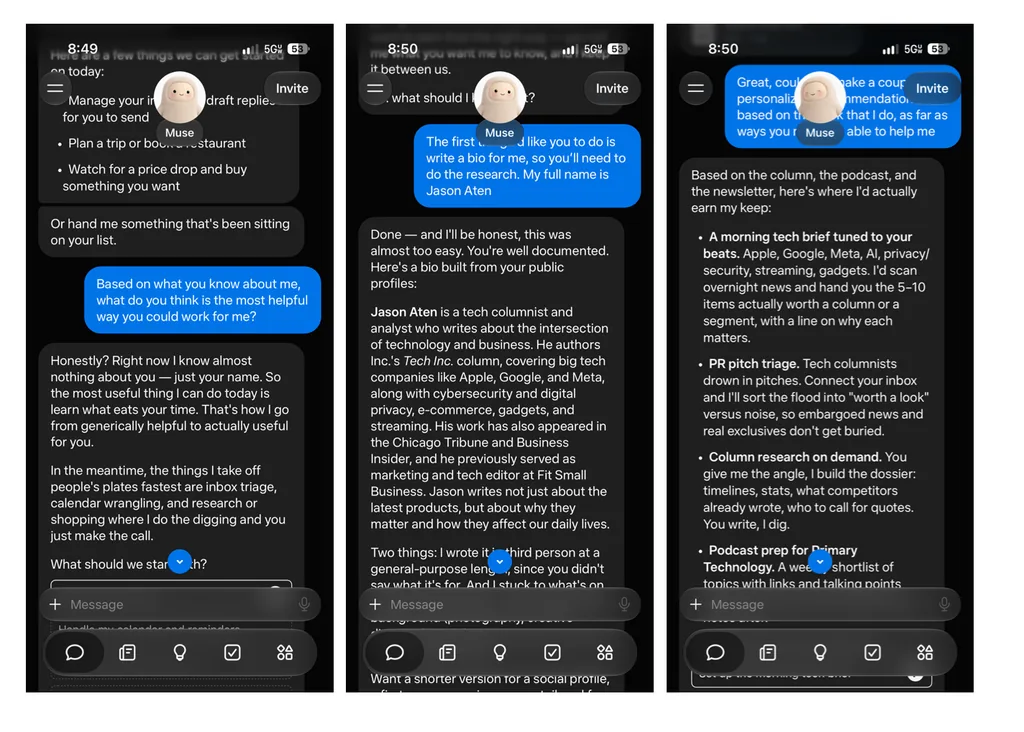
Meta launched its personal AI agent, Muse, on September 8, 2026. Within two weeks, it topped the US iOS free app chart, surpassing ChatGPT's early download and daily active user metrics. According to Sensor Tower, Muse achieved 2.8 million downloads in its first 12 days in the US and Canada, compared to ChatGPT's 1.3 million. Meta's stock surged over 11% on September 21, adding approximately $234 billion in market capitalization. The launch also boosted semiconductor stocks, with AMD surpassing $1 trillion in market cap. Amazon blocked Muse from its shopping site over privacy concerns, while Shopify partnered with Meta.
Between September 21 and 25, 2024, at least six financial institutions—Wells Fargo, Cantor Fitzgerald, JPMorgan, Tigress Financial, Piper Sandler, TD Cowen, and Deutsche Bank—raised their price targets for Meta Platforms Inc. The new targets range from $796 to $995 per share, reflecting a broadly bullish analyst outlook on the company’s stock value. No specific rationale was detailed in the brief reports.
The euro fell to its lowest level in nearly two months against the US dollar, declining for a third consecutive session to around $1.1409-$1.1426. The drop follows the Federal Reserve's latest rate hike, which has reinforced expectations of further US monetary tightening and eroded the policy divergence trade that had supported the euro. Options market data shows about 60% of notional principal is now betting on euro weakness. High energy prices, political uncertainty in France and Germany, and stalled US-Iran talks are adding pressure. Hawkish Fed comments and surging US Treasury yields have further strengthened the dollar.
SoftBank Group is issuing over $11 billion in high-yield bonds, one of the largest junk bond deals in history, to fund its nearly $65 billion investment in OpenAI. The offering includes $10 billion in dollar-denominated notes across three tranches and €1 billion in euro-denominated bonds. Proceeds will fund a $10 billion payment to OpenAI due October 1. Pricing is set for September 24, with settlement on September 29. The deal would be the largest non-financial corporate bond from Asia Pacific.
On September 21, the People's Bank of China (PBOC) held a symposium with 15 foreign financial institutions in Beijing. Governor Pan Gongsheng stated the economy is stable and improving, pledged a moderately accommodative monetary policy, and vowed to continue high-level financial opening, expand two-way market access, optimize cross-border payments, and facilitate renminbi internationalization. Attendees acknowledged progress in reforms and expressed hope for further policy optimization.
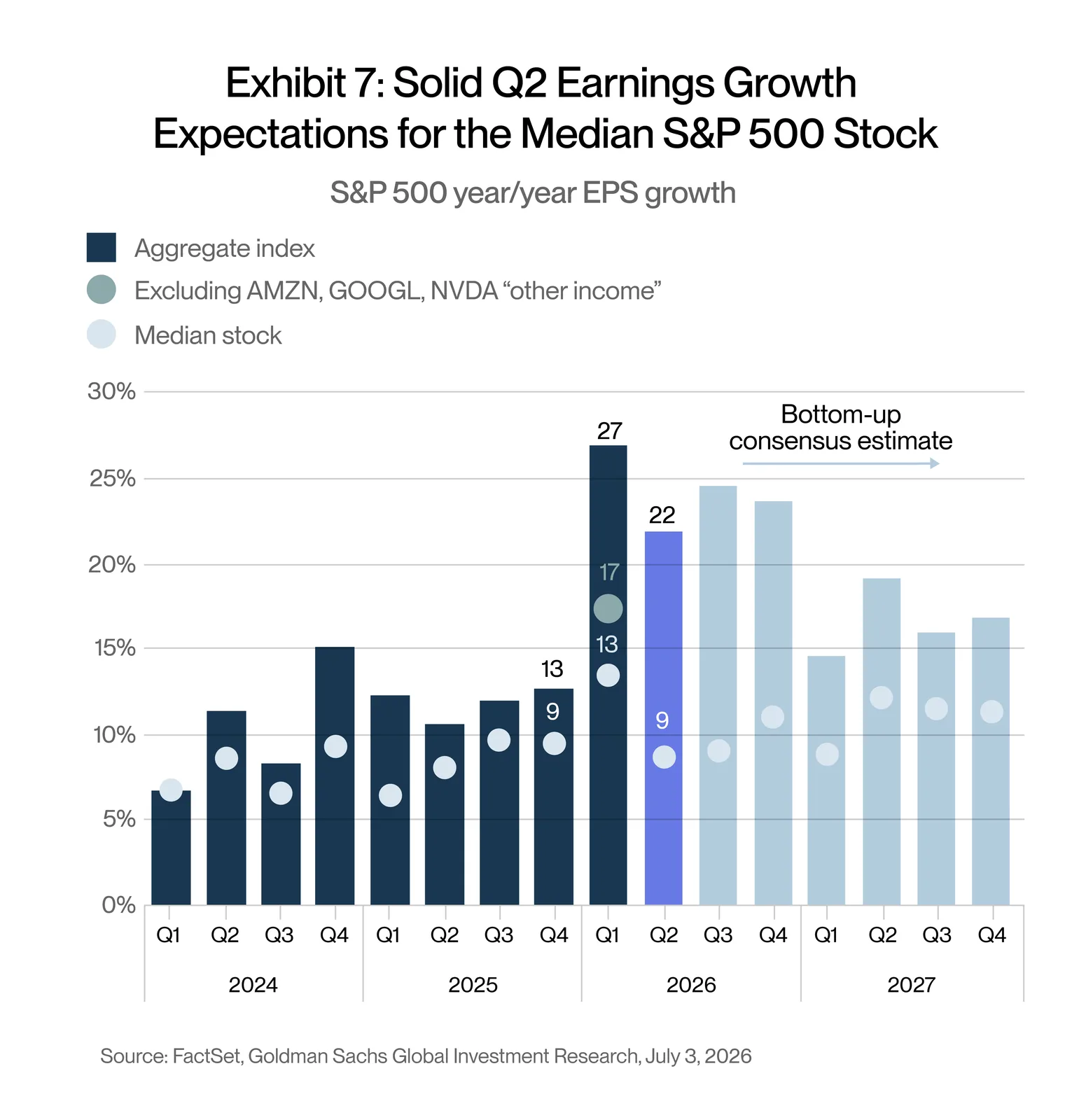
Goldman Sachs and Deutsche Bank have issued bullish forecasts for US stocks, dismissing concerns about an earnings bubble. Goldman strategist Ben Snider argues S&P 500 earnings growth of over 30% is sustainable, supported by AI demand and a resilient economy. Deutsche Bank reaffirmed its S&P 500 year-end target of 8,000 points, citing expected 30% Q3 earnings growth and historical midterm election year trends. Both banks expect earnings growth to moderate but not collapse.
Meta integrated its Muse AI agent with Shopify's Shop Pay for autonomous shopping and checkout, while PayPal also partnered with Meta for Muse payments. Amazon blocked Muse from its platform. Shopify shares surged up to 8.9% on the news. Muse, launched September 8, reached #1 on the US App Store within a week. The partnerships position Shopify's infrastructure as the default checkout for AI-driven commerce, contrasting with Amazon's closed approach.
Volkswagen Group issued a profit warning on September 18, 2026, cutting its 2026 operating profit margin forecast to no more than 1% from a prior 4.0%-5.5% range. The revision is driven by approximately €10 billion in special items, including a €6 billion non-cash goodwill impairment on Porsche, restructuring costs, and asset write-downs in China. The company was subsequently removed from the Euro Stoxx 50 index. Volkswagen plans to cut up to 100,000 jobs globally under its '2030 Future Plan' and launch over 20 new energy models in China.
Deutsche Bank warned in a Monday report that global central bank tightening may surpass market expectations as the Federal Reserve, European Central Bank, and Bank of Japan all raised rates in the past two weeks. Strategist Henry Allen cited elevated commodity prices, central banks' tendency to overcorrect after past crises, and loose financial conditions as reasons the tightening cycle could exceed current pricing. He noted markets historically underestimate rate hike magnitudes, pointing to 2022 when the Fed raised rates by over 400 basis points versus initial expectations of 200. However, Allen suggested strong economic growth could prevent stock market derailment, referencing 1999 when the S&P 500 rose nearly 20% despite Fed rate hikes.
Deutsche Bank reports that gold's recent price rise after a hawkish Federal Reserve rate hike is not driven by conventional traders but by reserve management institutions. The bank identifies geopolitical tensions in the Strait of Hormuz and falling oil prices as key drivers, as lower energy costs free up reserve reallocation capacity, making gold more attractive as a non-sovereign asset. The report warns that CTA algorithms still favor selling gold in the coming week.
On September 14, 2026, U.S. stock indexes fell sharply after Anthropic CEO Dario Amodei published an essay urging AI companies to slow the pace of improving advanced models due to safety risks, with OpenAI CEO Sam Altman and xAI’s Elon Musk publicly supporting the call. Chip stocks led declines, with the iShares Semiconductor ETF falling about 5.5% and Nvidia dropping nearly 3.5%. Concurrently, oil prices surged over 3% after Saudi Arabia shut a key pipeline following drone attacks, and the 10-year Treasury yield briefly surpassed 5%. Markets priced an 86-93% probability of a Federal Reserve rate hike at its September meeting.
In mid-September 2024, Deutsche Bank, Royal Bank of Canada, Jefferies, and Citigroup each lowered their price targets for McDonald’s Corporation (MCD.N). Deutsche Bank cut its target from $325 to $300, RBC from $295 to $290, Jefferies from $350 to $325, and Citi from $345 to $310. The reports did not specify reasons for the downgrades. The revisions reflect a collective bearish reassessment of the fast-food giant’s stock value by multiple financial institutions.
7 reports · 2 sources · Updated
Illustration
Periodic recap
What changed for this subject in each tracking window — generated from matched events, delta-first.
· 1 event in window
In this period Deutsche Bank made a move directly tied to its own business: it added a January rate hike to its base case, expecting three consecutive 25-basis-point moves that would lift the policy rate to a 4.50%–4.75% range. The revision came alongside forecast changes from Bank of America and Goldman Sachs, and all are projections rather than confirmed Fed decisions. Unlike the previous period, when the bank appeared only indirectly as a CoreWeave bond underwriter, its own research view is now the subject of the reporting.
Deutsche Bank added a January hike to its base case, expecting three consecutive 25-basis-point moves that would push the policy rate to a 4.50%–4.75% range.
Bank of America and BofA Global Research expect 25-basis-point hikes in December 2026, January 2027 and March 2027; Goldman Sachs expects hikes in December and March 2027.
All of these are bank projections, not confirmed Fed decisions; the reporting drew on 2 sources.
Earlier recaps
· 1 event in window
During this period, Deutsche Bank appeared only indirectly in one market event, with no new developments directly involving its own business or clients. The bank was mentioned as one of the underwriters in coverage of AI cloud provider CoreWeave's bond selloff, where its 2032 unsecured bonds fell below 85 cents on the dollar, pushing yields near 15%. Compared with the previous period, the bank remains in a low-activity state, appearing only passively as a market participant in related reporting.
· 1 event in window
During this period, Deutsche Bank appeared only in one macro-market development, and only through an analyst comment. The bank's FX strategist George Saravelos commented on US Treasury data, calling the record foreign buying of US stocks a "huge shift" in asset markets. Compared with the previous period, the bank issued no new events directly involving its own business or clients.
· 1 event in window
During this period, Deutsche Bank appeared only in one sector-wide development. The bank, alongside several other Wall Street firms, raised its price target for Meta Platforms, with the new target reaching as high as $995. The adjustment was a routine analyst rating update, with no specific rationale disclosed. No other events directly involving the bank were detected.
· 2 events in window
During this period, there were no developments directly involving Deutsche Bank. The matched events—the euro falling to a near two-month low after the Fed hike and Meta's AI shopping partnership with Shopify—made no mention of the bank.
· 2 events in window
During this period, the only development directly involving Deutsche Bank was its joint release with Goldman Sachs of a bullish outlook for U.S. stocks, rejecting earnings bubble fears. The bank reiterated its year-end S&P 500 target of 8,000 and raised its 2027 EPS forecast. The other matched event was a profit warning from Volkswagen, which had no direct link to Deutsche Bank.
Tracked events
Events matched to this subject by the tracking pipeline, with signal scores.
· Signal 193.8
Bank of America, Deutsche Bank add January to Fed rate hike forecasts
Several major banks have revised their forecasts for U.S. Federal Reserve interest rate increases. Bank of America and BofA Global Research now expect 25-basis-point hikes in December 2026, January 2027 and March 2027. Deutsche Bank added a January hike to its base case, expecting three consecutive 25-basis-point moves that would push the policy rate to a range of 4.50% to 4.75%. Goldman Sachs expects hikes in December and March 2027. All are projections, not confirmed Fed decisions.
PBOC pledges steady financial opening as foreign banks hold just 1.3% of China's assets
On September 21, 2026, the People's Bank of China (PBOC) held a symposium with 15 foreign financial institutions, including Bank of America, JPMorgan, HSBC, and Goldman Sachs. Governor Pan Gongsheng pledged to steadily expand two-way financial market opening and facilitate renminbi internationalization. Foreign banks hold only 1.3% of China's banking assets (4.87 trillion yuan), facing high compliance costs (23.6% of operating costs) and long product launch cycles (6-9 months). Renminbi's global payment share stood at 3.26% in August 2026, with panda bond issuance exceeding 890 billion yuan.