196 published Stories40 tracked eventsLatest event
Also known as Amazon, 亚马逊, 亚马逊公司
Cross-source coverage
One-sided
Reporting on this entity comes mostly from Western sources (source distribution, not a stance rating).
82%
15%
Western3394 · 82%
Regional113 · 3%
Neutral / independent643 · 15%
Eastern1 · 0%
Latest Stories
Periodic recap
What changed for this subject in each tracking window — generated from matched events, delta-first.
→· 1 event in window
The U.S. Federal Trade Commission, joined by over 20 states, filed a lawsuit against Amazon on August 31, accusing the company of misleading advertisers about its sponsored ads pricing and auction systems. The complaint alleges Amazon secretly raised minimum ad prices and manipulated its auction strategy, costing advertisers billions of dollars. Amazon confirmed the lawsuit, marking a significant escalation in regulatory scrutiny of its advertising business.
The FTC and over 20 states sued Amazon, alleging it misled advertisers about sponsored ads pricing and auction systems.
The complaint claims Amazon secretly raised minimum ad prices and manipulated auction strategy, costing advertisers billions of dollars.
Amazon confirmed the lawsuit, escalating regulatory scrutiny of its advertising business.
Earlier recaps
→· 1 event in window
Amazon significantly expanded its partnership with Nvidia, tripling its GPU order for AWS data centers from 1 million to 2 million chips covering 2027-2028. The new order includes the latest Blackwell Ultra, Rubin, and Rubin Ultra models in a deal worth tens of billions of dollars, reflecting surging AI computing demand. While Amazon continues developing its own Trainium chips, the expanded order underscores its near-term reliance on Nvidia's GPU supply. Nvidia has already delivered its first Vera CPU and Rubin GPU to AWS in Seattle.
→· 1 event in window
Amazon itself had no direct developments this period, but competitive signals in the AI infrastructure space continued to emerge. Nebius Group reported Q2 revenue up 454% year-over-year, with core AI cloud revenue surging over 500%, swinging to positive adjusted EBITDA and sending shares up as much as 30%. The strong performance further confirms robust demand in the AI infrastructure market, the same arena in which Amazon's AWS operates.
→· 2 events in window
Amazon itself had no major new developments this period, but two notable signals emerged in the competitive landscape. Google struck a $12.2 billion custom AI chip deal with Marvell Technology, causing shares of Google's longtime chip partner Broadcom to fall, reflecting Big Tech's accelerating push to diversify AI infrastructure suppliers. Walmart posted strong earnings but saw its stock plunge 9% on weaker-than-expected Q3 guidance, with U.S. same-store sales growth slowing to its lowest since 2020.
→· 1 event in window
Amazon announced a major expansion of its Prime Air drone delivery service, planning to reach nearly 500 US cities and towns by the end of 2026, a sixfold increase from the current 11 metro areas. The service targets suburban areas, delivering items under 5 pounds within 30 to 60 minutes. The expansion still faces challenges including regulatory hurdles and safety concerns, alongside competition from Walmart and Uber.
→· 1 event in window
In this period, Amazon founder Jeff Bezos joined a consortium nearing a deal to acquire over 30% of Liverpool FC. The transaction values the club at $6 billion and could be announced this week. Fenway Sports Group will retain control after the deal.
Tracked events
Events matched to this subject by the tracking pipeline, with signal scores.
Nebius Group Surges on Q2 Revenue Beat, Defying Michael Burry Short
Nebius Group, an Amsterdam-based AI infrastructure firm, reported Q2 2026 revenue of $582.3 million, a 454% year-over-year increase, beating analyst estimates. Core AI cloud revenue surged over 500%, and the company swung to positive adjusted EBITDA of $236 million. Shares jumped up to 30% on the news, defying a recent short position by investor Michael Burry. The company raised its year-end contracted power target to 5 gigawatts and noted strong customer prepayments, signaling robust demand for AI infrastructure.
Walmart reported strong Q2 FY27 results with revenue up 5.9% to $187.9 billion and operating income surging 28.8%, beating estimates. However, cautious Q3 guidance—sales growth of 3-3.75% and EPS of $0.62-$0.64, below consensus—triggered a 9% stock drop, its worst earnings-day reaction in ten quarters. U.S. same-store sales grew just 2.6%, the slowest since 2020. Tariff refunds boosted margins but are being reinvested into price rollbacks, pressuring near-term outlook.
Nvidia announced a $3.5 billion investment in Taiwanese chipmaker MediaTek, marking its largest direct investment outside the United States. MediaTek shares surged 10% on the news. The deal aims to strengthen Nvidia’s role in AI infrastructure amid growing competition from Big Tech developing their own chips. The partnership is expected to bolster MediaTek’s chip design capabilities and deepen ties between the two semiconductor firms, though specific project details were not disclosed.
The Federal Trade Commission (FTC), joined by over 20 U.S. states, filed a lawsuit against Amazon on August 31, 2026, accusing the e-commerce giant of misleading advertisers about its sponsored ads pricing and auction systems. The FTC alleges that Amazon secretly raised minimum ad prices and manipulated its auction strategy, costing advertisers billions of dollars. Amazon confirmed the lawsuit, which escalates regulatory scrutiny of its advertising business.
Amazon announced a major expansion of its Prime Air drone delivery service to nearly 500 US cities and towns by the end of 2026, a sixfold increase from its current 11 metro areas. The service delivers items under 5 pounds in 30-60 minutes, targeting suburban areas. However, the expansion faces regulatory hurdles, safety concerns, and competition from Walmart and Uber. A viral video showed a drone dropping a package into a Texas woman’s pool, highlighting operational challenges. Amazon aims to deliver half a billion packages by decade’s end.
Marvell Technology granted Alphabet (Google) a warrant to buy up to $12.18 billion in shares, tied to Google’s purchases of custom AI chips through fiscal 2033. The partnership covers AI inference accelerators, storage, and networking hardware for Google’s TPU ecosystem. Marvell shares surged over 11%, while Broadcom—Google’s longtime custom chip partner—fell up to 5%. The deal reflects Big Tech’s push to diversify custom silicon suppliers amid a planned $700 billion AI infrastructure spending surge.
AI companies, notably Anthropic, are destroying millions of rare and second-hand books to train large language models. Antiquarian booksellers in the UK and Europe received suspicious bulk orders for obscure titles. Court documents reveal Anthropic’s ‘Project Panama’ involved buying books, slicing off spines with industrial cutters, scanning pages, and recycling the rest. The practice raises copyright concerns, with publishers and authors calling for stronger regulation. Legal battles against Meta, Nvidia, and Anthropic are ongoing.
Nvidia CEO Jensen Huang announced partnerships with six major financial firms—Apollo, BlackRock, Blackstone, Brookfield, Goldman Sachs, and KKR—to establish independent financing platforms that could mobilize over $500 billion in third-party capital for AI infrastructure. The initiative aims to fund Nvidia-based AI data centers, framing AI compute as a new asset class. While final agreements are pending, the move could accelerate AI buildout but raises concerns about sustainability and potential bubbles.
A consortium led by Amit Bhatia, including Amazon founder Jeff Bezos and Facebook co-founder Eduardo Saverin, is nearing a deal to acquire over 30% of Liverpool FC from Fenway Sports Group, valuing the club at $6 billion. The announcement could come this week. FSG, which bought Liverpool for £300 million in 2010, would retain control. Fan group Spirit of Shankly has demanded clarity on the deal’s implications. The investment highlights growing billionaire interest in sports assets.
AI chipmaker Cerebras Systems saw its stock drop 16-20% after reporting Q2 2026 revenue of $180.11 million, missing analyst estimates of $194.23 million. Despite a 74% year-over-year revenue increase and raised full-year guidance to $880-890 million, investors punished the miss amid high AI stock valuations. The company swung to a net loss of $450.53 million due to IPO-related stock compensation, while transitioning from hardware sales to cloud services, with cloud revenue surging 281%. Cerebras reiterated its $20 billion deal with OpenAI and plans to unveil its next-generation chip on August 18.
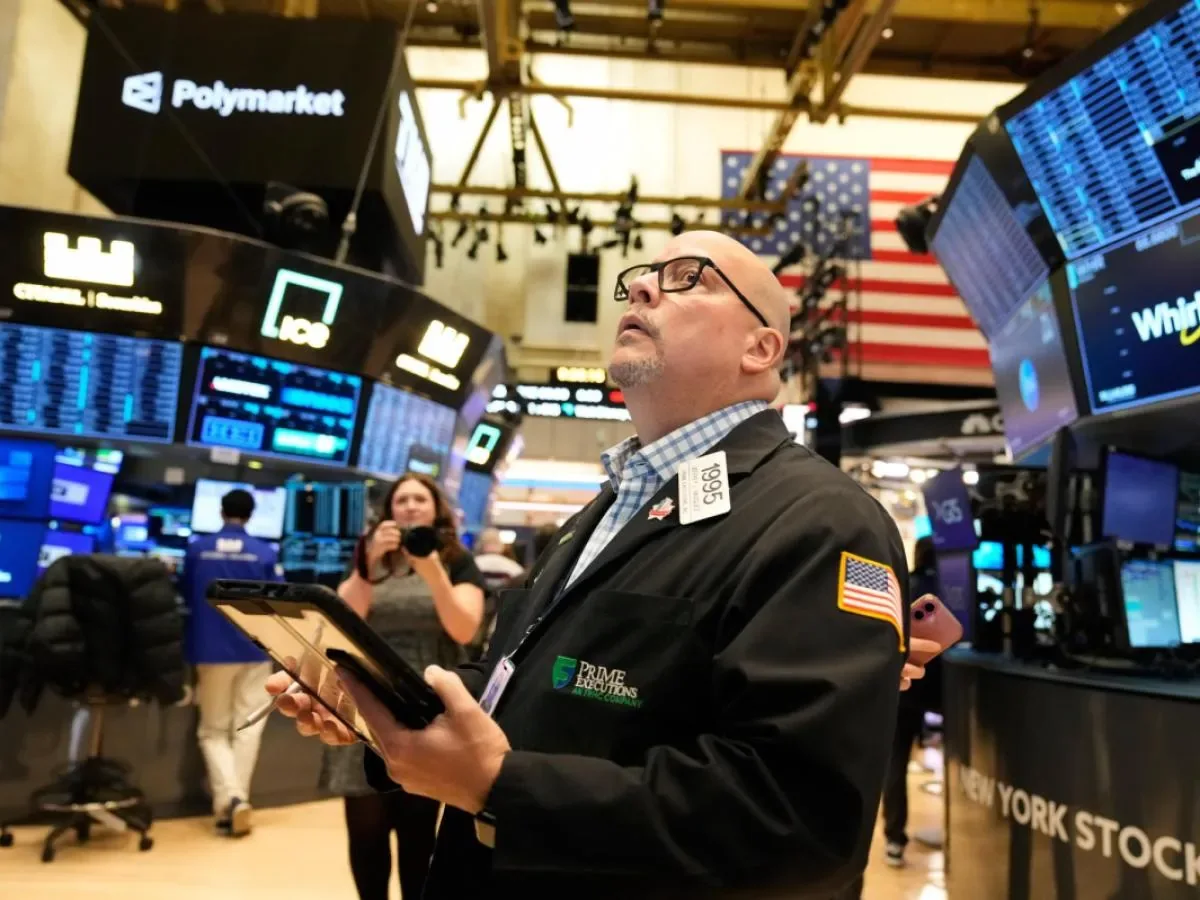
On August 3-4, 2026, U.S. stock markets rallied sharply, with the Dow Jones Industrial Average closing at a record high, the S&P 500 gaining over 1.5%, and the Nasdaq surging more than 2%. The rally was driven by Big Tech gains, strong corporate earnings (including Palantir and Caterpillar), and optimism over potential U.S.-Iran talks to reopen the Strait of Hormuz, which caused oil prices to drop about 5%. Amazon’s market cap surpassed $3 trillion, and over 84% of S&P 500 companies beat earnings expectations.
Chinese memory chipmaker ChangXin Memory Technologies (CXMT) surged over 500% in its Shanghai IPO, becoming China's most valuable company at $523 billion, driven by AI-related memory shortages. Meanwhile, Apple is testing CXMT chips for iPhones and MacBooks to diversify supply chains, despite U.S. lawmakers urging Apple to avoid CXMT due to Pentagon links to Chinese military entities. Experts debate whether this signals a long-term shift in global AI supply chains or a temporary boost, with geopolitical risks limiting widespread adoption.
Jeff Bezos filed plans to sell 15 million Amazon shares worth about $4.1 billion after the stock hit an all-time high, pushing Amazon’s market value above $3 trillion. The sale, under a prearranged trading plan, followed strong Q2 earnings driven by cloud-computing growth and AI investments. Amazon shares fell over 2% on the news. Bezos also donated 220,200 shares to nonprofits in May and has separately raised $10 billion for Blue Origin.
Amazon is building a 7.65-gigawatt natural gas power plant in Pecos County, Texas, to power an on-site AI data center. The plant, using 35 gas turbines, is permitted to emit 33 million tons of CO2 annually, making it the largest single pollution source in the U.S., surpassing the biggest coal plant. This contradicts Amazon’s net-zero-by-2040 Climate Pledge. Land clearing has begun, and construction permits are filed. The project faces likely public backlash over pollution, water use, and grid impacts, reflecting a broader industry shift to on-site power due to grid delays.
Amazon disclosed receiving $600 million in tariff refunds in Q2 2026, following a Supreme Court ruling that invalidated many Trump-era tariffs imposed under IEEPA. CFO Brian Olsavsky said the company will automatically refund customers in limited cases where tariff charges were directly passed on, and use remaining funds to lower prices. The refunds come amid a class-action lawsuit accusing Amazon of initially avoiding refunds to curry favor with Trump. Other major retailers like Apple, Walmart, and Costco also applied for refunds.
Alphabet, Google’s parent company, raised $25 billion through a highly sought-after bond offering, attracting $115 billion in peak demand. The sale, with notes maturing from two to 40 years, aims to finance a massive $205 billion capital expenditure forecast for 2026—more than double 2025’s outlays—driven by AI and cloud expansion. This marks Alphabet’s return to debt markets after reporting its first negative free cash flow since 2004, amid broader investor caution over AI spending returns.
Amazon reported Q2 2026 earnings of $5.75 per share, far exceeding estimates, with revenue up 20% to $200.6 billion. AWS grew 37% to $42.2 billion, its fastest in 18 quarters. Net income surged to $62.6 billion, boosted by $53.4 billion from Anthropic investments. Despite heavy AI infrastructure spending causing negative free cash flow, CEO Andy Jassy reassured investors, and shares rose up to 15% in after-hours trading.
On July 30, 2026, C.H. Robinson’s earnings call was overshadowed by a $600 million “nuclear verdict” in Dallas County, Texas, from the case *Lipe vs. Lupus Superior*. The jury found the broker liable for a fatal 2021 crash caused by a carrier’s driver, deeming the driver effectively an employee of C.H. Robinson. CEO Dave Bozeman plans to appeal, but the stock fell ~20% in five days. The verdict poses an existential threat to the brokerage model, with rising insurance costs and calls for federal guidance on carrier vetting standards.
Amazon-owned Zoox received a two-year NHTSA exemption to commercially deploy up to 2,500 purpose-built, steering wheel-less robotaxis annually, starting paid rides in Las Vegas next month. The Trump administration’s deregulatory push aims to remove federal mandates for driver controls and develop national AV safety standards. Supporters include disability and safety groups, while critics cite insufficient testing, regulatory capture risks, and union opposition. Zoox previously offered free rides and recalled 105 vehicles over a smoke-detection software issue.
On July 24, 2026, a coalition of 25 major U.S. tech companies including Nvidia, Microsoft, Meta, and Palantir released an open letter urging policymakers to avoid premature restrictions on open-weight AI models. The letter warns that such restrictions would stifle competition and drive innovation overseas, especially as Chinese models like Moonshot AI's Kimi K3 rival U.S. offerings. The debate centers on AI distillation, which U.S. officials accuse China of using for IP theft. Notably, OpenAI and Anthropic did not sign.
Former FBI Director James Comey has filed a motion to dismiss a federal indictment accusing him of threatening President Donald Trump. The charge stems from an Instagram photo of seashells arranged to read "86 47," which prosecutors interpreted as a death threat. Comey’s lawyers argue the post is protected political hyperbole under the First Amendment, not a "true threat." They also allege vindictive prosecution and illegal Secret Service surveillance of Comey and his wife. The DOJ has not yet responded.
Microsoft kept its capital expenditure forecast unchanged during its Wednesday earnings call, becoming one of the first major data center companies to hold the line on AI spending. The company had previously planned to spend $190 billion this year, but an accounting change now puts the guidance at $175 billion, with actual AI spending plans remaining steady. The decision contrasts sharply with rivals like Alphabet, Tesla, and Meta, which have all raised their capex forecasts recently, leading to stock declines. Microsoft's stock surged about 8% on the news. The article notes that rising AI spending across the industry has been partly driven by soaring memory chip prices, which account for about 45% of capex growth. By keeping its plans unchanged, Microsoft may effectively be pulling back slightly from building new capacity.
Amazon researchers have linked a North Korean hacker group to four open-source software compromises dating back to March 2025, significantly expanding the known scope of Pyongyang's cyber operations. The financially motivated group, tracked as Sapphire Sleet, Stardust Chollima, BlueNoroff, CageyChameleon, and Alluring Pisces, compromised major JavaScript packages including typo-crypto, debug, chalk, and axios—the latter receiving over 100 million weekly downloads. Amazon's Threat Intelligence attributed the campaigns with medium confidence based on reused code and attack similarities. In each incident, hackers tricked trusted software maintainers to publish malicious updates, potentially compromising thousands of downstream systems. The findings highlight how open-source attacks are becoming harder to detect, with attackers dividing malicious operations across multiple packages that appear harmless individually. North Korea uses such cyber operations for revenue generation to evade sanctions and finance its weapons programs.
Disney is ending its use of Microsoft's GitHub Copilot and several other AI coding tools in the US starting August, according to an internal message viewed by Business Insider. The company plans to adopt OpenAI's Codex coding tool, while retaining access to Anthropic's Claude Enterprise and Cursor. Disney is also dropping Amazon's Kiro and Q AI tools. The decision follows employee feedback that Copilot produced needlessly complex code and was rarely used, with some staffers preferring Claude and Cursor. Disney's streaming leaders have created an AI adoption dashboard to track usage and encourage faster output. The move is a setback for Microsoft's Copilot, which has lagged behind rivals like ChatGPT and Claude in adoption.
BrowserStack, an AI-native software testing platform, announced the launch of Test Companion, an agentic AI tool for test automation integrated directly into the IDE. Designed for QA teams and automation engineers, Test Companion accelerates the full testing lifecycle—authoring, execution, debugging, and maintenance—for web and mobile applications. The tool addresses a gap identified in a 2026 NBER study, which found that AI coding agents increased commits by 180% but releases by only 30%, highlighting testing bottlenecks. Test Companion works with existing code, frameworks, and testing stacks, supports over 30,000 real devices and browsers, and integrates with tools like Playwright, Selenium, and Jira. It is available now on VS Code, JetBrains, Cursor, and Antigravity marketplaces. Over 1,000 teams already use it to author, debug, and maintain tests up to 4x faster. BrowserStack is trusted by over 50,000 teams including Amazon, Microsoft, and NVIDIA.
Binance announced that its tokenized securities offering, bStocks, has surpassed $500 million in assets under management (AUM) just seven weeks after its June 11, 2026 launch. The product has expanded from five to over 46 listings, including major companies like Apple, Amazon, and Goldman Sachs. Data shows bStocks is attracting a crypto-native audience, with Gen Z accounting for 44% of trading activity and 41.5% of users making their first traditional finance investment through tokenized securities. Outside U.S. market hours, bStocks represent 58% of equity-linked trading volume on Binance, with $2 billion in weekend volume. The offering allows 24/7 trading and free instant conversion between tokenized and underlying stocks, integrated with Binance's broader ecosystem of spot, equities, and perpetual futures.
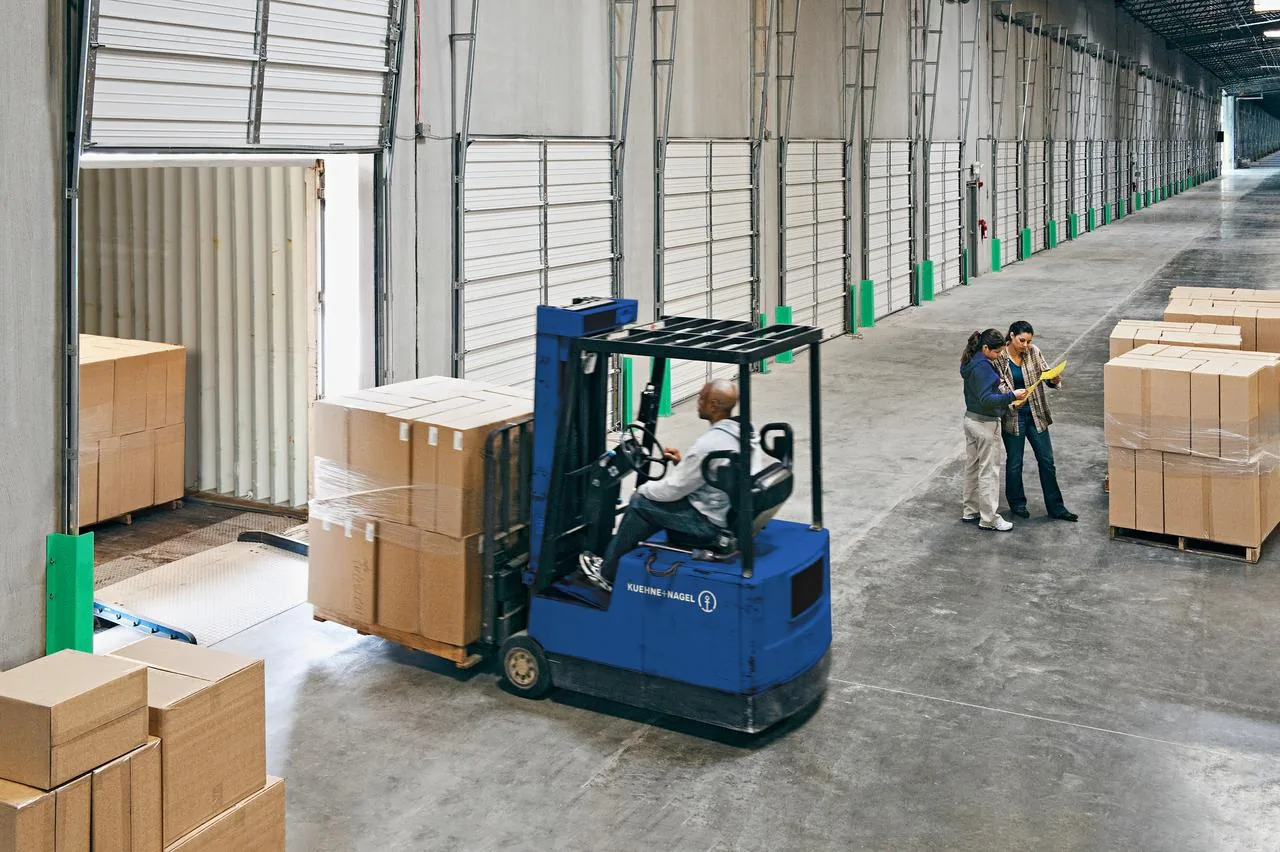
Old Dominion Freight Line reported a second-quarter operating ratio of 70.1%, approaching the milestone sub-70% level, a sharp improvement from 74.6% a year earlier. Despite lower shipment volumes and tonnage, the LTL carrier boosted revenue per hundredweight excluding fuel by 5.5% to $29.71, and revenue per shipment excluding fuel rose 7.2%. CEO Marty Freeman cited improved demand trends, yield discipline, and operational execution. The company also achieved a 99% on-time service rate and a 0.1% claims ratio. Earnings per share of $1.68 beat Wall Street consensus by $0.15, while revenue of $1.55 billion slightly exceeded expectations. Old Dominion's stock has faced pressure since early June amid Amazon's potential entry into LTL, but remains up 37.7% over 52 weeks.
On July 17, 2026, Apple overtook Nvidia to become the world's most valuable publicly traded company, with a market capitalization of approximately $4.88 trillion versus Nvidia's $4.84–$4.86 trillion. The shift was driven by a pullback in AI-infrastructure stocks, strong iPhone 17 sales, Apple's $100 billion buyback, and investor confidence in its AI-enhanced Siri. Nvidia's decline also reflected uncertainty over China chip sales and a new Chinese AI model. The lead remained slim and could change hands quickly.
SNK has opened pre-orders for the Neo Geo AES+, a faithful 1:1 revival of the iconic 1990s arcade home console, on Amazon. The base system costs $249 and includes a controller but no games. Ten classic game cartridges are available separately at $90 each, significantly more expensive than modern PS5 titles. The console features silicon-level hardware recreation using re-engineered ASIC chips, not emulation, and is compatible with original 1990s cartridges. It offers both AV output for CRT TVs and HDMI for modern displays, plus DIP switches for region/language settings and overclocking. Three editions are available: the base $249 system, a $349 Anniversary Edition with a white console and exclusive Metal Slug cartridge, and a $1,000 Ultimate Edition including all ten games, two arcade sticks, a gamepad, and a display rack. All orders ship after the official release date of November 12, 2026. The article notes that while emulation is easy, physical cartridge ownership offers a unique experience and ensures permanent game ownership without reliance on digital licenses.
SNK has opened pre-orders for the Neo Geo AES+, a faithful 1:1 hardware revival of the original 1990s Neo Geo console, priced at $249 for the base system. The console uses re-engineered ASIC chips for silicon-level recreation, not emulation, and is compatible with original cartridges. Ten classic games are being re-released at $90 each. A $349 Anniversary Edition includes an all-white Metal Slug cartridge and a wireless arcade stick. The $1,000 Ultimate Edition includes all ten games, both wired and wireless sticks, a gamepad, and a display rack. The console is set for release on November 12, 2026. The article notes that while emulation is cheaper, physical ownership offers preservation benefits and avoids digital license risks.
Corning Incorporated (NYSE:GLW) reported better-than-expected second-quarter earnings on Tuesday, with adjusted EPS of $0.78 (beating $0.75 consensus) and revenue of $4.74 billion (beating $4.62B consensus, up 17% YoY). However, shares fell 11.2% as third-quarter guidance disappointed: adjusted EPS midpoint of $0.87 and revenue midpoint of $4.95 billion both fell below Wall Street expectations. Optical Communications was the strongest segment, with revenue up 32% YoY to $2.07 billion, driven by 65% growth in Enterprise Networks from generative AI infrastructure demand. Solar business revenue surged 90% but posted a net loss of $7 million due to an extended maintenance shutdown. CEO Wendell Weeks announced upgraded long-term sales targets: $20 billion annualized run rate by end of 2026, $30 billion by 2028, and $40 billion by 2030. The company also secured a multiyear, multibillion-dollar agreement with Amazon and a partnership with NVIDIA to expand US optical connectivity manufacturing capacity tenfold. Operational metrics improved, with adjusted gross margin expanding 120 basis points to 39.6% and adjusted operating margin rising 190 basis points to 20.9%. Adjusted free cash flow reached $1.42 billion in the quarter.
Corning reported Q2 2026 core earnings of $0.78 per share (up 30% YoY) and core sales of $4.74 billion (up 17% YoY), beating analyst expectations of $0.76 EPS and $4.63 billion in sales. Despite the beat, shares fell 14% in premarket trading due to weaker-than-expected Q3 guidance: core EPS of $0.85-$0.89 and sales of $4.9-$5.0 billion, with the midpoint of sales guidance below the $4.99 billion consensus. Optical Communications led growth with $2.07 billion in sales (up 32%), while Solar segment sales surged 90% to $438 million but posted a net loss of $7 million. Corning announced major partnerships with Amazon (multiyear, multibillion-dollar fiber deal) and NVIDIA (expanding U.S. optical connectivity manufacturing tenfold). CEO Wendell Weeks cited a 'new phase of accelerating growth' with a Springboard Plan targeting $20 billion annualized sales by end of 2026, $30 billion by 2028, and $40 billion by 2030. Other optical networking stocks also fell, including Ciena (-5.9%), Coherent (-5.7%), and Lumentum (-4.7%).