159 published Stories16 tracked eventsLatest event
Also known as Alibaba, 阿里巴巴
Cross-source coverage
Latest Stories
One-sided
Reporting on this entity comes mostly from Western sources (source distribution, not a stance rating).
76%
18%
Western415 · 76%
Regional24 · 4%
Neutral / independent99 · 18%
Eastern7 · 1%
Latest Stories
Some matching results are temporarily unavailable.
Periodic recap
What changed for this subject in each tracking window — generated from matched events, delta-first.
→· 1 event in window
During this period, Alibaba released its next-generation flagship AI model, Qwen3.8-Max-0902, achieving a breakthrough in coding capabilities. The 2.4 trillion-parameter model topped the CodeArena WebDev leaderboard and entered the market with highly competitive pricing.
Released the Qwen3.8-Max-0902 model with 2.4 trillion parameters and a 1 million token context window.
Achieved the top position on the CodeArena WebDev leaderboard with a score of 1691, leading the Pareto frontier.
Priced at $5 per million tokens, available via QwenCloud API for enterprise and scientific users.
Earlier recaps
→· 2 events in window
During this period, Alibaba continued to advance its AI ecosystem by open-sourcing an efficient model previewing the Qwen4 architecture and participating in a record funding round for Xpeng's robotics unit. The new model achieves performance gains at a fraction of the training cost, targeting cost-sensitive developers. Meanwhile, the strategic investment in Xpeng's robotics signals a further bet on embodied intelligence.
→· 2 events in window
During this period, Alibaba announced a record $10.2 billion share placement in Hong Kong to fully fund its investment in full-stack AI capabilities. The stock fell 8% to 10% on dilution concerns and a sharp discount. The fundraising follows a 75% drop in quarterly net profit due to heavy AI spending, underscoring the company's strategic pivot amid intense competition. The placement was restricted to non-U.S. investors, reflecting a cautious approach to its financing strategy.
→· 1 event in window
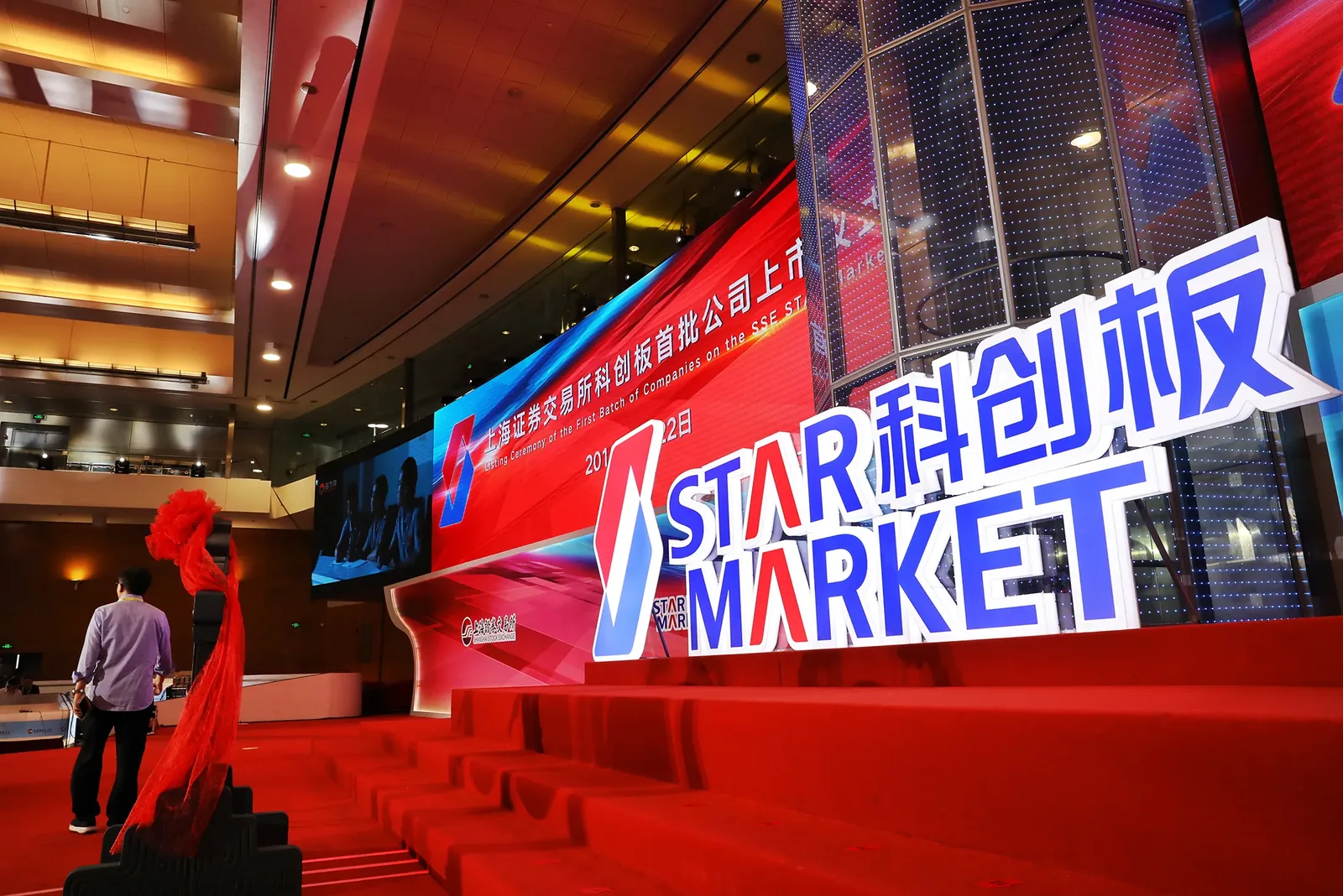
During this period, Alibaba, as an investor, saw its portfolio company Unitree Robotics achieve a significant capital-market milestone. Unitree unveiled a high-speed humanoid robot named 'Superman' and debuted on the Shanghai STAR Market, with shares surging 542% on the first day. This event primarily reflects Unitree's own business breakthrough and has limited direct impact on Alibaba, though it highlights market attention to Alibaba's early-stage bet on the robotics sector.
→· 1 event in window
During this period, Alibaba initiated a major divestiture, selling its gaming unit Lingxi Games for $1.5 billion, signaling a further strategic pivot toward artificial intelligence and cloud computing. The sale is part of CEO Eddie Wu's restructuring plan to exit non-core sectors and concentrate resources on AI. Following the transaction, Lingxi Games will retain its current management, while Alibaba continues to pursue its goal of reaching $100 billion in combined AI and cloud revenue within five years.
→· 1 event in window
During this period, Alibaba itself had no major new developments, but the external competitive landscape shifted notably. Meta released its open-source AI model Muse Glimmer, and CEO Mark Zuckerberg publicly urged the US to counter Chinese rivals by supporting open-source AI, specifically naming DeepSeek and Moonshot. This move signals an escalation in the US-China AI race within the open-source domain, creating new competitive pressure for Chinese AI firms like Alibaba.
Tracked events
Events matched to this subject by the tracking pipeline, with signal scores.
Alibaba's Qwen team released Qwen3.8-Max-0902, a 2.4 trillion-parameter AI model with a 1 million token context window. It achieved the number one position on the CodeArena WebDev leaderboard with a score of 1691 and leads the Pareto frontier at $5 per million tokens. The model, post-trained on coding and cowork tasks, is available via API on QwenCloud for enterprise and scientific applications.
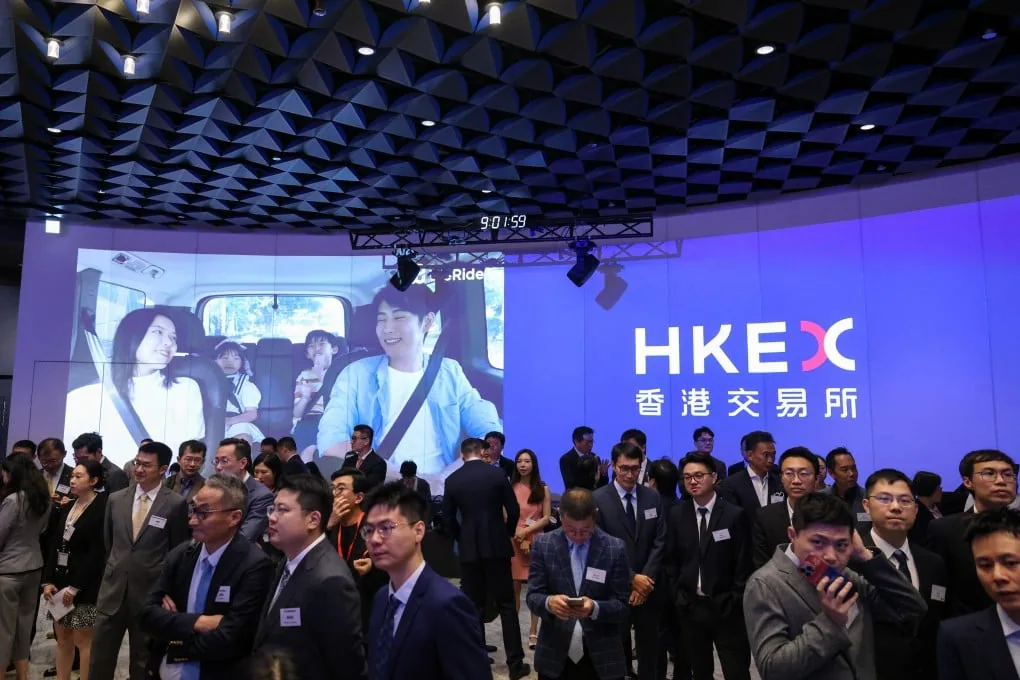
On August 23, 2026, Alibaba Group announced a $10.2 billion primary follow-on share placement in Hong Kong, the largest such offering by a Hong Kong-listed company. Proceeds will fully fund Alibaba’s investment in full-stack artificial intelligence capabilities, including AI infrastructure and cloud computing. The stock fell 8-10% on dilution concerns. The move follows a 75% drop in quarterly profit due to heavy AI spending and underscores Alibaba’s strategic pivot amid rising competition in the AI sector.
Chinese automaker Xpeng announced on August 24, 2026, that its robotics unit raised over $900 million in a record funding round led by IDG Capital, with strategic investments from Tencent and Alibaba. The unit is valued at over $6.3 billion. Funds will support development of the IRON humanoid robot, AI model training, mass production, and global expansion. Xpeng plans to begin mass production by end of 2026, with commercial sales in China and overseas starting in 2027. CEO He Xiaopeng will personally lead the robotics business.
Alibaba completed a record $10 billion share placement in Hong Kong, the largest primary follow-on offering by a Hong Kong-listed company. The proceeds will fund full-stack AI infrastructure and capabilities. Shares fell up to 10% due to dilution concerns and a sharp discount, compounded by a 75% drop in quarterly net profit from AI spending. The sale was restricted to non-U.S. investors, reflecting Alibaba’s aggressive AI push amid intense competition among Chinese tech giants.
Chinese humanoid-robot maker Unitree Robotics unveiled a high-speed robot named 'Superman' on August 17, 2026, claiming a top speed of 12.66 m/s, surpassing Usain Bolt's peak. Days later, its IPO on Shanghai's STAR Market raised 6.1 billion yuan ($905 million), with shares surging 542% on debut. The company, backed by Tencent and Alibaba, reported 2025 revenue of 1.7 billion yuan. The Superman robot, built in three months, can jump 2 meters. IPO proceeds will fund AI and factory expansion.
Alibaba Group is selling its gaming unit, Lingxi Games, to Asian private equity firm Trustar Capital in a deal valued at least $1.5 billion (potentially over $2 billion). The sale, confirmed by Lingxi CEO Zhou Bingshu, is part of CEO Eddie Wu’s restructuring to divest non-core assets and sharpen focus on artificial intelligence and cloud computing. Alibaba aims to reach $100 billion in combined AI and cloud revenue within five years, having pledged $53 billion to AI infrastructure. Lingxi, known for “Three Kingdoms: Strategy Edition,” will retain its current management.
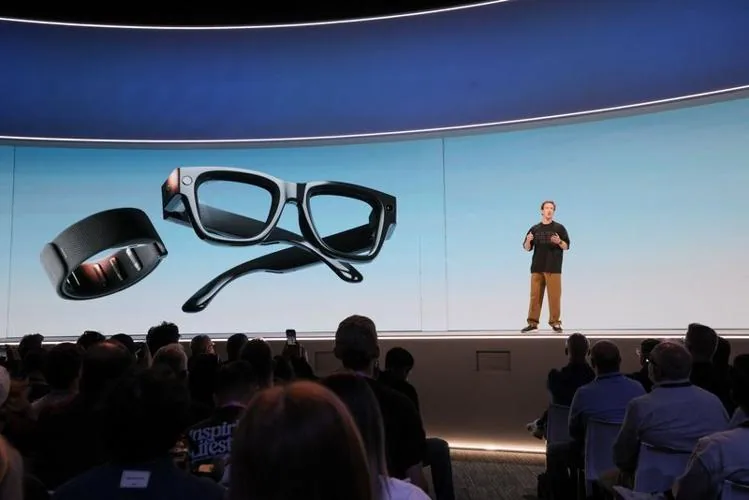
Meta CEO Mark Zuckerberg announced the release of the open-weight Muse Glimmer AI model for laptops and plans to open-source its most powerful model, Muse Spark 1.2. In a coordinated media blitz, Zuckerberg urged US policymakers to support open-source AI to counter Chinese rivals like DeepSeek and Moonshot, while criticizing closed-model competitors OpenAI and Anthropic. The move aims to democratize AI, reassure investors amid massive capital expenditures, and position Meta as a leader in the global AI race.
On August 3, 2026, Alibaba unveiled Qwen3.8-Max, its largest AI model with 2.4 trillion parameters, claiming performance rivaling Anthropic's Fable 5 and OpenAI's GPT5.6-Sol. The model uses a mixture-of-experts design, supports text, images, and video, and can process up to 1 million tokens. Alibaba plans to release model weights publicly in August. The announcement boosted Alibaba's stock and underscores intensifying U.S.-China AI competition amid export control tensions.
The article argues that US efforts to control adversary access to frontier AI models through country-based restrictions are failing, drawing parallels to the spyware industry's long-standing verification challenges. It highlights recent events including the World AI Conference in Shanghai, US Treasury Secretary Scott Bessent's announcement of an investigation into Chinese IP theft, and Anthropic's brief suspension of Fable and Mythos models. The piece identifies two key enforcement problems: subsidiary routing, where restricted Chinese parent companies (like Alibaba, Baidu, Tencent) legally access AI services through Singapore-based subsidiaries, and distillation, where rival models are trained on frontier model outputs (exemplified by Moonshot AI's Kimi K3). The article notes that Google, OpenAI, and Anthropic have built their own safeguards with varying effectiveness, but concludes that current export control laws fail to address these loopholes, urging policymakers to learn from spyware industry verification methods.
Treasury Secretary Scott Bessent announced the U.S. is considering sanctions on China over alleged theft of American large language models through model distillation. Bessent specifically named Chinese open-weight AI models like Moonshot's Kimi, DeepSeek, GLM of z.ai, and Alibaba as targets. In a Fox Business interview, Bessent framed the potential sanctions as an anti-piracy measure, stating 'You can't use counterfeit goods.' Possible sanctions include Specially Designated Nationals (SDN) financial sanctions that would freeze U.S.-based assets and bank accounts, or orders for U.S. companies and cloud providers to audit and remove Chinese models containing stolen weights. The announcement comes ahead of a late-September AI Summit between China and the U.S., which Bessent is leading. The article notes that nearly 50% of weekly API tokens for U.S. users on OpenRouter came from Chinese open-weight models, and suggests U.S. alternatives like Google's Gemini 3.6 Flash, Meta's Muse Spark 1.1, and xAI's Grok 4.5 could benefit if sanctions are imposed.
Business Insider reports that China's open-weight AI models, while technically impressive, are proving to be a terrible business compared to traditional open-source software. Unlike software, AI inference requires expensive chips, electricity, and data center capacity, meaning each new customer increases infrastructure costs rather than improving margins. Publicly traded Chinese AI labs like Zhipu and MiniMax have posted massive losses—$500 million and $250 million respectively—and their stocks have plunged over 40% and 50% in the past month. Moonshot AI had to halt new sign-ups due to insufficient computing power. Analysts from William Blair and Barclays note that open-weight models primarily generate revenue through hosting and inference compute, but those workloads flow to cloud giants like Amazon, Microsoft, and Alibaba, not the model creators. The strategy of giving away models may pressure Western leaders like OpenAI but creates severe profitability uncertainty for Chinese AI labs.
This analysis from Yahoo Finance examines Alibaba's position as a leading Chinese AI investment following Apple's endorsement. In 2025, Alibaba announced a $53 billion three-year investment in AI and cloud infrastructure, with plans to exceed that amount. A major catalyst came on July 15, 2026, when Apple secured regulatory approval to launch Apple Intelligence in China, powered by Alibaba's Qwen large language model for text generation, image understanding, and conversational AI. The partnership could reach 260-300 million active iOS devices in China. Alibaba's fiscal Q4 2026 results showed cloud revenue up 38%, with AI products accounting for 30% of external cloud revenue. The company generates $11.1 billion in annual free cash flow to fund expansion. Trading at 14-18x forward earnings and ~2x price-to-sales, Alibaba appears undervalued compared to Amazon (28x P/E, 3x P/S). Risks include China's uneven economic recovery, competition from Tencent/Baidu/Huawei/DeepSeek, and potential regulatory changes. Hedge fund holdings remain substantial at 102 funds in Q1 2026.
This analysis from Yahoo Finance examines Alibaba's position as a leading Chinese AI investment following Apple's partnership endorsement. Alibaba plans to invest over $53 billion in AI and cloud infrastructure by 2028. On July 15, 2026, Apple secured regulatory approval to launch Apple Intelligence in China, powered by Alibaba's Qwen large language model for text generation, image understanding, and conversational AI. This partnership is expected to boost Alibaba's reputation and drive adoption of its cloud AI services. Alibaba's fiscal Q4 2026 results show cloud revenue up 38%, with AI products contributing 30% of external cloud revenue. The company generates $11.1 billion in annual free cash flow, supporting its AI expansion. Trading at 14-18x forward earnings and a 2x price-to-sales ratio, Alibaba is considered undervalued compared to Amazon. Risks include China's uneven economic recovery, competition from Tencent, Baidu, DeepSeek, and Huawei, and potential regulatory changes. Hedge fund holdings decreased from 115 to 102 funds in Q1 2026, but major holders like Fisher Asset Management and Appaloosa Management remain significant.
China's Ministry of Commerce (MofCom) is reportedly considering a major expansion of technology export restrictions that would cover advanced AI models, training data, and overseas acquisitions of strategically important technology companies. According to the Financial Times, regulators have consulted with Alibaba, ByteDance, and Zhipu about limiting transfers of AI training data outside China and restricting foreign users from downloading model weights. The most controversial proposal would prohibit Chinese chip designers from manufacturing at TSMC and other foreign foundries, potentially forcing them to use domestic SMIC despite its technological lag. The measures also aim to close a regulatory loophole that allowed Meta to acquire Manus for $2 billion. These restrictions could be included in the next revision of China's catalogue of technologies prohibited or restricted from export, which already covers rare-earth materials and lithium-ion battery production technologies.
China's Ministry of Commerce (MofCom) is reportedly considering a major expansion of technology export restrictions that would cover advanced AI models, training data, and overseas acquisitions of strategically important technology companies. The measures, discussed with Alibaba, ByteDance, and Zhipu, could prohibit Chinese chip designers from using TSMC and other foreign foundries, potentially forcing them to rely on domestic manufacturer SMIC. Additionally, Beijing is considering tighter controls on foreign acquisitions of strategic tech firms, aiming to close a regulatory loophole that enabled Meta's acquisition of Manus. The restrictions would limit foreign users from downloading model weights from Chinese AI companies like DeepSeek and Moonshot, though remote access to services would still be permitted. These measures are intended to keep leading-edge AI developments in China amid intensifying US-China tech competition, but could slow global expansion of Chinese AI standards.
Alphabet released three new Gemini AI models on July 21, 2026, including Gemini 3.5 Flash Cyber for cybersecurity vulnerability detection, Gemini 3.6 Flash with improved coding and multimodal performance using up to 17% fewer tokens, and Gemini 3.5 Flash-Lite for high-volume workloads. The cybersecurity model targets Anthropic's lead in automated code defense and is initially limited to governments and trusted partners. Google aims to compete on cost and efficiency, with Gemini 3.6 Flash priced cheaper per task than GPT-5.6 Terra Max, Kimi K3, and Qwen 3.7 Max. The launch comes ahead of Alphabet earnings and amid growing competition from Chinese rivals like Moonshot AI and Alibaba. Google is also reportedly developing a specialized chip to run Gemini up to 10 times more efficiently.
U.S. Treasury Secretary Scott Bessent announced the Trump administration will investigate whether Chinese AI models have been distilled from American models, threatening sanctions if evidence of intellectual property theft is found. The statement comes as Chinese open-weight models, particularly Moonshot AI's Kimi K3, outperform leading U.S. offerings from OpenAI and Anthropic on industry benchmarks. Bessent cited watermarks of U.S. large language models on Chinese models as unacceptable. Anthropic previously alleged Alibaba conducted the largest known distillation attack. The U.S. and China plan to hold AI talks in September 2026, with Bessent representing the U.S. Both Anthropic and OpenAI have faced their own accusations of theft, including copyright lawsuits from authors and The New York Times.
A group of prominent Chinese business leaders and tech moguls, including NetEase's Ding Lei, Baidu's Robin Li, Didi's Cheng Wei, and Midea's Fang Hongbo, formed a group to watch the World Cup final. Other notable figures not pictured in the frame but also part of the gathering include Alibaba's Jack Ma, Fosun's Guo Guangchang, Pop Mart's Wang Ning, Yahoo's Jerry Yang, and AMD's Lisa Su. The event was reported by Hupu, a Chinese sports community platform, highlighting a rare social convergence of top entrepreneurs from diverse sectors such as internet, home appliances, investment, and semiconductors. The gathering underscores the personal connections among China's business elite and their shared interest in global sporting events.
China's Cyberspace Administration approved Apple Intelligence for launch, integrating Alibaba's Qwen AI model and Baidu's AI across iOS, iPadOS, macOS, and visionOS for Chinese users. The regulatory clearance, ending a wait since 2024, boosted Apple, Alibaba, and Baidu shares. The partnerships allow Apple to navigate US-China tech rivalry and local regulations, with Apple's China sales rising 28% year-over-year. Alibaba also banned employee use of Anthropic's AI amid intensifying competition.
Ant International, the global business arm of Ant Group, has closed a $1.2 billion Series A equity financing round. Existing investors including Ant Group and Alibaba Group participated, along with other international institutions. The company was valued at $10 billion prior to the round. Ant International will use the proceeds to accelerate global expansion and develop products in merchant payment, account management, and financial services for SMEs and enterprises. Operating independently since 2024, the company has a network connecting over 150 million merchants and 2 billion user accounts across Asia, Europe, the Middle East, and Latin America. Its business lines include Alipay+, Antom, WorldFirst, and Bettr. Recent developments include a partnership with Argentina's national QR payment scheme and the launch of the Agentic Mobile Protocol (AMP) for agentic commerce.
Ant International, the global business arm of Ant Group, has closed a $1.2 billion Series A equity financing round. Existing investors including Ant Group and Alibaba Group participated, along with other international institutions. The company was valued at $10 billion prior to the round. Ant International will use the proceeds to accelerate global expansion and develop products in merchant payment, account management, and financial services for SMEs and enterprises. Operating independently since 2024, the company has a network connecting over 150 million merchants with more than 2 billion user accounts across Asia, Europe, the Middle East, and Latin America. Its four business lines are Alipay+, Antom, WorldFirst, and Bettr. Recent developments include a partnership with PVS to integrate with Argentina's national QR payment scheme and the introduction of the Agentic Mobile Protocol (AMP) for agentic commerce.
Ant International, the Singapore-based overseas affiliate of Chinese fintech giant Ant Group, has raised $1.2 billion in a private equity fundraising round to accelerate its global expansion. Affiliates Ant Group and Alibaba Group participated in the round, though their individual commitments were not disclosed. The company plans to use the funds to expand its merchant payment business, account management, and other financial services for enterprises worldwide. Prior to this funding, Ant International was valued at $10 billion. The firm was spun out of Ant Group in 2024 and operates primarily in Asia, Europe, the Middle East, and Latin America, connecting with banks, card organizations, and mobile payment firms to serve 150 million merchants and 2 billion user accounts. The fundraising comes after Chinese regulators suspended Ant Group's planned IPO in 2020.
On July 20, 2026, chip stocks regained ground, boosting the Nasdaq as investors appeared to set aside AI bubble anxieties. The gains occurred despite Alibaba previewing a new artificial-intelligence model, marking the second time in a week that China demonstrated advances in AI. Major winners included Micron Technology, Sandisk, and Seagate Technology, all of which had fallen by double digits the previous week. The article, published by Yahoo Finance and sourced from the Wall Street Journal, reflects a positive market sentiment at the start of the trading week.
Chinese AI startup Moonshot AI released Kimi K3, the world's first open AI model with 2.8 trillion parameters, featuring a 1-million-token context window and native vision. It outperforms older US rivals on coding benchmarks but still trails Anthropic's Claude Fable 5 and OpenAI's GPT 5.6 Sol overall. The release intensifies US-China AI competition, with Moonshot backed by Alibaba and Tencent. Full model weights are due by July 27.
The article discusses the recent selloff in AI stocks, driven by concerns over overvaluation and sustainability of demand for AI chips. As investors rotate toward defensive sectors, Procter & Gamble (PG) is highlighted as a stable alternative. PG, a consumer staples giant with a market cap of $349.2 billion, has risen 4.2% year-to-date in 2026, contrasting with declines in the S&P 500 and Nasdaq. The company is noted for its 136-year uninterrupted dividend history, membership in the Dividend Kings, and its status as the longest-serving component of the Dow Jones Industrial Average since 1932. The article positions PG as a low-volatility, reliable income stock for risk-averse investors amid AI market uncertainty.
The European Commission imposed a record €550 million ($629 million) fine on Alibaba’s AliExpress for violating the Digital Services Act by failing to prevent the sale of counterfeit, unsafe, and illegal products. Investigators found that prohibited items remained on the platform for weeks, and AliExpress’s recommendation systems promoted nearly 15 million illegal products. The company has until October 20, 2026, to submit a remediation plan or face further penalties. The fine is the largest under the DSA, signaling stricter EU oversight of major online marketplaces.
SK Hynix, a South Korean memory-chip maker, surpassed a $1 trillion market capitalization on May 27, 2026, driven by surging demand for high-bandwidth memory (HBM) chips used in AI servers and accelerators. The company joins Samsung Electronics and Micron in the trillion-dollar club, with SK Hynix commanding 57% of global HBM revenue. The milestone highlights South Korea’s pivotal role in the AI supply chain and reflects investor enthusiasm for AI-linked semiconductor stocks, despite potential risks from labor disputes at rival Samsung.
Chinese AI startup Moonshot AI has temporarily paused new subscriptions for its newly launched Kimi K3 model due to overwhelming demand that strained computing capacity. The company, founded by AI researcher Yang Zhilin, is simultaneously seeking up to $2 billion in fresh capital at a $30 billion valuation and preparing for a potential Hong Kong IPO, having engaged Goldman Sachs and CICC as financial advisers. Moonshot raised over $2 billion in May from investors including Meituan and China Mobile, bringing total fundraising to over $5.5 billion. The Kimi K3 model, described as the world's largest open-weight AI system with 2.8 trillion parameters, has drawn massive user interest, leading to 'unprecedented compute challenges.' Moonshot will allocate existing capacity to current paid users and split future memberships into plans including one for coding. The capacity crunch highlights the costly computing infrastructure needs for Chinese AI firms racing to compete with U.S. rivals amid export controls on advanced Nvidia chips.
Chinese AI startup Moonshot AI has temporarily halted new subscriptions for its newly launched Kimi K3 model due to overwhelming demand that strained computing capacity. The company is simultaneously preparing for a potential Hong Kong IPO, having engaged Goldman Sachs and CICC as advisers. Moonshot raised over $2 billion in May and is seeking up to $2 billion more, with a valuation reaching $30 billion. The Kimi K3, a 2.8 trillion-parameter open-weight model, is the world's largest of its kind. The capacity crunch highlights the intense competition and infrastructure costs in China's AI sector, as rivals like DeepSeek also seek capital. Moonshot will prioritize existing paid users and introduce a coding-specific subscription plan.
Chinese AI startup Moonshot AI has temporarily halted new subscriptions for its newly launched Kimi K3 model after demand overwhelmed computing capacity. The company is simultaneously preparing for a potential Hong Kong IPO, having engaged Goldman Sachs and CICC as financial advisers. Moonshot raised over $2 billion in May 2026, bringing total funding to $5.5 billion, and is now seeking up to $2 billion more at a $30 billion valuation. The Kimi K3 model, a 2.8 trillion-parameter open-weight system, is the world's largest of its kind but requires costly GPU infrastructure. U.S. export controls on advanced Nvidia chips exacerbate capacity constraints. Moonshot will prioritize existing paid users and introduce a coding-specific subscription plan. Competitors like DeepSeek and Alibaba are also racing to expand compute capacity.