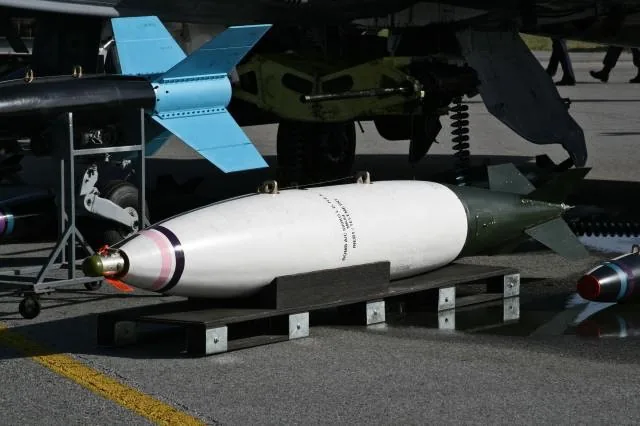
Greece and Israel signed a landmark defense agreement on August 31, 2026, valued at approximately €3 billion ($3.5 billion), to build a multi-layered air defense system named 'Achilles Shield'. The deal, Israel's largest-ever defense export, includes David's Sling, SPYDER, and BARAK MX systems, plus a command-and-control system and Drone Dome anti-drone systems. It is explicitly framed as a counter to perceived threats from Turkey and Iran, reshaping strategic alliances in the Eastern Mediterranean.
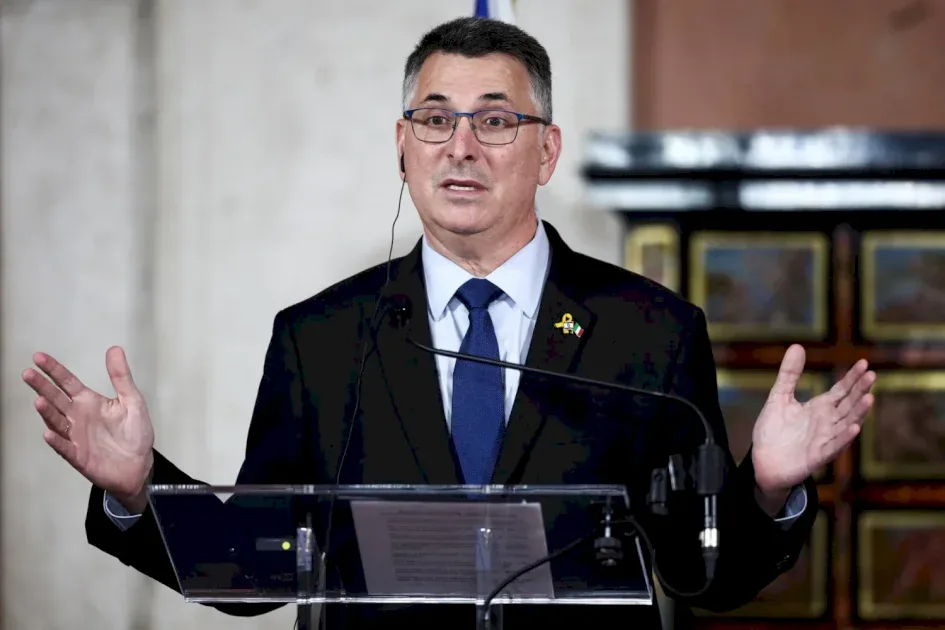
On July 30-31, 2026, approximately 72,000 migrants swam or climbed fences into Spain’s North African exclave of Ceuta, with around 5,000 remaining, including 1,200 minors. On August 31, Prime Minister Pedro Sánchez accused networks linked to Russia and Israel of spreading false reports that triggered the influx, citing the European External Action Service. Israel’s foreign minister rejected the claim as a “brazen lie.” Sánchez also blamed an “international far-right movement” for exploiting migration to divide Europe.
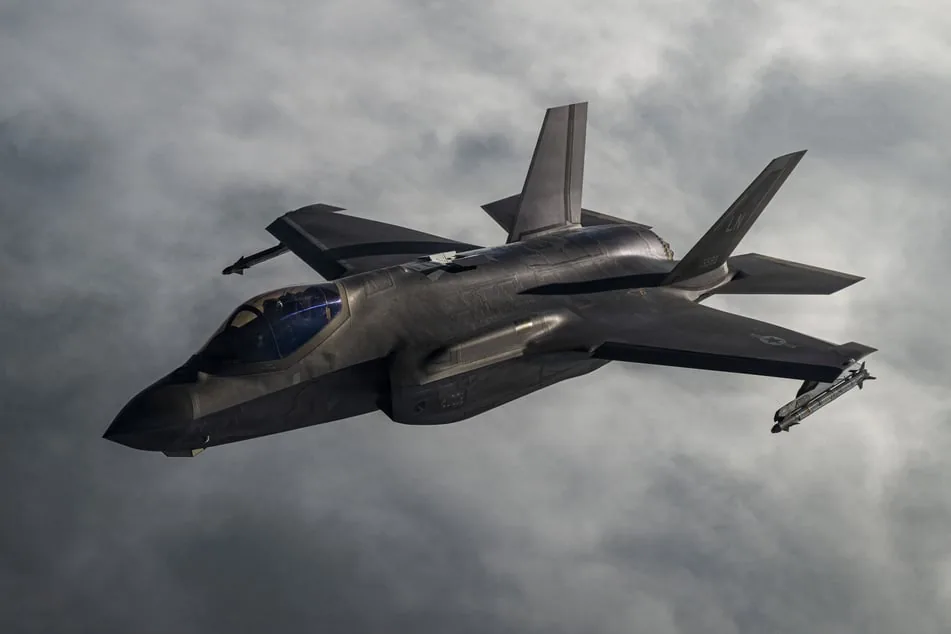
U.S. Air Force Chief of Staff Gen. Kenneth S. Wilsbach visited Israel in late August 2025/2026, meeting with Israeli military leaders Lt. Gen. Eyal Zamir and Maj. Gen. Omer Tischler as the conflict with Iran surpassed its six-month mark. Discussions focused on the regional situation, lessons from the joint U.S.-Israeli air campaign, and future cooperation. The war began with dual air campaigns on February 28, 2026, and has involved long-range bomber strikes. Since the war began, 18 U.S. service members have died, though the Pentagon later reclassified some casualties, lowering the official count to 14.
On August 18-19, 2026, Israel launched airstrikes on Syria’s Abu Duhur air base near Aleppo, damaging the runway but causing no casualties. Israel claimed Syria was about to breach a security status quo by allowing Turkish troops to deploy there. Turkey rejected the allegations, calling them “untenable,” and condemned the strike as a sovereignty violation. The U.S. criticized the attack as an “unnecessary escalation,” warning it risked direct confrontation between Israel, Turkey, and Syria. The incident highlights growing tensions between Israel and Turkey, and U.S. frustration with Israeli unilateral actions.
Key European leaders—including the UK, France, Germany, Italy, Canada, the Netherlands, and Norway—jointly condemned Israel’s advancement of the E1 settlement project in the occupied West Bank, which plans over 3,400 housing units near Jerusalem. They warned the project undermines the two-state solution, violates international law, and exacerbates instability. The UK announced forthcoming sanctions, while Israel’s Foreign Minister rejected the criticism, asserting Jewish rights to the land. Businesses were warned against participating due to legal risks.
Israeli far-right Security Minister Itamar Ben-Gvir sparked international outrage by advocating in a podcast for killing 30 to 40 Palestinians nightly in Gaza, calling many "not even human" and "not worthy of life." He also called for reoccupying Gaza, establishing settlements, and mass expelling Palestinians—actions international lawyers say could constitute ethnic cleansing. The remarks, surfaced August 16, 2026, were condemned globally, including by Germany and Iran, and come amid a fragile ceasefire and upcoming Israeli elections.
U.S. President Donald Trump threatened to bomb Oman if it interferes with U.S. naval operations or a potential U.S.-Iran deal regarding the Strait of Hormuz. The threat follows Iran’s closure of the strait in late February amid ongoing U.S.-Israeli attacks, and as Iran negotiates with Oman over shipping regulations. Trump also claimed a backchannel with Iran’s Revolutionary Guard and plans to declare the strait U.S. territory. The conflict has driven up global energy prices and remains deeply unpopular ahead of U.S. midterm elections.
U.S. envoy Jared Kushner held a rare, over-two-hour meeting with Hamas political chief Khalil al-Hayya in Cairo on August 16, 2026, joined by mediators from Egypt, Qatar, and Turkey. The talks aim to salvage a U.S.-backed 15-point ceasefire roadmap requiring Hamas to disarm and Israel to withdraw from Gaza. Israeli Prime Minister Netanyahu has rejected the plan, while regional powers condemn Israel’s stance. A ceasefire since October 2025 remains fragile amid mutual violations and resumed Israeli airstrikes.
The European Broadcasting Union (EBU) introduced new rules effective 2027 barring countries in armed conflict or sensitive geopolitical situations from hosting Eurovision if they win. The change follows controversy over Israel’s participation amid the Gaza war, which led to boycotts by five countries. Bulgaria won the 2026 contest and will host in Burgas. Canada will debut in 2027. Israeli brand Moroccanoil ended its sponsorship.
On August 7, 2026, Saudi Arabia, Pakistan, and Turkey signed a mutual defense agreement in Mecca, declaring an armed attack on any one member as an attack on all. The pact aims to enhance collective deterrence amid regional tensions, including Houthi attacks, Iran-related threats, and uncertainty over US security guarantees. It includes technology transfers, intelligence sharing, and defense investments, but is not explicitly anti-Iran. Pakistan has already deployed troops to Saudi Arabia, while no Turkish troop deployment is planned.
In July 2026, U.S. President Donald Trump was covertly smuggled out of Ankara, Turkey, following a NATO summit, after U.S. intelligence assessed a credible Iranian assassination threat. Trump publicly boarded Air Force One but secretly exited via a catering container truck to a smaller C-32A military jet, flying to RAF Mildenhall in the UK. The iconic Air Force One flew empty as a decoy, with journalists and staff unaware. The operation occurred amid U.S. military strikes in Iran and drew criticism for using the press as decoys.
On July 30, 2026, US President Donald Trump announced a phased agreement brokered by his "Board of Peace" for the complete disarmament of Hamas and other armed groups in Gaza. The deal includes Israeli troop withdrawal, deployment of an International Stabilization Force, and a new Palestinian police force. Mediators Egypt, Qatar, and Turkey facilitated the talks. Despite the announcement, Israeli strikes killed at least six Palestinians, including children, on the same day, highlighting ongoing violence.
On August 1-2, 2026, U.S. President Donald Trump announced a temporary suspension of planned U.S.-Israeli strikes on Iran, claiming Tehran and other Middle Eastern states requested the halt after agreeing on a basic deal framework. The proposed deal demands immediate opening of the Strait of Hormuz and an end to Iran’s nuclear threat. Iran’s state media denied requesting the pause and warned of proportionate retaliation. The conflict, ongoing since February 28, 2026, has seen tit-for-tat attacks, with a previous June ceasefire collapsing. Trump threatened massive retaliation if no deal is reached quickly.
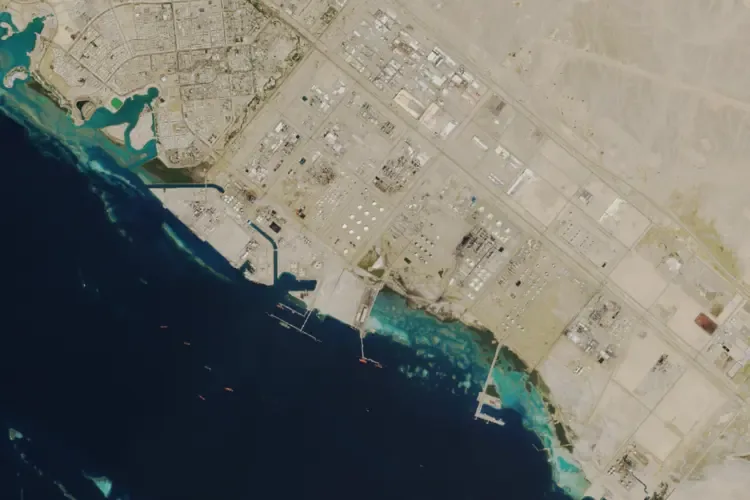
Yemen’s Houthi rebels escalated the Middle East conflict by threatening shipping companies and striking Saudi oil tankers in the Red Sea, forcing reroutes and pushing Brent crude above $98 per barrel. Saudi Aramco shipped record volumes from Yanbu port to preempt disruptions. Two tankers reversed course to avoid Houthi drones and missiles. The attacks, linked to the Israel-Hamas war, threaten global energy supply through the Bab el-Mandeb Strait, with oil prices rising nearly 20% in two weeks.
Rafael Advanced Defense Systems delivered its 1,000th TYPHOON remotely operated naval weapon station to the Israeli Navy, marking a global production milestone. The system, operational since 2000, is used by 25 navies including the US, Canada, and Australia. Recent deliveries include Mk-30c units for Sa'ar 6 corvettes. The combat-proven system engages surface and aerial threats like drones, supporting advanced munitions. Rafael CEO Yoav Tourgeman highlighted its strategic importance in contested maritime environments.
On July 23, 2026, the U.S. House of Representatives passed a war powers resolution (214-208) directing President Trump to end hostilities against Iran. Four Republicans joined Democrats in the non-binding vote, reflecting growing bipartisan concern over rising U.S. casualties—including four troops killed in recent attacks—and the administration’s resumed military operations after a brief truce. The Senate plans a binding vote, though a veto is likely. The conflict threatens key straits and has involved 12 consecutive nights of U.S. strikes.
Iran is set to receive up to 400 Chinese-made QW-12 and FN-16 shoulder-fired air defense missile launchers within weeks, valued at $60-70 million, to bolster its short-range air defenses amid ongoing war with the U.S. and Israel. The deal, brokered via Hong Kong-based intermediary Zhongqing Baoshang International Investment, plans delivery from Urumqi, China, through Pakistan. China and Pakistan deny involvement. U.S. President Trump expressed surprise, citing Xi Jinping’s assurances of non-intervention. Delivery schedules may change.
On July 30, 2026, the U.S.-Iran conflict intensified as U.S. Central Command launched heavy strikes on Iran’s Qeshm Island, killing three. Iran retaliated by hitting a Chinese firm’s building in Kuwait and a U.S.-owned tanker in Egypt’s Damietta port, causing fires. Saudi Arabia joined U.S. strikes on Iranian-backed militias in Iraq for the first time. Iran claimed attacks on U.S. forces in Jordan. The conflict, which ended a brief pause, now involves multiple allies, raising regional tensions.
Israel is constructing a network of earth barriers stretching over 42 km along the Yellow Line in Gaza, moving the de facto border deeper into the territory and displacing Palestinian families. The barriers, which began after the October 2025 ceasefire, now cover 85% of the Yellow Line. In some areas, the embankments extend more than 1.5 km beyond the original demarcation. Families in al-Tuffah and Zeitoun have been forced to flee as Israeli forces move concrete blocks and issue evacuation orders. Experts say the earthworks suggest Israel is planning for a long-term occupation. Hamas accuses Israel of violating the ceasefire agreement, while Israel says the measures are operational to protect citizens and prevent Hamas rebuilding. The UN reports dozens of families lost tents in Zeitoun due to the displacement.
According to sources cited by The Business Times, Iran is expected to receive Chinese shoulder-launched missile systems within weeks amid an ongoing war with the United States. The report indicates that Iran needs to rearm after months of conflict in which the US and Israel have struck facilities linked to its missile, drone, and air-defense programs. China has dismissed the report as groundless, and Pakistan has denied any involvement in the transfers. The article, published on July 30, 2026, highlights escalating tensions and potential third-party arms transfers in the Iran-US conflict.
On July 29, 2026, the Israeli military accused Hezbollah of a 'blatant violation' of the Lebanon ceasefire after the Iran-backed group launched an explosive drone at an Israeli engineering vehicle in the Ali al-Taher Ridge area, within a 10-km deep Security Zone in southern Lebanon where Israeli forces are operating. No Israeli soldiers were injured. The incident occurred under a U.S.-sponsored ceasefire agreement signed last month, which requires Lebanon's army to disarm Hezbollah and Israeli forces to withdraw from designated zones. Violence has declined since the preliminary U.S.-Iran deal and Lebanon-Israel agreement, but Lebanon continues to report intermittent Israeli strikes. Hezbollah has not claimed any attacks since June 20.
Jordan, which had previously avoided major damage in the US-Iran war, is now facing escalating attacks. On July 17, an Iranian airstrike on the Muwaffaq Salti Air Base killed three US soldiers and wounded others. Iran has also targeted other bases, destroying helicopters and injuring dozens. Jordan is a key US ally, hosting troops and bases, but this puts it in the crossfire. Iran is attempting to incite Jordan's population, which is largely of Palestinian origin and already discontented due to the Gaza war, through propaganda and sleeper cells. Experts warn that Iran is increasing pressure on the US and Israel by targeting Jordan.
Ukrainian President Volodymyr Zelensky met with U.S. President Donald Trump at the White House on July 28, 2026, ahead of Senator Lindsey Graham’s funeral, focusing on Ukraine’s licensed production of Patriot missile systems. Separately, Zelensky met Raytheon executives in Kyiv and gave an interview to far-right influencer Laura Loomer, who apologized for past anti-Ukraine remarks. Trump shared Loomer’s clip on Truth Social, signaling shifting MAGA attitudes. Zelensky also warned that Russia is sharing satellite imagery of U.S. bases with Iran.
Fox & Friends co-host Brian Kilmeade revealed on a podcast that President Donald Trump admitted the US-Israel war on Iran is unpopular but necessary. Kilmeade quoted Trump as saying, 'I realize the war is not that popular. I also realize it's necessary.' This comes amid polls showing 69% of Americans, including 40% of Republicans, believe Trump has not clearly explained US military goals in Iran. Kilmeade also discussed a New York Times report that Trump paused escalation due to missile stockpile concerns, which Trump denied, claiming Gulf nations were not supportive of a major attack. On Tuesday, the US military intercepted a barrage of Iranian missiles targeting US troops in the Middle East, ending a brief pause in fighting. US Central Command confirmed all missiles were intercepted and forces remain on high alert.
Israeli Prime Minister Benjamin Netanyahu will travel to Washington on July 28, 2026, to meet President Donald Trump at the White House, as the U.S.-Israeli military campaign against Iran enters its fifth month. The visit, confirmed by both leaders, also includes Netanyahu attending the funeral of Senator Lindsey Graham. The meeting aims to coordinate strategy on Iran, amid strained U.S.-Israel relations, growing domestic and international pressures, and concerns from Trump’s anti-interventionist allies about further escalation.
The Portuguese under-18 men's national handball team begins its European Championship campaign in Belgrade, Serbia, facing the Czech Republic on Wednesday, followed by Croatia and Israel in Group C. Coach Nuno Santos noted a substitution due to injury (Miguel Mendes replaced by Diogo Silva) and acknowledged the challenge after previous absences, but expressed determination to reach the Main Round. Separately, the women's under-18 national team starts its World Championship in Romania against Argentina in Group D, also facing Montenegro and the Netherlands. Coach Sandra Fernandes emphasized the need for defensive aggression and fast transitions, viewing the tournament as a key development opportunity for young athletes despite the high competitive demands.
Israeli Defence Minister Israel Katz stated on July 28, 2026, that American warplanes used Israeli bases during their attacks on Iran, reiterating that Israel would retaliate with full force if targeted. Katz noted that Iran is currently firing at everything in the region except Israel, but warned the situation could change within an hour. The remarks come after 13 nights of U.S. strikes on Iran following the collapse of an April ceasefire. Israel has not participated in the latest hostilities. U.S. President Donald Trump expressed optimism about a negotiated peace deal with Iran as both sides held fire for a third consecutive day.
President Trump is scheduled to deliver remarks at the funeral of the late Senator Lindsey Graham (R-S.C.) on Tuesday afternoon at the Washington National Cathedral. The service is expected to draw high-profile international figures, including Israeli Prime Minister Benjamin Netanyahu and Ukrainian President Volodymyr Zelensky. The two world leaders reportedly met with President Trump ahead of the memorial service. The event underscores the bipartisan and international respect for Graham, a longtime senator known for his foreign policy influence. The funeral brings together key political figures amid ongoing global tensions.
Israeli Prime Minister Benjamin Netanyahu has finally secured a one-on-one meeting with former US President Donald Trump after months of pushing for it. However, the meeting is unlikely to repair the increasingly strained relations between the two leaders and their countries. The article, published by Die Welt on July 28, 2026, highlights the risks Netanyahu faces in this diplomatic encounter, suggesting that the political and strategic costs could be significant. The strained ties stem from disagreements over Iran policy, settlement expansion, and other regional issues. The meeting is seen as a high-stakes gamble for Netanyahu, who may have to make concessions or face further isolation from the US administration.
Greece has approved over €3 billion for the 'Achilles Shield,' a comprehensive, integrated air and missile defense architecture designed for modern warfare dominated by drones and precision weapons. The program, approved by the Greek Government Council for Foreign Affairs and Defence, involves acquiring three complementary Israeli systems: Spyder AiO for short-range threats, Barak MX for intermediate coverage, and David's Sling for long-range missiles. These will be linked by an AI-supported command-and-control system. This marks a shift from purchasing individual platforms to building a unified defensive network. The decision is driven by the need to replace aging Russian-made Tor-M1 and Osa-AK systems, which have become unsustainable due to the war in Ukraine. The Achilles Shield complements a previous €656 million deal for PULS rocket artillery, giving Greece both defensive and long-range strike capabilities. While Athens officially states the program is not directed at any third country, the analysis highlights Turkey's expanding missile and drone capabilities as a key factor accelerating the decision, raising concerns about a regional arms race.
1 reports · 1 sources · Updated
Periodic recap
What changed for this subject in each tracking window — generated from matched events, delta-first.
→· 3 events in window
Israel-related developments increased markedly this period, shifting from last week's indirect connection to direct military diplomacy and defense cooperation. The U.S. Air Force chief visited Israel to discuss lessons and future coordination in the six-month-old Iran war. Simultaneously, Israel signed its largest-ever defense export deal with Greece, explicitly aimed at Turkey and Iran. Separately, Spain's prime minister accused Israel of fueling a migrant crisis through disinformation, a claim Israel rejected.
U.S. Air Force Chief Wilsbach visited Israel to discuss lessons from the six-month Iran war and future cooperation with Israeli military leaders.
Israel and Greece signed a record $3.5 billion 'Achilles Shield' air defense deal, Israel's largest defense export, explicitly countering Turkey and Iran.
Spain's PM Sánchez accused Israeli and Russian networks of using disinformation to trigger a 72,000-migrant influx into Ceuta; Israel's foreign minister rejected the claim as a 'brazen lie'.
Earlier recaps
→· 1 event in window
Only one event related to Israel was recorded this period, and the connection is indirect. U.S. President Trump threatened to bomb Oman, a development tied to Iran's closure of the Strait of Hormuz and ongoing U.S.-Israeli attacks on Iran. The event does not directly involve Israel proper or its official actions, but reflects the broader regional tensions.
→· 1 event in window
Developments related to Israel this period centered on a cross-border military strike and its diplomatic fallout. On August 18-19, Israel conducted an airstrike on Syria's Abu Duhur air base near Aleppo, claiming it was to prevent a Turkish troop deployment. Both Turkey and the U.S. condemned the action, with Washington warning it was an “unnecessary escalation” that risked a broader direct confrontation.
→· 1 event in window
Developments related to Israel this period centered on controversial remarks by far-right Minister Itamar Ben-Gvir. He publicly advocated in a podcast for killing dozens of Palestinians nightly in Gaza and called for reoccupation, settlement building, and mass expulsion, drawing widespread international condemnation. The remarks surfaced amid a fragile ceasefire and upcoming Israeli elections, further heightening regional tensions.
→· 1 event in window
Only one development directly related to Israel occurred this period. U.S. envoy Jared Kushner held a rare meeting with Hamas's political chief in Cairo to advance a ceasefire roadmap requiring Hamas to disarm and Israel to withdraw from Gaza. Israeli Prime Minister Netanyahu has rejected the plan, while regional powers have condemned Israel's stance. The ceasefire in place since October 2025 remains fragile amid mutual violations and resumed Israeli airstrikes.
→· 1 event in window
Only one development indirectly related to Israel occurred this period. On August 7, 2026, Saudi Arabia, Pakistan, and Turkey signed a mutual defense pact in Mecca, aimed at enhancing collective deterrence against Houthi attacks, Iran-related threats, and uncertainty over U.S. security guarantees. The pact is not explicitly anti-Iran, but this new regional security architecture may have implications for Israel's strategic environment.
Tracked events
Events matched to this subject by the tracking pipeline, with signal scores.