Israel marks third anniversary of October 7 attacks amid tight election and security reckoning
Three years after the October 7, 2023 Hamas attack, Israel faces a tight national election as opposition leaders demand a state commission of inquiry into the disaster, which Prime Minister Benjamin Netanyahu has blocked. A foiled hijacking attempt on a FlyDubai flight has revived public feelings of abandonment due to institutional screening failures. The election is focused inward on accountability, burden sharing, and trauma, while ongoing conflicts in Gaza, Lebanon, and Syria receive less debate. Israel's security doctrine has shifted to preemptive strikes, but the country remains reliant on U.S. and Arab cooperation.
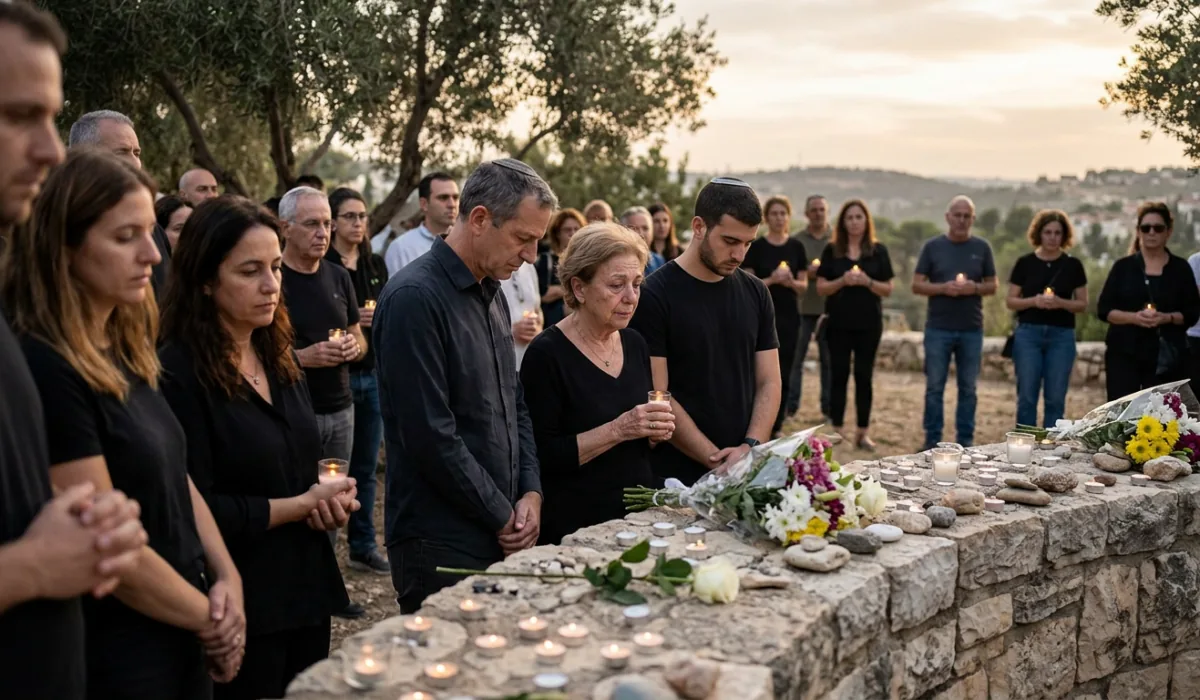 Reference image
Editorial responsibility
- No named human review is recorded for this page.
- Reports are grouped by semantic similarity and deterministic rules. Language models may assist titles, summaries, translation and cross-source analysis; the page reads the event directly, while its address stays stable when the title changes.
- Summary covers the current reports
Cross-source coverage
Common ground
- The trauma from October 7 is real and deeply affects Israeli society, with two-thirds of Jewish voters saying it determines their vote.
- The Haredi military exemption is a major structural crisis, with 66,000 men avoiding service while the IDF loses combat troops and the economy strains.
- International isolation—including the ICC warrant, ICJ case, and European arms embargoes—is being ignored in the election campaign.
- The election focuses on blame for past failures rather than future plans for Gaza, hostages, or diplomacy.
- Institutional trust has collapsed, and the political system is broken, with neither candidate addressing key long-term issues.
Points of contention
- Whether the trauma response is 'manufactured' by Netanyahu's political exploitation or an organic societal reaction to government failure.
- Whether a state commission of inquiry is logistically possible during an ongoing war, with one side citing historical examples like the Kahan and Chilcot inquiries and the other arguing it would interfere with live command decisions.
- Whether the election is a 'masterpiece of avoidance' or a natural result of a traumatized society that needs time to rebuild trust.
- Whether Netanyahu's blocking of accountability is the core problem or just one symptom of a deeper institutional collapse.
Blind spots
- The economic dimension—including the strain on small businesses, the tech sector bleeding talent, and the unsustainable war economy—is largely ignored by both candidates.
- The Haredi exemption's full scale as both a fiscal and security crisis is not being debated, even though it could break the military and economy.
- The feedback loop where international isolation reinforces Israelis' sense of abandonment, making them less likely to engage with global criticism.
- The death of the Israeli peace camp and the lack of any serious debate about a two-state solution or diplomatic horizon.
WorldAttention’s read
This election is a referendum on blame for October 7, not a debate about Israel's future. The trauma is real and deep, but it's being exploited by a political class that avoids every structural crisis—from the occupation and diplomatic isolation to the Haredi exemption and economic strain. A state commission of inquiry is blocked not for logistical reasons but to protect Netanyahu, yet even if one were held, it wouldn't fix the broken trust or the demographic time bomb. The real unspoken issue is the Haredi exemption, which will force a reckoning regardless of who wins. Meanwhile, the international isolation and economic pressures will only grow, but the campaign offers no plan for any of it. Israel is sleepwalking into a one-state reality that threatens its character as both Jewish and democratic, and nobody is willing to say that out loud.
Reporting timeline
At October 7 Anniversary, Israelis Face Election and Unfinished Reckoning on Security
This analysis by Elliott Abrams, a former U.S. deputy national security advisor, examines Israel's mood on the third anniversary of the October 7, 2023 attacks, shaped by a foiled hijacking of a FlyDubai flight and an impending national election. Abrams argues that while Israel's security doctrine has hardened—abandoning deterrence for preemptive strikes, weakening Hamas and Hezbollah, and setting back Iran's nuclear program—the country faces sobering lessons. It cannot defend itself alone, requiring U.S. and Arab assistance for air defense and strikes on Iran. Internationally, Israel faces growing political criticism and isolation, particularly in Europe and the U.S., which Abrams attributes to consensus issues like opposition to a Palestinian state rather than solely to Prime Minister Netanyahu. The article notes that a formal national commission on the October 7 failures has been blocked by Netanyahu, leaving the election as a short-term verdict. Key unresolved issues for the next government include military conscription for ultra-Orthodox Haredi men. Abrams concludes that the anniversary prompts reflection on both failures and achievements, and that international condemnation is unlikely to change regardless of election outcomes.
Read sourceAt October 7 Anniversary, Israelis Face Election and Unfinished Reckoning on Security
This analysis by Elliott Abrams, a former U.S. deputy national security advisor, examines Israel's mood on the third anniversary of the October 7, 2023 attacks, shaped by a recent foiled hijacking of a FlyDubai flight and an impending national election. Abrams notes that while Prime Minister Benjamin Netanyahu has survived politically, the race is tight and no party holds a majority. He argues that Israel's security doctrine has hardened, abandoning deterrence for preemptive strikes, leading to military successes against Hamas, Hezbollah, and Iran. However, Abrams highlights two sobering lessons: Israel cannot defend itself alone, relying on U.S. and Arab cooperation, and its military achievements have been shadowed by growing international political criticism and isolation. He contends that a change in government is unlikely to alter consensus policies on a Palestinian state, Gaza, Iran, or Lebanon. The article concludes that the anniversary prompts reflection on both failures and achievements, with critical issues like ultra-Orthodox military service awaiting the next government.
Read sourceThree years after October 7, Israel faces inward amid election and security failures
This analysis from the Atlantic Council examines Israel's political and security landscape three years after the October 7, 2023, Hamas attack. A recent foiled terrorist plot on a flydubai flight, where passengers and crew prevented a co-pilot from crashing the plane, has revived feelings of abandonment among Israelis, as government authorities reportedly neglected screening duties. This incident converges with a hard-fought Israeli election, where opposition leaders demand a state commission of inquiry into the October 7 disaster, accusing Prime Minister Benjamin Netanyahu of negligence. Netanyahu resists, claiming it should wait until the war ends. The election is focused inward on issues of accountability, burden sharing, and the psychological toll of the war, while debates about the ongoing conflicts in Gaza, Lebanon, Syria, and Iran are less prominent. The article notes that the trauma of October 7 has deeply affected Israeli society's self-image, shaping politics for years to come.
Show 2 older updatesHide older updates
Three years after October 7, Israel faces inward amid election and security failures
The article analyzes Israel's political and security landscape three years after the October 7, 2023 Hamas attack. A foiled terrorist plot on a flydubai flight from Dubai to Tel Aviv, where passengers and crew prevented the co-pilot from crashing the plane, has revived feelings of abandonment among Israelis. The incident revealed institutional failures in screening foreign airline crews due to bureaucratic disputes and budget shortfalls. This narrative converges with the upcoming Israeli election, where opposition leaders demand a state commission of inquiry into the October 7 attack, while Prime Minister Benjamin Netanyahu resists, claiming it should wait until the war ends. The election is focused inward on issues of leadership, accountability, burden sharing, and the psychological toll of the war, rather than on the ongoing conflicts in Gaza, Lebanon, Syria, and Iran. The article notes that Hamas still controls about 35% of Gaza, Israeli forces remain in southern Lebanon, and the war with Iran continues. Israel's standing in the US and Europe is declining. The author argues that the trauma of October 7 has deeply affected Israeli society and self-image, shaping politics for years to come.
Three years after October 7, Israel's election focuses inward on trauma and accountability
This analysis from the Atlantic Council examines how a foiled terrorist attack on a flydubai flight has revived feelings of abandonment among Israelis, mirroring the trauma of the October 7, 2023 Hamas attack. The incident revealed institutional failures in screening foreign airline crews, leading to public anger. As Israel approaches a hard-fought election, polls show thin margins and opposition leaders like Gadi Eisenkot and Naftali Bennett are demanding a state commission of inquiry into the October 7 disaster, which Prime Minister Benjamin Netanyahu resists. The election is dominated by internal disputes over accountability, burden sharing, and the role of civil society, while broader issues like the ongoing wars in Gaza, Lebanon, and Syria, as well as Israel's declining international standing, receive less attention. The article argues that the deep trauma from October 7, which shattered Israel's self-image of strength, is shaping politics and may continue to do so for years.