248 published Stories13 tracked eventsLatest event
Also known as Hezbollah, 真主党
Cross-source coverage
Latest Stories
Contested
Reporting on this entity comes from multiple media camps.
58%
36%
Western544 · 58%
Regional340 · 36%
Neutral / independent20 · 2%
Eastern33 · 4%
Latest Stories
Some matching results are temporarily unavailable.
Periodic recap
What changed for this subject in each tracking window — generated from matched events, delta-first.
→· 1 event in window
Only one relevant event occurred this period, and Hezbollah itself was not mentioned. Former US President Donald Trump declared 'unprecedented economic warfare' against Iran and threatened sanctions on any country trading with it. Hezbollah remains absent from this major regional development, continuing its marginalization seen in previous periods.
Trump declared 'unprecedented economic warfare' against Iran and threatened secondary sanctions on countries trading with it.
The announcement was made in San Francisco on August 20, marking a return to maximum pressure tactics.
Hezbollah was not mentioned in this US-Iran escalation, remaining on the sidelines of regional dynamics.
Earlier recaps
→· 1 event in window
Only one relevant event occurred this period, and Hezbollah itself was not mentioned. The U.S.-Iran military standoff took a dramatic turn as President Trump announced a suspension of strikes and claimed a preliminary deal framework, which Iran denied. Hezbollah remains absent from this major regional development, continuing its marginalization seen in previous periods.
→· 1 event in window
Only one relevant event occurred this period: Hadi Matar was convicted of transnational terrorism on July 29, 2026, for the 2022 stabbing of author Salman Rushdie. The attack was linked to a 1989 Iranian fatwa against Rushdie, but no direct Hezbollah involvement or statement was reported. Hezbollah remains absent from regional dynamics, continuing the trend seen in previous periods.
→· 2 events in window
Neither of the two events in this period directly involves Hezbollah, continuing the group's absence from regional dynamics observed previously. US-Saudi airstrikes on Iran-backed militias in Iraq and Iran's retaliatory attack on Jordan escalated broader regional tensions, but no Hezbollah actions or positions were mentioned. The other event focused on Zelensky's meeting with Trump and Russia-Iran intelligence sharing, also unrelated to Hezbollah.
→· 1 event in window
Only one related event was captured in this period, and it has no direct connection to Hezbollah. The event focuses on Israeli PM Netanyahu's trip to Washington to meet President Trump and coordinate strategy on the military campaign against Iran. No actions, statements, or positional changes by Hezbollah were mentioned.
→· 1 event in window
Only one related event was captured in this period, and it has no direct connection to Hezbollah. The event concerns a New York City mayor's threat to arrest Israeli PM Netanyahu and his subsequent retreat, primarily reflecting friction between US domestic politics and ICC jurisdiction. No actions, statements, or positional changes by Hezbollah were mentioned.
Tracked events
Events matched to this subject by the tracking pipeline, with signal scores.
On August 20, 2026, former US President Donald Trump declared a major escalation in economic pressure against Iran, calling it "economic D-Day" and "unprecedented economic warfare." Citing Iran's failure to reach a nuclear deal, Trump warned of severe consequences for any country providing Iran economic or trade support, signaling a broad secondary sanctions campaign. The announcement, made in San Francisco, marks a return to maximum pressure tactics with potential global economic implications.
On August 1-2, 2026, U.S. President Donald Trump announced a temporary suspension of planned U.S.-Israeli strikes on Iran, claiming Tehran and other Middle Eastern states requested the halt after agreeing on a basic deal framework. The proposed deal demands immediate opening of the Strait of Hormuz and an end to Iran’s nuclear threat. Iran’s state media denied requesting the pause and warned of proportionate retaliation. The conflict, ongoing since February 28, 2026, has seen tit-for-tat attacks, with a previous June ceasefire collapsing. Trump threatened massive retaliation if no deal is reached quickly.
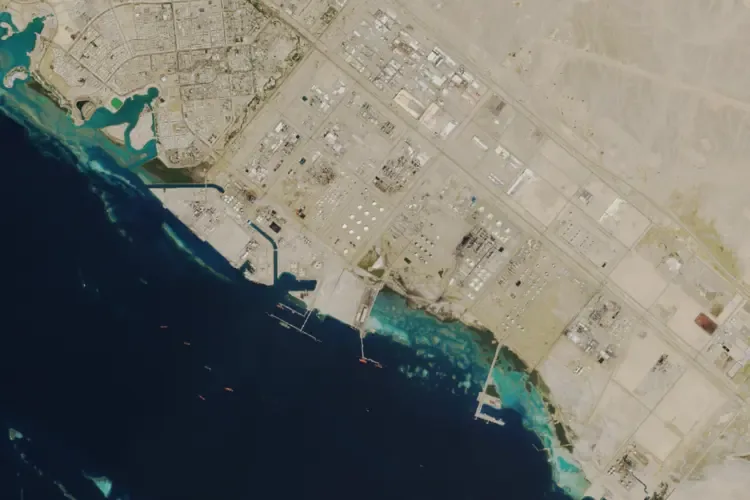
On July 30, 2026, the U.S.-Iran conflict intensified as U.S. Central Command launched heavy strikes on Iran’s Qeshm Island, killing three. Iran retaliated by hitting a Chinese firm’s building in Kuwait and a U.S.-owned tanker in Egypt’s Damietta port, causing fires. Saudi Arabia joined U.S. strikes on Iranian-backed militias in Iraq for the first time. Iran claimed attacks on U.S. forces in Jordan. The conflict, which ended a brief pause, now involves multiple allies, raising regional tensions.
On July 29, 2026, the Israeli military accused Hezbollah of a 'blatant violation' of the Lebanon ceasefire after the Iran-backed group launched an explosive drone at an Israeli engineering vehicle in the Ali al-Taher Ridge area, within a 10-km deep Security Zone in southern Lebanon where Israeli forces are operating. No Israeli soldiers were injured. The incident occurred under a U.S.-sponsored ceasefire agreement signed last month, which requires Lebanon's army to disarm Hezbollah and Israeli forces to withdraw from designated zones. Violence has declined since the preliminary U.S.-Iran deal and Lebanon-Israel agreement, but Lebanon continues to report intermittent Israeli strikes. Hezbollah has not claimed any attacks since June 20.
On July 29, 2026, the United States and Saudi Arabia conducted joint airstrikes against Iran-backed Popular Mobilization Forces (PMF) in Iraq, killing at least 20 and wounding 32 across seven provinces. The strikes, coordinated with US Central Command, retaliated against drone attacks on Saudi oil facilities and US forces. Iran’s IRGC responded by attacking Jordan. Iraqi Prime Minister Ali al-Zaidi condemned the violation of sovereignty, canceled a meeting with Saudi Crown Prince Mohammed bin Salman, and faces pressure to disarm militias, risking broader regional conflict.
The article investigates the role of Lebanon in the radicalization of Abdul B., the German-Lebanese attacker who drove a van into a crowd at Berlin's CSD parade, killing one and injuring 29. According to the public prosecutor's office, B. traveled to Lebanon in May 2025, where he contacted suspected Islamic State (IS) members. He was arrested in Lebanon on July 24, 2025, convicted of inciting religious conflict, and imprisoned for three months before returning to Germany in November 2025, where he was immediately rearrested. The article notes that while Lebanon is typically associated with Shiite Hezbollah, IS is also active there, citing the recent arrest of an IS emir in Beirut. B.'s family is Shiite-influenced, raising questions about his attraction to the Sunni Salafist group. Experts suggest radicalization often affects isolated young people in identity crises rather than 'brainwashed' individuals. Lebanese authorities declined to comment, citing sealed military court proceedings.
Ukrainian President Volodymyr Zelensky met with U.S. President Donald Trump at the White House on July 28, 2026, ahead of Senator Lindsey Graham’s funeral, focusing on Ukraine’s licensed production of Patriot missile systems. Separately, Zelensky met Raytheon executives in Kyiv and gave an interview to far-right influencer Laura Loomer, who apologized for past anti-Ukraine remarks. Trump shared Loomer’s clip on Truth Social, signaling shifting MAGA attitudes. Zelensky also warned that Russia is sharing satellite imagery of U.S. bases with Iran.
The UNESCO World Heritage Committee, meeting in Busan, South Korea, added five Crusader castle ruins in southern Lebanon and the ancient city of Sebastia in the West Bank to the World Heritage List, immediately placing them on the Red List of threatened sites due to the Israel-Hezbollah war and Israeli occupation. The article analyzes how UNESCO's decisions are increasingly politicized, with Lebanon and Palestine using the process to highlight destruction from Israeli military actions. Seven cultural sites are now directly linked to Israel's conflicts. The Palestinian Authority systematically uses World Heritage status to oppose Israeli occupation, while Iran and Gulf states have not sought additional protection for their threatened sites despite regional tensions. The article notes the committee's composition favors critics of Netanyahu's policies, and that the Red List signals urgent need for international protection.
Syrian President Ahmed al-Sharaa stated in an Al Jazeera interview that Syria is pursuing a security agreement with Israel, aiming to involve a group of states to encourage a more balanced Israeli policy. He emphasized that such an agreement could lead to comprehensive peace, but Syria will not relinquish its claim to the Golan Heights. Al-Sharaa also noted his government avoids confrontations and is considering no military interventions in Lebanon, despite US pressure to address Hezbollah. His remarks coincided with a visit by UN Secretary-General António Guterres, who called for respect for Syria's sovereignty and condemned Israeli violations of the 1974 Disengagement Agreement. Israeli forces had advanced into Syrian territory, including the demilitarized zone and Mount Hermon, following the overthrow of Bashar al-Assad in December 2024. Al-Sharaa is focused on restoring Syria's international standing and rebuilding the economy after nearly 14 years of war.
Lebanese Prime Minister Nawaf Salam visited the village of Zawtar al-Gharbiyah on July 22, 2026, stating that Beirut is mobilizing political and diplomatic efforts to secure a complete Israeli withdrawal from occupied southern areas. The visit followed a U.S.-sponsored agreement signed last month, under which Lebanon's army is to disarm Hezbollah and Israeli forces are to withdraw from designated 'pilot zones.' Tensions remain high: the Israeli military said it fired warning shots after Lebanese soldiers entered an area outside the agreed pilot zone. Hezbollah has rejected the agreement and refuses to disarm. The war, triggered by Hezbollah's attack on Israel in March 2026, caused widespread destruction in southern Lebanon. Over 700,000 people have returned home in recent weeks, but many residents still await permission to re-enter their villages. President Joseph Aoun also met with U.S. President Donald Trump to stress the need for full Israeli withdrawal.
President Trump on Tuesday reauthorized US airlines to sell tickets for direct flights to Lebanon, following his White House meeting with Lebanese President Joseph Aoun. The decision ends a more than 40-year ban imposed after Hezbollah terrorists hijacked TWA Flight 847 in 1985. The move signals a shift in US-Lebanon relations and could impact travel and diplomatic ties. The ban had been in place since the hijacking, which resulted in the death of a US Navy diver. The reauthorization allows airlines to begin selling tickets for direct routes, though operational details remain to be determined.
Robby Soave of Reason.com critiques the rising influence of the Democratic Socialists of America (DSA), focusing on far-left commentator Hasan Piker, who recently spoke at a College Democrats event dressed in Mao Zedong-style attire. Soave argues that Piker's admiration for Mao reflects the DSA's authoritarian tendencies, citing Mao's catastrophic Great Leap Forward and Cultural Revolution. The article warns that DSA candidates are winning Democratic primaries, pushing policies like collectivization of food, education, and energy, and calling for scrapping the U.S. Constitution. Soave also links DSA figures to support for terrorist groups like Hamas and Hezbollah, citing a livestream featuring several prominent leftist politicians. The piece concludes that the DSA poses a serious threat to the Democratic Party and U.S. capitalism.
During a White House meeting with Lebanese President Joseph Aoun, President Donald Trump pledged to help Lebanon 'a lot' and announced the resumption of direct US airline flights to Lebanon for the first time since 1985, when the route was suspended after the TWA Flight 847 hijacking. The meeting, the first by a Lebanese president since 2009, focused on securing long-term calm after months of war between Israel and Hezbollah. Trump also discussed a framework agreement for Israeli troop withdrawal from southern Lebanon and Hezbollah disarmament, though implementation in pilot zones faced confusion and a reported incident of Israeli warning shots. Trump suggested he could personally speak with Hezbollah and floated the idea of Syrian intervention, which would be unpopular in Lebanon.
During a White House meeting with Lebanese President Joseph Aoun, President Donald Trump pledged to help Lebanon 'a lot' and announced the restoration of direct U.S. airline flights to Lebanon for the first time since 1985, when the route was suspended after the TWA Flight 847 hijacking. The meeting, the first by a Lebanese president since 2009, focused on securing long-term calm after months of war between Israel and Hezbollah. Trump also discussed Israeli troop withdrawal from southern Lebanon and a framework agreement for Hezbollah disarmament. However, confusion emerged over the implementation of pilot zones for Israeli withdrawal, with conflicting accounts of troop movements and warning shots fired. Trump suggested he could personally speak with Hezbollah and floated the idea of Syrian intervention, though such concepts could embarrass Aoun.
Lebanese President Joseph Aoun has traveled to Washington to meet US President Donald Trump, seeking his pressure to compel a complete Israeli withdrawal from southern Lebanon. The visit comes amid internal Lebanese divisions over direct talks with Israel, with Hezbollah opposing both negotiations and disarmament. Israel has begun a gradual withdrawal from two 'pilot zones' as part of a US-brokered agreement, with Lebanese army units moving into Sawtar al-Gharbia. Aoun plans to present a written proposal for his army to secure Hezbollah's weapons arsenal, believing only Trump has the influence to restore Lebanese sovereignty. The article highlights the ongoing Israeli occupation of 60 villages, displacement of 700,000 people, and continued demolitions by Israeli forces.
Lebanese President Joseph Aoun has traveled to Washington to meet US President Donald Trump, seeking his pressure on Israel to complete a full withdrawal from southern Lebanon. The visit comes amid internal tensions in Lebanon, where Hezbollah opposes direct talks with Israel and the government's disarmament plans. Israel currently occupies 60 villages in southern Lebanon, displacing 700,000 people. A pilot withdrawal program has begun in two zones, with Israeli forces leaving Sawtar al-Gharbia and Lebanese army units moving in. Aoun plans to present a written proposal for securing Hezbollah's weapons arsenal, believing only Trump has the influence to restore Lebanese sovereignty against both Iran and Israel. The US-brokered agreement envisions the Lebanese army disarming Hezbollah in exchange for a full Israeli withdrawal.
Lebanese President Joseph Aoun visits the White House for the first presidential summit in nearly two decades, seeking Donald Trump's assistance to rebuild the country amid a severe financial crisis, ongoing conflict with Hezbollah, and war damage from clashes with Israel. The Economist podcast also covers threats to Red Bull's marketing machine and the declining trend of trophy wives, as age gaps between wealthy men and their spouses shrink. The episode features correspondents Gregg Carlstrom, Vendeline von Bredow, and data journalist Doug Dowson, hosted by Rosie Blau and Jason Palmer.
Lebanese President Joseph Aoun visits the White House to seek Donald Trump's help in rebuilding Lebanon, marking the first presidential summit in nearly two decades. The country faces a severe financial crisis, a power struggle with Hezbollah, and damage from conflict with Israel. The Economist podcast also covers threats to Red Bull's marketing machine and the declining trend of trophy wives, as the age gap between wealthy men and their spouses shrinks. The episode features correspondents Gregg Carlstrom, Vendeline von Bredow, and data journalist Doug Dowson.
The crisis in Lebanon will move center stage as Lebanese President Joseph Aoun is scheduled to meet President Trump at the White House. The meeting is vital for Aoun, who seeks to drain support away from Hezbollah while also demonstrating that he can be trusted to stand up to Israel. The summit underscores the ongoing geopolitical tensions in the region and the delicate balancing act required of Lebanon's leadership.
Lebanese President Joseph Aoun is seeking assistance from former U.S. President Donald Trump to rebuild Lebanon after devastating conflict. The country faces three major challenges: neutralizing Hezbollah's influence, repairing infrastructure damaged by Israeli airstrikes, and reviving a collapsed economy. Economy Minister Amer Bisat envisions Lebanon reclaiming its historical role as a regional hub for banking, tourism, and trade, potentially benefiting from reconstruction in Syria and Gulf energy projects. The article highlights the complex geopolitical landscape, including U.S.-Iran tensions in Iraq and regional shifts, as Lebanon attempts to attract foreign investment and rebuild.
Abby Maxman, President and CEO of Oxfam America, discussed the severe humanitarian crisis in Lebanon on Forbes Newsroom. The conflict between Israel and Hezbollah reignited after joint U.S.-Israel strikes on Iran earlier in 2026. A June ceasefire agreement was rejected by Hezbollah, and a subsequent U.S.-Iran memorandum of understanding has disintegrated, raising fears of renewed fighting. The Lebanese president is set to meet with President Trump in Washington to push for a stronger ceasefire and Israeli troop withdrawal from southern Lebanon. According to the UN, the conflict has killed over 3,500 people, injured thousands more, and displaced approximately 1 million people. Maxman emphasized that any ceasefire must be effectively implemented and not just a paper agreement to address the escalating humanitarian needs.
Khalil al-Hayya, the former chief negotiator of Hamas, has been elected as the new leader of the Palestinian terrorist organization, succeeding Yahya Sinwar who was killed by Israel in October 2024. The 66-year-old al-Hayya, born in the Gaza Strip, has been based in Qatar for several years and previously served as the highest-ranking Hamas leader abroad. He was a member of the five-member leadership council that led Hamas after Sinwar's death. Al-Hayya prevailed in an internal election against former Hamas leader Khaled Mashal. He maintains good relations with Hezbollah, Qatar, Egypt, Algeria, and Iran. Al-Hayya survived an Israeli assassination attempt in Doha last year, though four of his sons were killed in Israeli attacks. A ceasefire has been in effect since October 2025, but Hamas has consolidated its rule in areas it still controls in Gaza.
Israel and Lebanon continue negotiations over peace in southern Lebanon, mediated by the US, but the agreement offers no lasting perspective. Key players, including Hezbollah and Iran, are not at the table. The framework agreement signed on June 26, 2026, proposes 'pilot zones' where the Lebanese army would be stationed to guarantee Hezbollah's withdrawal, but Israel refuses to fully withdraw until complete disarmament. Meanwhile, Israeli attacks persist, with airstrikes and demolitions reported. Hezbollah has rearmed with Iranian funding of $50 million monthly and resumed rocket attacks after the killing of Iran's religious leader. Lebanon's government struggles to enforce disarmament, and the plan lacks a sustainable solution.
The article reports on ongoing Lebanon-Israel peace negotiations mediated by the USA, focusing on southern Lebanon. A framework agreement was signed on June 26, 2026, with implementation talks held in Rome. The plan involves Lebanon's army taking control of southern Lebanon and disarming Hezbollah, after which Israel would end its incursion. However, key obstacles remain: Israel refuses full withdrawal until Hezbollah is completely disarmed, while Hezbollah resists disarmament and continues rearming with Iranian funding ($50 million monthly). Israeli military attacks persist, including airstrikes and house demolitions. The proposed 'pilot zones' are seen as inadequate, and two key players—Hezbollah and Iran—are not participating in the talks. The article highlights the lack of a sustainable long-term solution.
Israeli Defence Minister Israel Katz informed U.S. Defense Secretary Pete Hegseth that Israel is determined to maintain its military presence in 'security zones' it has established inside Lebanon, Syria, and the Gaza Strip. The statement comes days after U.S. President Donald Trump reportedly asked Israeli Prime Minister Benjamin Netanyahu to withdraw forces from Syria and Lebanon, warning the deployment was fueling tensions. Katz emphasized that Israel has never asked the U.S. to act along its borders. Since the overthrow of Bashar al-Assad in December 2024, Israel has sent troops into a UN-patrolled buffer zone on the Golan Heights and conducted incursions into Syrian territory. In Lebanon, Israeli forces remain in a roughly 10-kilometer security zone, while U.S.-brokered talks in Rome aim for a phased withdrawal. In Gaza, Israel controls 60% of the territory and maintains a perimeter along the borders with Israel and Egypt.
Lebanese President Joseph Aoun has urgently called on the United States to pressure Israel to halt ongoing military operations and home demolitions in southern Lebanon, despite a ceasefire declared in April. With the death toll reaching 2,869 since March and 1.2 million displaced, hostilities persist as Israel maintains a security zone against Hezbollah. Washington is set to host indirect talks between Lebanese and Israeli representatives in mid-May. The crisis highlights deep regional tensions, internal Lebanese divisions regarding Hezbollah, and stalled diplomatic efforts involving Iran.
This opinion piece from the New York Post argues that recent protests demonstrate an eroding distinction between antizionism and antisemitism. The author highlights an incident at New York University where a banner resembling the Israeli flag, but defaced with Nazi swastikas and the university logo, was displayed atop the Steinhardt building during graduation celebrations. The article condemns this act as a hateful gesture intended to shame Jewish graduates, noting the building's namesake is a prominent supporter of Israel. The commentary also references a separate incident in Brooklyn where protesters outside a synagogue waved Hezbollah flags and shouted anti-Zionist slogans in a Jewish neighborhood. The author asserts that targeting Jewish spaces and individuals while claiming to oppose only Zionism is a form of humiliation and scapegoating. The piece concludes by urging NYU to identify and punish those responsible, suggesting expulsion or diploma revocation, and calls for society to censure such bigotry to prevent further violence and normalization of hate.
The US-brokered ceasefire between Israel and Hezbollah has effectively collapsed, leading to a severe escalation in violence across southern Lebanon. Israeli airstrikes and ground operations have killed hundreds since the truce began, with recent days seeing over 50 deaths in 24 hours, including medical workers. Hezbollah has retaliated with drone and rocket attacks into Israel. The conflict has displaced over one million civilians and caused nearly 2,900 total deaths since March. Despite ongoing diplomatic talks in Washington, the humanitarian crisis deepens as both sides accuse each other of violating international law and ceasefire terms.
Despite a ceasefire effective mid-April 2026, intense conflict persists between Israel and Hezbollah in southern Lebanon. The IDF reports striking over 1,100 targets and killing 350 militants since April 8, citing ongoing security threats. Conversely, Hezbollah claims 20 recent attacks on Israeli forces using drones and missiles, alleging Israeli ceasefire violations. Recent escalations include Israeli airstrikes on command centers and the release of footage showing Hezbollah’s underground tunnel networks. This sustained violence underscores the fragility of the peace agreement and continued regional instability along the border.
Lebanon’s agricultural sector is facing a critical collapse due to the combined effects of ongoing war with Israel, severe economic instability, and prolonged drought. According to the UN, nearly 20% of the population faces acute food insecurity, with over 1.2 million people affected. The conflict has displaced approximately one million internally and forced hundreds of thousands to flee to Syria, exacerbating a decade-long crisis marked by political turmoil and supply chain disruptions. In key farming regions like Akkar, farmers struggle with dwindling water resources and groundwater depletion. International aid efforts, including Swiss-backed water projects, are hindered by renewed instability and ceasefire violations. Additionally, the expulsion of Syrian seasonal workers has further strained agricultural productivity. With 22% of farmland reportedly damaged and livestock numbers dropping, the FAO warns of urgent needs for emergency assistance. However, funding is shrinking, highlighted by the US withdrawal of significant contributions to the FAO budget. Despite these challenges, international organizations aim to strengthen water infrastructure and social cohesion, though the volatile security situation makes long-term planning increasingly difficult for humanitarian agencies operating in the region.