Ireland players protest Gaza war with black armbands, no handshake vs Israel
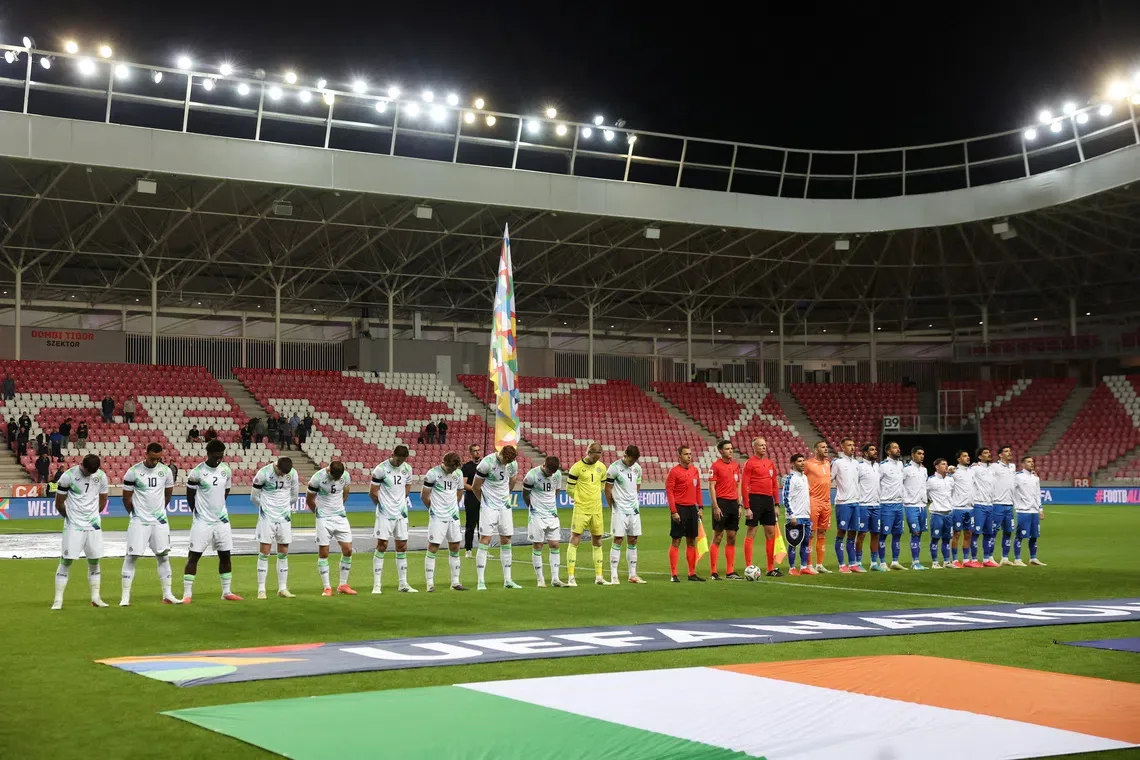
The Republic of Ireland football team defeated Israel 3-0 in a Nations League match in Debrecen, Hungary, but the game was overshadowed by political protests. Irish players wore black armbands, refused pre-match handshakes, and bowed their heads during the Israeli anthem to protest the Gaza conflict. Goalkeeper Gavin Bazunu withdrew from the squad, citing his personal belief that killing innocent people is wrong. The match was played on neutral ground due to the conflict.
 Reference image
Editorial responsibility
- No named human review is recorded for this page.
- Reports are grouped by semantic similarity and deterministic rules. Language models may assist titles, summaries, translation and cross-source analysis; the page reads the event directly, while its address stays stable when the title changes.
- Summary covers the current reports
Cross-source coverage
Reporting timeline
Ireland's protest against Israel in Nations League leaves 'feeling of bitterness and betrayal'
Ireland's national football team defeated Israel 3-0 in a Nations League match played in Debrecen, Hungary, but the victory was overshadowed by political protests. Irish players wore black armbands to honor those killed in the Gaza conflict, refused handshakes with Israeli players, and bowed their heads during the Israeli national anthem. The Irish Times described the event as leaving 'a feeling of bitterness and betrayal,' while the Irish Independent said Ireland 'scored points but won little.' Coach Heimir Hallgrimsson said his players showed support for the protest and raised awareness. Goalkeeper Gavin Bazunu refused to be in the squad, citing his conscience against the killing of innocent people. The match was played on neutral ground due to the conflict, and the return fixture is scheduled for Serbia on October 4. The article contrasts this with Ireland's 2022 matches against Ukraine, where no such mourning gestures were made.
Read sourceIreland players wear black armbands, skip handshakes in Nations League match against Israel
Republic of Ireland soccer players wore black armbands and refrained from the traditional pre-match handshake with their Israeli opponents during a UEFA Nations League match in Dublin. The gestures were a protest against the ongoing conflict in Gaza. One Irish player left the squad, while the remaining players voted to proceed with the match despite pressure from some groups to boycott the fixture entirely. Ireland manager Heimir Hallgrimsson commented on the situation, stating that in tough times you find your leaders. The match proceeded as scheduled, with the Irish team's actions drawing significant media attention and highlighting the intersection of sports and political protest.
Read sourceIreland captain refuses handshake with Israeli counterpart in Nations League political protest
In a Nations League match between Ireland and Israel on September 27, 2026, Irish captain Dara O'Shea refused to shake hands with Israeli captain Manor Solomon before the game, and the Irish starting lineup looked down during the Israeli national anthem. The Irish Football Association's David Courell had previously stated that players would not participate in parts of the pre-match ceremony due to Israel's role in the Gaza war. After the anthems, the teams did not exchange greetings. All Irish players wore black armbands to 'remember all those who have lost their lives in this conflict,' according to Courell. The match had been preceded by political controversy, with 160 Irish athletes signing an open letter urging the national team to boycott the two matches against Israel. The players voted in favor of playing, but backup goalkeeper Gavin Bazunu withdrew independently, stating he believed it was wrong to participate. The article notes that support for Palestinians is particularly strong in Ireland, and the Irish government has described the Gaza war as 'genocide,' a claim Israel denies.
Read sourceShow 2 older updatesHide older updates
Irish goalkeeper Gavin Bazunu boycotts Nations League match against Israel over Gaza conflict
Irish national team goalkeeper Gavin Bazunu has announced he will boycott the upcoming Nations League matches against Israel, citing his personal opposition to 'the atrocities in the region' amid the Gaza conflict. The 24-year-old Bolton Wanderers player stated on Instagram that his decision was based on his Christian faith and principles, emphasizing that his protest is directed against the killings of innocent people, not against the Israeli people or the Jewish community. The Irish team had previously decided against a full boycott after lengthy internal discussions, with a majority of players voting to play the matches on neutral ground in Hungary and Serbia. Irish coach Heimir Hallgrimsson noted growing public pressure in Ireland, which has strong pro-Palestinian sentiment. The Irish Football Association confirmed players will wear black armbands to honor all victims of the conflict and will refrain from participating in certain pre-match ceremonies.
Read sourceRepublic of Ireland players to wear black armbands for Nations League match against Israel
The Republic of Ireland football team will wear black armbands 'in recognition of all lives lost in the [Gaza] conflict' during their Nations League match against Israel in Hungary on Sunday, after a players' vote produced a 'significant majority' in favour of playing the fixture. Football Association of Ireland (FAI) chief executive David Courell confirmed that one player, goalkeeper Gavin Bazunu, withdrew from the squad in protest, stating his decision was based on his 'personal belief that the killing of innocent people is wrong.' The players also intend to make further gestures, including skipping some pre-match ceremonies and donating match fees to charity. The fixtures have been controversial due to the ongoing Israel-Gaza war, with a 'Stop The Game' campaign by Irish Sport for Palestine. Ireland manager Heimir Hallgrimsson described the situation as 'a situation you can't win,' while Israel FA's Shlomi Barzel said 'football has won' after the match was confirmed. The Irish government stated the decision to play rests with the FAI and UEFA.
Read source