Over 100 Israeli settlers attack West Bank village, block family return despite court order
More than 100 Israeli settlers attacked the Palestinian village of Jalud in the occupied West Bank on September 28-29, 2026, setting two homes of the al-Tubasi family on fire and preventing their return despite an Israeli High Court ruling. The family, escorted by Israeli forces, was forced to flee. Israeli Prime Minister Benjamin Netanyahu condemned the violence and called for prosecution of the rioters.
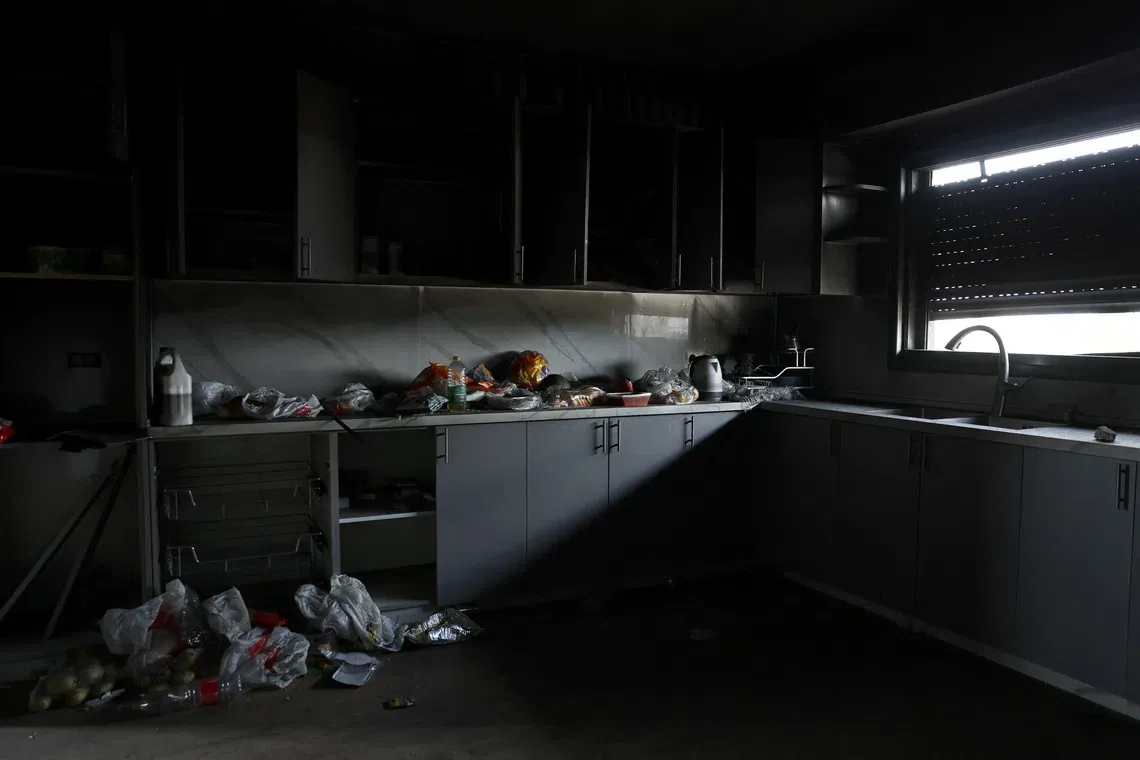 Reference image
Editorial responsibility
- No named human review is recorded for this page.
- Reports are grouped by semantic similarity and deterministic rules. Language models may assist titles, summaries, translation and cross-source analysis; the page reads the event directly, while its address stays stable when the title changes.
- Summary covers the current reports
Cross-source coverage
Common ground
- Settler violence in the West Bank is not random but a systematic, state-enabled pattern of land grabs and forced displacement.
- The Israeli government's condemnation of specific attacks is performative, as it funds, protects, and legitimizes the settlement enterprise.
- International complicity through arms sales, diplomatic cover, and economic support enables the occupation and displacement.
- The legal system fails Palestinians, with a conviction rate below five percent for settler violence, showing it's a policy choice, not a breakdown of law.
Points of contention
- Whether the displacement of 6,500 Palestinians since October 7th qualifies as 'ethnic cleansing' or is better described as localized, opportunistic land grabs.
- Whether the term 'ethnic cleansing' should require a specific demographic scale or can apply to targeted rural areas like Masafer Yatta and the Jordan Valley.
- Whether the Israeli security establishment's frustration with settler violence is a meaningful tension or just bureaucratic turf disputes.
- Whether the Palestinian Authority's security coordination with Israel is a symptom of occupation or a moral parallel that deepens the problem.
Blind spots
- The debate overlooks the economic dimension of settlement expansion, such as how sanctions on settlement products or divestment could create real leverage.
- Internal Israeli politics, including Netanyahu's balancing act between settler coalition partners and the security establishment, is underappreciated.
- The role of Israeli public opinion, which supports settlement expansion but also a two-state solution, is not fully explored as a societal factor.
- The Palestinian Authority's authoritarianism and loss of legitimacy, including canceling elections and arresting activists, is ignored as a complicating factor.
WorldAttention’s read
This debate reveals a deep divide over how to label the ongoing displacement in the West Bank—whether it's 'ethnic cleansing' or a 'slow-motion land grab'—but both sides agree it's a brutal, state-enabled process with international complicity. The key takeaway is that precision in language matters for effective action, but the real leverage lies in economic pressure and enforcing existing international laws, not just moral condemnation. The international community must move beyond calling this 'complex' and start holding all parties accountable, including Israel, the Palestinian Authority, and the nations arming the occupation.
Reporting timeline
Israeli Settler Attack in West Bank Blocks Palestinian Family From Returning Home
A coordinated attack by over 100 Israeli settlers in the occupied West Bank village of Jalud has resulted in a Palestinian family being blocked from returning to their home. The incident, described by Al Jazeera as a pogrom, has drawn widespread condemnation. Israeli Prime Minister Benjamin Netanyahu has called for the full prosecution of the extremist settlers involved, according to The Times of Israel and The Jerusalem Post. The New York Times reports the attack specifically prevented a Palestinian family from returning home, while the Financial Times notes the rampage involved more than 100 Israelis. The event highlights ongoing tensions and violence in the region.
Read sourceIsraeli settlers attack West Bank village, block Palestinian family's return despite court order
More than 100 Israeli settlers attacked the Palestinian village of Jalud in the occupied West Bank on Monday night, setting two homes of the al-Tubasi family on fire and preventing their return despite a High Court ruling. The family, escorted by Israeli forces, was forced to flee after settlers threw stones, slashed tires, and set vehicles ablaze. Israeli security forces protected the family but did not detain the attackers, according to Mahmoud al-Tubasi. The IDF described the family as victims of a 'nationalist crime' but said the mission was not completed due to violence. Israeli Prime Minister Benjamin Netanyahu condemned the attacks on security forces and called for prosecution of 'rioters,' while human rights groups accuse authorities of failing to enforce the law. The UN reports settler violence at an all-time high, with over 6,500 Palestinians displaced since 2023. The incident follows a strongly worded High Court decision criticizing the government's inaction against settler violence.
Read sourceIsraeli settlers attack West Bank village, block Palestinian family's return home
Multiple news outlets report that a large group of Israeli settlers attacked a West Bank village and prevented a Palestinian family from returning to their home. The New York Times reports that settlers stopped Israeli soldiers from returning the Palestinians to their home. CNN reports that over 100 Israeli settlers drove a Palestinian family from their home again, and that Israeli Prime Minister Benjamin Netanyahu blamed a 'handful of rioters' for the incident. The Financial Times describes the event as a rampage by more than 100 Israelis in a Palestinian town. A resident quoted by Yahoo News described the scene, saying 'Everything's broken.' The BBC reports that the settlers attacked the village and blocked the family's return.
Show 2 older updatesHide older updates
Israeli settlers attack Jalud village in occupied West Bank, Netanyahu condemns rioters
Multiple news outlets report that over 100 Israeli settlers attacked the Palestinian village of Jalud in the occupied West Bank, in what Al Jazeera describes as a pogrom. The attack blocked a Palestinian family from returning to their home. The New York Times, Financial Times, and BBC also covered the incident, noting the settlers went on a rampage. In response, Israeli Prime Minister Benjamin Netanyahu called for the full force of the law to be applied against the rioters, according to The Times of Israel. The event highlights ongoing tensions and settler violence in the occupied West Bank.
Read sourceOver 100 Israeli settlers attack Palestinian village in West Bank, military also targeted
On September 29, 2026, more than 100 radical Israeli settlers attacked the Palestinian village of Jaloud in the northern West Bank, attempting to prevent the Tubasi family from returning to their home. The family had been forced to leave in July due to repeated harassment. The Israeli military intervened, but settlers blocked roads, set buildings and vehicles on fire, and threw stones at security forces, injuring three police officers. Two rioters were arrested. Israeli President Isaac Herzog condemned the attacks as a 'moral stain and an attack on the rule of law,' calling for prosecution. Foreign Minister Gideon Saar and Prime Minister Benjamin Netanyahu also condemned the violence, with Netanyahu describing the perpetrators as a small group not representing law-abiding settlers. However, the article notes that according to human rights organization Yesh Din, conviction rates for violent settlers are below five percent. The report contextualizes the event within a broader pattern of settler violence, citing Israeli military data of 2.4 attacks per day and UN figures more than double that. Since October 7, 2023, over 1,100 Palestinians have been killed in the West Bank according to Palestinian health authorities.