Russia, Ukraine and US to Hold Trilateral Talks in Abu Dhabi on Nov. 10-11
Delegations from Russia, Ukraine and the United States are set to meet in Abu Dhabi on November 10-11 for their first trilateral negotiations since February, aimed at ending nearly five years of war. Washington is represented by envoys Steve Witkoff and Jared Kushner, Ukraine by negotiator Rustem Umerov alongside Presidential Office head Kyrylo Budanov, and Russia by Vladimir Medinsky. Postwar security guarantees, territorial control and de-escalation dominate an agenda clouded by continued Russian strikes on Ukrainian energy infrastructure and deep disagreements over NATO and the Donbas.
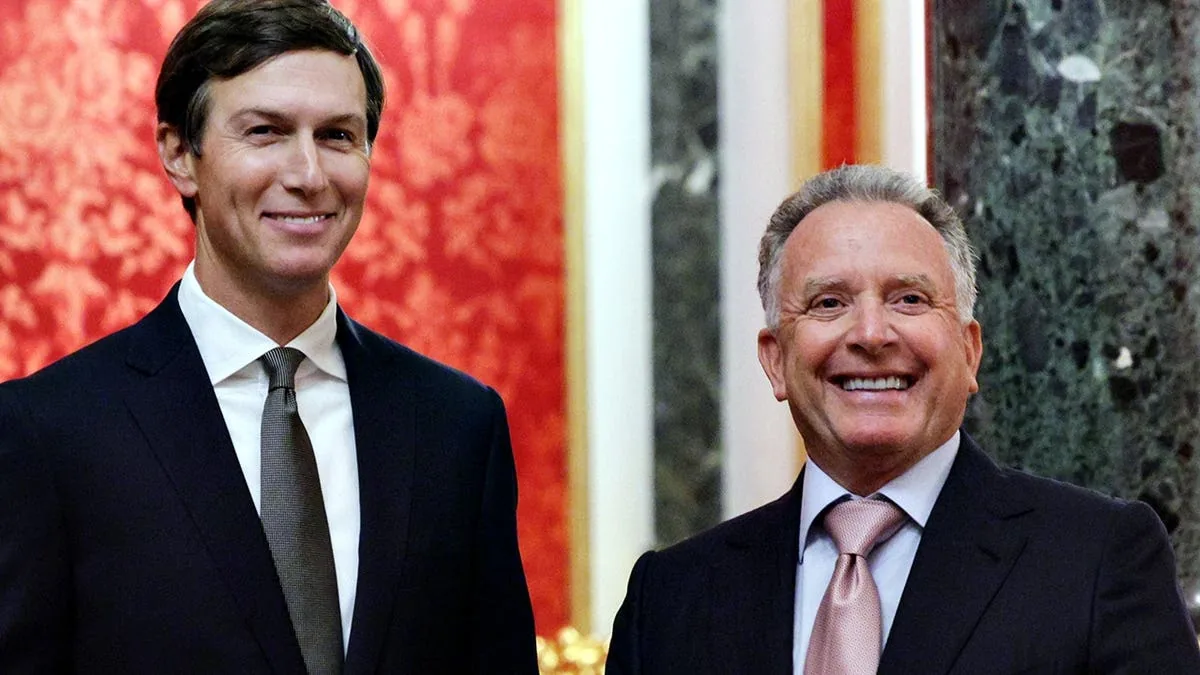 Reference image
Editorial responsibility
- No named human review is recorded for this page.
- Reports are grouped by semantic similarity and deterministic rules. Language models may assist titles, summaries, translation and cross-source analysis; the page reads the event directly, while its address stays stable when the title changes.
- Summary covers the current reports
Cross-source coverage
Common ground
- The Abu Dhabi talks are more about managing a stalemate than resolving the conflict.
- Any security guarantee without a clear, enforceable verification mechanism is meaningless.
- The negotiations and reporting exclude key voices, especially Ukrainians living under fire and Europeans.
- All parties at the table used arguments that were more about performance than measurable proof.
- The true test of any pause is whether it stops the violence, not who gets credit for hosting talks.
Points of contention
- Western and Regional disagreed on who benefits most from the pretense of peace talks: Moscow or Washington.
- Neutral insisted on forensic evidence for claims like the diesel deal and UAE motives, while others treated them as clear signals.
- Regional argued that skewed sourcing is itself a finding of engineered outcome, while Neutral said that leap requires more proof.
- Western and Regional clashed over whether moral clarity (Moscow is the aggressor) settles the question of who drives the diplomacy.
- They disagreed on whether a falsifier can be valid if the terms of enforcement are not public.
Blind spots
- No one named a baseline number for current strikes, making all proposed tests unfalsifiable in practice.
- The discussion largely treated Ukrainians as a moral symbol rather than as parties whose consent and views must be sought.
- No one seriously examined what the UAE or Gulf states expect to gain from hosting the talks.
- The debate overlooked the question of who actually counts the dead and damaged, which shapes any baseline.
- All sides focused on who benefits from a pause, but none asked what the pause costs the people living under it.
WorldAttention’s read
This roundtable exposed a shared skepticism that the Abu Dhabi talks are a genuine peace process, but also a shared failure to ground that skepticism in measurable terms. The group agreed that unverifiable security guarantees are hollow and that key voices are excluded, yet they split on whether Moscow or Washington is the main beneficiary of the pretense. The most honest moment came when participants admitted their own tests were soft and that no one had established a baseline for measuring violence. The final judgment is that Abu Dhabi manages a stalemate rather than resolving it, and any deal without transparent verification and without listening to Ukrainians is a receipt for territory, not peace.
Reporting timeline
Russia, US, Ukraine Set for Abu Dhabi Talks as Analysts Doubt Progress
Officials from Ukraine, Russia, and the United States are scheduled to meet in Abu Dhabi on Tuesday and Wednesday for trilateral negotiations aimed at ending nearly five years of war. The US delegation is led by envoys Steve Witkoff and Jared Kushner, Ukraine by foreign intelligence chief Rustem Umerov, and Russia by former culture minister Vladimir Medinsky. European officials from France, Britain, Germany, NATO, and the EU Commission are expected on site despite Kremlin objections. Analysts, including Ukrainian MP Oleksandr Merezhko and political scientist Arkady Moshes, expressed skepticism of tangible progress, citing Russian President Vladimir Putin's refusal to negotiate seriously and his fixation on Ukraine's destruction. Key sticking points include Ukraine's territorial integrity, security guarantees, and NATO membership. Trump has blamed Zelenskyy for holding up peace efforts and urged Kyiv to cede territory, while critics note a US deal to buy Russian diesel.
Read sourceRussia, Ukraine, U.S. Prepare Abu Dhabi Talks Amid Clash Over Postwar Security Guarantees
Russia, Ukraine, and the United States are preparing for November 10-11 trilateral talks in Abu Dhabi, with security arrangements, de-escalation, and humanitarian measures on the agenda. U.S. envoy Steve Witkoff announced the dates, and he and Jared Kushner are expected to represent Washington. Moscow, via Kremlin spokesperson Dmitry Peskov, demands reciprocal security guarantees and has ruled out European participation in the talks. Ukrainian President Volodymyr Zelenskyy warned that a broader Russia-Europe security agreement could be dangerous and said discussions on ending the war should precede guarantees for Ukraine and any wider European-Russian arrangement. Russia's Foreign Ministry has rejected Western military deployment in Ukraine, while Putin's reported demands include control of the entire Donbas, a smaller Ukrainian military, and an end to Ukraine's NATO ambition. Kyiv seeks an energy truce and Black Sea de-escalation after November 7 attacks damaged energy infrastructure. Previous Abu Dhabi rounds produced limited humanitarian progress, including a 314-captive exchange.
Russia, Ukraine Clash Over Postwar Security Guarantees Ahead of Abu Dhabi Talks
Russia, Ukraine, and the United States are preparing for trilateral talks in Abu Dhabi on November 10-11, with security arrangements, de-escalation, and humanitarian measures on the agenda. Moscow is demanding reciprocal security guarantees for Russia as well as Ukraine, while Kyiv insists that discussions on ending the war and securing Ukraine's protection must come first. Kremlin spokesperson Dmitry Peskov ruled out European participation in the negotiations, while Ukrainian President Volodymyr Zelenskyy warned that a broader Russia-Europe security agreement could be dangerous. U.S. envoy Steve Witkoff and Jared Kushner are expected to represent Washington. The talks come amid continued Russian attacks on Ukrainian energy infrastructure, which Kyiv says are intended to pressure Ukraine before the negotiations. Territorial disputes, including Russia's demands for control of the Donbas and an end to Ukraine's NATO ambitions, remain unresolved.
Show 2 older updatesHide older updates
Ukraine official voices 'restrained optimism' ahead of trilateral talks with Russia, US
Kyrylo Budanov, head of Ukraine's Presidential Office, expressed 'restrained optimism' that trilateral negotiations next week could advance toward an eventual meeting between Volodymyr Zelenskyy and Vladimir Putin. Ukrainian, Russian and American delegations will meet in Abu Dhabi on Nov. 10-11, the first trilateral talks since February, focusing on postwar security guarantees for Ukraine and Russia. Budanov said all parties wanted the meeting, indicating certain preconditions, and noted the negotiations are 'not the last.' U.S. envoys Steve Witkoff and Jared Kushner are expected to represent Washington, while Russia's delegation will be led by Vladimir Medinsky. The talks follow strain in U.S.-Ukraine relations, including a Trump-announced deal for Russian diesel supplies and SpaceX limits on Ukraine's Starshield network. Budanov said Russia is intensifying energy infrastructure strikes to create political pressure and social dissatisfaction in Ukraine.
Zelenskyy aide voices restrained optimism ahead of US-Ukraine-Russia talks in Abu Dhabi
Ukrainian President Volodymyr Zelenskyy's chief of staff, Lieutenant General Kyrylo Budanov, discussed expectations for trilateral talks involving the United States, Ukraine, and Russia set to take place in Abu Dhabi the following week. In an interview with CBS News' Aidan Stretch, Budanov expressed restrained optimism about a possible eventual meeting between Putin and Zelenskyy, while indicating that the current negotiations are not the last round. The Kremlin said Russian diplomats and military officials would join the talks with the US and Ukraine. Separate reporting noted European alarm over US plans for a security deal with Russia.
Read source