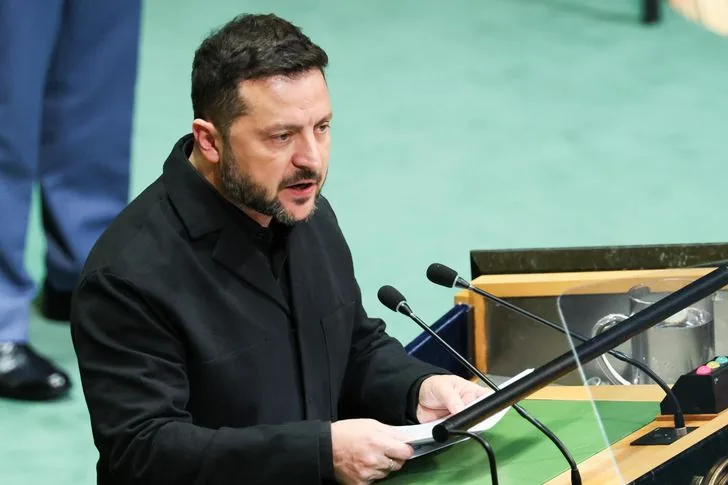
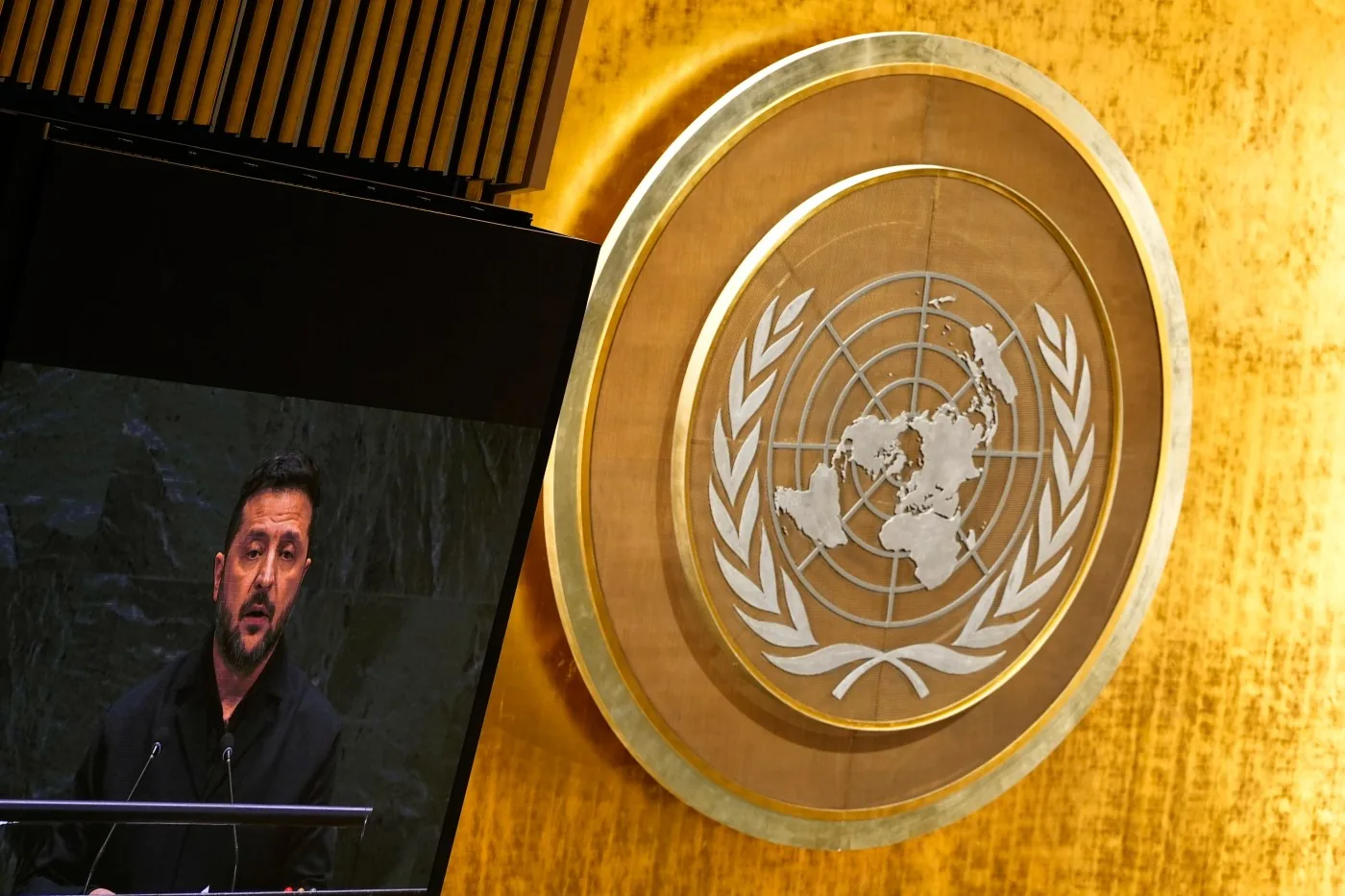
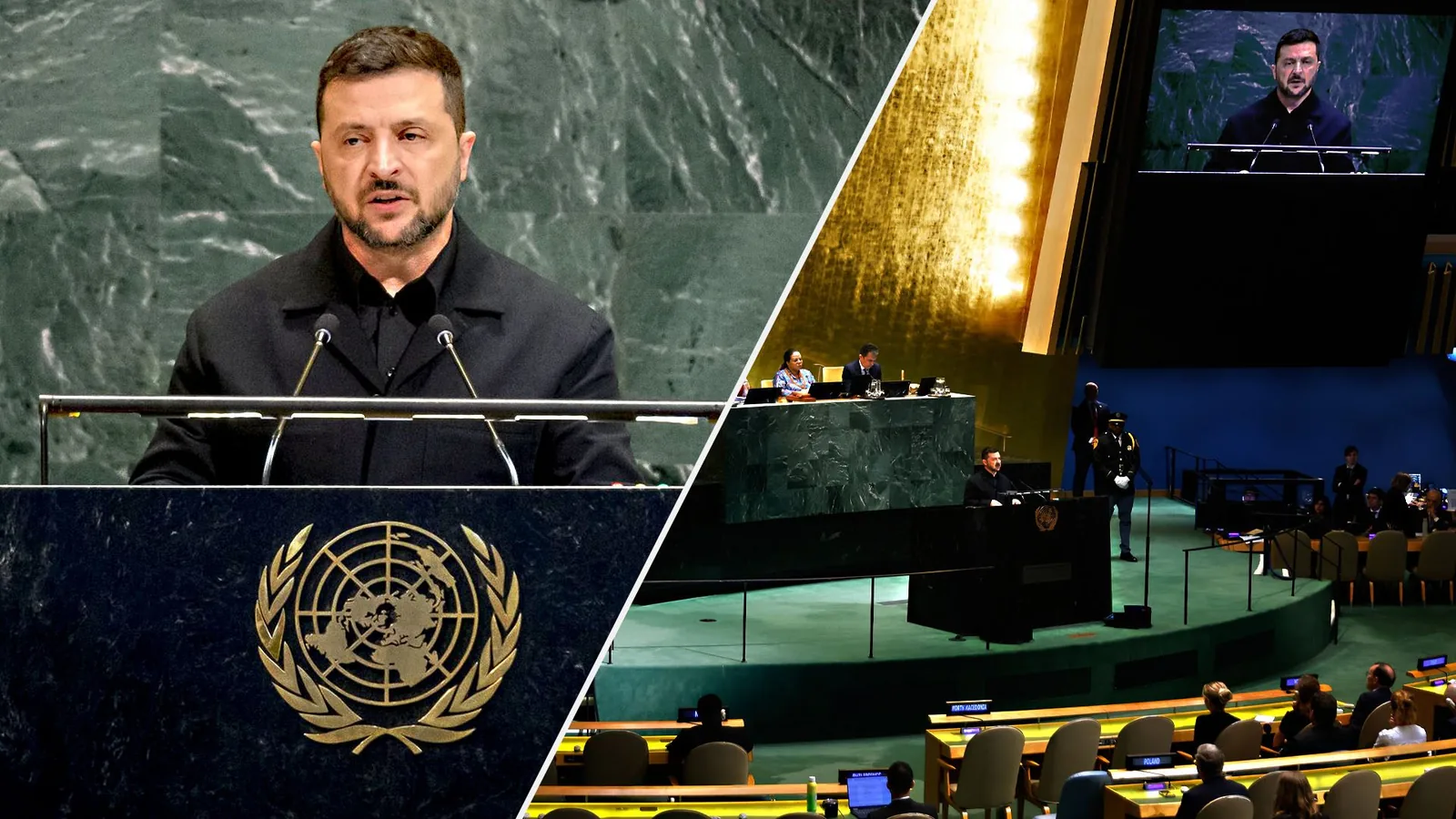
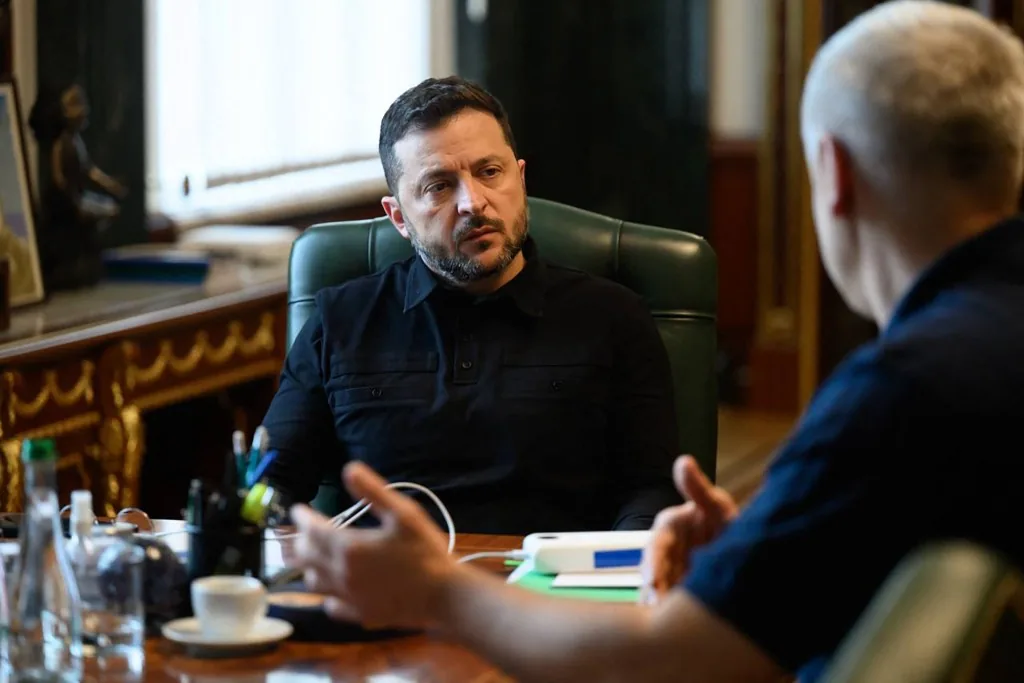
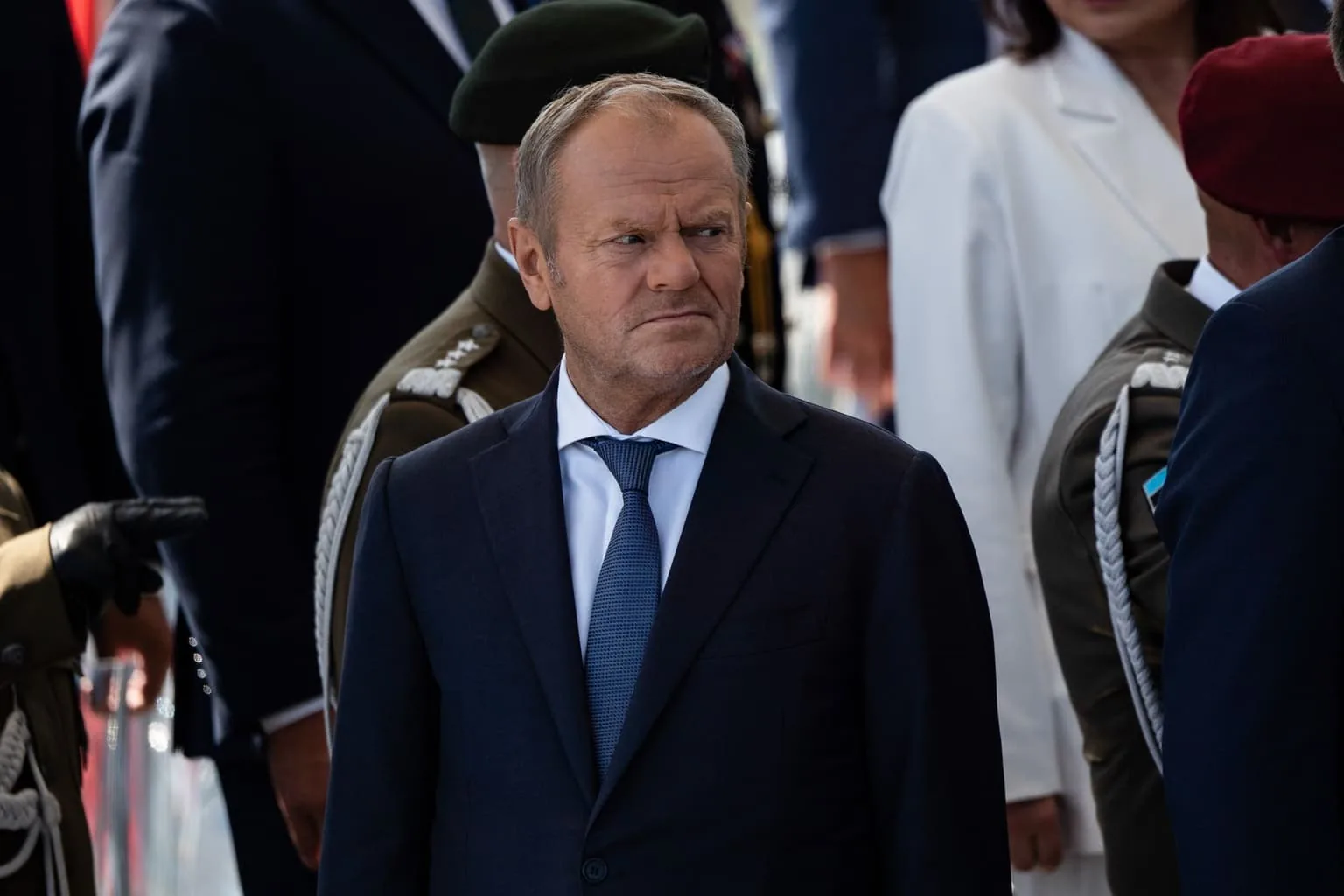
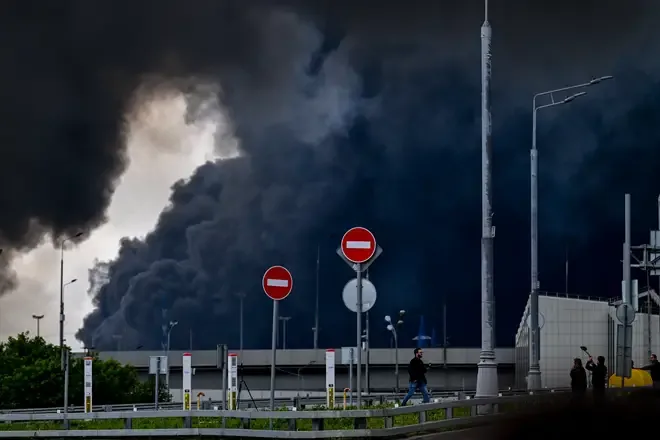
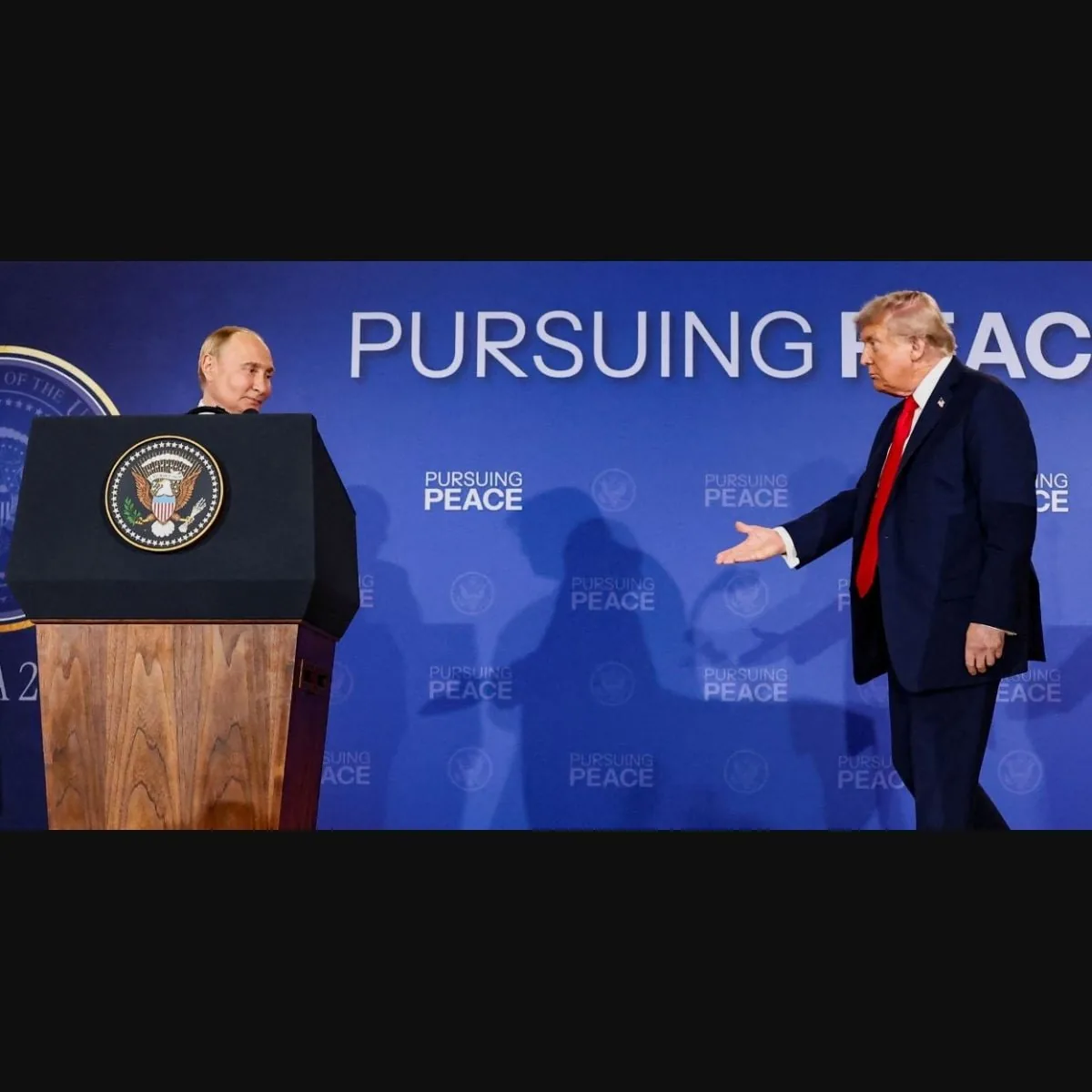
Ukrainian President Volodymyr Zelenskyy warned airlines that Russian airspace is becoming completely unsafe due to Ukraine's drone attacks, effectively closing it de facto. He stated Ukraine does not threaten civilian aviation but that drones will be so numerous airlines must take this into account. Russian President Vladimir Putin labeled the drone campaign "state terrorism" and ruled out negotiations with Kyiv. Zelenskyy recently threatened to deploy up to 1,000 long-range drones daily.
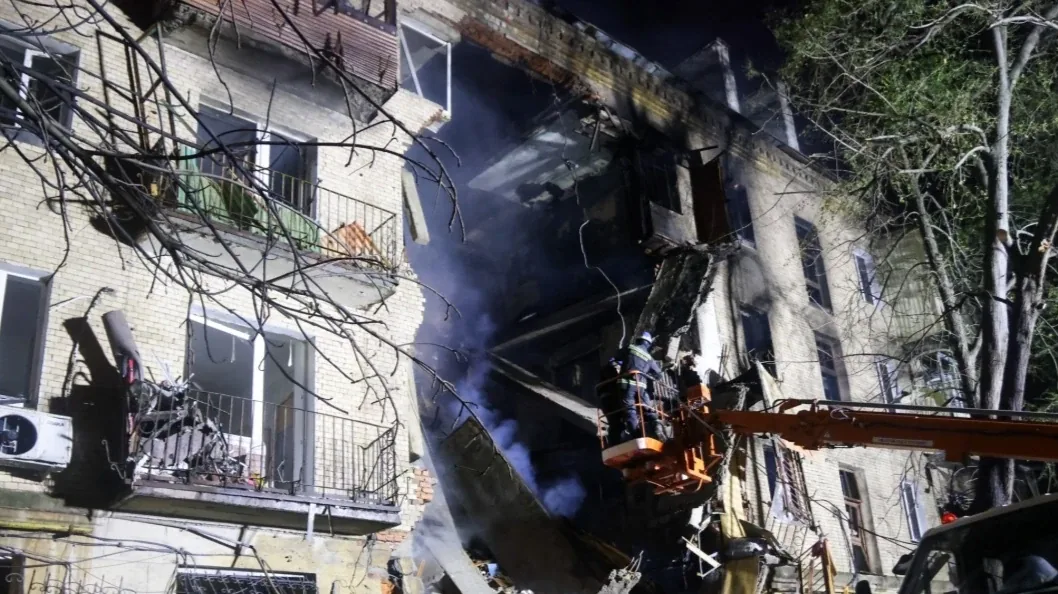
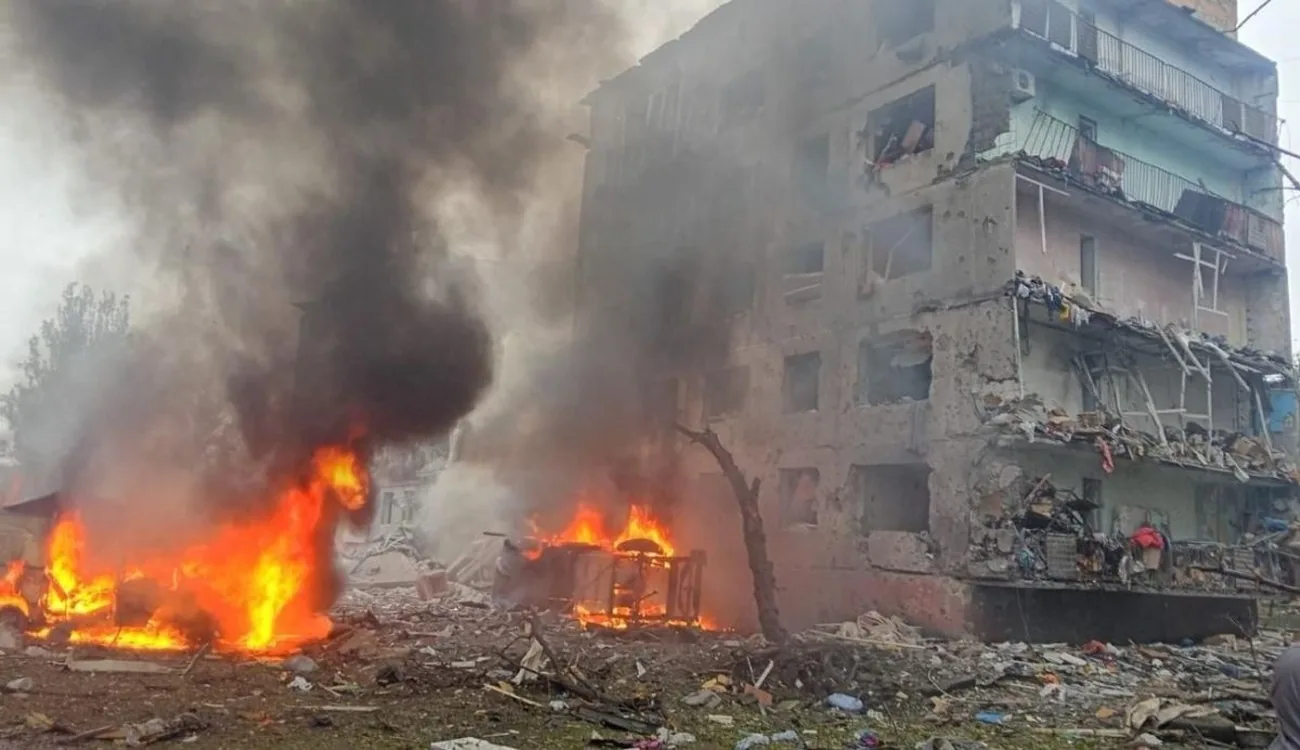
On August 19-20, 2026, Russia launched massive ballistic missile strikes on Kyiv and surrounding areas, killing at least 12 people and injuring 34. Residential buildings, a medical facility, and an educational institution were hit. In occupied Crimea, Sevastopol cut power after Ukrainian strikes on energy infrastructure, exacerbating weeks of outages and a fuel crisis. Both sides have intensified attacks, with Ukraine lacking sufficient air defense missiles. Kyiv declared a day of mourning.
UK Prime Minister Andy Burnham made his first overseas trip to Kyiv on Ukraine’s 35th Independence Day, meeting President Zelenskyy and co-chairing the Coalition of the Willing. He authorized MBDA to declassify UK components of SCALP/Storm Shadow missiles, enabling Ukraine to locally assemble long-range missiles with a 550 km range. Russia accused the UK of escalating the war, warning of consequences. The visit underscores continued Western military support amid heightened tensions.
Former Ukrainian Defense Minister Mykhailo Fedorov, dismissed in July 2026, publicly called for holding elections during the ongoing war with Russia, arguing that democracy cannot be held hostage by Moscow. His statement challenges President Zelenskyy, who has suspended elections under martial law since Russia’s 2022 invasion. Fedorov’s call follows his sacking, which sparked protests in Kyiv, and comes as Zelenskyy nominated Yevhen Khmara as the new defense minister. The demand highlights growing political tensions within Ukraine’s wartime leadership.
German Foreign Minister Johann Wadephul made an unannounced visit to Kyiv on August 22, 2026, ahead of Ukraine’s 35th Independence Day, reaffirming Germany’s support in Ukraine’s defensive war against Russia. He condemned Russian attacks on civilians and energy infrastructure, noting July and August were the deadliest months for Ukrainian civilians in over four years. Wadephul pledged 50 million euros in humanitarian aid and additional winter support. The visit coincided with a Russian drone attack on a Kryvyi Rih shopping center killing at least 16 people.
Ukraine launched a series of long-range drone strikes targeting Russian oil refineries, including Lukoil's Permnefteorgsintez facility in the Perm region (over 1,600 km from the border), Novokuybyshevsk refinery in Samara Oblast, and Afipsky refinery in Krasnodar Krai. Ukrainian President Zelenskyy confirmed the attacks, which caused fires and are part of a sustained campaign to disrupt Russian fuel supplies and military logistics. Russian air defenses intercepted some drones but reported damage and no injuries. The strikes have contributed to gasoline and diesel shortages in Russia over the past three months.
Ukrainian President Volodymyr Zelenskyy made his first official visit to Belgrade, Serbia, on August 8-9, 2026, meeting President Aleksandar Vucic. The visit challenges Russia’s traditional influence over Serbia, which has refused EU sanctions on Moscow but provided non-military aid to Ukraine. Talks covered economic ties, EU relations, and security. Ukraine reaffirmed Serbia’s claim to Kosovo in exchange for Serbia’s recognition of Ukraine’s territorial integrity. The visit coincides with intensified Russian strikes on Kyiv, killing at least four people.
Ukraine conducted long-range drone strikes on several major Russian oil refineries, including the Slavneft-Yanos refinery in Yaroslavl, the Taneco refinery in Tatarstan, and the Orsknefteorgsintez refinery in Orenburg. The attacks caused fires, injuries, and significant damage, with all 11 of Russia’s largest refineries now hit at least once. Ukraine aims to disrupt Russia’s oil revenues and fuel supply for its war effort, while Russia has intensified retaliatory strikes on Ukrainian energy infrastructure.
Since mid-July 2026, Ukraine has launched repeated drone strikes on logistics centers of Wildberries, Russia’s largest online retailer, damaging or destroying 17–27% of its warehouse capacity. The attacks, including a record-distance strike on a facility in Yekaterinburg 1,700 km from the border, have caused direct damages of €1–2.1 billion and losses of €2.3–3 billion for sellers. Sales at pickup points have dropped 50%, threatening tens of thousands of small businesses and potentially forcing a government bailout or triggering bankruptcies.
On August 12-13, 2026, Ukraine launched a major drone and missile attack on the Russian Black Sea port of Novorossiysk, damaging key grain export terminals and at least four Russian warships, including frigates Admiral Essen and Admiral Makarov. The attack killed three civilians, including a child, and injured 24. Ukrainian President Zelenskyy confirmed the operation, which targeted military and economic infrastructure. The strikes disrupted global grain supplies, halted operations at major terminals, and drove up wheat prices, escalating the conflict’s impact on Black Sea shipping.
Russia launched a massive overnight attack on Ukraine with over 70 missiles and 280 drones, striking Kyiv, Lviv, Kryvyi Rih, and other cities. At least eight people were killed, including three children, and dozens were injured. An unknown object—likely a Russian missile—entered Polish airspace, creating a 10-meter crater near Tarnawa-Kolonia. Poland scrambled fighter jets and placed air defenses on alert. Ukraine retaliated with a drone strike on a Russian Wildberries warehouse in Penza. President Zelenskyy renewed calls for Western Patriot air defense systems.
The U.S. Senate passed the Lindsey O. Graham Sanctioning Russia and Iran Act of 2026 in an 86-11 bipartisan vote, imposing sanctions on Russia over its Ukraine invasion and granting President Trump authority to impose up to 100% tariffs on top Russian oil and gas buyers, including China, India, Azerbaijan, Hungary, and Slovakia. The bill also targets Russian officials, oligarchs, and Iran’s energy sector. It now heads to the House, facing uncertain prospects due to concerns over expanded presidential tariff powers.
On July 31–August 1, 2026, Kyiv was hit by a massive Russian ballistic missile attack, killing at least four people and injuring 15, including teenagers. Over ten explosions damaged residential and commercial buildings, setting cars on fire. Ukrainian President Zelenskyy had warned of the impending attack and urged Western allies, including the US, to deliver Patriot air defense missiles. Poland scrambled fighter jets as a precaution. The attack follows a pattern of recent strikes on the capital.
A video from Kherson, Ukraine, shows a suspected Russian drone chasing a 52-year-old vegetable vendor across a market for nearly a minute before exploding near him, causing shrapnel injuries and a concussion. Ukrainian President Zelenskyy condemned the attack as a deliberate "drone safari" on civilians, part of a systematic pattern of war crimes. UN investigators confirm ongoing targeted attacks on non-combatants in the region, where Russian and Ukrainian forces face off across the Dnipro River.
Ukraine launched multiple drone attacks on Wildberries logistics centers in Russia’s Krasnodar and Stavropol regions, injuring at least eight people and causing massive fires. President Zelenskyy framed the strikes as “long-range sanctions” targeting facilities supplying the Russian military with drone components and navigation gear. The Kremlin condemned the attacks as terrorism. Wildberries, Russia’s largest online retailer, suffered an estimated $2 billion in damage, with about 7% of its warehouse capacity destroyed. The strikes are part of Ukraine’s strategy to bring the war back to Russian territory.
Ukrainian President Zelenskyy announced that President Trump agreed to grant Ukraine a license to produce Patriot PAC-3 MSE missiles, a capability currently held only by Japan. However, Trump later backtracked, stating the U.S. had not agreed and expressing concerns about giving away advanced technology. The reversal, reported by multiple outlets, deals a significant setback to Ukraine’s efforts to address critical missile shortages amid its war with Russia. Zelenskyy said Ukraine would proceed based on the initial commitment, but building production infrastructure would take years.
On July 26, 2026, Iran condemned a Ukrainian attack on an Iranian commercial vessel in the Caspian Sea, killing one sailor and injuring another. Ukraine’s President Zelenskyy confirmed strikes on Russian warships and Iranian-linked cargo vessels, accusing Russia of sharing satellite data with Iran for Middle Eastern strikes. The incident escalates tensions amid Iran’s drone supply to Russia, coinciding with Saudi strikes on Houthis, U.S. naval blockade, and Israeli threats against Iran’s nuclear program.
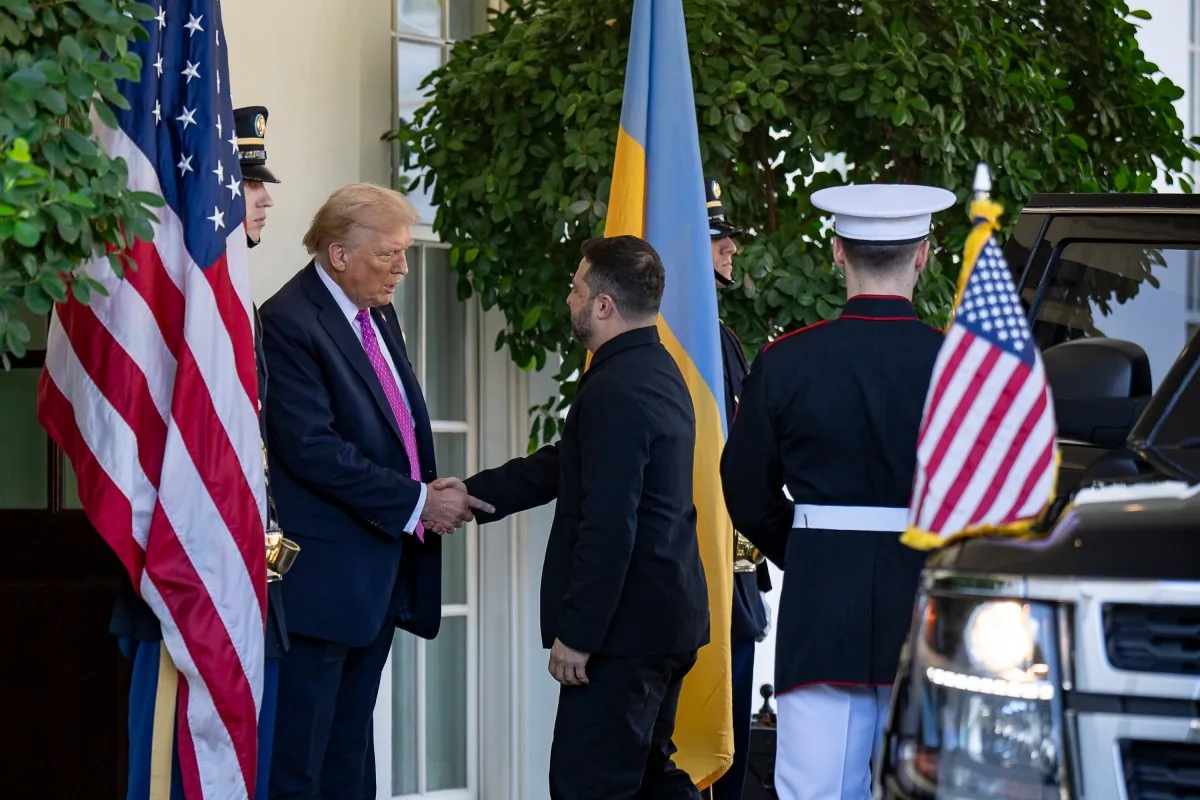
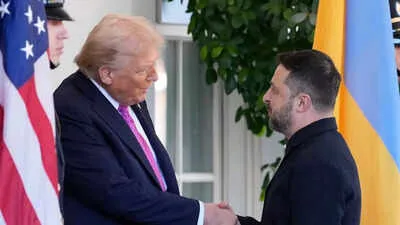
Ukrainian President Volodymyr Zelensky met with U.S. President Donald Trump at the White House on July 28, 2026, ahead of Senator Lindsey Graham’s funeral, focusing on Ukraine’s licensed production of Patriot missile systems. Separately, Zelensky met Raytheon executives in Kyiv and gave an interview to far-right influencer Laura Loomer, who apologized for past anti-Ukraine remarks. Trump shared Loomer’s clip on Truth Social, signaling shifting MAGA attitudes. Zelensky also warned that Russia is sharing satellite imagery of U.S. bases with Iran.
Journalists from the 'Telebatchennya Toronto' project have located Ukraine's exiled former president Viktor Yanukovych, now 76, living in the Russian city of Sochi. He resides on a three-hectare estate with multiple houses, a garden, a chapel, and a pond. His wife Lyubov owns extensive land and properties in Russia, while his daughter-in-law Alena possesses an $18 million home near Moscow. Personal security is reportedly provided by former Ukrainian State Security Service employees now serving in Russia's Federal Protective Service, who are wanted in Ukraine. Yanukovych fled to Russia in 2014 after the Euromaidan protests ousted him from power. He has been sentenced in absentia in Ukraine to a total of 28 years in prison. The article also recounts his political career, his close ties to Russia, and his role in extending the lease for Russia's Black Sea Fleet base in Crimea.
Ukraine's military confirmed an overnight drone strike on the Ryazan oil refinery in Russia, causing a fire at the facility. The refinery, with an annual capacity of 17 million tonnes, produces gasoline, diesel, aviation fuel, and other petroleum products. The attack occurred hours after Ukrainian President Volodymyr Zelenskyy met with former U.S. President Donald Trump, though the article does not explicitly link the two events. The strike is part of Ukraine's ongoing campaign to disrupt Russian energy infrastructure and reduce fuel supplies for the Russian military. The Ryazan refinery is a major asset for Russia's domestic fuel market and military logistics.
The United Kingdom has authorized the transfer of intellectual property rights for the "Stone Cloak" electronic warfare system to Ukraine, enabling domestic mass production of tablet-sized radar jammers for drones. These devices help Ukrainian UAVs bypass Russian air defenses during long-range strikes. Thousands of units have already been exported. In exchange, UK analysts receive battlefield telemetry to refine future weapons. The deal was announced during talks between UK Prime Minister Andy Burnham and President Volodymyr Zelenskyy, reaffirming continued support for Ukraine’s ongoing attacks on Russian infrastructure.
Ukrainian President Zelenskyy dismissed Defense Minister Mykhailo Fedorov after six months, part of a broader government reshuffle following the Prime Minister's resignation. Fedorov, a modernizer credited with drone warfare successes and anti-corruption reforms, faced internal conflicts with military leadership. His removal sparked large protests in Kyiv and other cities, with accusations of infighting and fears of destabilizing the war effort against Russia. No successor has been named.
Ukrainian President Volodymyr Zelenskyy met with US President Donald Trump at the White House on July 28, 2026, marking a significant improvement in their relationship following a previous scandal. According to journalist Alina Quast, even prominent MAGA influencers are now changing their stance on Ukraine, indicating a notable shift within Trump's political base. The meeting suggests a potential realignment of US policy toward Ukraine under the Trump administration, with the MAGA camp's traditionally skeptical or hostile view of Ukraine softening. The article, published by Die Welt, highlights this as a 'remarkable turnaround' in bilateral relations and domestic political dynamics.
Ukrainian President Volodymyr Zelenskyy visits Washington to meet President Donald Trump, warning that Russia may deploy 30,000 North Korean troops to the war. Zelenskyy also claims Russia is providing Iran with satellite surveillance of Gulf states and US bases. Ukraine struck an Iranian cargo ship in the Caspian Sea, accusing it of carrying military supplies from Iran to Russia. The article notes Trump's domestic struggles and his potential need for a diplomatic win, as he also prepares to meet Israeli Prime Minister Benjamin Netanyahu. Domestically, the article covers New York Mayor Zohran Mamdani's proposed city-owned grocery stores, the Fed's uncertain rate decision, and Wisconsin gubernatorial candidate Francesca Hong's progressive platform.
Finland has closed part of its airspace and severely restricted maritime traffic off its southern coast near the Russian border due to the danger of stray Ukrainian drones. The measures aim to allow safe countermeasures and protect bystanders. The background involves repeated incidents where Ukrainian military drones, en route to targets in Russia, entered the airspace of NATO states including Finland, Estonia, Latvia, Lithuania, and Poland. In March, several Ukrainian drones crashed east of Kouvola, Finland; a drone hit a power plant in Estonia; and a drone exploded in Latvia. Ukraine and NATO states blame Russian jammers for the course deviations. Estonian Defense Minister Margus Tsahkna speculated that Russia aims to split the West and weaken support for Ukraine. The article also notes that Ukrainian President Zelenskyy is visiting the USA for a meeting with President Trump, while Russian President Putin has increased troop strength for the third time this year and plans to send wounded soldiers back to the front faster.
Ukrainian President Volodymyr Zelenskyy is set to meet U.S. President Donald Trump at the White House on Tuesday as the U.S. war against Iran and Russia's full-scale invasion of Ukraine show signs of converging. The meeting comes after Ukraine launched an attack on an Iranian commercial vessel in the Caspian Sea on Saturday, killing one sailor and injuring several others. Iran has threatened retaliation, with its foreign minister stating the attack 'cannot go unanswered.' Zelenskyy defended the strike, claiming Ukraine hit vessels used in military cargo shipments involving Iran. Analysts describe the incident as a significant collision of the two conflicts, though the U.S.-Iran military exchanges have recently de-escalated. Ukraine's foreign minister dismissed Iran's threats as unjustified, accusing Tehran of being an accomplice to Russian aggression by supplying drones used against Ukraine since 2022.
Far-right U.S. influencer Laura Loomer, a Trump ally known for pro-Russian rhetoric, visited Ukraine and met President Zelenskyy. After witnessing evidence of Russian atrocities in Bucha and experiencing an air raid in Kyiv, she publicly apologized for being "propagandized by Russian media" and downplaying Ukraine's suffering. Zelenskyy’s office welcomed the visit as a counter to Russian propaganda. Loomer’s reversal is significant given her influence on Trump and past columns for Kremlin-sponsored RT.
UK Prime Minister Andy Burnham hosted Ukrainian President Volodymyr Zelenskyy at Portsmouth Naval Base, his first foreign leader visit since taking office. Burnham reaffirmed unwavering support for Ukraine, announcing the transfer of intellectual property for the 'Stone Cloak' drone jammer to enable Ukrainian mass production. The leaders met 200 Ukrainian personnel training in Exercise Sea Breeze for Black Sea missions. The UK’s total aid to Ukraine has reached £25 billion since Russia’s 2022 invasion.
Israeli Prime Minister Benjamin Netanyahu and Ukrainian President Volodymyr Zelenskyy are traveling to Washington, D.C., to attend the funeral of the late U.S. Senator Lindsey Graham, who died on July 11 from an aortic dissection. Both leaders plan to meet separately with President Donald Trump during their visits. Netanyahu aims to discuss Israel's security and the ongoing Iran war, which is currently in a pause after recent U.S. strikes. Zelenskyy's visit comes amid discussions of new peace proposals to end Russia's full-scale invasion of Ukraine. The two conflicts overlapped when Ukraine struck an Iranian commercial vessel in the Caspian Sea, which Kyiv said was transporting weapons to Russia. Graham, a close ally of both leaders, had just returned from a trip to Ukraine before his death. Two funerals are planned: one in Washington on Tuesday and another in South Carolina.
The Ukrainian parliament ratified a free trade agreement with Turkey on July 14, 2026, concluding nearly two decades of negotiations. The deal, signed in February 2022, aims to boost bilateral trade toward a $10 billion target. It features phased tariff liberalization: Turkey will immediately eliminate tariffs on 93.4% of Ukrainian industrial goods and 7.6% of agricultural products, while Ukraine will lift tariffs on 56% of Turkish industrial goods and 11.5% of agricultural products, with longer transition periods for sensitive sectors. The agreement enters into force amid Russia's full-scale invasion, which has reversed Ukraine's traditional trade surplus and shifted export composition toward raw commodities like grain and sunflower oil. A special clause allows both sides to review provisions after ratification. The deal is expected to encourage Ukrainian processing capacity but poses risks for Ukrainian industries facing high energy costs and wartime disruptions.
1 reports · 1 sources · Updated
Periodic recap
What changed for this subject in each tracking window — generated from matched events, delta-first.
→· 1 event in window
Ukraine launched a new wave of long-range drone strikes against oil refineries deep inside Russia, with President Zelenskyy publicly confirming the operations. The targets included facilities in the Perm, Samara, and Krasnodar regions, with the Perm target located over 1,600 km from the border. Russia reported intercepting some drones but acknowledged property damage. The sustained campaign has contributed to gasoline and diesel shortages in Russia over the past three months.
Zelenskyy confirmed Ukraine's long-range drone strikes on multiple Russian oil refineries, including a facility in Perm over 1,600 km from the border.
The targets were Lukoil's Permnefteorgsintez, the Novokuybyshevsk refinery, and the Afipsky refinery, all of which caught fire.
Russia reported intercepting some drones and acknowledged property damage but no injuries.
The sustained campaign over the past three months has led to gasoline and diesel shortages within Russia.
Earlier recaps
→· 1 event in window
UK Prime Minister Burnham made his first overseas trip to Kyiv on Ukraine's Independence Day, meeting Zelenskyy and co-chairing the Coalition of the Willing. Burnham authorized the declassification of UK components of the Storm Shadow missile, enabling Ukraine to locally assemble long-range missiles with a 550 km range. Russia immediately accused the UK of escalating the war and warned of consequences.
→· 1 event in window
Only one event was recorded this period. German Foreign Minister Wadephul made a surprise visit to Kyiv on the eve of Ukraine's Independence Day, reaffirming Germany's support for Ukraine's defensive war and announcing 50 million euros in humanitarian aid and winter support. He condemned Russian attacks on civilians and energy infrastructure, noting that recent civilian casualties are the worst in over four years. During the visit, a Russian drone strike on a shopping center in Kryvyi Rih killed at least 16 people.
→· 1 event in window
Only one event was recorded this period. Russia launched a large-scale ballistic missile attack on Kyiv, killing at least 12 people and injuring 34, with multiple civilian facilities damaged. Kyiv declared a day of mourning. The attack underscores the escalating intensity of strikes on both sides amid Ukraine's shortage of air defense missiles.
→· 1 event in window
Only one event was recorded this period. Dismissed former Ukrainian Defense Minister Fedorov publicly called for wartime elections, directly challenging President Zelenskyy's suspension of elections under martial law. The call follows his sacking, which sparked protests in Kyiv, and highlights growing political tensions within Ukraine's wartime leadership.
→· 1 event in window
Only one event was recorded this period. Ukraine has carried out sustained drone strikes against the logistics network of Wildberries, Russia’s largest online retailer, damaging 17–27% of its warehouse capacity. The attacks have reached deep into Russian territory, including a record-distance strike on a facility in Yekaterinburg, causing billions of euros in losses and threatening tens of thousands of small businesses.
Tracked events
Events matched to this subject by the tracking pipeline, with signal scores.