Ukraine Says Starlink Speed Limits Disrupted Drone Missions as US Denies Ordering Curbs
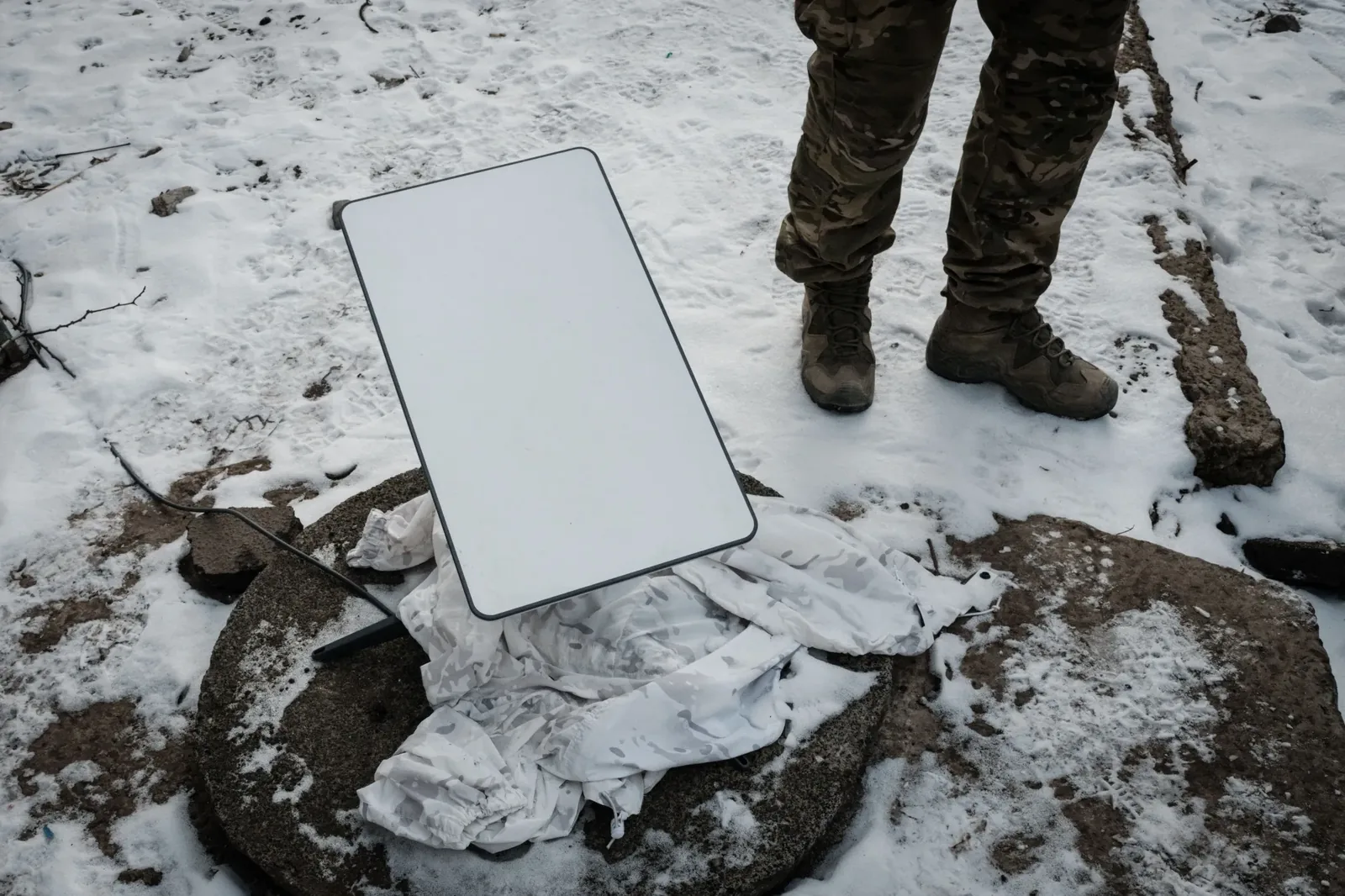
Ukraine reported that SpaceX imposed speed limits on Starlink/Starshield terminals around October 14, 2026, restricting drones to 100mph (160km/h) and disrupting battlefield missions, including interception of Russian Shahed drones. Reuters, citing US and Western officials, reported the order came from inside the White House; President Trump denied it, Elon Musk said Starshield is US-government controlled, and a bipartisan group of senators demanded a Pentagon inspector general investigation. Connectivity was partially restored, but Ukraine said limits persisted.
 Reference image
Editorial responsibility
- No named human review is recorded for this page.
- Reports are grouped by semantic similarity and deterministic rules. Language models may assist titles, summaries, translation and cross-source analysis; the page reads the event directly, while its address stays stable when the title changes.
- Summary covers the current reports
Cross-source coverage
Common ground
- A private company controlled critical military infrastructure during a war, and a Ukrainian official had to publicly ask for a change.
- Depending on a foreign commercial provider for essential defense creates serious risk, because the provider can change terms or cut service.
- The current system has no clear authority to hold a private satellite operator accountable when it affects a country's defense.
- The alternative to using Starlink in 2022 was not a ready-made sovereign system, so Ukraine faced a real tradeoff between speed and control.
- The incident shows that interdependence in global infrastructure often means leverage for whoever owns the pipes.
Points of contention
- Whether the speed limit was deliberately imposed, a technical glitch, or ordered by a government remains unproven.
- Whether the main lesson is about commercial dependence, a policy choice made over decades, or simply a desperate wartime necessity.
- Whether a buyers' consortium can create real leverage over a company like SpaceX, or whether it is just a bigger club with no enforcement power.
- Whether the 161 km/h figure is a reliable fact or just an unverified official complaint repeated until it sounds true.
- Whether the failure was mainly a procurement and legal problem, a sovereignty problem, or a broader failure of the Western model.
Blind spots
- No one fully priced what Ukraine would have lost in 2022 without Starlink, such as drone reconnaissance at scale.
- The discussion focused on satellites but ignored other shared infrastructure like undersea cables, payment systems, and cloud servers.
- The Global South was mostly discussed as a warning, not as a group whose interests and choices should shape any solution.
- No one explained how a new rule or consortium would actually enforce penalties on a company that can reflag to another country.
- The debate treated the incident as a single event, but did not explore how repeated incidents could change military planning over time.
WorldAttention’s read
The roundtable agreed that the Starlink speed-limit incident exposed a real and dangerous problem: a private company can hold leverage over a nation's defense, and no clear authority can hold that company accountable. They disagreed on whether the cause was deliberate, accidental, or ordered by a government, and on whether the deeper lesson is about commercial dependence, policy choices, or wartime desperation. The strongest shared insight is that interdependence often becomes leverage, and leverage eventually gets used. The unresolved question is what to do about it, because no one named a realistic enforcer. A buyers' consortium might help, but only if it includes major countries beyond the West and only if the seller needs the buyers more than they need the seller. Until that changes, the architecture remains a landlord-tenant system, and most countries are on the free plan.
Reporting timeline
Elon Musk Ordered Starlink Slowdown in Ukraine, Reports Say
Multiple news outlets, including DW, WSJ, CBS News, CNBC, and CNN, report that Elon Musk ordered a slowdown of Starlink satellite internet service in Ukraine. The WSJ exclusive claims the slowdown blindsided Ukraine, while CBS News sources say Musk chose to restrict Ukraine's access to SpaceX's satellite network. CNN raises questions about who is to blame for disruptions to Starshield, a related satellite system. The reports suggest Musk personally intervened to limit Ukraine's use of the satellite network, though the exact timing, scope, and motivations remain unclear. The incident has raised concerns about the reliability of commercial satellite services in conflict zones and the influence of private individuals over critical communications infrastructure.
Read sourceMusk Ordered Starlink Slowdown Restricting Ukraine's Military Access, Reports Say
Multiple news outlets, including CBS News, The Wall Street Journal, CNBC, and Reuters, report that Elon Musk personally ordered a slowdown of SpaceX's Starlink satellite network service used by Ukraine's military. The WSJ, citing unnamed sources, reported that the decision blindsided Ukrainian officials. Ukrainian President Volodymyr Zelenskyy has claimed that Starlink was blocked, affecting Ukraine's defenses. The reports have prompted calls for nationalization of SpaceX, valued at approximately $2 trillion. Neither SpaceX nor Musk has publicly confirmed the specific order. The incident raises questions about the reliance of military operations on privately owned satellite infrastructure and the influence of individual executives over critical communications systems in conflict zones.
Read sourceElon Musk Ordered Starlink Slowdown for Ukraine, Reports Say
Multiple news outlets, including CNBC, The Wall Street Journal, CBS News, CNN, and Reuters, report that Elon Musk ordered a slowdown of Starlink satellite service used by Ukraine's military. The WSJ exclusive claims the move blindsided Ukraine, while CBS News sources say Musk chose to restrict Ukraine's access to SpaceX's satellite network. CNN raises questions about who is to blame for Starshield disruptions in Ukraine. The reports attribute the information to unnamed sources and do not provide an official statement from Musk or SpaceX. The incident concerns the use of commercial satellite communications in the ongoing conflict between Ukraine and Russia.
Read sourceShow 17 older updatesHide older updates
Musk Ordered Starlink Speed Limits for Ukraine, WSJ Reports
The Wall Street Journal reported that Elon Musk ordered speed restrictions on Ukraine's military-grade Starlink service, severely impairing some attack and interceptor drones. Two people familiar said Musk and Trump spoke shortly after the limits became public, and one said they had discussed the matter beforehand. Ukrainian President Zelensky publicly complained, prompting widespread questions over who ordered the restrictions and an informal White House inquiry. During the controversy, SpaceX representatives called White House officials seeking a shared understanding and a unified public message that SpaceX had coordinated with the Trump administration before Musk's directive. Some U.S. officials said Musk acted unilaterally and Trump did not explicitly order any measures against Ukraine.
Musk Ordered Starlink Slowdown for Ukraine, Reports Say
A Wall Street Journal exclusive reports that Elon Musk ordered a slowdown of Starlink service that blindsided Ukraine, while Reuters reports, citing sources, that the order to limit Starshield for Ukraine came from inside the White House. CNN examines the unanswered questions over who is to blame for Starshield disruptions in Ukraine. CNBC reports that Bessent warned Zelenskyy to 'be very careful' about claims that the U.S. is throttling Starlink. Yahoo Finance reports that Musk's SpaceX, valued at $2 trillion, faces nationalization calls after Zelenskyy claimed Starlink blocked Ukraine's defenses. The reports present competing accounts of the origin of the restrictions and their impact on Ukrainian operations.
Read sourceSpaceX Throttled Starlink in Ukraine as US and Kyiv Clash Over Starshield
SpaceX throttled Starlink satellite internet service in Ukraine, according to reporting aggregated by Yahoo Finance, and neither President Trump nor Elon Musk has taken ownership of the decision. Treasury Secretary Bessent warned Ukrainian President Zelenskyy to 'be very careful' about claims that the United States is throttling Starlink, while Ukraine and the U.S. remain at odds over the Starshield program. In a separate development, Treasury Secretary Bessent refused to say whether the U.S. views Ukraine as an ally. Rep. Turner called for a congressional probe into the Starlink disruption in Ukraine, saying 'Lives are at risk.' The reports, from Yahoo Finance, CNBC, NPR, NBC News, and CBS News, highlight growing tensions between Washington and Kyiv over satellite communications support.
Read sourceBessent Warns Zelenskyy Over Starlink Throttling Claims as Ukraine Dispute Widens
U.S. Treasury Secretary Scott Bessent warned Ukrainian President Volodymyr Zelenskyy to "be very careful" about claims that the United States is throttling Starlink access in Ukraine, according to CNBC. The dispute centers on Starshield, a satellite system whose access Ukraine says remains restricted, per Axios. President Trump said neither he nor Elon Musk is responsible for Ukraine's loss of Starlink access, Reuters reported. NPR detailed the broader U.S.-Ukraine disagreement over Starshield. Rep. Turner called for a congressional probe into the Starlink disruption, saying "lives are at risk," CBS News reported. The competing statements leave unresolved the question of who restricted the service and under what conditions.
Rubio Says Ukraine Lacks Starshield Access as Future Remains Under Discussion
US Secretary of State Marco Rubio said Ukraine does not have access to Starshield, the military-focused satellite service tied to Elon Musk's SpaceX, and that its future is 'under discussion,' according to Al Jazeera. The statement comes amid competing accounts: President Donald Trump said neither he nor Musk is responsible for Ukraine losing Starlink access, while Ukrainian President Volodymyr Zelensky said the Musk-owned satellite system remains restricted in Ukraine. Zelensky also said Ukraine is still unable to intercept Russian drones because of those Starlink restrictions. Rubio separately rejected claims that the United States slowed Starlink service for Ukraine. The reports, carried by Al Jazeera, Reuters, Axios, CBS News, and Yahoo, highlight ongoing uncertainty over Ukraine's access to satellite communications critical to its defense operations.
Read sourceZelenskyy Says Starlink Restrictions Still Hinder Ukraine's Drone Interception
Ukrainian President Volodymyr Zelenskyy said Ukraine remains unable to intercept Russian drones because of ongoing restrictions on Starlink satellite services, according to CBS News. A presidential adviser said Kyiv is in talks to lift a speed limit on the military satellite network, AP News reported. Reuters reported exclusively that the order to limit Starshield for Ukraine came from inside the White House, according to sources. Sen. Jeanne Shaheen is leading a push for answers about Starlink outages in Ukraine, WMUR reported. Axios reported that Zelenskyy said the Musk-owned satellite system is still restricted in Ukraine. The reports highlight continuing tensions over satellite communications access that Ukraine relies on for military operations, including drone defense.
Read sourceZelensky Says Starlink Restrictions Persist as Ukraine Seeks Lifted Limits
Ukrainian President Volodymyr Zelensky said a Musk-owned satellite system remains restricted in Ukraine, leaving the country unable to intercept Russian drones, according to Axios and CBS News. A presidential adviser said Ukraine is in talks to lift a speed limit on the military satellite network, per AP News. Reuters reported exclusively that the order to limit Starshield for Ukraine came from inside the White House, citing sources. Separately, The Hill reported that four Republican senators joined a letter demanding a Pentagon inspector general investigation into Ukraine's Starlink outage. The reports collectively indicate ongoing restrictions on satellite communications capabilities used by Ukrainian forces, with Ukrainian officials pursuing relief and U.S. lawmakers seeking oversight.
Read sourceUkraine Reports Starshield Restrictions as US Leverage Fears Grow
Ukrainian soldiers have reported temporary restrictions on Starshield, the satellite communications system linked to Elon Musk's SpaceX, according to reporting by Steffen Schwarzkopf. Connections have been restored along parts of the front line, but the disruptions have fueled concern in Kyiv that the United States could use its control over the technology as a pressure tool. The report highlights Ukraine's dependence on Starshield for military communications and the broader anxiety that access to critical satellite infrastructure may be leveraged in political or strategic disputes. The source attributes the assessment to Schwarzkopf and does not provide further details on the scope, duration, or cause of the restrictions.
Read sourceZelenskyy Calls Starlink Speed Limits in Ukraine a 'Planned Operation' as US Denies Ordering Curbs
Ukrainian President Volodymyr Zelenskyy said Starlink speed restrictions affecting Ukraine appear to be a 'planned operation' and look deliberate, according to Financial Times and Bloomberg reports. Reuters, citing sources, reported exclusively that the order to limit Starshield — the military version of SpaceX's satellite network — for Ukraine came from inside the White House. President Donald Trump said the White House did not order the Starlink restrictions in Ukraine, per CNBC. A Ukrainian presidential adviser said Kyiv is in talks to lift the speed limit on the military satellite network, AP News reported. The competing accounts leave unresolved who authorized the curbs and why, with Ukraine seeking their removal while US officials deny responsibility.
Read sourceZelensky Says Starlink Speed Limit Applies Only in Ukraine, Claims Evidence
Ukrainian President Volodymyr Zelensky said on October 17 that Ukraine has gathered evidence showing Starlink satellite communication terminals are speed-limited only inside Ukraine. He stated that terminals in Ukraine lose connection completely above 161 km/h, causing drones that rely on the system to go out of control. To determine whether this was a technical fault or an intentional restriction, Ukraine sent vehicles equipped with terminals to EU countries for comparison tests. On roads where high speeds were allowed, the terminals continued operating normally at speeds above 180 km/h. Zelensky said Ukraine has preserved the test records and possesses corresponding evidence. He argued the restriction is not a general technical problem but a planned action, and questioned whether it is intended to weaken Ukraine's defense capabilities and make it harder to protect frontline soldiers and civilians.
Ukraine's Starlink Disruptions Expose Risks of Military Reliance on Commercial Tech
Ukrainian forces reportedly canceled drone missions after sudden restrictions on Starshield, SpaceX's military-grade satellite service, disrupted communications around October 14, 2026. Ukrainian officials reported dropped connections and slower speeds, though the full extent and cause remain unclear; connectivity was restored by October 15. The Atlantic Council analysis argues the incident reveals a deeper vulnerability: when militaries build command-and-control, intelligence, and operational procedures around commercial technology they do not own or control, availability becomes a basic planning assumption, and losing access can force improvisation and cascade into operational problems. The piece notes the Pentagon is deliberately deepening reliance on commercial satellite communications, cloud computing, and AI, and warns that contracts and access arrangements during crisis or conflict deserve the same scrutiny as other operational risks.
Read sourceUkraine Starlink Disruptions Expose Risks of Military Reliance on Commercial Tech
Ukrainian forces reportedly canceled drone missions after sudden restrictions on Starshield, SpaceX's military-grade satellite service, disrupted communications around October 14, 2026. Ukrainian officials reported dropped connections and slower speeds, though the full scope and cause remain unclear; connectivity was restored by October 15. The Atlantic Council analysis distinguishes Starlink, a commercial satellite internet service, from Starshield, its defense-oriented counterpart, and notes both have supported Ukrainian command and control, intelligence sharing, and drone operations since Russia's 2022 invasion. The incident illustrates a broader vulnerability: militaries that build operational procedures around commercial technology they do not own or control may face cascading problems if access is lost due to technical failures, provider decisions, or contractual restrictions. The article notes the Pentagon is deliberately deepening reliance on commercial satellite communications, cloud computing, and AI, and argues that access arrangements during crises deserve the same scrutiny as other operational risks.
Read sourceUkraine in talks to lift Starshield speed limit as White House role questioned
A presidential adviser says Ukraine is negotiating to lift a speed limit imposed on its military satellite network, according to AP News. Reuters reports exclusively that the order to limit Starshield for Ukraine came from inside the White House, while Axios reports President Trump denied that the White House impeded the satellite system. Four Republican senators joined a letter demanding a Pentagon inspector general investigation into Ukraine's Starlink outage, The Hill reports. Meanwhile, CNBC reports that Europe's answer to SpaceX rose 18% as concerns over Ukraine's Starshield limits grew. The reports present competing accounts of who ordered the restrictions and why, with the White House denying responsibility and Ukrainian officials seeking to restore full capability.
Read sourceMusk and Trump Both Involved in Ukraine Starlink Shut-Off, Sources Say
Elon Musk reportedly approached President Trump to slow down Starshield, the military-grade version of Starlink, in Ukraine earlier this week, according to The Telegraph citing four anonymous sources. Trump agreed, hindering Ukraine's drone defenses against Russian attacks. The move came amid Trump's frustration with Ukrainian President Zelenskiy targeting Russian oil refineries after sanctions were lifted. After Starlink access was restricted, Russia launched a massive aerial attack on Kyiv. Musk later blamed the Trump administration, saying Starshield is controlled by the US government. A source said both Musk and Trump were involved, contradicting their public statements. Trump claimed ignorance when asked about responsibility.
Read sourceMusk and Trump Both Approved Ukraine Starlink Shutoff, Report Says
Elon Musk reportedly approached President Trump to slow down Starshield, the military-grade Starlink service, in Ukraine earlier this week, and Trump agreed, according to The Telegraph citing four anonymous sources. The move hindered Ukraine's drone defenses, and came as Trump was upset over Ukrainian strikes on Russian oil refineries after he lifted sanctions on Russian fuel. After Ukraine's Starlink access was restricted, Russia launched a massive aerial attack on Wednesday. Musk later blamed the Trump administration, saying Starshield is owned and controlled by the federal government. Trump claimed ignorance on Friday, saying it wasn't him and he doesn't think it was Musk. A source said both were involved.
Read sourceMusk and Trump Both Involved in Ukraine Starlink Shutoff, Sources Say
Elon Musk reportedly approached President Trump to propose slowing down Starshield, the military-grade version of Starlink, in Ukraine, and Trump agreed, according to The Telegraph citing four anonymous sources. The move hindered Ukraine's drone defenses against Russian attacks and coincided with Trump's frustration over Ukraine targeting Russian oil refineries after sanctions were lifted. After Starlink access was restricted, Russia launched a massive aerial attack on Kyiv. Musk later blamed the Trump administration, claiming Starshield is owned and controlled by the federal government. Trump denied knowledge of who was responsible. A source said both Musk and Trump were involved, contradicting their public statements.
Read sourceStarshield vs Starlink: SpaceX's Military Satellite Network Explained
Ukraine said SpaceX restricted 'military-grade' Starlink services, hampering Ukrainian drone strikes and air defenses, renewing attention on the distinction between Starlink and Starshield. Elon Musk said Starshield systems are owned and controlled by the U.S. government, with usage limits decided by the U.S. military or president, while Starlink is a commercial service limited to civilian or defensive activities. Starlink is a network of over 11,000 satellites with roughly 13 million subscribers. Starshield, a SpaceX business unit, develops military and intelligence satellite systems for the Pentagon, using enhanced encryption and dedicated terminals but relying on the Starlink constellation as its backbone. The Pentagon has spent billions on both and bought dedicated Starshield satellites, including missile-warning and spy spacecraft. Britain has adopted Starshield, and New Zealand is running a trial.