Brazil runoff set: Flávio Bolsonaro wins 47% to Lula's 45% in first round
Brazil's presidential election will be decided in an October 25 runoff after right-wing Senator Flávio Bolsonaro won 47% of the first-round vote to incumbent Luiz Inácio Lula da Silva's 45%. Neither candidate secured the required majority. Bolsonaro, son of imprisoned former President Jair Bolsonaro, exceeded expectations. The election is a proxy rematch of 2022, with key issues including security, corruption, and foreign policy alignment.
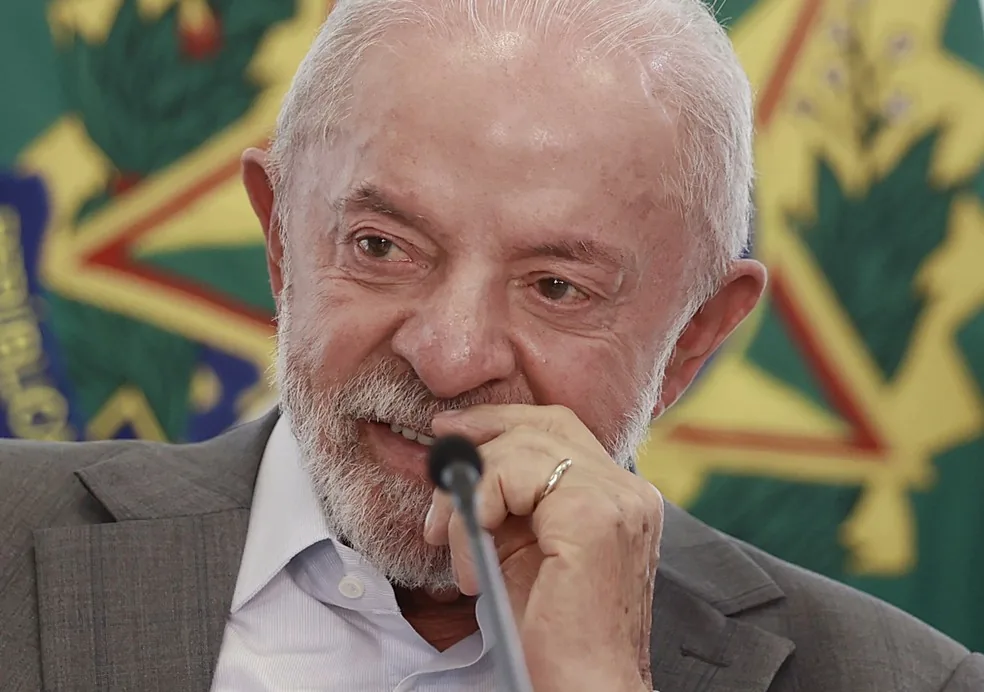 Reference image
Editorial responsibility
- No named human review is recorded for this page.
- Reports are grouped by semantic similarity and deterministic rules. Language models may assist titles, summaries, translation and cross-source analysis; the page reads the event directly, while its address stays stable when the title changes.
- Summary covers the current reports
Cross-source coverage
Common ground
- Both agents agree the Bolsonaro family represents a genuine threat to democratic norms in Brazil.
- Both acknowledge the amnesty platform for the January 8 rioters is dangerous and a red flag.
- Both agree that Lula's coalition is weak and defensive, and the Bolsonaro brand is damaged but still viable.
- Both recognize the XP Inc. stock surge is a significant market signal worth watching.
Points of contention
- The Neutral Agent insists it matters whether the candidate is Jair or Flávio Bolsonaro, while the Western Agent argues the family brand makes the distinction irrelevant.
- The Neutral Agent sees Lula's first-round lead as evidence of a functioning democracy under strain, while the Western Agent views the narrow 47-45 split as a warning of near-authoritarian support.
- The Neutral Agent treats prediction market odds and CFR modeling as unreliable speculation, while the Western Agent sees them as valid indicators of real danger.
- The Neutral Agent argues the Hungary comparison is flawed due to Brazil's fragmented Congress and independent judiciary, while the Western Agent sees a similar slow-motion institutional collapse.
Blind spots
- Neither agent fully addresses the possibility that the source confusion itself—whether Jair or Flávio is running—could be a deliberate tactic by the Bolsonaro family to muddy the waters.
- Both overlook the role of Brazil's electoral court and its ability to bar candidates, which could legally prevent either Bolsonaro from running.
- The discussion ignores how international pressure or sanctions might influence the election outcome or post-election behavior.
WorldAttention’s read
This debate boils down to a clash between factual precision and pattern recognition. The Neutral Agent argues we can't analyze a crisis without first confirming basic facts—like which Bolsonaro is on the ballot—and warns against mistaking betting market odds for election results. The Western Agent counters that the Bolsonaro family operates as a single authoritarian machine, and the narrow 47-45 split shows democracy is barely holding on, with markets already pricing in impunity. Both sides agree the Bolsonaro brand is dangerous and Lula's coalition is weak, but they disagree on whether Brazil is facing a normal ugly election or a slow-motion collapse. The blind spot is that neither fully considers how legal barriers or international pressure could change the game. Ultimately, the real story is a deeply polarized country where both camps are vulnerable—and the biggest risk may be that we're so focused on predicting a crisis that we miss the messy, boring reality of a democracy under strain but still functioning.
Reporting timeline
Brazil election: Lula and Flávio Bolsonaro advance to run-off after no first-round majority
Since no candidate secured a majority in the first round of Brazil’s general election, the top two candidates will advance to a run-off later this month. The Economist's poll tracker is following the odds of Luiz Inácio Lula da Silva and Flávio Bolsonaro, the two leading contenders. The run-off will determine the next president of Brazil, as neither candidate achieved the required majority in the initial vote. The poll tracker provides ongoing analysis of their chances as the election enters its final phase.
Brazil election: Flávio Bolsonaro takes 47% to Lula's 45%, forcing run-off
In the first round of Brazil's presidential election, candidate Flávio Bolsonaro exceeded expectations by securing 47% of the vote, compared to Luiz Inácio Lula da Silva's 45%. Since no candidate won more than half of the total votes, the election will proceed to a run-off round between the two leading candidates. The result defied pre-election polls and sets up a decisive second-round contest.
Read sourceRight-Wing Bolsonaro Surges Ahead of Lula in Brazil Presidential Race
Multiple news outlets report a significant political shift in Brazil, with Flávio Bolsonaro, a right-wing candidate and political heir to former President Jair Bolsonaro, surging past leftist incumbent Luiz Inácio Lula da Silva in the presidential race. The New York Times describes this as a major boost for the right, while the Wall Street Journal reports that Bolsonaro has set up a bitter election runoff. CNBC notes that Brazilian stocks jumped as Bolsonaro is now seen as a heavy favorite to win the presidency. Reuters adds that a right-wing wave in Brazil's Congress is boosting the Bolsonaro camp ahead of the presidential runoff. The Economist frames this as a Bolsonaro comeback in Brazil. The reports collectively indicate a strong shift in voter sentiment towards the right-wing candidate, with significant implications for Brazil's political and economic landscape.
Read sourceShow 17 older updatesHide older updates
Flávio Bolsonaro poised to win Brazilian presidency after shock first-round victory
Multiple news outlets report that Flávio Bolsonaro has surged past Luiz Inácio Lula da Silva in the first round of the Brazilian presidential election, setting up a bitter runoff. The Guardian states Bolsonaro is poised to win after a shock first-round victory. The Wall Street Journal reports that Bolsonaro's surge past Lula sets up a bitter runoff. The New York Times frames this as a major boost for the right, with another Bolsonaro nearing Brazil's presidency. CNN provides key takeaways, noting the runoff could reshape Latin America. Reuters reports that Brazil's currency and stocks jumped following Bolsonaro's first-round upset, indicating a positive market reaction to the result.
Read sourceBrazil's 2026 Runoff: Lula vs. Flávio Bolsonaro Could Reshape Foreign Policy
Brazil will hold a runoff presidential election on October 25 between incumbent Luiz Inácio Lula da Silva and Senator Flávio Bolsonaro, son of former President Jair Bolsonaro. The first round saw Flávio Bolsonaro win 47% and Lula 45%. This is Brazil's first presidential election since the January 2023 storming of government buildings by supporters of Jair Bolsonaro. Experts say the election is a proxy rematch of 2022, with voters motivated more by dislike of the other side than policy issues. Key issues include security, corruption, affordability, and sovereignty. Lula, 80, seeks a fourth term, emphasizing reducing inequality, sustainability, and expanding geopolitical partnerships. Flávio Bolsonaro proposes stronger ties with the US, a tough-on-crime security plan, and fiscal conservatism. The outcome could reshape Brazil's foreign policy, particularly relations with the US and China, and its regional posture amid a rightward shift in Latin America. Lula has brought Brazil closer to China, while Bolsonaro favors the US. Experts say the next president will likely maintain ties with both major powers out of economic necessity.
Read sourceBrazil's 2026 Runoff: Lula vs. Flávio Bolsonaro Could Reshape Foreign Policy
Brazil will hold a runoff presidential election on October 25, 2026, after the first round saw Senator Flávio Bolsonaro, son of former President Jair Bolsonaro, win 47% of the vote and incumbent Luiz Inácio Lula da Silva win 45%. The election is a proxy rematch of the 2022 vote, which was followed by the January 2023 storming of government buildings by Bolsonaro supporters. Key voter issues include security, corruption, affordability, and sovereignty. Experts from the Council on Foreign Relations say the result could reshape Brazil's regional and international relations. Lula, seeking a fourth term, emphasizes reducing inequality, expanding industry, and promoting sustainability, while maintaining ties with China and the Global South. Flávio Bolsonaro proposes stronger ties with the United States, a more aggressive approach to authoritarian regimes in the region, and a security plan modeled after El Salvador. The winner will lead Latin America's largest democracy and economy, navigating relations with the US and China, its top trading partners. The election occurs amid a rightward shift in Latin America and follows Jair Bolsonaro's 2025 conviction for plotting a coup.
Read sourceBrazil Election Shock: XP Inc. Stocks Surge as Bolsonaro Surges Past Lula
A political earthquake in Brazil has sent shockwaves through financial markets and the political landscape. According to a Barron's report, stocks like XP Inc. are surging following the election shock. The Wall Street Journal reports that Flávio Bolsonaro has surged past Luiz Inácio Lula da Silva, setting up a bitter presidential runoff. The New York Times frames this as a major boost for the right, with another Bolsonaro nearing Brazil's presidency. CNN highlights key takeaways from the election, noting that the runoff could reshape Latin America. Local reports from KSAT indicate that Lula is seeking a shake-up while Flávio Bolsonaro reaches for more support ahead of the decisive vote. The unexpected strength of the Bolsonaro campaign has driven a rally in Brazilian equities, as markets react to the prospect of a more business-friendly government.
Read sourceFirst Round of Presidential Election: Brazil Faces Dark Years, Commentary Warns
This commentary from taz.de analyzes the first round of Brazil's presidential election, where Flávio Bolsonaro (Bolsonaro Junior) outperformed expectations against incumbent Lula da Silva. The author, Niklas Franzen, argues that Bolsonaro Junior's success was partly a vote against Lula and reflects voter fatigue with the left, which has won many elections in Brazil this century. Franzen warns that a Bolsonaro Junior presidency could be more dangerous than his father's, citing a weakened Supreme Court, a further right-leaning parliament, and support from U.S. President Donald Trump. The author urges against panic but notes that Lula has three weeks to avert what he describes as a potential catastrophe, after which Brazil could face politically dark years.
Trump Poised for Win in Brazil as Bolsonaro Advances to Runoff Against Lula
The Trump administration is closely watching Brazil's presidential election after right-wing candidate Flávio Bolsonaro, son of former President Jair Bolsonaro and Trump's preferred candidate, advanced to an October 25 runoff against incumbent leftist President Luiz Inacio Lula da Silva. The White House has actively boosted Bolsonaro to cement Trump's influence over Latin America, where seven right-wing candidates have won presidential elections in the last 18 months with Trump's backing. Trump previously supported the elder Bolsonaro, who was convicted and sentenced to 27 years in prison for a coup attempt after losing the 2022 election. Trump threatened Brazil with tariffs over the trial. Lula has used Trump's involvement in his reelection campaign, accusing Flávio Bolsonaro of being 'Trump's candidate' and criticizing Trump at the UN General Assembly. The article notes it remains to be seen whether Lula's efforts will help him win the runoff.
Trump Poised for Win in Brazil as Bolsonaro Son Advances to Runoff Against Lula
The Trump administration is closely watching Brazil's presidential election after right-wing candidate Flávio Bolsonaro, son of former President Jair Bolsonaro and President Trump's preferred candidate, advanced to a runoff against incumbent leftist President Luiz Inacio Lula da Silva. The White House has actively boosted Bolsonaro to cement Trump's influence over Latin America, where seven right-wing candidates have won presidential elections in the last 18 months with Trump's backing. Trump previously supported the elder Bolsonaro, who was convicted and sentenced to 27 years in prison for a coup attempt after losing the 2022 election. Trump threatened Brazil with tariffs over the trial. Lula has used Trump's efforts in his reelection campaign, accusing Flávio Bolsonaro of being 'Trump's candidate' and calling out Trump at the UN. The outcome of the October 29 runoff remains uncertain.
Trump administration closely watches Brazil runoff as Flávio Bolsonaro advances against Lula
The Trump administration is closely monitoring Brazil's presidential election after right-wing candidate Flávio Bolsonaro, son of former President Jair Bolsonaro and Trump's preferred candidate, advanced to an October 25 runoff against incumbent leftist President Luiz Inacio Lula da Silva. The White House has actively boosted Bolsonaro's campaign as part of Trump's broader effort to cement influence over Latin America, where seven right-wing candidates have won presidential elections in the last 18 months. Trump previously supported the elder Bolsonaro, who was convicted and sentenced to 27 years in prison for a coup attempt after losing the 2022 election. Trump threatened Brazil with tariffs over the prosecution. Lula has used Trump's involvement in his reelection campaign, calling Flávio Bolsonaro 'Trump's candidate' and criticizing Trump at the UN. Brazil denied visas to two State Department officials sent to investigate 'electoral integrity,' accusing them of interference. The outcome of the runoff remains uncertain.
Brazil's Rightward Shift: Bolsonaro Leads Lula Ahead of Runoff Election
Brazil's presidential election has resulted in a significant setback for the left-wing government, as right-wing candidate Flávio Bolsonaro secured 47.05% of the vote, narrowly leading incumbent President Luiz Inácio Lula da Silva, who received 45.14%. The results, published on October 5, 2026, force a runoff election scheduled for October 25. Bolsonaro's performance exceeded his father Jair Bolsonaro's 2022 result of 43%. The election saw a 21% abstention rate, indicating voter fatigue amid corruption scandals. Bolsonaro's Partido Liberal (PL) became the strongest force in the Senate with 28 seats, and the right-wing bloc holds 49 of 81 Senate seats. Lula's Workers' Party (PT) failed to gain new Senate seats. Bolsonaro performed best in the conservative south and southwest, while Lula led in the north and northeast. Despite the setback, Lula expressed confidence, stating the runoff will present a true picture of Brazil. The article attributes the rightward shift to corruption scandals and notes that scandals involving Bolsonaro did not significantly damage his campaign.
Brazil Elections Head to Runoff Between Lula and Bolsonaro
Brazil's presidential election is heading to a second-round runoff between former President Luiz Inácio Lula da Silva and incumbent President Jair Bolsonaro, as neither candidate secured the required majority in the first round. The New York Times reports the runoff will determine the future direction of Latin America's largest economy. CNN highlights key takeaways from the first round, noting the result could reshape the region. The Guardian reports that Flávio Bolsonaro leads incumbent Lula in the race for the second round. Al Jazeera provides three key takeaways from the first round. The Wall Street Journal offers an analysis piece titled 'Lula Is the Brazilian Left’s Last Hope—And Its Biggest Problem,' suggesting internal challenges for the left-wing candidate despite his frontrunner status. The runoff election is expected to be highly competitive, with both candidates representing starkly different political visions for Brazil.
Read sourceFlávio Bolsonaro Surprises with Narrow Lead Over Lula in Brazil First Round
In the first round of Brazil's presidential election, candidate Flávio Bolsonaro has taken a surprising lead of approximately two percentage points over incumbent President Lula da Silva, according to a report by WELT correspondent Tobias Käufer. The result, published on October 5, 2026, marks an unexpected turn in the election, as Lula had been widely expected to lead. Käufer provides analysis on the current political mood in Brazil, noting the surprise among observers. The article is based on preliminary results and reflects the dynamic and polarized nature of the Brazilian electorate. The final outcome remains uncertain as the election may proceed to a runoff if no candidate secures an outright majority.
Read sourceBrazil presidential race heads to runoff between Lula and Bolsonaro
Brazil's presidential election is heading to a runoff between former President Luiz Inácio Lula da Silva and incumbent Jair Bolsonaro, according to multiple news reports. The first round results showed a tight race, with Bolsonaro pushing Lula to the brink of defeat, as reported by Bloomberg. The New York Times notes the runoff will be between Lula and Bolsonaro's son, while Al Jazeera highlights three key takeaways from the first round. The Wall Street Journal characterizes Lula as the Brazilian left's last hope and its biggest problem. The Economist reports that Bolsonaro and Lula go to a run-off in Brazil, alongside other world news. The runoff election will determine the next president of Brazil.
Read sourceWatch: How Brazil's dramatic election unfolded as Lula and Bolsonaro head to run-off
Millions of Brazilians voted on Sunday in the first round of the country's presidential elections. Incumbent President Luiz Inácio Lula da Silva, 80, is seeking a fourth non-consecutive term, while his challenger, right-winger Flávio Bolsonaro, 45, is competing in his first presidential race. Flávio Bolsonaro is the son of former President Jair Bolsonaro, who governed Brazil from 2019 to 2022. The election is now heading to a run-off scheduled for 25 October. BBC correspondent Ione Wells unpacks the results in a video report. The article includes a video titled 'Watch: How Brazil's dramatic election unfolded' and provides links to related topics including Luiz Inacio Lula da Silva, Brazil, and Jair Bolsonaro.
Read sourceRight-wing Flávio Bolsonaro wins first round of Brazil election, faces run-off with Lula
Right-wing candidate Flávio Bolsonaro won the first round of Brazil's presidential election on October 4, 2026, defeating left-wing incumbent President Luiz Inácio Lula da Silva but falling short of an outright majority. With nearly all votes counted, Bolsonaro secured 47% to Lula's 45%, forcing a run-off on October 25. Bolsonaro, the son of former President Jair Bolsonaro who is serving a 27-year prison sentence for masterminding a failed coup, exceeded expectations. His Liberal Party also won the most governors, senators, and federal deputies, giving it significant influence in Congress. Lula, 80, warned the choice was between democracy and 'barbarism,' while Bolsonaro, 45, said he wanted to 'free the Brazilian people.' Key campaign issues include corruption, crime, and the economy. Bolsonaro has pledged amnesty for his father and supporters involved in the January 8, 2023 riots, while Lula has focused on social welfare programs. The outcome will determine whether Brazil aligns with the right-wing trend in Latin America and the Trump administration.
Read sourceBrazil's Flavio Bolsonaro leads first round, heads into runoff as favorite against Lula
Brazil's presidential election first round delivered a surprise result, with right-wing challenger Flavio Bolsonaro, son of former President Jair Bolsonaro and a friend of Donald Trump, winning 47.1% of the vote against incumbent Luiz Inácio Lula da Silva's 45.1%. Bolsonaro now enters the October 25 runoff as the favorite, with observers calling the result a 'Wahlbombe' (election bomb). The outcome continues a broader rightward trend across South America, where leftist governments have lost ground in Argentina, Bolivia, Chile, Ecuador, Colombia, Peru, and Paraguay. Analysts attribute the shift to rising crime driving demand for law-and-order policies, corruption scandals, and the burden of leftist dictatorships in Nicaragua and Cuba. A Bolsonaro victory would align Brazil geopolitically with the US and other right-wing South American leaders, while Lula faces an uphill battle to rally support. The article notes that Lula, at nearly 81, is likely in his final campaign, and the Bolsonaro family has returned to power with key Senate and gubernatorial wins.
Read sourceBrazil's Lula and Bolsonaro head to runoff after both fail to secure majority
Brazil's presidential election will be decided in a runoff on October 25 between leftist incumbent Luiz Inácio Lula da Silva and right-wing Senator Flávio Bolsonaro, after neither candidate secured the required absolute majority in the first round. With 97% of votes counted, Lula received approximately 44.6% and Bolsonaro 47.4%, according to preliminary data from the electoral authority. Lula, 80, of the Workers' Party (PT), seeks a fourth term by continuing his policies of social programs, public investment, and a stronger state role. Bolsonaro, 45, of the Liberal Party (PL) and son of former President Jair Bolsonaro, promises a leaner state, spending cuts, and a tougher line on crime. The campaign has been marked by strong polarization. Key issues include security, with Bolsonaro proposing half a million new prison places and high-security facilities, while Lula focuses on targeting organized crime finances. The election also carries regional implications, as a Lula victory would maintain a counterweight to a rightward shift in Latin America, while a Bolsonaro win would align Brazil more closely with Washington and conservative regional governments. The outcome will also affect relations with the US under President Donald Trump, who supported Jair Bolsonaro. Flávio Bolsonaro has promised amnesty for his father, who was sentenced to over 27 years for involvement in an attempted coup. Congressional results will be crucial for the next government's ability to pass legislation.
Read sourcePolls close in Brazil as Lula and Flávio Bolsonaro remain neck and neck in tight race
Polls have closed in Brazil's general election after voters queued in long lines for a tight first round of the presidential race. Left-wing President Luiz Inácio Lula da Silva, 80, warned that the choice was between democracy and 'barbarism', while his challenger, right-winger Flávio Bolsonaro, 45, said he wanted to 'free the Brazilian people'. BBC Brazil's poll aggregator shows the gap between Lula and Bolsonaro is only two points. If no candidate gets more than 50% of the vote, the election will go to a run-off on 25 October. More than 158.7 million Brazilians are eligible to vote. Official results are expected within hours due to electronic voting. A victory for Bolsonaro would extend a wave of right-wing wins across Latin America aligned with US President Donald Trump, while Lula's re-election would create problems for Washington over trade and security. The election also determines the composition of the Senate, with 54 of 81 seats being contested. In the last election four years ago, Lula narrowly defeated Flávio Bolsonaro's father, Jair, who was later convicted of plotting a coup and is serving a 27-year sentence.
Read source