223 published Stories14 tracked eventsLatest event
Also known as Abbas Araghchi, 阿巴斯·阿拉格齐
Cross-source coverage
Latest Stories
Contested
Reporting on this entity comes from multiple media camps.
46%
45%
Western193 · 46%
Regional190 · 45%
Neutral / independent14 · 3%
Eastern22 · 5%
Latest Stories
Some matching results are temporarily unavailable.
Periodic recap
What changed for this subject in each tracking window — generated from matched events, delta-first.
→· 1 event in window
In this period, Iran-backed Houthi rebels launched a series of attacks that escalated regional tensions. The Houthis struck Yemen's Red Sea port of Mokha and a Saudi Aramco refinery in Jazan, and assaulted commercial vessels in the Bab el-Mandeb Strait, resulting in multiple casualties. These actions unfolded against the backdrop of an ongoing US-Iran standoff over the Strait of Hormuz, where Iran continues to refuse reopening until US conditions are met.
Iran-backed Houthi rebels attacked Yemen's Red Sea port of Mokha, killing at least seven and injuring 15.
The Houthis also struck a Saudi Aramco refinery in Jazan.
Houthi assaults on commercial vessels in the Bab el-Mandeb Strait killed six, including three Pakistani citizens.
The attacks occurred as Iran continues to refuse reopening the Strait of Hormuz until US conditions are met.
Earlier recaps
→· 1 event in window
In this period, the U.S. launched retaliatory military strikes against Iran's Islamic Revolutionary Guard Corps, triggering sharp volatility in global oil prices. The strikes, a response to earlier Iranian missile attacks on American forces, intensified market concerns over shipping safety in the Strait of Hormuz and Bab el-Mandeb Strait. Brent and WTI crude prices surged before rebounding amid uncertain peace talks, keeping markets in flux.
→· 1 event in window
Tensions surrounding the Strait of Hormuz escalated further in this period. The UAE publicly accused Iran of attacking one of its tankers on August 8, while Iran reiterated it will not reopen the strait until the U.S. meets its conditions. Meanwhile, negotiations between Iran and Oman on an alternative shipping route have progressed, though the U.S. opposes Iran's proposal to impose tolls.
→· 1 event in window
Iranian Foreign Minister Abbas Araghchi faces the most significant diplomatic turn since the February 2026 conflict began. U.S. President Trump announced a suspension of strikes on Iran in early August, claiming a deal framework has been reached on opening the Strait of Hormuz and ending Iran's nuclear threat. However, Iranian state media swiftly denied requesting the pause and warned of proportionate retaliation, casting uncertainty over the deal's prospects.
→· 1 event in window
Iranian Foreign Minister Abbas Araghchi faces renewed diplomatic pressure following a new warning from Ukrainian President Zelenskyy. During a U.S. visit, Zelenskyy alleged that Russia is sharing satellite imagery of American military bases with Iran, drawing Tehran deeper into the intelligence dimension of the Russia-Ukraine conflict. The claim adds a new layer of security concern to an already tense regional situation following the Caspian Sea vessel attack.
→· 1 event in window
Iranian Foreign Minister Abbas Araghchi faces a new diplomatic crisis following a Ukrainian attack on an Iranian commercial vessel in the Caspian Sea. Iran condemned the strike, which killed one sailor and injured another, while Ukrainian President Zelenskyy confirmed targeting Iranian-linked cargo ships. The incident escalates tensions against the backdrop of Iran's drone supply to Russia.
Tracked events
Events matched to this subject by the tracking pipeline, with signal scores.
On August 1-2, 2026, U.S. President Donald Trump announced a temporary suspension of planned U.S.-Israeli strikes on Iran, claiming Tehran and other Middle Eastern states requested the halt after agreeing on a basic deal framework. The proposed deal demands immediate opening of the Strait of Hormuz and an end to Iran’s nuclear threat. Iran’s state media denied requesting the pause and warned of proportionate retaliation. The conflict, ongoing since February 28, 2026, has seen tit-for-tat attacks, with a previous June ceasefire collapsing. Trump threatened massive retaliation if no deal is reached quickly.
On August 11, 2026, Iran-backed Houthi rebels attacked Yemen's Red Sea port of Mokha, killing at least seven and injuring 15, and struck a Saudi Aramco refinery in Jazan. Separately, Houthi assaults on commercial vessels in the Bab el-Mandeb Strait killed six, including three Pakistani citizens. The attacks threaten to reignite Yemen's civil war and disrupt Red Sea shipping amid heightened US-Iran tensions over the Strait of Hormuz, where Iran refuses to reopen until US conditions are met.
In late July 2026, the U.S. launched heavy military strikes against Iranian Islamic Revolutionary Guard Corps targets in retaliation for Iranian missile attacks on American forces. This escalation, following a surprise attack in Jordan, drove Brent crude above $92 and WTI above $85 per barrel. Supply concerns intensified due to threats to the Strait of Hormuz and Bab el-Mandeb Strait. By early August, oil prices rebounded from a sell-off amid uncertain peace talks, keeping markets volatile.
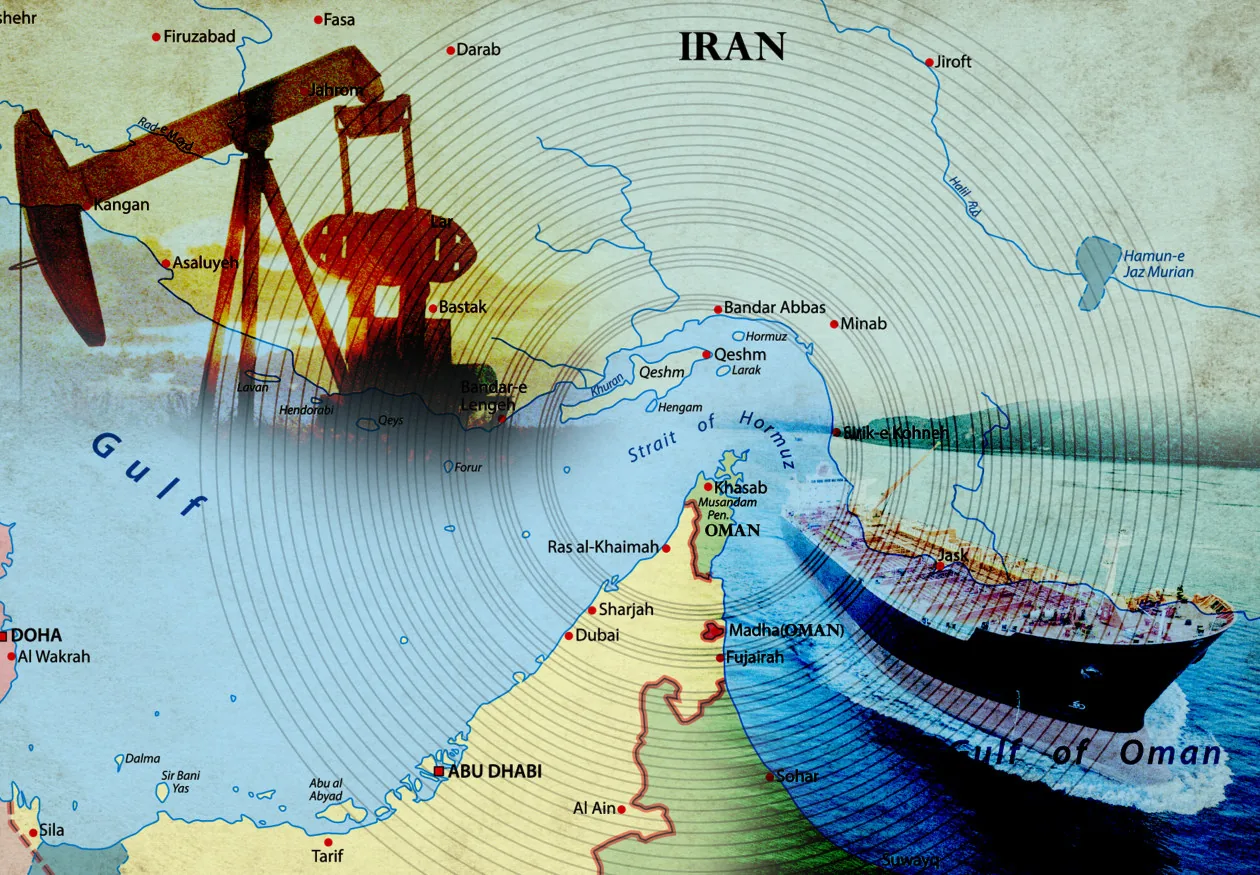
Iran’s Revolutionary Guards have blockaded the Strait of Hormuz since late February 2026, following US-Israeli strikes. On August 8, the UAE accused Iran of attacking an ADNOC tanker in the strait, calling it piracy. Iran and Oman are nearing a deal on an alternative shipping route, but Iran insists the strait will not reopen until the US meets conditions including ending aggression, lifting sanctions, and paying compensation. The US opposes Iranian tolls. The blockade disrupts about one-fifth of global oil and LNG shipments.
Ukrainian President Volodymyr Zelenskyy is set to meet U.S. President Donald Trump at the White House on Tuesday as the U.S. war against Iran and Russia's full-scale invasion of Ukraine show signs of converging. The meeting comes after Ukraine launched an attack on an Iranian commercial vessel in the Caspian Sea on Saturday, killing one sailor and injuring several others. Iran has threatened retaliation, with its foreign minister stating the attack 'cannot go unanswered.' Zelenskyy defended the strike, claiming Ukraine hit vessels used in military cargo shipments involving Iran. Analysts describe the incident as a significant collision of the two conflicts, though the U.S.-Iran military exchanges have recently de-escalated. Ukraine's foreign minister dismissed Iran's threats as unjustified, accusing Tehran of being an accomplice to Russian aggression by supplying drones used against Ukraine since 2022.
On July 20-21, 2026, Iran-backed Houthi rebels in Yemen declared an immediate maritime embargo against Saudi Arabia, threatening to close the Bab el-Mandeb Strait—a critical chokepoint for global oil trade. The blockade, retaliation for a Saudi-led siege on Yemen and an attack on Sanaa airport, escalates the ongoing U.S.-Iran war. It threatens Saudi oil exports via the Red Sea port of Yanbu, already strained by Iran’s closure of the Strait of Hormuz. Tankers carrying Saudi crude have turned back, and global oil markets face severe supply disruptions.
Secretary of State Marco Rubio warned early Thursday that President Trump is prepared to direct an outsized military response to Iranian aggression, as the two sides continue to exchange fire nearly five months into the conflict. Rubio responded to Iranian Foreign Minister Abbas Araghchi’s statement that Tehran’s policy is an “eye for an eye” in the ongoing hostilities. The remarks signal an escalation in US-Iran tensions, with the Trump administration indicating a willingness to use disproportionate force in retaliation for Iranian attacks.
The article argues that with Iran's Foreign Minister Abbas Araghchi ruling out any concessions or reopening of the Strait of Hormuz, the only effective way to stop Tehran's attacks on shipping may be a ground invasion. The analyst suggests seizing key Iranian Gulf islands such as Kharg Island (95% of Iran's oil exports), Qeshm Island (hosting drone bases and fast-attack boats), and the disputed Abu Musa, Greater Tonb, and Lesser Tonb islands. The piece notes that the U.S. military buildup off Iran continues amid the impasse over Hormuz and Iran's nuclear program. It draws a historical parallel to President Clinton's 1999 Kosovo campaign, which began with a no-ground-troops promise but later required boots on the ground. The analyst cautions that occupying mainland Iran would be far larger than the Iraq war, given Iran is four times Iraq's size, and that Trump's rhetoric risks turning ordinary Iranians against America.
The article analyzes potential US military ground operations against Iran amid the ongoing impasse over the Strait of Hormuz and Iran's nuclear program. Iranian Foreign Minister Abbas Araghchi states Iran will not make concessions under fire and sees no reason to reopen the Strait. The piece explores two main strategies: seizing Iranian islands in the Persian Gulf (such as Kharg, Abu Musa, Qeshm, or Kish) or occupying mainland ports like Bandar Abbas, Bushehr, and Abadan. It notes the US lacks manpower for an Iraq-style invasion given Iran's size, and discusses historical precedents like the 1999 Kosovo campaign and the 1856 British landing at Bushehr. The article questions how ordinary Iranians would react to US troops on their territory, suggesting nationalism could be a factor but not necessarily leading to a unified rally around the regime.
The article analyzes the renewed internal power struggle in Iran following the collapse of a memorandum between Iran and the USA. Supreme Leader Mojtaba Khamenei issued a communiqué opposing the understanding, while rumors persist about his health and whereabouts. Foreign Minister Abbas Araghchi returned empty-handed from Oman after failing to reach an agreement on the Strait of Hormuz, which Iran considers vital leverage. Subsequently, the Revolutionary Guards launched symbolic attacks on Kuwait, Bahrain, and Oman. Journalist Hamid Assefi notes a power vacuum at the highest level. Araghchi revealed on a TV program that a 'security gap at the highest level' betrayed state secrets, including details of the assassination of former Supreme Leader Ali Khamenei, and that this gap still influences policy. The article highlights the dual conflict: external tensions with the US and Gulf states, and internal factional strife between reformers and radicals.
US President Donald Trump rejected Iran’s counterproposal to end the ongoing ten-week conflict, labeling it "unacceptable" and declaring the ceasefire on "life support." Tehran demanded sanctions relief, war reparations, and sovereignty over the Strait of Hormuz, while refusing to dismantle nuclear facilities. The diplomatic deadlock has paralyzed critical shipping lanes, causing global oil prices to surge above $104 per barrel and threatening a severe energy crisis. With NATO allies refusing military intervention, Trump plans to leverage Chinese influence during an upcoming summit, as regional tensions escalate with continued drone attacks and naval posturing.
US President Donald Trump stated that the recent ceasefire with Iran was granted primarily as a favor to Pakistan and at the request of other nations, despite his personal reservations. Meanwhile, Iranian Foreign Minister Abbas Araghchi acknowledged that Pakistani mediation efforts are facing significant difficulties due to mutual mistrust and contradictory messages from Washington. Araghchi emphasized Tehran's willingness to preserve the ceasefire to allow diplomacy to proceed, while expressing openness to constructive roles from China and Russia. He noted that Iran is considering Russia's offer to store enriched uranium but has postponed this issue for later negotiation stages. The comments came during BRICS foreign ministers' meetings in New Delhi, where members expressed differing views on the Middle East conflict. China reiterated its stance against the continuation of hostilities, advocating for an early resolution. Iran also clarified its position on the Strait of Hormuz, stating it remains open to friendly vessels coordinating with Iranian officials, while denying responsibility for disruptions. The situation remains fragile as both sides navigate complex diplomatic channels amidst ongoing regional tensions.
Pakistan has successfully repatriated 11 Pakistani nationals and facilitated the return of 20 Iranian citizens who were detained aboard vessels seized by the United States in international waters. Deputy Prime Minister and Foreign Minister Ishaq Dar confirmed that all 31 individuals arrived in good health via Singapore and Bangkok, expressing gratitude to the governments of Singapore, Thailand, Iran, and the United States for their cooperation in the complex logistical operation. The Iranian nationals are set to return to Iran following their arrival in Islamabad. In a separate domestic development, opposition lawmakers in Pakistan's National Assembly raised urgent alarms regarding the alleged deportation of thousands of Pakistani workers from the United Arab Emirates. PTI-backed lawmaker Shehryar Afridi criticized the interior minister's policies and called for mediated dialogue to improve relations with the UAE, emphasizing the economic importance of remittances. Afridi also addressed internal political tensions, urging the government to stop isolating PTI leaders and highlighting deteriorating security situations in certain provinces.
Tensions between the US and Iran have escalated as President Trump considers resuming large-scale military operations following the collapse of nuclear negotiations. Iran has rejected US demands, threatening to enrich uranium to weapons-grade levels and warning of severe retaliation against any aggression. The Strait of Hormuz remains blocked, prompting European powers to organize defense meetings while the UAE allegedly conducts secret strikes. With new US sanctions imposed and mediation efforts faltering, the fragile ceasefire is at risk, raising fears of a broader regional conflict ahead of Trump’s diplomatic visit to China.
Abbas Araghchi, Iran's Minister of Foreign Affairs, stated on social media platform X that the United States will face significant economic distress when its national debt and mortgage rates surge, dismissing current rises in gasoline prices and stock market valuations as superficial issues. This political commentary is presented alongside a detailed analysis of the severe economic conditions within Iran. The report highlights a decade of chronic inflation, ranging between 30 and 50 percent, which has drastically reduced household purchasing power and altered lifestyles. Families are reportedly cutting back on basic necessities, medical care, and social activities due to shrinking budgets. The article further explores the psychological impact of this economic instability, noting increased anxiety, collective burnout, and weakened social capital. It argues that continuous economic pressure has eroded the middle class, increased poverty, and led to broader social harms such as domestic violence and reduced trust in institutions. The piece juxtaposes Iranian diplomatic rhetoric targeting US economic vulnerabilities with the internal reality of widespread livelihood insecurity and structural psychological pressure affecting Iranian society.
Tensions escalated between the US and Iran as military clashes erupted in the Strait of Hormuz, jeopardizing a fragile ceasefire. Iranian forces attacked US warships, prompting American retaliatory strikes on missile sites, while the UAE intercepted incoming drones. President Trump warned of intensified action if peace talks fail, even as global oil prices surged above $100 per barrel due to supply disruptions. With new US sanctions imposed and diplomatic efforts ongoing, the region faces heightened instability and significant risks to global energy security amidst conflicting narratives of violation and self-defense.
Iranian Foreign Ministry spokesman Esmail Baghaei issued stern warnings against US military aggression, threatening severe consequences for any ground invasion. Tehran rejected recent US nuclear proposals as demands for surrender and demanded the unfreezing of assets and safety in the Strait of Hormuz. Blaming US and Israeli actions for regional instability, Iran characterized the US blockade as an act of war while asserting its military readiness. The escalating conflict has compromised Persian Gulf security, impacting global energy markets and shipping lanes, with Iran seeking diplomatic resolution through BRICS channels.
BRICS foreign ministers concluded their meeting in New Delhi without a joint declaration, highlighting deep divisions over the ongoing war involving the US, Israel, and Iran. Tensions between member states Iran and the UAE prevented consensus, with Tehran seeking condemnation of Western actions while Abu Dhabi blocked such language. The final chair’s statement acknowledged differing views but affirmed support for Palestinian statehood and economic cooperation. This deadlock underscores the geopolitical challenges facing the expanded bloc as it prepares for the upcoming leaders' summit, revealing fractures within the Global South alliance.
According to independent media reports, Iranian authorities are compelling citizens to surrender extensive personal information and publish pro-government social media content to regain internet access following widespread blackouts. Users must provide home and work addresses, bank account details, images of bank cards, and social media links. Additionally, they are required to sign pledges abstaining from content deemed harmful to national security and post at least twenty pro-regime messages spaced out to appear natural. Some individuals are also forced to attend rallies and document their participation. This crackdown occurs as Iran’s Foreign Minister, Abbas Araghchi, accuses the United States of undermining trust and jeopardizing peace talks, citing contradictory messages from Washington. Amidst a shaky ceasefire and ongoing conflict, Iran has deployed submarines to the Strait of Hormuz and is utilizing alternative trade routes via the Caspian Sea and China to bypass US blockades. Meanwhile, the nation’s economy is reportedly deteriorating, prompting leadership to urge frugality and prevent layoffs. The report highlights the regime's intensifying internal control measures alongside its external diplomatic and military tensions.
Israel announced the targeting of Ezzedine Haddad, a leader of Hamas's military branch in Gaza, on May 25. Concurrently, reports indicate that the United States and Iran are negotiating a ceasefire agreement that includes all regional fronts, a development viewed as unfavorable by Israel. Lebanese Parliament Speaker Nabih Berri confirmed that Lebanon would be included in any such deal. Meanwhile, tensions persist on the northern border, where Hezbollah continues attacks despite a reported ceasefire, restricting Israeli military freedom of action. Israeli Chief of Staff Eyal Zamir visited southern Lebanon, asserting that over 2,000 Hezbollah fighters have been killed and warning of potential operations against Iran. While Israeli forces aim to disarm Hezbollah and prevent capability rebuilding, they face constraints including reserve force exhaustion. In Gaza, Israeli officials state that the containment of the Lebanon conflict allows them to focus on dismantling Hamas, though large-scale operations depend on White House approval and regional stability. The situation remains complex with ongoing diplomatic negotiations and military engagements across multiple fronts.
Israeli Prime Minister Benjamin Netanyahu and Defense Minister Yisrael Katz announced that the Israeli military targeted Ezzedine Haddad, a senior commander of Hamas's military wing. Concurrently, reports indicate that the United States and Iran are negotiating a ceasefire agreement that includes a clause linking all regional fronts, a development viewed as unfavorable by Israel. This agreement reportedly grants Hezbollah leaders a degree of protection, restricting Israeli military operations in Lebanon. Despite this, Israeli Chief of Staff Eyal Zamir stated that Israel retains pre-designated targets in Iran and remains on full alert. Zamir emphasized ongoing efforts to dismantle Hezbollah's infrastructure in southern Lebanon, citing the discovery of tunnels under civilian areas as evidence of human shield usage. While de-escalation in Lebanon allows Israel to redirect resources toward Gaza to disarm Hamas, officials acknowledge constraints such as troop exhaustion and the need for US approval. The Israeli security cabinet is set to discuss the implications of these emerging diplomatic understandings, particularly regarding the future security arrangement in Lebanon and the potential for renewed large-scale operations.
Iran’s Foreign Minister Abbas Araghchi has identified deep-seated mistrust between Tehran and Washington as the primary barrier to ongoing negotiations. Speaking at a BRICS meeting held in India, Araghchi emphasized that this lack of trust continues to significantly hinder diplomatic progress regarding the war. The Iranian official stated that Tehran remains committed to resolving the issues but insisted that any potential agreement must be "fair and balanced." This statement underscores the persistent diplomatic tensions and the challenging environment for dialogue between the two nations. The remarks were made in the context of international discussions within the BRICS framework, highlighting Iran's effort to articulate its position on the global stage while maintaining firm conditions for future engagements with the United States. The article, published by Al Jazeera on May 15, 2026, reflects the ongoing geopolitical complexities and the specific diplomatic hurdles faced by Iran in its interactions with Western powers, particularly concerning conflict resolution and international agreements.
Iranian Foreign Minister Abbas Araghchi has appealed to India to continue its investment in the strategic Chabahar Port, despite the expiration of a US sanctions waiver on April 26, 2026. Speaking after the BRICS Foreign Ministers' meeting, Araghchi emphasized the port's role as a vital trade corridor connecting India to Central Asia, the Caucasus, and Europe, while bypassing Pakistan. He acknowledged that US sanctions have slowed Indian investment but expressed hope for continued cooperation. In response to the lapsed waiver, the Indian Ministry of External Affairs is engaging in dialogue with both Washington and Tehran. Reports indicate India is preparing a contingency plan to temporarily transfer its stake to a local Iranian entity during the sanction period, with no funds allocated in the current budget. Araghchi also praised India's neutral diplomatic stance in the region and criticized the Trump administration as a barrier to Middle East peace. The port remains a key strategic asset for India to counter Chinese influence and enhance regional connectivity, following a 10-year operational agreement signed in 2024.
The United Arab Emirates has firmly rejected accusations made by Iran that it is playing an active role in the ongoing Middle East war. The diplomatic rift intensified after Iranian Foreign Minister Abbas Araghchi claimed during a BRICS meeting in New Delhi that the UAE was a partner in aggression and warned that US alliances could not guarantee its security. In response, UAE Minister of State for Foreign Affairs Khalifa bin Shaheen Al Marar issued a statement categorically denying these claims, describing them as attempts to justify Iranian terrorist attacks against the UAE and other nations. The UAE foreign ministry highlighted that the country has been subjected to approximately 3,000 unjustified attacks involving ballistic missiles, cruise missiles, and drones. Marar emphasized that the UAE does not seek protection from external powers, asserting the nation's capability to deter aggression. He stated that the UAE reserves all sovereign, legal, diplomatic, and military rights to defend its territorial integrity and protect its citizens, residents, and visitors from any hostile acts or threats.
This news compilation from May 15, 2026, highlights escalating geopolitical tensions involving the United States. The U.S. House of Representatives narrowly failed to pass a war powers resolution limiting President Trump’s military actions against Iran, while CENTCOM Admiral Brad Cooper denied reports of civilian casualties during Senate testimony. Internationally, Iran’s Foreign Minister Abbas Araghchi urged BRICS nations in New Delhi to unite against U.S. coercion. Meanwhile, President Trump concluded a state visit to China without securing agreements on Iran or the Strait of Hormuz, amid warnings from President Xi regarding Taiwan. In the Caribbean, CIA Director John Ratcliffe visited Havana as Cuba faced critical fuel shortages attributed to U.S. sanctions, prompting Democratic lawmakers to urge against further military escalation. Additionally, UNICEF reported significant child casualties in Lebanon following Israeli strikes, despite an existing ceasefire deal. These events collectively underscore heightened global instability and diplomatic fractures across the Middle East, Asia, and Latin America.
Iranian Foreign Minister Abbas Araghchi expressed Tehran's openness to diplomatic mediation by any nation, specifically highlighting China's potential role in resolving the ongoing conflict with the United States and Israel. Speaking in New Delhi, Araghchi cited China's successful facilitation of the Iran-Saudi Arabia rapprochement as evidence of its constructive influence and sincere intentions. This statement follows claims by US President Donald Trump that Chinese President Xi Jinping offered assistance in de-escalating the crisis. The diplomatic overture occurs amidst heightened tensions following US-Israeli military strikes on Iran that began in late February, resulting in approximately 3,375 Iranian casualties. Although a temporary ceasefire was announced in April, subsequent negotiations in Islamabad failed to produce a long-term settlement. Iran has rejected Washington's unilateral extension of the ceasefire, asserting its right to act according to its strategic interests. The situation remains volatile as international actors, including China and Saudi Arabia, explore diplomatic avenues to prevent further escalation in the region.
Iranian Foreign Minister Abbas Araghchi expressed deep skepticism regarding the United States' sincerity in ongoing negotiations to end the regional conflict during the BRICS Foreign Ministers' Meeting in New Delhi. Araghchi highlighted a persistent deadlock concerning Iran's enriched nuclear material, stating that this contentious issue would likely be deferred to later stages of any future talks. While acknowledging messages from the Trump administration indicating openness to dialogue, Tehran remains distrustful of US intentions. Araghchi confirmed discussions with Russian officials about Moscow's proposal to store Iran's enriched uranium, noting that such offers would be considered when negotiations progress. He also welcomed potential diplomatic support from China, emphasizing strong strategic ties. Additionally, Araghchi criticized the United Arab Emirates for blocking a final BRICS ministerial statement, attributing the move to the UAE's alignment with Israel and the US. The comments underscore the complex geopolitical dynamics involving BRICS nations, the ongoing war, and the stalled nuclear negotiations.
Iranian Foreign Minister Abbas Araghchi stated during a press conference in New Delhi that Iran is prepared to resume oil exports to India, provided the Indian government chooses to purchase them. Araghchi acknowledged that India previously halted imports due to unilateral sanctions imposed by the United States. While expressing Tehran's interest in continuing energy trade, he recognized India's cautious position regarding the potential consequences of violating US sanctions. The Foreign Minister emphasized that the decision ultimately rests with New Delhi. He expressed confidence that once sanctions are lifted, bilateral trade would immediately rebound to pre-sanction levels. Araghchi highlighted that historical trade volume between the two nations had exceeded $20 billion, noting that current figures are significantly lower. This statement underscores Iran's willingness to re-engage economically with key Asian partners despite ongoing geopolitical pressures and restrictions. The remarks were made in the context of broader diplomatic engagements, signaling Tehran's intent to normalize economic relations as soon as external political constraints allow.
In May 2026, Chainlink (LINK) is trading near $10.63 with a market capitalization of approximately $7.72 billion. The cryptocurrency's price trajectory is currently influenced by heightened geopolitical tensions involving Iran, specifically fears regarding potential conflict and the strategic importance of the Strait of Hormuz for global energy supplies. These macro pressures have increased volatility in risk assets, including altcoins. Despite this, Chainlink has shown resilience, rising 4.46% in 24 hours, supported by its fundamental role in providing oracle services for decentralized finance and institutional blockchain tools. Price prediction models from CoinCodex suggest LINK could reach $12.38 within a month and potentially hit $16.16 by the end of 2026 if bullish conditions prevail. Conversely, a conservative growth model from Kraken projects slower long-term appreciation. Analysts note that while escalation in Iran could drive investors toward safer assets like Bitcoin or gold, Chainlink’s utility in tokenized assets and cross-chain systems may present a buying opportunity if it maintains support levels above $10 during the market shock.
Pakistan firmly rejected US reports claiming it allowed Iranian military aircraft to park at Nur Khan Air Base to evade potential American airstrikes. While US officials alleged this move undermined Islamabad’s role as a neutral mediator in the US-Iran conflict, Pakistani officials stated the planes were present solely for diplomatic logistics during ceasefire negotiations. The controversy has prompted US lawmakers to question Pakistan’s neutrality, highlighting complex geopolitical tensions involving the US, Iran, and China amidst ongoing regional instability and stalled peace talks.