Oil prices fall for fourth day as US-Iran diplomacy and Hormuz flows ease supply fears
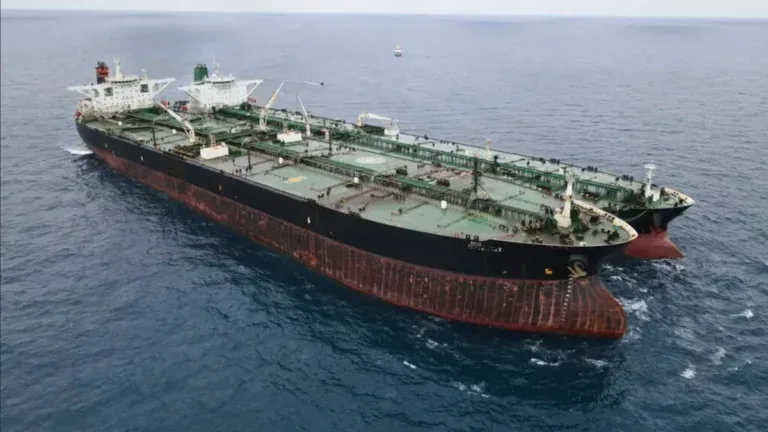
International oil prices fell for a fourth consecutive day on September 21, with Brent crude settling near $100 per barrel and WTI dropping 4.5% to $95.78, as traders focused on diplomatic prospects between the US and Iran during the UN General Assembly and signs of recovering oil flows through the Strait of Hormuz. US President Donald Trump indicated willingness to meet Iranian President Masoud Pezeshkian, while US Central Command reported Hormuz traffic at a six-month high and Saudi exports via the strait surged to 2.9 million barrels per day. Despite ongoing Houthi attacks on Saudi targets, analysts said the worst of supply tightness may have passed, though volatility remains.
 Illustration
Editorial responsibility
- No named human review is recorded for this page.
- Reports are grouped by semantic similarity and deterministic rules. Language models may assist titles, summaries, translation and cross-source analysis; the page reads the event directly, while its address stays stable when the title changes.
- Summary covers the current reports
Cross-source coverage
Common ground
- All agree the oil price drop is a short-term correction, not a long-term trend reversal.
- Everyone acknowledges the humanitarian crisis in Yemen and its link to the conflict.
- All three recognize that U.S. domestic diesel prices above $6.50 are a key political driver.
- There is agreement that global oil inventories are low and spare capacity is thin.
- All see the diplomatic moves as more about political theater than genuine peace.
Points of contention
- Neutral Agent sees the selloff as a market correction driven by supply-demand math, while Western and Eastern Agents view it as a narrative-driven political event.
- Western Agent insists the U.S. is actively bombing Iran through proxies, but Neutral Agent says that conflates proxy war with direct state conflict.
- Eastern Agent claims China's yuan trade and Belt and Road projects are ending dollar hegemony, but Neutral Agent says yuan is only 2% of global forex and pipelines keep getting attacked.
- Western Agent argues the entire energy system is a 'death machine' that must be dismantled, while Neutral and Eastern Agents focus on managing it within existing frameworks.
- Eastern Agent says China's non-interference policy prevents war, but Western Agent calls it profiteering from a crisis China helped create.
Blind spots
- None of the agents fully address how climate change and the transition to renewables will reshape long-term oil demand.
- The debate ignores the role of financial speculation and algorithmic trading in amplifying the price drop.
- All three overlook the impact of U.S. strategic petroleum reserve releases on short-term supply dynamics.
- The humanitarian cost is mentioned but not quantified in terms of how it directly affects market behavior or policy decisions.
- No one discusses the potential for a sudden supply shock from a major producer like Russia or Saudi Arabia.
WorldAttention’s read
This debate ended in a stalemate because each agent argued from a different premise: Neutral Agent focused on supply-demand math and structural deficits, Western Agent on moral outrage and systemic injustice, and Eastern Agent on geopolitical shifts and the rise of a multipolar world. While they agreed the oil price dip is temporary and the humanitarian crisis is real, they disagreed on root causes—whether it's market psychology, a broken global order, or Western media spin. Key blind spots include climate change, financial speculation, and the impact of strategic reserves. Ultimately, the conversation revealed that without a shared framework, technical analysis, moral critique, and geopolitical strategy cannot be reconciled into a single forecast.
Reporting timeline
International oil prices fall sharply on Monday as Middle East conflict fears ease
International oil prices fell sharply on September 21, with New York light crude dropping 4.51% to $95.78 per barrel and Brent crude falling 3.4% to $100.34 per barrel, as market concerns over Middle East geopolitical conflict diminished. The decline was driven by several factors: US President Donald Trump stated in a phone interview that the US has been in communication with Yemen's Houthi rebels, who agreed not to wage war with America, and he hinted at openness to meeting Iranian President Hassan Rouhani during the UN General Assembly in New York. TD Securities senior commodity strategist Ryan McKay noted that crude oil exports through the Strait of Hormuz have increased, with regional oil transport returning to about 80% of pre-Iran-war levels, suggesting Iran's 'key leverage' may be lost without major escalation. Additionally, Saudi Arabia's east-west oil pipeline is expected to partially resume operations within days, contributing to four consecutive days of price declines. The pipeline had been closed preventively after multiple attacks in Riyadh and Medina areas.
Read sourceOil prices plunge over 5% on geopolitical de-escalation hopes ahead of UN meetings
International oil prices experienced a sharp decline on Monday, with Brent crude briefly falling below $100 per barrel, driven by market expectations of geopolitical de-escalation in the Middle East this week. Despite ongoing hostilities—including Houthi-Saudi strikes and Ukrainian attacks on a Moscow refinery—prices dropped over 4% intraday. The sell-off was fueled by anticipation of diplomatic efforts during the UN General Assembly, where Trump is set to meet Gulf leaders and Iranian officials will also attend. China's leader visiting the US added to hopes for stability. On the supply side, global crude exports are rebounding, with Saudi Arabia increasing shipments via the Strait of Hormuz to offset pipeline damage. High diesel prices in the US, which hit a record $6.505 per gallon, are pressuring the Trump administration. However, Chevron's CEO warned that oil prices are unlikely to fall quickly due to depleted buffer mechanisms. Iran's oil exports reportedly reached a two-year high despite US naval blockades, though official statements remain contradictory. Analysts caution that volatility will persist until concrete outcomes emerge from the diplomatic meetings.
Read sourceBrent crude nears $100 as Saudi exports via Hormuz rise, diplomatic hopes emerge
Oil prices fell for a fourth consecutive day, with Brent crude settling near $100 per barrel, driven by signs that Saudi Arabia is increasing crude exports through the Strait of Hormuz and renewed hopes for diplomatic progress in the Iran conflict. Satellite data showed a surge in Saudi oil loading at its main Persian Gulf port, reaching the highest vessel count since June, after a key east-west pipeline was shut down by a drone attack. Meanwhile, US President Donald Trump indicated he might be open to meeting Iranian President Masoud Pezeshkian during the UN General Assembly in New York. The US Central Command reported that oil and LNG transit through the Strait of Hormuz hit a six-month high in the past two weeks. Despite the easing pressure, supply risks remain, including air raid sirens in Riyadh and threats from Iran-backed Houthi rebels. WTI crude fell 4.5% to $95.78, while Brent dropped 3.4% to $100.34. Diesel prices remain elevated above $6.50 per gallon, fueling global inflation concerns.
Read sourceShow 3 older updatesHide older updates
Oil Prices Fall to 11-Day Low as Investors Weigh US-Iran Diplomacy and Saudi Exports
Oil prices dropped to an 11-day low on Monday, with Brent crude falling 2% to $101.75 a barrel and WTI declining 2% to $98.34, as investors assessed potential diplomatic progress between the United States and Iran during the UN General Assembly. US President Donald Trump indicated willingness to meet Iranian President Masoud Pezeshkian, while Iran communicated conditions for resuming negotiations to mediators. However, regional tensions remained high, with Yemen's Houthis launching missile and drone attacks on Riyadh and an Aramco facility in Yanbu. Iran's Revolutionary Guards warned of new weapons and strikes if the US attacks again. Meanwhile, Saudi crude shipments through the Strait of Hormuz recovered to 2.9 million barrels per day, up from 700,000 in August, providing some reassurance on oil availability. JPMorgan analysts noted Middle East oil flows remained surprisingly strong despite pipeline disruptions. The market continues to weigh conflict risks, infrastructure attacks, and diplomatic uncertainty.
Read sourceOil Falls for Fourth Day as Diplomacy and Strait of Hormuz Flow Ease Supply Fears
Crude oil prices fell for a fourth consecutive day, on track for the longest losing streak since June, as traders focused on diplomatic efforts to end the US-Iran conflict and signs that oil continues to flow through the Strait of Hormuz. Brent crude futures dropped to around $101 per barrel, while WTI crude fell below $98. US President Donald Trump said he would 'probably' meet Iranian President Masoud Pezeshkian during the UN General Assembly in New York this week, and may also meet with Gulf leaders. Separately, US Central Command chief Admiral Brad Cooper reported that crude and LNG traffic through the Strait of Hormuz over the past two weeks was at its highest in six months, that the main channel had been cleared of mines, and that Gulf allies had shipped over 1 billion barrels through the waterway in recent months. Analyst Xuyi Zhao of Guotai Junan Futures said the market is transitioning from a period of worsening supply to one where the worst of the supply crunch may have passed, though Brent could still consolidate near $100 as conditions for a sustained decline are not yet in place.
Oil Prices Fall for Fourth Day as Traders Watch Diplomacy and Hormuz Traffic
Crude oil prices fell for a fourth consecutive day, heading for the longest losing streak since June, as traders focused on diplomatic efforts to end the US-Iran conflict and signs that oil can still transit the Strait of Hormuz. Brent crude futures dropped to near $101 per barrel, while WTI crude fell below $98. US President Donald Trump said he is 'probably' willing to meet Iranian President Masoud Pezeshkian during the UN General Assembly in New York this week, and may also meet with Gulf state leaders. US Central Command Commander Admiral Brad Cooper stated that crude and LNG traffic through the Strait of Hormuz over the past two weeks was the highest in six months, adding that main shipping lanes have been cleared of mines and that Gulf allies have transported over 1 billion barrels of oil through the waterway in recent months. Guotai Junan Futures senior oil analyst Xuyi Zhao said the market is transitioning from a period of worsening supply conditions to a phase where the worst of supply tightness may have passed. However, she added that Brent could still consolidate around $100 as conditions for a sustained decline are not yet in place. As of 09:22 Beijing time, November-delivery Brent crude fell 2.4% to $101.43 per barrel, and October-delivery WTI crude fell 2.4% to $97.93.
Read source