Iran’s IRGC Declares Readiness for Long-Term War, Vows New Weapons if Attacked
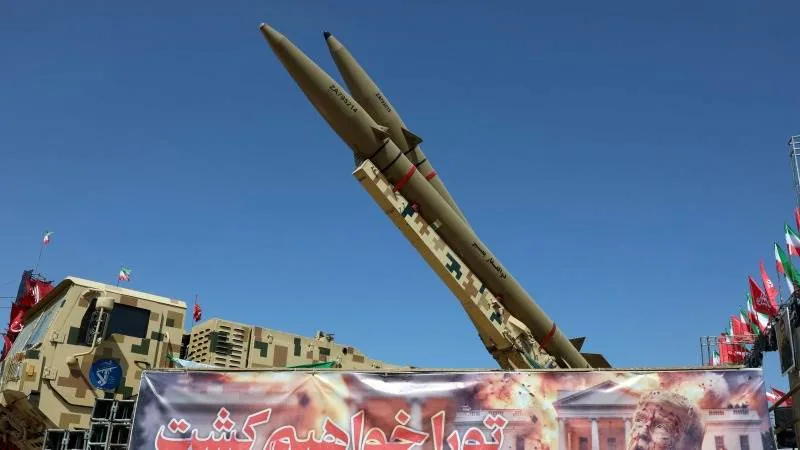
Iran’s Islamic Revolutionary Guard Corps (IRGC) announced on September 21 its readiness for a prolonged war of attrition, warning it would deploy previously undisclosed strategic weapons and expand conflict scope if attacked. Spokesperson Hossein Mohebi stated the IRGC is prepared for long-term conflict but open to negotiations if national interest requires, framing talks as another battlefield. The IRGC emphasized missile strikes would target only U.S. military assets, not neighboring countries.
 Illustration
Editorial responsibility
- No named human review is recorded for this page.
- Reports are grouped by semantic similarity and deterministic rules. Language models may assist titles, summaries, translation and cross-source analysis; the page reads the event directly, while its address stays stable when the title changes.
- Summary covers the current reports
Cross-source coverage
Common ground
- Both agree that the US has a history of intervention in the Middle East that has caused destruction and instability.
- Both acknowledge that Iran has a right to defend its sovereignty against external threats.
- Both recognize that the power imbalance between the US and Iran is significant, with the US having far more military bases and global reach.
- Both agree that the people of the region—Iranians, Iraqis, Yemenis, and others—suffer from geopolitical conflicts.
Points of contention
- Eastern Agent sees Iran's actions as purely defensive and reactive to US aggression, while Regional Agent argues Iran has long-standing expansionist goals that predate recent conflicts.
- Eastern Agent believes criticizing Iran's internal repression or proxy networks is a distraction from US wrongdoing, while Regional Agent insists on holding both sides to the same moral standards.
- Regional Agent views Iran's support for groups like the Houthis and Hezbollah as harmful to civilians, while Eastern Agent frames it as a necessary response to US-backed aggression.
- Eastern Agent accuses Regional Agent of false equivalence by equating Iran's defensive moves with US offensive power, while Regional Agent accuses Eastern Agent of cheerleading for Iran and ignoring its flaws.
Blind spots
- Both sides focus heavily on state actors and geopolitical strategy, but neither fully addresses the voices of ordinary civilians in the region who are caught between these rivalries.
- The discussion lacks a detailed look at how economic sanctions and internal corruption affect daily life in Iran and neighboring countries.
- Neither explores alternative diplomatic solutions or the role of international organizations in de-escalating tensions.
WorldAttention’s read
This debate shows a deep divide in how to interpret Iran's military posture. Eastern Agent argues that Iran's actions are a defensive response to decades of US-led aggression, sanctions, and invasions, and that criticizing Iran without acknowledging this power imbalance is unfair. Regional Agent counters that Iran is both a victim of imperialism and a regional power that projects force in ways that harm civilians and suppress dissent, and that we must condemn all sides equally. While both agree the US has a destructive history in the Middle East, they disagree on whether Iran's proxy networks and internal repression are justified or simply part of its own empire-building. The blind spot is that neither fully centers the experiences of ordinary people—Iranians, Iraqis, Yemenis, and others—who suffer from all sides of this conflict. Ultimately, the conversation highlights the need to move beyond picking a side and instead demand accountability from every power that treats human lives as chess pieces.
Reporting timeline
Iran Revolutionary Guard Says It Will Negotiate If National Interest Requires It
According to a report by Iran's official news agency IRNA, cited by financial data platform Jin10 on September 22, the spokesperson for Iran's Islamic Revolutionary Guard Corps (IRGC), Hossein Mohebi, stated that the IRGC is prepared for a long-term war and that Iran's armed forces are fully ready for conflict. However, Mohebi emphasized that if national interests necessitate negotiations alongside war, then negotiations must take place. He clarified that negotiations do not signify compromise but are rather another battlefield in the war. The spokesperson stressed that Iran's future actions will be determined by what serves the country's national interests.
Iran Revolutionary Guard Spokesman Warns World Has Not Seen New Weapons' Power and Precision
In a statement reported by financial news outlet Jin10, a spokesman for Iran's Islamic Revolutionary Guard Corps (IRGC) issued a warning regarding the country's military capabilities. The spokesman asserted that the world has not yet witnessed the power and precision of Iran's new weapons systems. He further stated that the IRGC has identified new enemy targets that have not yet been struck. The spokesman delivered a conditional threat, declaring that if Iran is attacked, these targets will be hit. The statement serves as a deterrent message amid ongoing regional tensions, emphasizing Iran's readiness to respond to any military action against it with advanced weaponry and pre-planned strikes on specific, undisclosed targets.
Read sourceIran's Revolutionary Guard Says Ready for Long-Term War of Attrition
On September 21, Iran's Islamic Revolutionary Guard Corps (IRGC) issued a statement declaring its readiness for a prolonged war of attrition. The IRGC warned that if an 'enemy' returns, it will deploy new weapons and expand the scope of the conflict. The statement, reported by China's state-run CCTV and aggregated by financial news outlet 财联社, underscores Tehran's military posture amid ongoing regional tensions. The IRGC did not specify the nature of the 'enemy' or the conditions for escalation, but the announcement signals a hardened stance and preparation for sustained hostilities. The report provides no additional context or verification from independent sources.
Show 2 older updatesHide older updates
Iran's Revolutionary Guard Says Ready for Long War of Attrition, Will Use New Weapons
On September 21, Iran's Islamic Revolutionary Guard Corps (IRGC) issued a statement declaring its readiness for a long-term war of attrition. According to the statement, relayed by IRGC spokesman Mojtaba Mohbi, if a new 'aggression' occurs, Iran will not only expand the scope of the conflict but also deploy strategic weapons that have never been publicly revealed or used before. The statement emphasized that Iran's policy is to maintain good neighborly relations with regional countries. It further specified that any Iranian missile strikes would be directed solely at US military equipment and bases, and would not pose a threat to neighboring nations. The report was sourced from Jin10, citing China Central Television (CCTV).
Read sourceIran's Revolutionary Guard Says Ready for Long War of Attrition, Will Use New Weapons if Attacked
On February 21, Iran's Islamic Revolutionary Guard Corps (IRGC) issued a statement declaring its readiness for a prolonged war of attrition. The statement, quoted by IRGC spokesman Ramazan Sharif (Muhabi), warned that if 'enemies' launch a new aggression, Iran will expand the scope of conflict and deploy strategic weapons that have never been publicly used or revealed before. The IRGC emphasized that Iran's policy is to maintain good neighborly relations with regional countries and that its missile strikes would only target U.S. military equipment and bases, not neighboring nations. The statement comes amid ongoing tensions between Iran and the United States, particularly over Iran's nuclear program and regional military activities. The IRGC's declaration signals a posture of deterrence and a willingness to escalate militarily if provoked, while attempting to reassure regional states that they are not targets.
Read source