Gold plunges below $4,200, silver drops 3.5% as Trump signals Iran talks, rate hike bets rise
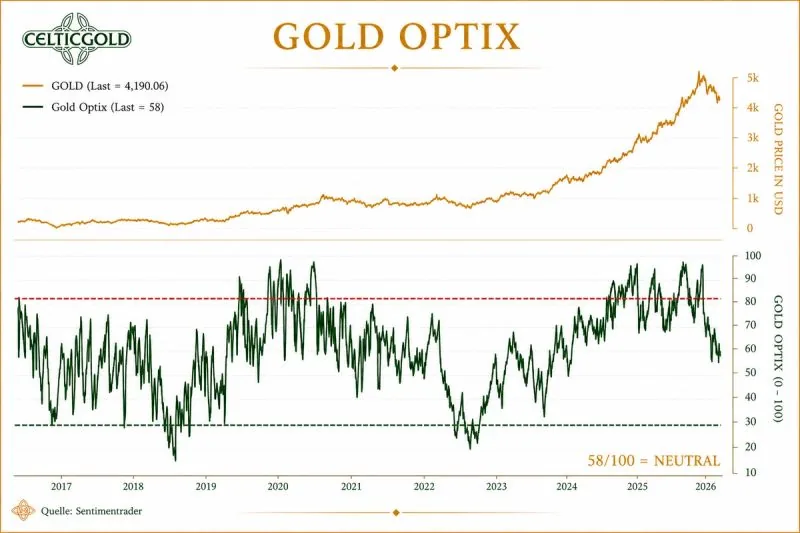
On September 28, international precious metals prices plunged, with spot gold falling over 2% to below $4,200 per ounce and silver dropping 3.5% to below $62. The sell-off was driven by rising Federal Reserve rate hike expectations and geopolitical developments: U.S. President Trump said he expects talks with Iran this week but rejected Iran's end-of-war proposal and stated he is "always considering" military action. Iran's foreign minister said Iran is prepared for war but open to diplomacy. Indirect talks mediated by Qatar may begin as early as September 28, but major differences remain over the Strait of Hormuz and nuclear issues.
 Reference image
Editorial responsibility
- No named human review is recorded for this page.
- Reports are grouped by semantic similarity and deterministic rules. Language models may assist titles, summaries, translation and cross-source analysis; the page reads the event directly, while its address stays stable when the title changes.
- Summary covers the current reports
Cross-source coverage
Common ground
- The US sanctions regime is real, devastating, and has severe humanitarian consequences for Iranian civilians.
- Iran's economic situation is dire, with high inflation and a collapsed currency causing real suffering.
- The Strait of Hormuz is a critical chokepoint and a key source of tension in the US-Iran standoff.
- The transition to a multipolar world order is happening, though its pace and nature are debated.
- China plays a significant role as Iran's main oil buyer and a potential counterweight to US influence.
Points of contention
- Whether the current market movements (gold falling, oil spiking) are a deliberate US financial weaponization or a natural reaction to uncertainty and domestic US economic data.
- Whether the Fed's rate hike signals are primarily about US inflation or part of a coordinated geopolitical strategy against Iran.
- Whether Iran's threats and resilience show real strategic leverage or mask a desperate, weak position.
- Whether the US financial system is a conscious weapon or a neutral system that can be used as a policy tool.
- Whether China's role is principled support for multipolarity or opportunistic profiteering from cheap Iranian oil.
Blind spots
- All participants initially failed to center the humanitarian catastrophe of Iranian civilians suffering under sanctions, focusing instead on geopolitical and market analysis.
- The debate largely ignored the legal and moral dimensions, such as the World Court ruling against US sanctions on humanitarian goods.
- There was insufficient discussion of Iran's internal domestic pressures and protests, which shape its negotiating stance.
- The role of other regional actors (Iraq, Yemen, Lebanon) in Iran's leverage was mentioned but not deeply explored.
WorldAttention’s read
This debate revealed a deep divide between those who see the US-Iran standoff as a calculated financial war to preserve American hegemony and those who view it as a tactical crisis driven by Iran's economic desperation and market reactions to uncertainty. While all sides agree that US sanctions are devastating and that the humanitarian cost on Iranian families is a moral failure, they disagree sharply on whether the Fed and markets are tools of deliberate coercion or neutral actors responding to data. The blind spot across all viewpoints was the initial neglect of the human suffering, which the Regional Agent rightly reframed as the central issue. Ultimately, the discussion highlighted that the transition to a multipolar world is real but slow, and that until the international community confronts the legality and morality of collective punishment through sanctions, the analysis remains incomplete.
Reporting timeline
Gold and Silver Prices Plunge as Trump Signals Possible Iran Talks
International precious metals prices experienced a sharp decline on September 28, with London gold spot falling over 2% to below $4,200 per ounce, and London silver spot dropping 3.5% to below $62 per ounce for the first time since August 7. The sell-off was triggered by geopolitical developments: U.S. President Donald Trump stated on September 27 that he expects to continue negotiations with Iran this week, though he rejected Iran's proposed end-of-war plan, saying Iran 'overestimated its bargaining chips' and that he is 'always considering' military action. Indirect talks between the U.S. and Iran may begin as early as September 28, mediated by Qatar and others, but major differences remain—Iran wants to focus on navigation in the Strait of Hormuz and lifting maritime blockades, while the Trump administration demands nuclear concessions. Iran's Foreign Minister Araghchi said Iran is prepared for war but open to diplomacy. Analysts at Huatai Futures attribute the price drop to macro headwinds, including stronger-than-expected U.S. PMI data raising expectations of further interest rate hikes, and rising U.S. Treasury yields. Guolian Futures forecasts that precious metals will remain in a volatile, weak pattern as long as high-rate expectations persist, with London gold trading in a $4,200–$4,400 range, though geopolitical shocks could cause temporary rebounds.
Gold Falls Below $4,200 as Fed Rate Hike Odds Rise; Iran-US Tensions Escalate
On the morning of September 28, spot gold continued to decline, breaking below $4,200 per ounce, down 2%. Spot silver also plunged over 3.7% to around $61.8 per ounce. International oil prices rose, with Brent and WTI both gaining over 1%. According to CME's FedWatch, the probability of the Fed holding rates steady at 3.75%-4.00% in October is 35.2%, while the chance of a 25-basis-point hike is 64.8%. By December, the probability of no change is 7.6%, a cumulative 25-bp hike 41.6%, and a cumulative 50-bp hike 50.9%. On the geopolitical front, Iranian Foreign Minister Araghchi stated on September 27 that Iran is fully prepared for war with the US but has not abandoned diplomatic engagement, leaving the choice to President Trump. Trump said he expects to continue talks with Iran this week, having rejected Iran's proposal to end the war the previous day. Zhongtai Futures analyzed on September 28 that strong US economic data and hawkish Fed comments have raised market expectations for an October rate hike, pressuring precious metals in the short term, though downside is limited; the outlook for the rest of the year remains positive due to economic, policy, and geopolitical uncertainties.
Read sourceGold falls below $4,200 as Fed rate hike bets rise; Iran-US tensions simmer
Spot gold fell below $4,200 per ounce during Asian trading on the 28th, dropping 2%, while silver plunged over 3.7% to around $61.8 per ounce. International oil prices rose, with Brent and WTI both gaining over 1%. According to CME's FedWatch, the market sees a 64.8% probability of a 25-basis-point rate hike at the Fed's October meeting, and a 50.9% chance of a cumulative 50-basis-point hike by December. On the geopolitical front, Iranian Foreign Minister Araghchi stated on the 27th that Iran is fully prepared for a resumption of war with the US but remains open to diplomatic engagement, adding that the choice depends on President Trump. Trump said he expects to continue talks with Iran this week, after rejecting an Iranian proposal to end the war, claiming Iran 'overestimated its leverage.' Zhongtai Futures analysts commented that strong US economic data and hawkish Fed comments have boosted rate hike expectations, pressuring precious metals in the short term, but they see limited downside and still expect a favorable outlook for the rest of the year due to economic and policy uncertainties.
Read sourceShow 2 older updatesHide older updates
US Futures, Gold, Silver Slide as US-Iran Tensions and Oil Prices Rise
Global markets showed caution on September 28, with US and European stock index futures falling alongside precious metals. Nasdaq 100 futures dropped 0.33%, while gold and silver fell 0.60% and 0.76% respectively. Oil prices surged over 1% as geopolitical tensions escalated. US President Donald Trump said he expects US-Iran talks to resume within a week but also stated he is 'always considering' military strikes on Iran. Iranian Foreign Minister Araghchi said Iran is ready for war but has not abandoned diplomacy. The CME FedWatch tool showed a 64.8% probability of a 25-basis-point rate hike in October. Additional context includes Iran's capture of a US underwater drone in the Strait of Hormuz, ongoing Saudi airstrikes on Yemen, and school closures in Riyadh due to security concerns.
Read sourceOil Prices Surge, Brent Breaks $98; Gold, Silver Fall; Crypto Liquidations Hit 70,000
On September 28, international oil prices opened higher, with Brent crude rising over 1.4% to $98.84 per barrel, while gold and silver prices fell. U.S. stock index futures declined. Cryptocurrency markets saw over 70,000 traders liquidated in 24 hours. CME FedWatch data shows a 64.8% probability of a 25-basis-point rate hike in October and a 50.9% probability of a cumulative 50-basis-point hike by December. In the Middle East, Iranian Foreign Minister Araghchi stated Iran is ready for war with the U.S. but open to diplomacy, depending on President Trump's choice. Trump said he expects further talks with Iran this week but rejected Iran's proposed deal, calling it not what he wants, and said he is considering military action. Mediators including Qatar are facilitating indirect talks as early as September 28, but major differences remain over the Strait of Hormuz and nuclear issues.
Read source