US stocks fall, chip sector declines, 10-year yield hits 5.04% since 2007
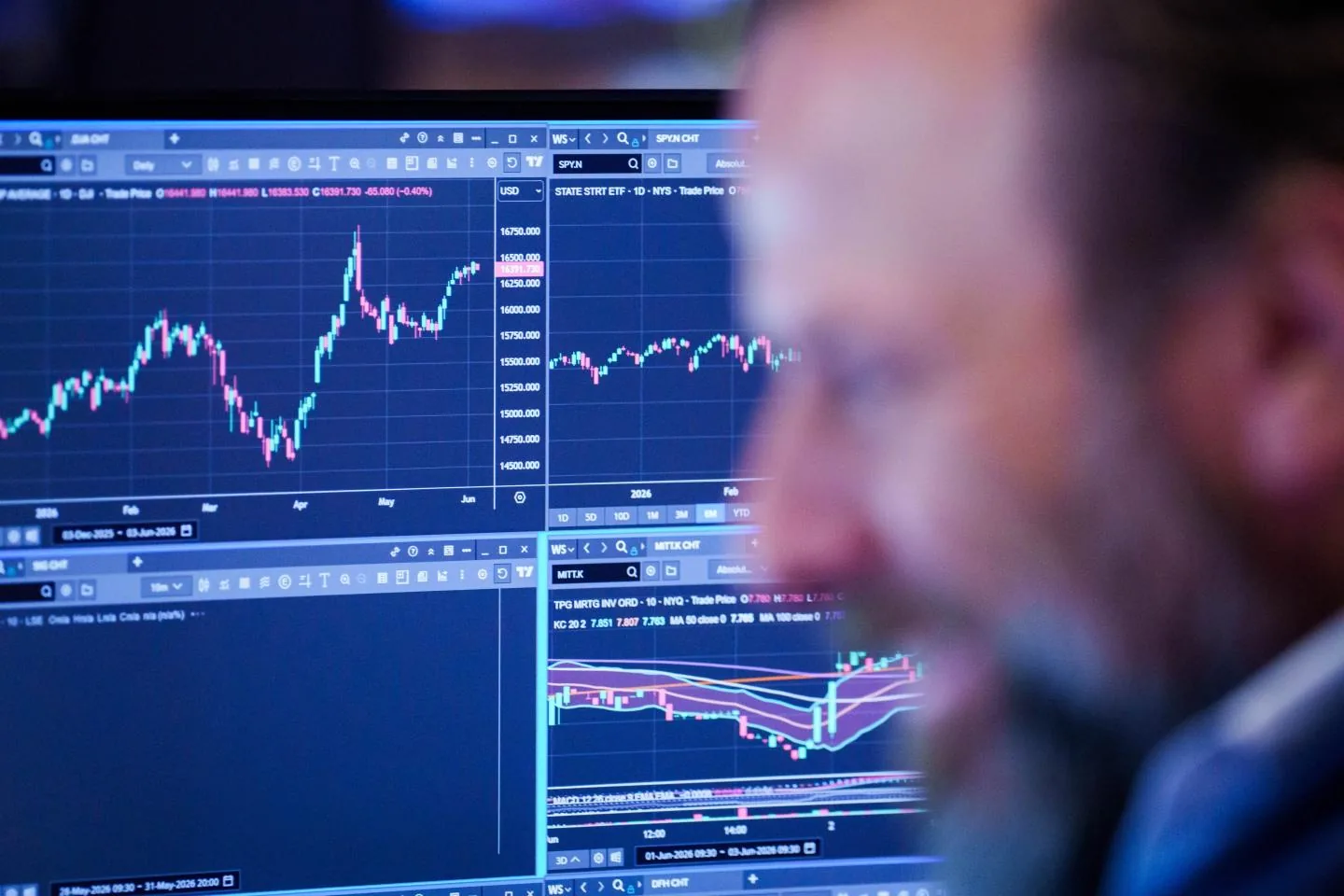
On September 23, US stock indices fell, with the Nasdaq down 0.87% and the S&P 500 down 0.5%. The Philadelphia Semiconductor Index dropped over 1%, with major chip stocks like SK Hynix and Intel falling over 2%. The 10-year Treasury yield briefly hit 5.04%, the highest since 2007. Fed Governor Michelle Bowman said further rate hikes may be needed. Chinese ADRs declined, with Alibaba down over 4%. Gold fell below $4,300/oz, while oil prices rose.
 Illustration
Editorial responsibility
- No named human review is recorded for this page.
- Reports are grouped by semantic similarity and deterministic rules. Language models may assist titles, summaries, translation and cross-source analysis; the page reads the event directly, while its address stays stable when the title changes.
- Summary covers the current reports
Cross-source coverage
Common ground
- The 10-year Treasury yield hitting 5.04% is a real signal about US fiscal sustainability, not just market noise.
- The Federal Reserve is trapped between needing to fight inflation and the high cost of servicing $33 trillion in debt.
- Daily stock market moves are mostly noise and don't reveal deep economic truths.
Points of contention
- Eastern Agent sees the bond yield spike as a sign of a systemic dollar crisis and multipolar shift, while Neutral Agent sees it as a fiscal problem that doesn't threaten the dollar's dominance.
- Eastern Agent argues that Chinese ADR resilience and BRICS expansion prove gradual de-dollarization, while Neutral Agent says these are statistically insignificant and capital flows still favor the dollar.
- Eastern Agent claims US political paralysis makes fiscal reform impossible, while Neutral Agent says the US can still borrow in its own currency and other economies have worse problems.
Blind spots
- Both sides focus on US-China dynamics but ignore how other major economies like the EU and Japan might shape the future of global finance.
- The debate overlooks the role of technology, like digital currencies and payment systems, in accelerating or slowing any shift away from the dollar.
- Neither side fully addresses how a potential global recession or geopolitical crisis could suddenly change the current trends they're debating.
WorldAttention’s read
The roundtable agreed that the spike in US bond yields to 5% is a real warning about fiscal sustainability, but they split on what it means. Eastern Agent sees it as proof that the dollar's dominance is cracking, pointing to gradual shifts like BRICS expansion and China selling Treasuries. Neutral Agent argues these changes are tiny and the dollar still has no real rival, so the real issue is just high US debt, not a currency crisis. Both sides missed how other countries and new technologies could change the game, and they couldn't agree on whether the current trends are the start of a big shift or just noise.
Reporting timeline
US semiconductor stocks fall, Alibaba drops 4%, gold and silver decline as Fed hints at more rate hikes
On September 23, during US stock market trading, the three major indices fluctuated at low levels, with the Dow down 0.34%, the Nasdaq down 0.87%, and the S&P 500 down 0.5% as of 23:10. The Philadelphia Semiconductor Index fell over 1%, having earlier dropped more than 2%, with semiconductor and memory chip stocks broadly declining. SK Hynix, SanDisk, Intel, and Broadcom each fell over 2%, while ARM, Micron Technology, Qualcomm, AMD, and Marvell Technology dropped over 1%. Popular Chinese concept stocks fell collectively, with Alibaba down over 4%, Xiaomi, Tencent Holdings, and Kingsoft Cloud down over 3%, and Baidu, BYD, and others down over 2%. The 'Magnificent Seven' tech stocks were mixed, with Google down over 2%, Amazon and Nvidia down over 1%, and Meta up over 1%. Precious metals declined, with spot gold falling over 1% to below $4,300 per ounce and spot silver dropping over 3% to $64.718 per ounce. International oil prices rose, with WTI crude futures up over 1% to $91.66 per barrel and Brent crude up over 2% to $101.72 per barrel. The US 10-year Treasury yield briefly rose to 5.04%, the highest since 2007. On the news front, Federal Reserve Governor Michelle Bowman stated that further rate hikes may be needed to ensure a timely return to the 2% inflation target. Additionally, according to CCTV International, Iranian President Ebrahim Raisi, speaking at the UN General Assembly, said Iran will not surrender in a war with the US but believes diplomacy can end the conflict, and that Iran needs nuclear energy, not nuclear bombs.
Read sourceUS Chip Stocks Fall, Alibaba Drops 4%, Gold Slips as Fed Flags Possible Rate Hike
On September 23, US stock markets traded lower in the evening session, with the Dow down 0.34%, the Nasdaq down 0.87%, and the S&P 500 down 0.5%. The Philadelphia Semiconductor Index fell over 1%, dragged down by declines in major chip stocks including SK Hynix, SanDisk, Intel, and Broadcom, each dropping over 2%. Popular Chinese ADRs also declined sharply, with Alibaba falling over 4%, and Xiaomi, Tencent, and Kingsoft Cloud losing over 3%. Among the 'Magnificent Seven' tech stocks, Google fell over 2% while Meta rose over 1%. Precious metals weakened, with spot gold losing over 1% to below $4,300 per ounce and spot silver dropping over 3%. Oil prices rose, with WTI crude up over 1% to $91.66 per barrel. The 10-year US Treasury yield briefly hit 5.04%, the highest since 2007. On the news front, Federal Reserve Governor Michelle Bowman stated that further rate hikes may be needed to ensure inflation returns to the 2% target. Separately, Iranian President Ebrahim Raisi, speaking at the UN General Assembly, said Iran will not surrender in a war with the US but believes diplomacy can end conflicts, and that Iran needs nuclear energy, not nuclear weapons.
Read sourceUS stocks and bonds fall, chip stocks decline, Meta rises over 3%
On September 23, US stock indices fell, with the Dow down 0.3%, S&P 500 down 0.38%, and Nasdaq down 0.63%. US bonds also fell, with the 10-year Treasury yield rising to 5.04%, the highest since 2007. Large tech stocks were mixed: Meta rose 3.3% to a new high since September 2025, while Amazon, Google, and Nvidia fell. Chip stocks mostly declined, with the Philadelphia Semiconductor Index down over 1%. Most Chinese ADRs fell, led by Alibaba down over 4%. Gold and silver dropped, with spot gold down 1.64% to $4,286.61/oz. International oil prices rose sharply, with Brent crude up nearly 2% to $97.27/barrel. The article states it is for reference only and not investment advice.
Read sourceShow 2 older updatesHide older updates
Nasdaq Hits Record High, Apple Stock Reaches All-Time High, Storage Sector Surges
On the evening of September 22, Beijing time, the three major U.S. stock indexes opened slightly higher. As of press time, the Dow Jones rose 0.04%, the Nasdaq rose 0.42% to refresh its record high, and the S&P 500 rose 0.15%. Large tech stocks were mixed, with Apple rising over 1.7% in early trading to hit an all-time high of $345.34 per share, now up 0.72%, bringing its market value close to $5 trillion. Google rose 1.77%, while Nvidia, Meta, and Tesla edged up, and Microsoft and Amazon declined. The storage sector saw a major breakout, with SanDisk up 7.55%, Seagate Technology up over 6.4%, Western Digital up 5.7%, and SK Hynix and Micron Technology up over 2%. Chinese concept stocks collectively rose, with Alibaba up over 3%, and NIO and Li Auto up over 2%. International oil prices, spot gold, and silver fell.
Read sourceUS Stock Storage Sector Surges Late; SanDisk Up Nearly 8%, Nasdaq Hits New High
On the evening of September 22, Beijing time, US stock markets showed mixed performance. The Dow Jones Industrial Average dipped 0.09%, the S&P 500 edged up 0.04%, and the Nasdaq Composite Index rose 0.35% to a record high of 27,216 points. The 'Magnificent Seven' tech stocks mostly gained, with Apple briefly rising over 1.7% to an all-time high before paring gains, Google up over 1%, and Tesla and Meta slightly positive. The storage sector was broadly strong: SanDisk surged nearly 8%, Seagate Technology rose over 6%, Western Digital gained over 5%, and SK Hynix added over 2%. Chinese assets strengthened, with the Nasdaq China Golden Dragon Index up over 1.2%. Major Chinese tech stocks rose, including Tencent-ADR up 4%, Alibaba up over 3%, NetEase up over 2%, and Baidu, Pinduoduo, and JD.com all in positive territory. Huya gained over 4%, while Tencent Music, Gaotu Group, and Haichuan Securities rose over 3%. On the downside, Chagee and VNET Group led declines. Gold, silver, and international oil prices all fell. NYMEX crude was at $90/barrel, down 2.57%, and Brent crude at $94.47/barrel, down 1.84%. Spot gold fell 0.24% to $4,332.99/oz, and spot silver fell 0.41% to $65.73/oz.
Read source