Reporting on this entity comes mostly from Eastern sources (source distribution, not a stance rating).
23%
66%
Western29 · 4%
Regional53 · 7%
Neutral / independent167 · 23%
Eastern493 · 66%
Latest Stories
Reader quick takes
0 takes
Loading reader quick takes…
Periodic recap
What changed for this subject in each tracking window — generated from matched events, delta-first.
· 1 event in window
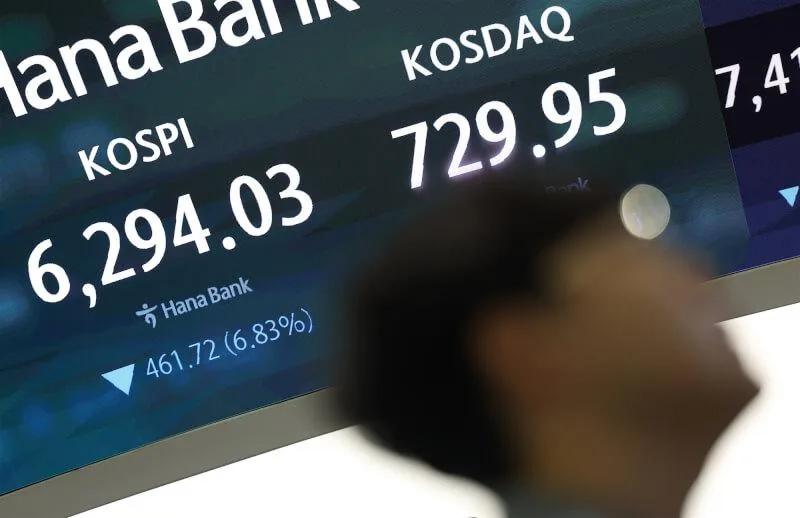
SK Hynix's decline deepened this period, extending the selloff from the previous digest. On October 15, Japanese and South Korean stocks plunged again, with South Korea's KOSPI falling more than 9% intraday and triggering its tenth circuit breaker of the year. SK Hynix preliminarily closed down 11.06%, while Samsung Electronics fell 9.48%. South Korea's financial regulator held an emergency meeting in the afternoon, after which losses narrowed somewhat.
SK Hynix preliminarily closed down 11.06%, extending its decline from the previous period's roughly 10% drop.
South Korea's KOSPI closed down 7.56%, after falling more than 9% intraday and triggering its tenth circuit breaker of the year.
Japan's Nikkei 225 closed down 4.90% at 64,425.95.
South Korea's financial regulator held an emergency meeting in the afternoon, after which losses narrowed.
Earlier recaps
· 1 event in window
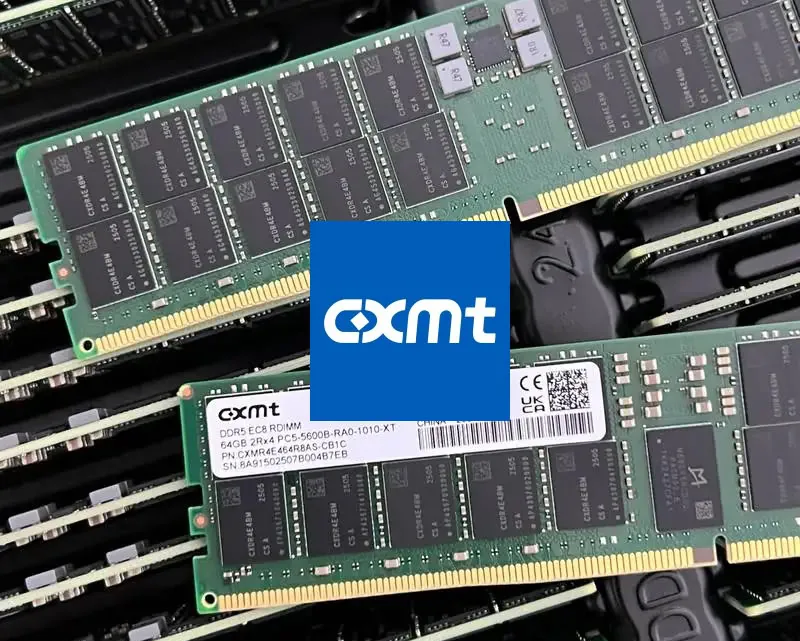
This period saw a single high-signal report directly involving SK Hynix, a sharp contrast to the previous quiet stretch of indirect coverage. On October 13, a broad selloff in semiconductor and AI-related stocks hit SK Hynix shares, which fell about 10%, while Samsung Electronics dropped roughly 7% and South Korea's Kospi closed down 5.5%. The rout was triggered by China's CXMT announcing a chip technology breakthrough, compounded by Broadcom CEO Hock Tan's warning about AI financing constraints and investor anxiety over AI spending returns.
· 1 event in window
This period saw a single indirectly related report, with no direct mention of SK Hynix. On October 8, multiple outlets covered Samsung Electronics' record third-quarter operating profit of roughly 107.4 trillion won ($80.1 billion), more than eight times the year-ago figure, driven by AI-server high-bandwidth memory demand, though both profit and revenue slightly missed analyst estimates. The coverage centered on Samsung and did not address SK Hynix's own operations or share price.
· 1 event in window
This period remained dominated by market context, with a single report directly naming SK Hynix. On September 28, the KOSPI fell over 2.5% in one session, with SK Hynix down 4.4% and Samsung Electronics down 5%, capping a 19.3% quarterly decline, the index's worst since early 2020. No specific catalyst was cited for the sell-off, and no company-specific operational developments were reported.
· 1 event in window
This period saw minimal SK Hynix-related activity, with only one indirectly related market report. US stocks fell on September 24 and 29, led by technology, semiconductor, and memory chip sectors, with memory chips among the worst performers, continuing the earlier discussion of slowing memory price growth, but with no direct developments in SK Hynix's operations or Solidigm's IPO. Overall, the event is market context with limited signal strength, and no major direct changes involving the company were reported.
· 2 events in window
This period's SK Hynix-related developments center on two items: the upcoming Q3 earnings report, with market expectations for combined operating profit with Samsung near a record 189.9 trillion won, though analysts have trimmed estimates due to won strength, and investor focus on slowing memory price growth, long-term supply agreements, and HBM4 profitability; and US Treasury data showing record foreign buying of US stocks, partly attributed to Korean investors diversifying, continuing the earlier discussion of fund flows in the Korean market. Overall, the events are mostly market context or forward-looking reports, with no major direct developments in SK Hynix's operations or Solidigm's IPO.
Tracked events
Events matched to this subject by the tracking pipeline, with signal scores.
· Signal 189.3
Japan and South Korea Stocks Plunge; Seoul Regulator Holds Emergency Meeting
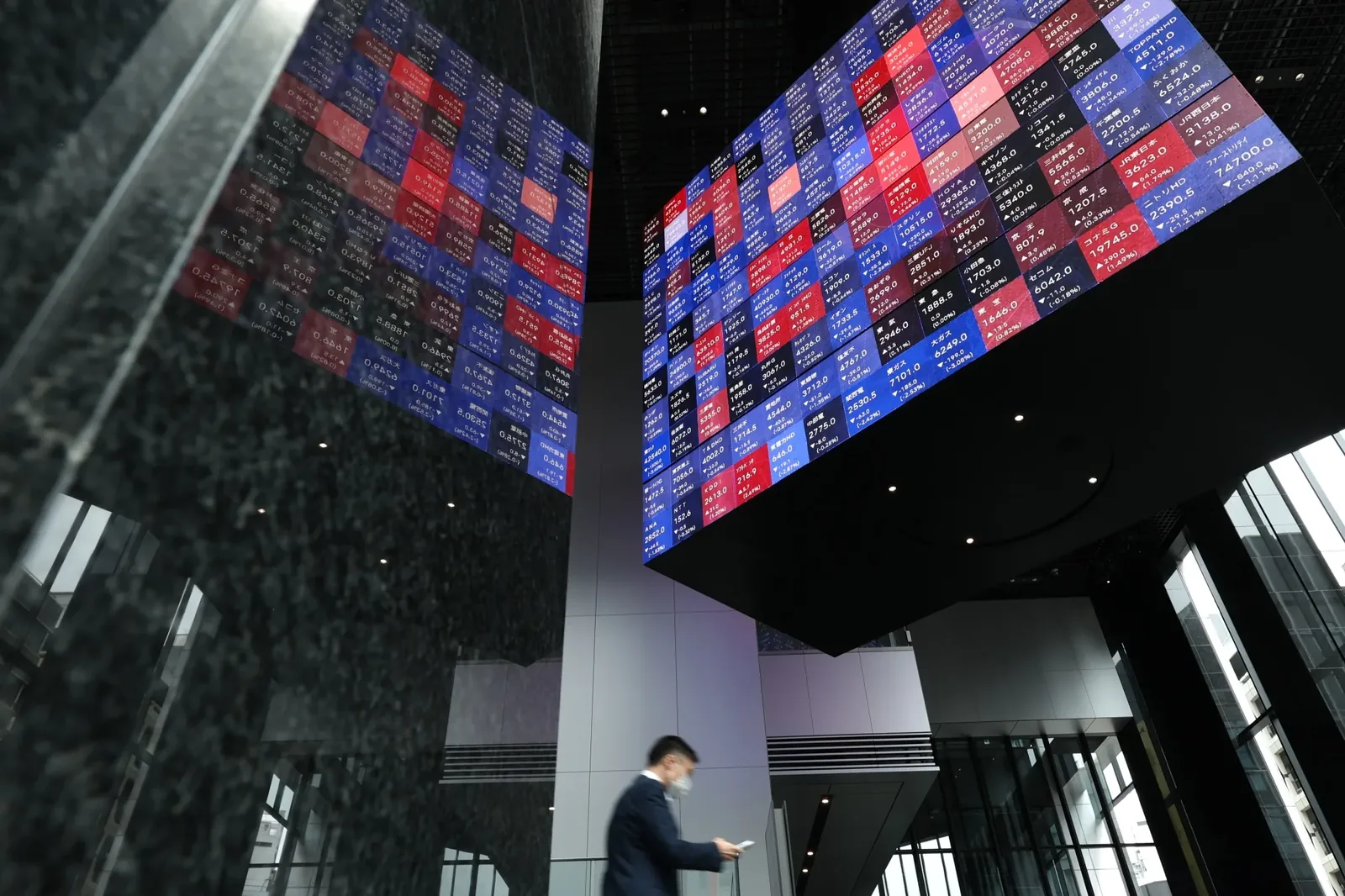
Japanese and South Korean stock markets suffered sharp declines on Thursday, October 15. The Nikkei 225 closed down 3,318.34 points, or 4.90%, at 64,425.95. South Korea's KOSPI closed down 454.54 points, or 7.56%, at 5,554.27 after falling more than 9% intraday, triggering the market's circuit breaker for the tenth time this year. South Korea's financial regulator convened an emergency meeting in the afternoon, after which the decline narrowed somewhat. SK Hynix preliminarily closed down 11.06%, and Samsung Electronics fell 9.48%.
A broad selloff in semiconductor and AI-related stocks intensified, with South Korea's Kospi closing down 5.5% after briefly falling more than 7%. Samsung Electronics and SK Hynix fell about 7% and 10% respectively, while the Philadelphia Semiconductor Index dropped over 7% from its monthly high and Taiwan's Taiex and Japan's Nikkei 225 each fell nearly 2%. The trigger was China's CXMT announcing a chip technology breakthrough, compounded by Broadcom CEO Hock Tan's warning about AI financing constraints and investor anxiety over AI spending returns.
Samsung Electronics reported a record operating profit of approximately 107.4 trillion won ($80.1 billion) for the third quarter of 2026, an eightfold increase year-on-year, driven by surging demand for high-bandwidth memory (HBM) chips used in AI data centers. The result slightly missed analyst estimates of 108.7 trillion won, and revenue of 195 trillion won also fell short. The company's chip division led the surge, while its consumer electronics division faced margin pressure. Samsung's stock remains about 25% below its June peak amid investor caution about the cyclical memory chip market.
South Korea's benchmark KOSPI index fell 19.3% in the third quarter, its steepest quarterly decline since the first quarter of 2020. On September 28, the index dropped over 2.5% in a single session, led by sharp declines in technology stocks Samsung Electronics (down 5%) and SK Hynix (down 4.4%). The Nikkei 225 also fell 0.73% that day. No specific catalyst was cited for the sell-off.
US stock markets fell on September 24 and 29, 2024, with the Nasdaq dropping 0.75% and 0.92%, the S&P 500 declining 0.51% and 0.77%, and the Dow falling 0.19% and 0.67% respectively. Technology and semiconductor stocks led the declines, with Oracle falling over 5%, ARM plunging over 8%, and Qualcomm dropping over 7%. Memory chip and optical communication sectors were among the worst performers.
South Korea's KOSPI index fell 2.70% to 6,889.74 on September 28, its first close below 7,000 in four trading days, as trading resumed after the Chuseok holiday. Heavy foreign selling of Samsung Electronics (down 5.43%) and SK Hynix (down 5.05%) drove the decline, with foreign investors net selling 3.24 trillion won. The drop was attributed to a surge in the 10-year U.S. Treasury yield to 5.22%, its highest since 2007, and Oracle's force majeure notice for its Project Jupiter data center, which weighed on AI hardware sentiment. Despite the sell-off, global banks like Goldman Sachs and JPMorgan maintained 12-month KOSPI targets of 12,000 and 12,500 respectively.
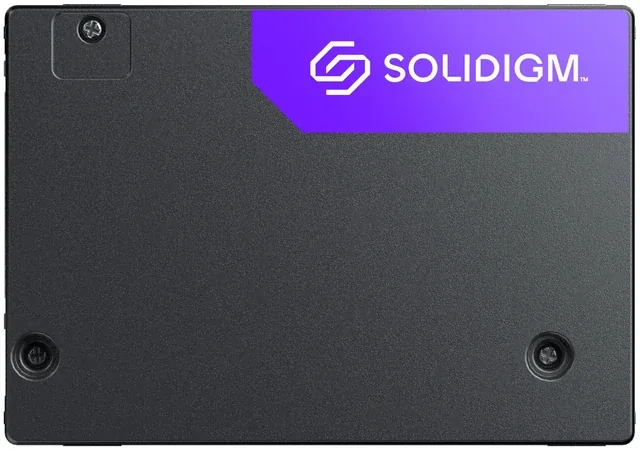
SK Hynix's US-based NAND flash and SSD subsidiary Solidigm is considering an initial public offering in the United States, with reports citing a potential valuation of up to $150 billion and a fundraising target of approximately $15 billion. The company has held competitive pitch meetings with investment banks, marking a substantive step in the listing process. The IPO could occur as early as next year or by 2027, though plans remain preliminary and subject to market conditions. The move has sparked investor concerns over SK Group's complex ownership structure, with SK Hynix shares falling up to 5% on September 28.
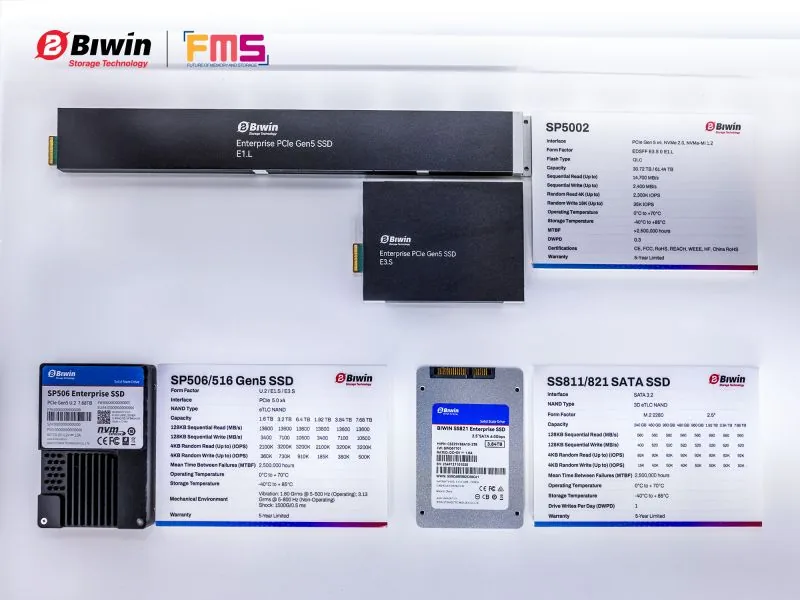
Chinese memory module maker Biwin Storage announced a ¥4.5 billion investment in a third-phase wafer-level advanced packaging and testing project in Dongguan's Songshan Lake, despite its first two phases (¥3.09 billion) not yet generating mass production revenue. The company aims to reach 10,000 wafers/month capacity by end-2027, targeting revenue contribution from late 2026. The move follows a 298% revenue surge to ¥155.75 billion in H1 2026, driven by AI demand, but comes amid negative operating cash flow of ¥6.261 billion and a stock price decline of over 50% from its June 2026 peak.
Samsung Electronics is accelerating construction of its P5 semiconductor complex in Pyeongtaek, South Korea, aiming to move equipment deployment for its first mass production line from Q3 2027 to Q2 2027 to meet AI-driven demand for high-value memory chips. Separately, SK Hynix has begun preliminary foundation work for a semiconductor wafer fab in Japan's Tohoku region, just one month after stating the project was still under evaluation. The facility's operational structure—independent or a joint venture with Kioxia—remains unclear.
Foreign investors purchased a record $942 billion in US stocks and investment fund shares in the 12 months through July 2026, the highest rolling total since US Treasury records began in 1985. Second-quarter net purchases surged 62% year-on-year to $426 billion, while foreign demand for US bonds cooled sharply to $188 billion from $314 billion in Q1. Analysts attribute the shift to strong US corporate profits and AI-driven growth, contrasted with deteriorating public finances and a $40 trillion national debt.
Iranian Foreign Minister Abbas Araghchi announced a plan to reopen the Strait of Hormuz within seven days if the U.S. takes necessary actions, conveyed via Qatar. This led to a retreat in oil prices, with WTI crude falling 2.33% to $92.41 and Brent crude dropping 2.14% to $104.32. U.S. stocks rose on the news, with the Dow gaining 0.93%. The proposal temporarily eased supply disruption fears, though market expectations for a Fed rate hike in October rose to nearly 70%.
Japanese stocks rallied on September 28, with the Nikkei 225 rising 0.93% after Japan's August corporate services price index rose 3.7% year-on-year. Bank of Japan minutes showed members noted core inflation near 2%. In contrast, South Korea's KOSPI fell 0.67%. Separately, SK Hynix subsidiary Solidigm is reportedly considering an IPO as early as next year, aiming to raise $15 billion at a potential valuation of up to $150 billion, and is evaluating building its first US NAND flash production facility.
Samsung Electronics and SK Hynix are set to report third-quarter earnings with combined operating profit forecast near a record 189.9 trillion won, driven by AI demand. Analyst estimates have been trimmed slightly due to won strength, not a market downturn. Investors are watching memory price sustainability, long-term supply agreements, and HBM4 profitability to gauge if the boom is structural or temporary.
Shinyoung Securities analyst Kim Hak-kyun reports that South Korean retail investors, who previously drove the KOSPI’s rally, are now exiting en masse, with net outflows of 13.5 trillion won in August and 9.83 trillion won in September through the 18th. He argues that foreign buying is now critical for a rebound, contingent on easing Middle East tensions, stable oil prices, and lower US long-term interest rates. The shift follows a sharp market correction from June highs.
Iranian Foreign Minister Abbas Araghchi stated on September 24 that Iran submitted a new draft proposal to the U.S. via Qatar to reopen the Strait of Hormuz within seven days if the U.S. meets conditions from a June memorandum. U.S. officials described talks as "positive and constructive." The development drove international oil prices down over 2%, with WTI crude falling to $92.44 per barrel and Brent crude dropping below $98, boosting U.S. stock markets.
Enterprise SSD demand is surging in the second half of 2024, driven by AI developments in North America and China. TrendForce reports major US cloud providers have raised procurement forecasts, pushing Q4 orders toward a record high. Citi Research predicts 2027 eSSD demand will grow 52.9% year-on-year, creating a NAND supply deficit of -6.1%. Key drivers include North America's Agent AI expansion and China's KV cache offloading technology promoted by DeepSeek. NAND manufacturers are tightening capacity and pricing, supporting further eSSD price increases through Q4.
On September 25, AI hardware stocks saw broad gains in US pre-market trading, with nearly all major semiconductor and AI-related companies posting positive movements. Arm Holdings led with a 2.85% rise, followed by Coherent at 2.17% and AMD at 1.94%. The Direxion Daily Semiconductor Bull 3X Shares ETF rose 3.34%. No specific catalyst was cited.
US stock indexes closed mixed on September 24, with the Dow down 0.31%, the S&P 500 flat, and the Nasdaq up 0.01%. Memory chip stocks led declines, with ARM dropping nearly 8% and Western Digital falling nearly 5%. Meta surged 4.5% to a one-year high after launching a handheld AI device called Muse Charm. Intel gained nearly 4% on a reported collaboration with Alibaba Cloud. International oil prices rose sharply, with Brent crude up 3.41% to $106.60 per barrel.
South Korea’s KOSPI index surged in mid-September 2024, breaking above 7,000 points for the first time in the period, driven by strong gains in technology heavyweights Samsung Electronics and SK Hynix. The rally followed a record high on the U.S. Nasdaq and was supported by bargain hunting after a recent correction. Japanese markets were closed for three consecutive days from September 21 to 23 due to national holidays, while South Korean trading continued.
Investor Michael Burry disclosed on September 22 that he has significantly increased short positions in Micron Technology, Nebius, the iShares Semiconductor ETF (SOXX), and Palantir, describing the moves as "quite large." Burry argues the memory chip price surge is a temporary supply dislocation from manufacturers shifting capacity to AI-focused HBM, not structural demand. He warns of a "violent sell-off" as production reverts. Acer CEO Jason Chen's warning of rising Chinese memory output and inventory buildup supports Burry's bearish thesis.
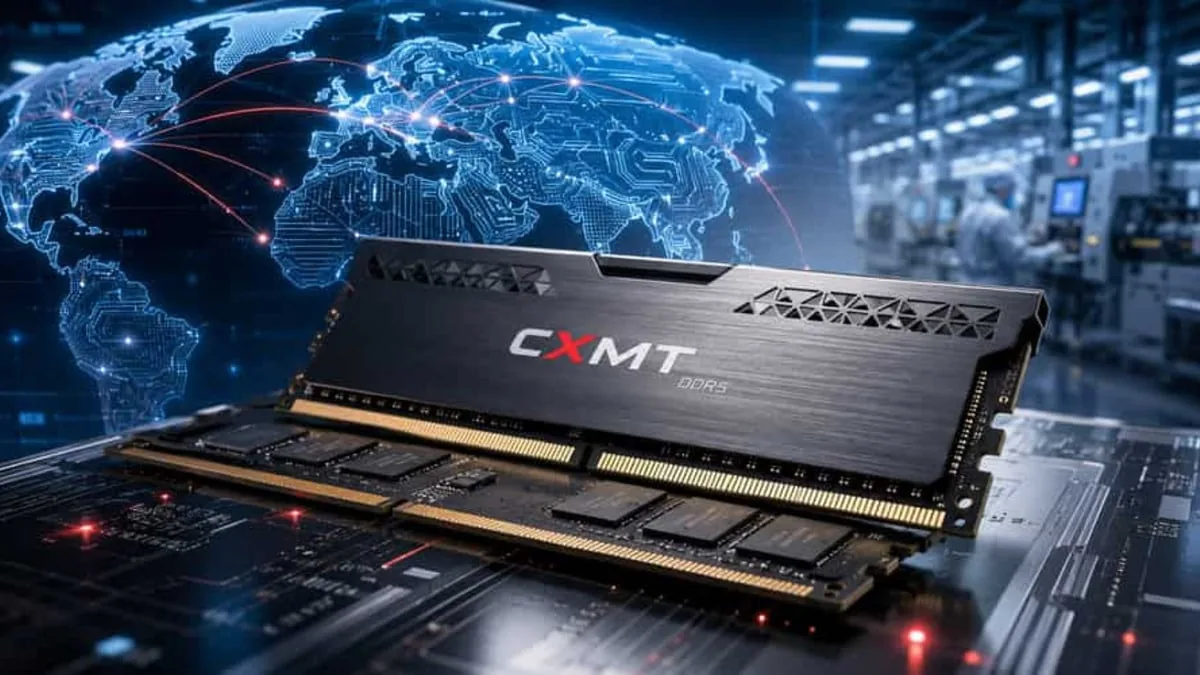
Chinese DRAM leader Changxin Technology (CXMT) announced mass production of its fifth-generation (G5) process platform on September 20, 2026, showcasing 24GB LPDDR5X products. Its shares rose up to 6% on September 21, reaching a market cap of 3.9 trillion yuan. The company cautioned that yield ramp-up will take time and sales are not yet significant. Separately, South Korea's chip exports surged 259% year-on-year in the first 20 days of September to $34.12 billion. UBS raised its global AI capex forecast to $998 billion in 2026 and $1.447 trillion in 2027, citing rapid memory price increases.
JPMorgan and Morgan Stanley have released reports countering market fears of an HBM specification downgrade, stating that total bit demand remains strong with a 63% CAGR from 2026 to 2028. The supply-demand gap will narrow only slightly from -20% to -16%, with shortages persisting through 2028. ASIC custom chips are expected to surpass Nvidia as the largest HBM buyer by 2027. HBM average selling prices are forecast to rise 42% in 2027 and 25% in 2028.
On September 23, U.S. stock indices fell sharply, with the S&P 500 dropping nearly 0.8% in its largest single-day decline in over a month. The tech-heavy Nasdaq fell 1.13%, and the "Magnificent Seven" tech index dropped 1.18%, led by a 3% decline in Google. Semiconductor and optical communication stocks also fell broadly. In commodities, international gold prices declined while oil prices rose. Analysts attributed the tech selloff to interest rate pressures on valuations rather than a change in AI industry trends.
On September 23, US stock markets opened lower, with the Nasdaq falling 1.13%, led by semiconductor stocks after prominent short-seller Michael Burry increased his short position against Micron Technology, warning of a "violent sell-off" due to a cycle reversal. Chip stocks including SK Hynix, Intel, AMD, and Nvidia fell 1-4%. US mortgage rates rose to 7.12%, the highest since May 2024, pressuring the housing market. Gold and silver prices also dropped sharply, with spot gold falling below $4,300.
Micron Technology (NASDAQ: MU) stock has surged past $1,000, driven by AI demand for memory chips, as the company prepares to report fiscal Q4 earnings on September 30, 2026. Wall Street expects revenue of approximately $50-51 billion (350% year-over-year growth) and EPS of about $31.35. Analysts are divided: some see continued upside from tight supply and strategic customer agreements worth $100 billion, while others warn of cyclical peak risks and new fab supply coming online in 2028-2029.
CLSA published a research report on September 22 expressing a bullish outlook on South Korean semiconductor companies' role in the Agentic AI supply chain, citing structural demand for high-bandwidth memory and tight supply. The brokerage assigned 'high conviction outperform' ratings to SK Hynix, Samsung Electro-Mechanics, and EO Technics. On September 23, South Korea's KOSPI index opened 1.9% higher, with Samsung Electronics and SK Hynix rising over 2-3%, tracking gains in U.S. semiconductor stocks where the Philadelphia Semiconductor Index closed up over 2%.
Meta’s new personal AI agent, Muse, topped Apple’s free app chart shortly after its September launch, driving a global rally in AI and semiconductor stocks. The Philadelphia Semiconductor Index surged 4.3% on September 22, and Meta shares rose 11%. South Korean chipmakers Samsung and SK Hynix gained about 3%, lifting the KOSPI. However, the rally partially reversed the next day as oil price concerns and market caution returned, with Samsung and SK Hynix giving back roughly 3.5% of gains.
Server-grade DDR5 DRAM chips now cost 1.84 times the price of gold per gram, according to TrendForce data from August 28, 2026. The average spot price for a 16GB server DDR5 chip was $53.933, equating to about $269.7 per gram versus gold's $146.8 per gram. The surge is driven by AI demand—AI servers require 8-10 times more DRAM than standard servers—and supply constraints as Samsung, SK Hynix, and Micron shift capacity to high-margin HBM. TrendForce forecasts DRAM contract prices to rise 58-63% quarter-on-quarter in Q2 2026, with Citigroup raising its 2026 average selling price growth forecast to 88%. The impact is spreading to PCs, smartphones, and automotive sectors.
SK Hynix subsidiary Solidigm is evaluating construction of its first NAND flash memory production plant in the eastern United States, according to multiple sources. The company currently manufactures only in Dalian, China. The evaluation is driven by surging AI data center demand and pressure from the Trump administration, which has threatened tariffs of up to 100% on Korean chipmakers. SK Hynix stated Solidigm is reviewing options but no plans have been finalized.
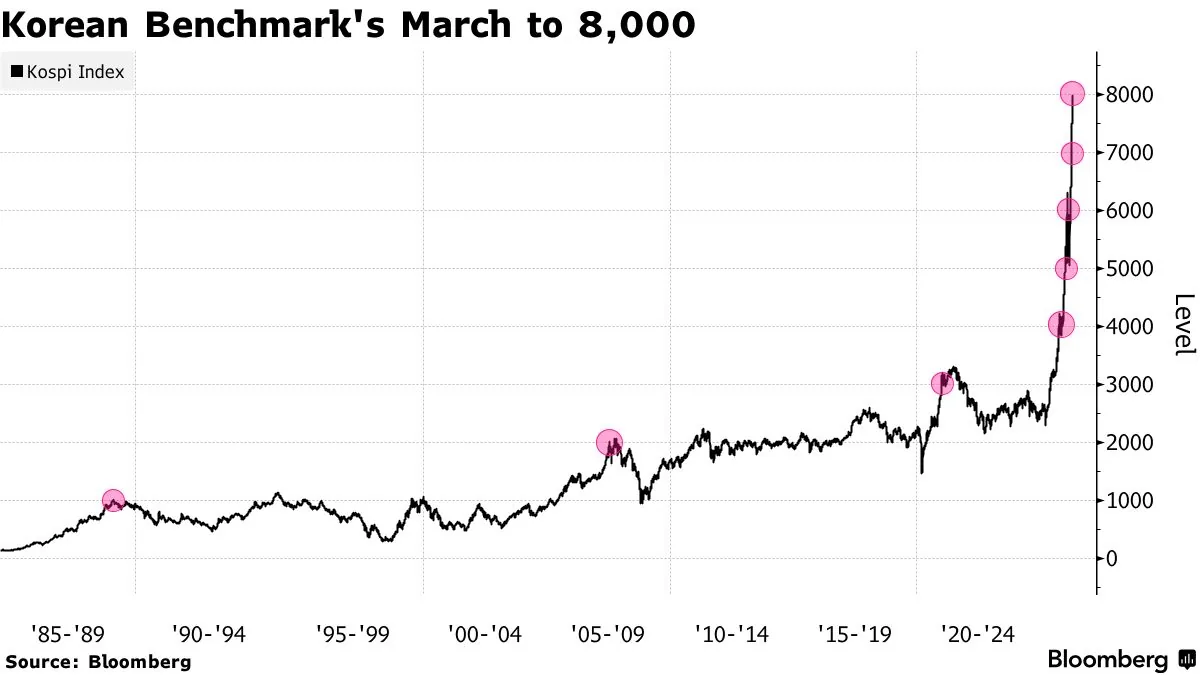
UBS lowered its 12-month target for South Korea's KOSPI index by nearly 10% to 8,000 points from 8,800, citing rising domestic interest rates, a strengthening won, and surging oil prices. The revision reduces the implied price-to-earnings ratio from 8x to 7x. Consensus earnings-per-share revisions turned negative for the first time this year in September. The Bank of Korea has raised rates twice since July, and crude oil has breached $100 per barrel. UBS expects the index to remain range-bound until third- and fourth-quarter earnings reports provide clarity.
The Philadelphia Semiconductor Index (SOX) surged 4% to 12,398.17 points on September 22, driven by broad gains in major chip stocks. Intel jumped 11.97%, AMD rose 8.82%, and Arm Holdings climbed 15.91%. The rally extended a multi-day advance that began September 17, with the index reaching its highest level in over a month. The Nasdaq Composite rose over 2%, while the Dow and S&P 500 also gained.