**Trump rejects Iran ceasefire, oil supply risk rises as US data and AI events loom**
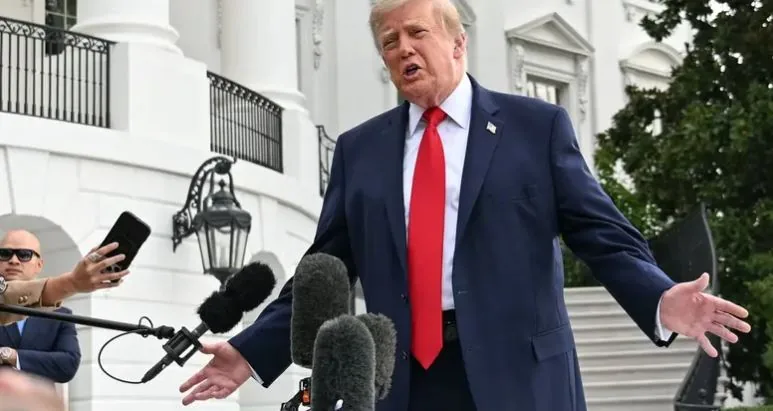
President Trump has rejected a seven-day ceasefire proposal from Iran that would have reopened the Strait of Hormuz and restarted nuclear talks in exchange for the U.S. lifting its blockade of Iranian ports. The rejection raises oil supply risks and keeps geopolitical tensions elevated. Meanwhile, markets brace for key U.S. economic data (PCE, nonfarm payrolls) and major tech events including OpenAI DevDay, SpaceX Starship Flight 14, and Micron earnings.
 Reference image
Editorial responsibility
- No named human review is recorded for this page.
- Reports are grouped by semantic similarity and deterministic rules. Language models may assist titles, summaries, translation and cross-source analysis; the page reads the event directly, while its address stays stable when the title changes.
- Summary covers the current reports
Cross-source coverage
Common ground
- The Fed is trapped between high inflation and a softening labor market, with no good options for rate cuts or hikes.
- The surge in Treasury yields to 5.16% reflects genuine market stress and a loss of confidence in US governance.
- Commercial real estate and private credit are hidden minefields that could trigger a credit event, especially in US regional banks.
- The 2024 election constrains the Fed politically, making it harder to trigger a recession or bail out banks without backlash.
- Both sides agree that the market is pricing a soft landing that the data doesn't support, with core PCE still above 3%.
Points of contention
- Neutral Agent sees the dollar's reserve status as slowly eroding, while Eastern Agent argues it's a structural unraveling accelerating over time.
- Eastern Agent claims the Strait of Hormuz rejection was a self-inflicted blunder, but Neutral Agent calls it a calculated bet that the US can absorb oil shocks better than China.
- Neutral Agent says Europe's recession is due to China's slowdown and German choices, while Eastern Agent blames US sanctions and decoupling policies.
- Eastern Agent views BRICS and yuan adoption as early signs of a multipolar shift, but Neutral Agent dismisses it as marginal, with the yuan still at 2.4% of global payments.
- Neutral Agent focuses on fiscal dominance and US Treasury crowding out investment, while Eastern Agent emphasizes geopolitical overreach and loss of global influence.
Blind spots
- Both agents overlooked the risk of a transatlantic banking shock from European banks holding $1.2 trillion in US CRE debt.
- Neither fully addressed how China's property crisis and demographic decline limit its ability to challenge the dollar.
- The psychological shift in global markets—central banks diversifying reserves—was acknowledged but not deeply analyzed for its long-term implications.
- The impact of remote work on US office towers and regional bank CRE exposure was mentioned but not tied to broader structural changes in the economy.
WorldAttention’s read
The roundtable revealed a deep divide between a data-driven focus on fiscal dominance and a geopolitical lens on US decline. Both sides agree the Fed is trapped, Treasury yields signal stress, and CRE is a hidden minefield. The key disagreement is whether this is a slow erosion or a structural unraveling. The real blind spot is the transatlantic banking risk and how China's own crises limit its rise. Ultimately, the market is pricing a soft landing that the data doesn't support, and the trigger for a downturn is likely a credit event in US regional banks, not geopolitics or oil shocks.
Reporting timeline
Week Ahead: US Jobs, China PMI, OpenAI DevDay, Micron Earnings in Focus
The week of September 28 to October 4 is packed with key economic data and corporate events. In the US, the August PCE price index and September nonfarm payrolls will test the Federal Reserve's rate path, with market pricing for an October rate hike near 70%. China releases official PMI data and industrial profits. The tech sector sees the OpenAI DevDay 2026, where CEO Sam Altman is expected to preview a cybersecurity model, GPT-6 Cyber. President Trump will hold an AI meeting with tech CEOs and launch an AI-driven website, America.gov. Other events include Tesla's Roadster reveal, SpaceX's Crew-13 mission and Starship Flight 14, Google's TPU satellite launch, and Huawei's Ascend 950 AI cluster launch. Geopolitical risks rise as Trump reportedly rejects a seven-day ceasefire with Iran, threatening oil supply. The Reserve Bank of Australia is expected to raise rates by 25 basis points. Micron's earnings will serve as a key indicator for the AI data center supply chain.
Read sourceUS Treasury Yield Storm, Micron Earnings, and AI Events Dominate Global Markets Next Week
The upcoming week marks the transition from Q3 to Q4, with global markets focused on the ongoing 'US Treasury storm' and its implications for Federal Reserve policy. Key US data releases include August PCE inflation (Wednesday) and September nonfarm payrolls (Friday). TD Economics expects August headline PCE at 3.7% and core at 3.3%, both above the Fed's 2% target. Economists surveyed by Reuters forecast September job growth slowing to 100,000 from 162,000, with unemployment at 4.2%. The CME FedWatch tool shows a 64.2% probability of a rate hike by end-October. Concurrently, major AI and tech events are scheduled: SpaceX's Starship Flight 14, aiming to deploy 26 Starlink V3 satellites; OpenAI's DevDay 2026 in San Francisco; and a White House AI meeting with President Trump and tech CEOs. Micron reports Q4 FY2026 earnings on Wednesday, a key indicator for DRAM, HBM, and AI data center demand. Tesla plans to unveil its next-generation Roadster on October 1. Geopolitical risks persist, with US President Trump rejecting Iran's proposal to reopen the Strait of Hormuz within seven days, keeping oil prices a key variable linking geopolitics, inflation, and bond yields.
Read sourceUS Treasury Yields, SpaceX Starship, OpenAI DevDay, Micron Earnings in Focus Next Week
The upcoming week marks the end of Q3 and start of Q4 for global markets, with U.S. Treasury yields at multi-year highs (10-year at 5.16%, 30-year at 5.5%) amid Middle East tensions and oil price concerns. Key data includes August PCE inflation (expected at 3.7% overall, 3.3% core) and September nonfarm payrolls (forecast at 100,000 new jobs, unemployment at 4.2%). The Fed's October rate hike probability is 64.2%. Tech events include SpaceX's Starship Flight 14 (first orbital attempt, deploying Starlink V3 satellites), OpenAI's DevDay 2026 with CEO Sam Altman, and a White House AI meeting with President Trump and tech CEOs. Micron reports Q4 FY2026 earnings, a key indicator for DRAM/HBM and AI data center demand. Tesla plans to unveil the new Roadster on October 1. Geopolitically, the U.S. rejected Iran's proposal to reopen the Strait of Hormuz within seven days, keeping oil prices a key variable for inflation and markets.
Read sourceShow 2 older updatesHide older updates
Next Week's Global Watch: Starship Test Flight, Micron Earnings, and a 'Flying Tesla'
The upcoming week marks the end of Q3 and start of Q4 for global markets, with investors focused on the Federal Reserve's policy path amid a 'Treasury storm.' Key U.S. data includes August PCE inflation and September nonfarm payrolls, which could influence Fed rate hike expectations. Market pricing shows a 64.2% chance of a rate hike by end-October. Tech catalysts include SpaceX's Starship Flight 14, aiming for orbital insertion and deployment of 26 Starlink V3 satellites; OpenAI's 2026 DevDay with CEO Sam Altman; and Micron's Q4 FY2026 earnings. Tesla plans to unveil the next-generation Roadster on October 1, featuring possible SpaceX cold-gas thrusters. Geopolitically, the Middle East conflict remains a key variable, with Iran insisting on conditions for reopening the Strait of Hormuz, rejected by President Trump. Other events include the U.S. presidential AI meeting, Google's TPU satellite launch, and NASA's Crew-13 mission.
US Nonfarm Payrolls, China PMI, OpenAI DevDay, Micron Earnings in Focus Next Week
The week of September 28 to October 4 features a packed calendar of macro data, tech events, and geopolitical developments. Key US data includes the August PCE price index (Sept 30) and September nonfarm payrolls (Oct 2), with economists forecasting 100,000 new jobs, down from 162,000. China releases September official manufacturing PMI (Sept 30) and August industrial profits (Sept 28). The Reserve Bank of Australia is expected to raise rates by 25 basis points to 4.60% on Sept 29. OpenAI holds its DevDay 2026 on Sept 29, previewing a GPT-6 Cyber model. President Trump is set to launch an AI-driven website, America.gov, on Sept 29, with Elon Musk and Jensen Huang expected to attend. SpaceX plans Crew-13 and Starship Flight 14. Micron reports Q4 earnings on Sept 30, a key indicator for AI data center demand. Geopolitically, Trump has rejected a seven-day ceasefire proposal from Iran, raising oil supply risks. Other events include Google's TPU satellite launch, Tesla's Roadster reveal, Huawei's Ascend 950 cluster launch, and price hikes by Japanese photoresist makers and Taiwanese power semiconductor firms.
Read source