Zelenskyy Says IMF Will Help Ukraine Raise Part of Next Year's Funding
Ukrainian President Volodymyr Zelenskyy announced on September 25 that the International Monetary Fund and European Union have responded positively to Ukraine’s financing request. Following a meeting with IMF Managing Director Kristalina Georgieva, Zelenskyy stated the IMF will help Ukraine raise part of its 2025 funding needs. No specific amounts or mechanisms were disclosed.
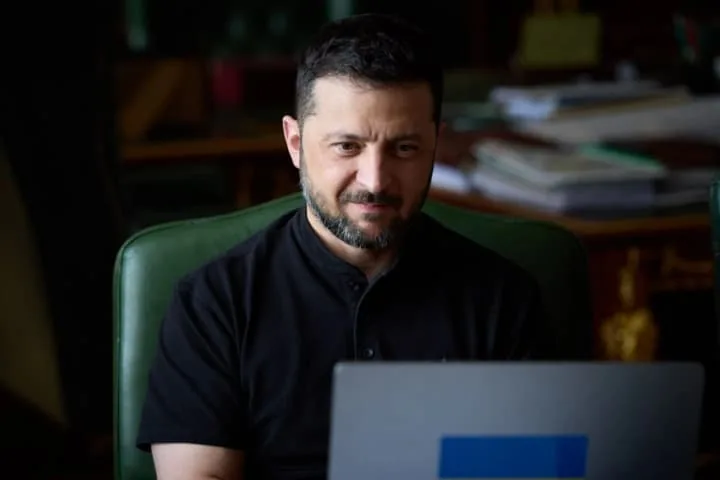 Reference image
Editorial responsibility
- No named human review is recorded for this page.
- Reports are grouped by semantic similarity and deterministic rules. Language models may assist titles, summaries, translation and cross-source analysis; the page reads the event directly, while its address stays stable when the title changes.
- Summary covers the current reports
Cross-source coverage
Common ground
- Both sides agree that Ukraine's $20 billion Eurobond restructuring is a major unresolved issue that could unravel the entire financing plan.
- Both acknowledge that Ukraine's budget deficit of around 20% of GDP makes external funding necessary to keep the civilian state running.
- Both recognize that the psychological impact of IMF approval matters for Ukrainian morale and stability.
- Both agree that the current financing path is unsustainable long-term, but the alternative of immediate state collapse is worse.
Points of contention
- They disagree on whether IMF conditions are genuinely enforced or just theater, with one side pointing to specific laws passed and the other citing corruption rankings and waived benchmarks.
- They disagree on whether the 2022 Istanbul peace talks were a lost opportunity or a surrender demand, with one side blaming Western pressure and the other citing Russian atrocities.
- They disagree on whether the West is financing a proxy war or providing a necessary lifeline for a sovereign nation under attack.
- They disagree on whether a ceasefire would lead to peace or just give Russia time to rearm.
Blind spots
- Both sides underplay the role of private creditors and the risk of a default that could lock Ukraine out of capital markets for a decade.
- Neither fully addresses how Ukraine's domestic politics—like the need to maintain public trust and prevent capital flight—shapes Zelenskyy's statements.
- Both overlook the possibility that Russia's own fiscal problems and shrinking war fund could limit its ability to sustain the conflict long-term.
WorldAttention’s read
This debate shows there's no easy answer for Ukraine's financing. Both sides agree the current path is unsustainable, but stopping aid would cause immediate state collapse. The real tension is between seeing IMF loans as a necessary evil to keep Ukraine running versus viewing them as a trap that prolongs war and hurts ordinary people. The unresolved $20 billion bond restructuring is a ticking time bomb neither side fully addresses. Ultimately, the choice is between bad and worse options, with no clean exit in sight.
Reporting timeline
Zelensky Says EU and IMF Understand Importance of Aid to Fill Ukraine Budget Gap
Ukrainian President Volodymyr Zelensky stated that the European Union and the International Monetary Fund are aware of the importance of providing assistance to Ukraine to cover its budget deficit. The statement, reported by financial news outlet Jin10, underscores Kyiv's ongoing need for external financial support amid the war with Russia. Zelensky's remark highlights the recognition by key international financial institutions of Ukraine's fiscal challenges, though no specific aid amounts or timelines were mentioned in the brief report.
Read sourceZelenskyy Says EU and IMF Understand Importance of Helping Ukraine Fill Budget Gap
Ukrainian President Volodymyr Zelenskyy stated that the European Union and the International Monetary Fund (IMF) recognize the importance of assisting Ukraine in covering its budget deficit. The statement, reported by financial news outlet Jin10, highlights ongoing international financial support discussions for Ukraine amid its war with Russia. The budget gap refers to the shortfall between Ukraine's government revenues and expenditures, which has been exacerbated by the conflict. Zelenskyy's comment suggests that key international financial institutions are receptive to providing further aid to stabilize Ukraine's economy, though no specific funding amounts or conditions were mentioned in the brief report.
Read sourceZelenskyy Says EU and IMF Respond Positively to Ukraine's Financing Request
Ukrainian President Volodymyr Zelenskyy stated on September 25 that the European Union and the International Monetary Fund have reacted positively to Ukraine's financing request. The statement, reported by Chinese financial media outlet Cailianshe, indicates continued international financial support for Ukraine amid its ongoing conflict with Russia. No further details on the amount or terms of the financing were provided in the brief report.
Show 2 older updatesHide older updates
Zelenskyy says IMF will help Ukraine raise part of next year's funding after meeting with Georgieva
Ukrainian President Volodymyr Zelenskyy announced that the International Monetary Fund (IMF) will assist Ukraine in raising part of its funding needs for the coming year. The statement was made following a meeting with IMF Managing Director Kristalina Georgieva. The announcement underscores ongoing international financial support for Ukraine amid its war with Russia, though specific amounts or mechanisms were not detailed in the report. The IMF's role is framed as facilitative, helping to secure a portion of the required funds rather than providing the full amount.
Read sourceZelenskyy Says IMF Will Help Ukraine Raise Part of Next Year's Funding
Ukrainian President Volodymyr Zelenskyy stated that the International Monetary Fund (IMF) will assist Ukraine in raising a portion of its funding requirements for the next year. He made the announcement following a meeting with IMF Managing Director Kristalina Georgieva. The statement indicates continued international financial support for Ukraine amid its ongoing conflict with Russia, though specific amounts or mechanisms were not disclosed in the report.