SpaceX Starship achieves first orbital flight, deploys 26 Starlink V3 satellites after engine anomaly
On September 28, 2026, SpaceX's Starship launched from Starbase, Texas, on its 14th test flight and first orbital attempt. Despite a single engine failure shortly after liftoff, the rocket successfully entered orbit and deployed 26 Starlink V3 satellites. SpaceX later confirmed communication with all deployed satellites. The mission marks Starship's first revenue-generating flight and a transition from testing to operational capability.
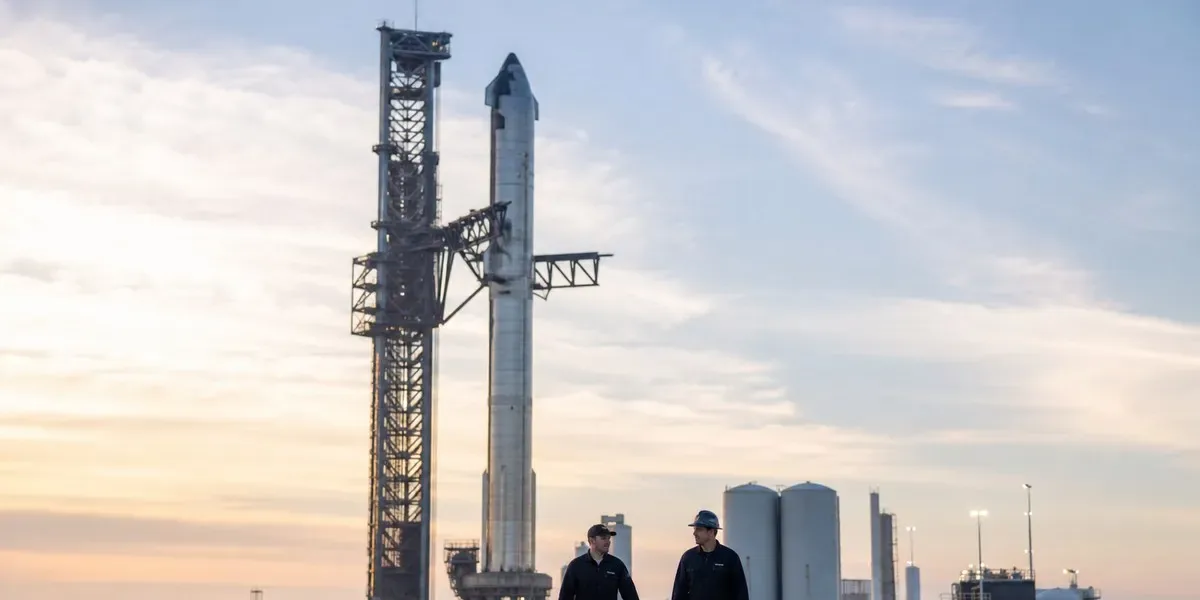 Reference image
Editorial responsibility
- No named human review is recorded for this page.
- Reports are grouped by semantic similarity and deterministic rules. Language models may assist titles, summaries, translation and cross-source analysis; the page reads the event directly, while its address stays stable when the title changes.
- Summary covers the current reports
Cross-source coverage
Reporting timeline
Starship Super Rocket Breakthrough: New Starlink Era Begins with First Orbital Mission
On September 28, 2026, SpaceX's Starship achieved its first orbital flight, successfully deploying a new generation of more powerful Starlink satellites. This milestone transforms the super-heavy-lift rocket from a spectacular test project into an operational vehicle that catapults the Starlink network into an entirely new scale. The article, published by Die Welt, reports that the mission marks the beginning of a new Starlink era, as the satellite constellation gains significantly enhanced capabilities through the deployment of these advanced satellites. The achievement represents a major step forward for both Starship and the Starlink broadband internet system, demonstrating the rocket's ability to perform its primary intended function of delivering large payloads to orbit.
Read sourceSpaceX Establishes Communication with All 26 Starlink V3 Satellites Deployed on Starship's First Orbital Flight
On September 28, Chinese financial news outlet Cailianshe reported that SpaceX announced it has successfully established communication links with all 26 Starlink V3 satellites deployed during the first orbital flight of its Starship rocket. This marks a significant milestone for SpaceX's next-generation satellite constellation and the Starship launch vehicle, demonstrating the capability to deploy operational satellites on a test flight. The Starlink V3 satellites are expected to provide enhanced broadband internet coverage and capacity compared to earlier versions. The achievement indicates progress in SpaceX's dual goals of advancing Starship's orbital capabilities and expanding the Starlink network.
Read sourceSpaceX's Starship deploys 26 Starlink V3 satellites on first revenue-generating flight
SpaceX's Starship rocket successfully deployed 26 Starlink V3 satellites into orbit, marking the vehicle's first ever revenue-generating flight. This milestone demonstrates the operational capability of the world's largest rocket to deliver commercial payloads, specifically SpaceX's own next-generation Starlink satellites, which are designed to provide high-speed internet connectivity. The flight represents a significant step in Starship's transition from testing to commercial operations, potentially reducing launch costs and increasing deployment capacity for the Starlink constellation.
Read sourceShow 10 older updatesHide older updates
SpaceX Starship Enters Orbit After Engine Failure, Deploys Starlink Satellites
SpaceX's heavy-lift Starship rocket launched from its Starbase facility in South Texas at 7:48 a.m. local time on September 28, beginning a mission expected to last nearly 10 hours. Shortly after launch, SpaceX confirmed a single engine failure and initially stated the Starship would not reach orbit, causing the company's stock to drop approximately 2% in pre-market trading. The failure also threatened the planned deployment of 26 upgraded Starlink satellites. However, despite the engine issue, SpaceX indicated it might still attempt to reach orbit. Subsequently, the Starship successfully entered orbit for the first time and began deploying the Starlink satellites. This news caused the stock to fluctuate significantly in pre-market trading before returning to near flat levels.
Read sourceSpaceX Starship Enters Orbit After Engine Failure, Deploys Starlink Satellites
SpaceX launched its heavy Starship rocket from its Starbase facility in South Texas at 7:48 a.m. local time on September 28, beginning a mission expected to last nearly 10 hours. Shortly after launch, SpaceX confirmed a single engine failure and initially stated the Starship would not reach orbit, causing the company's stock to drop approximately 2% in pre-market trading. The failure was expected to prevent the deployment of 26 upgraded Starlink satellites. However, despite the engine issue, SpaceX later announced it would attempt to reach orbit, and the Starship successfully entered orbit for the first time and began deploying Starlink satellites. This development caused the stock to fluctuate sharply in pre-market trading before returning to near flat levels.
Read sourceSpaceX Starship Engine Failure on 14th Test Flight Aborts Orbit and Starlink Deployment
SpaceX has reported that during the 14th test flight of its Starship vehicle, one of the engines failed. As a result, the Starship will not proceed with its original plan to enter Earth orbit. The company has also abandoned the mission's objective of deploying the next-generation V3 Starlink satellites. The announcement was made by SpaceX and reported by CCTV International News. The failure marks a setback for the test campaign, which aimed to demonstrate orbital capability and the deployment of upgraded Starlink hardware.
SpaceX Starship 14th Test Flight Aims for First Orbital Attempt, Will Deploy 26 Starlink Satellites
On September 28, SpaceX conducted the 14th test flight of its Starship heavy-lift rocket from its launch site in southern Texas. This flight marks the first attempt for Starship to enter Earth orbit, with a planned trajectory of approximately six orbits around the Earth over nearly 10 hours. Unlike previous tests, neither the booster nor the spacecraft will be recovered; the spacecraft is scheduled to splash down in the Pacific Ocean near Chile. During the flight, Starship will also deploy 26 Starlink satellites, according to a report from CCTV International News.
Read sourceSpaceX Starship 14th Test Flight Attempts First Orbital Entry, to Deploy Starlink Satellites
On September 28, SpaceX conducted the 14th test flight of its Starship heavy-lift rocket from its launch site in southern Texas. This mission marks the first attempt by Starship to enter Earth orbit, with a planned trajectory of approximately six orbits around the Earth over nearly 10 hours. During the flight, Starship is scheduled to deploy 26 Starlink satellites. According to the plan, neither the booster nor the spacecraft will be captured or recovered; the spacecraft is intended to splash down in the Pacific Ocean near Chile. The report is attributed to CCTV International News and was published by CLS (Cailianshe).
Read sourceSpaceX to Launch Starship into Orbit for First Time, Carrying 26 Starlink Satellites
SpaceX is expected to launch its giant Starship rocket into orbit for the first time on Monday, in a test flight that could last nearly 10 hours. This milestone may pave the way for routine satellite launches using the rocket. The mission will carry 26 upgraded V3 Starlink satellites, which the company plans to deploy into orbit and integrate into its existing space internet network, which currently includes over 11,000 satellites. Previous Starship space launches deliberately avoided orbit to maximize safety. If successful, this mission could open the door to more orbital flights. The V3 satellites are the first upgraded version to be deployed into orbit; a prior Starship mission also carried V3 satellites, but they were intentionally burned up upon re-entering Earth's atmosphere.
Read sourceSpaceX to Attempt First Orbital Starship Test Flight on Monday with 26 Starlink Satellites
SpaceX is expected to conduct the first orbital test flight of its giant Starship rocket on Monday, according to a report from financial data provider Jin10. The test flight could last nearly 10 hours and marks a critical milestone that may pave the way for routine satellite launches using the rocket. The Starship will carry 26 upgraded V3 Starlink satellites, which SpaceX plans to deploy into orbit and integrate into its existing space internet network of over 11,000 satellites. Previous Starship space missions deliberately avoided entering orbit to maximize safety. If successful, this mission could open the door to more orbital flights. In a prior mission, Starship also deployed V3 Starlink satellites, but those were intentionally burned up upon re-entering Earth's atmosphere as planned.
Read sourceSpaceX to Attempt First Orbital Starship Launch on Monday, Deploying Starlink V3 Satellites
SpaceX plans to conduct the 14th test flight of its Starship spacecraft on Monday, September 28, marking the first attempt to send the vehicle into Earth orbit. The mission aims to deploy 26 next-generation Starlink V3 satellites. According to the report, the spacecraft is expected to fly at an altitude of approximately 275 kilometers for nearly 10 hours, completing about six orbits around Earth, before splashing down in the Pacific Ocean west of Chile. If successful, this flight would represent a critical transition for Starship from the experimental phase to operational status, and could become SpaceX's first revenue-generating mission. The V3 satellites are expected to significantly enhance the overall capacity of the Starlink network.
Read sourceSpaceX prepares to launch Starship rocket into orbit for historic first orbital flight
SpaceX plans to launch its giant Starship rocket early Monday morning, aiming for the vehicle's first orbital flight. The launch window opens at 8:15 AM ET (7:15 AM local time) from SpaceX's Starbase facility in Texas, lasting 75 minutes. The U.S. Federal Aviation Administration (FAA) issued the launch and re-entry permit for the 14th Starship test flight on September 26. During this mission, SpaceX also intends to deploy 26 new Starlink V3 satellites. Starship is critical to SpaceX's expansion strategy, as the company relies on the rocket to grow its Starlink internet business, which is SpaceX's largest and only profitable segment. SpaceX currently operates about 11,000 active satellites in orbit. CEO Elon Musk stated in an August earnings call that it is not far-fetched for Starlink to handle most global internet traffic in countries where it is licensed. SpaceX completed its largest IPO in June and is valued at about $2 trillion. The Starship-Super Heavy system is designed to be fully reusable, aiming to deliver more cargo to orbit at lower cost. Previous 13 test flights did not target orbit; the 14th aims for orbital flight. SpaceX is also preparing Starship for a major NASA test mission next year to return astronauts to the lunar surface. COO Gwynne Shotwell revealed plans for 'space-based supercomputing' with an AI computing satellite launch in 2027. The new V3 satellites, produced in Redmond, Washington, have double the solar array power and offer faster data rates than previous generations.
SpaceX prepares to launch Starship rocket into orbit in historic 14th test flight
SpaceX plans to launch its giant Starship rocket on Monday morning in an attempt to achieve its first orbital flight. The launch window opens at 8:15 a.m. Eastern Time (7:15 a.m. local time) from the company's Starbase facility in Texas, lasting 75 minutes. The U.S. Federal Aviation Administration (FAA) confirmed via email that it issued a launch and reentry permit for the 14th Starship-Super Heavy test flight on September 26. During this mission, SpaceX also intends to deploy 26 new Starlink V3 satellites. Starship is central to SpaceX's growth strategy, particularly for expanding its Starlink internet business, which was the company's only profitable segment as of the second quarter. SpaceX currently operates approximately 11,000 active satellites in orbit. During an August earnings call, CEO Elon Musk stated that it is not inconceivable for Starlink to handle the majority of global internet traffic in countries where it is permitted to operate. SpaceX completed the largest initial public offering in history in August, with a current valuation of about $2 trillion. The Starship-Super Heavy system is designed to be fully reusable, aiming to deliver more cargo to orbit at lower cost. Previous 13 test flights did not target orbit. SpaceX is also preparing Starship for a major NASA test flight next year to return U.S. astronauts to the lunar surface, and COO Gwynne Shotwell revealed plans to launch an 'AI computing satellite' into orbit in 2027 for space-based supercomputing.
Read source