SpaceX aims for first Starship orbital flight Monday, carrying 26 Starlink V3 satellites
SpaceX plans to launch its Starship rocket into orbit for the first time on Monday, September 28, from its Starbase facility in Texas. The 14th test flight, authorized by the FAA on September 26, will attempt to deploy 26 upgraded Starlink V3 satellites into orbit. The spacecraft is expected to fly at about 275 km altitude for nearly 10 hours, completing roughly six orbits before splashing down in the Pacific Ocean west of Chile. Previous Starship flights deliberately avoided orbit.
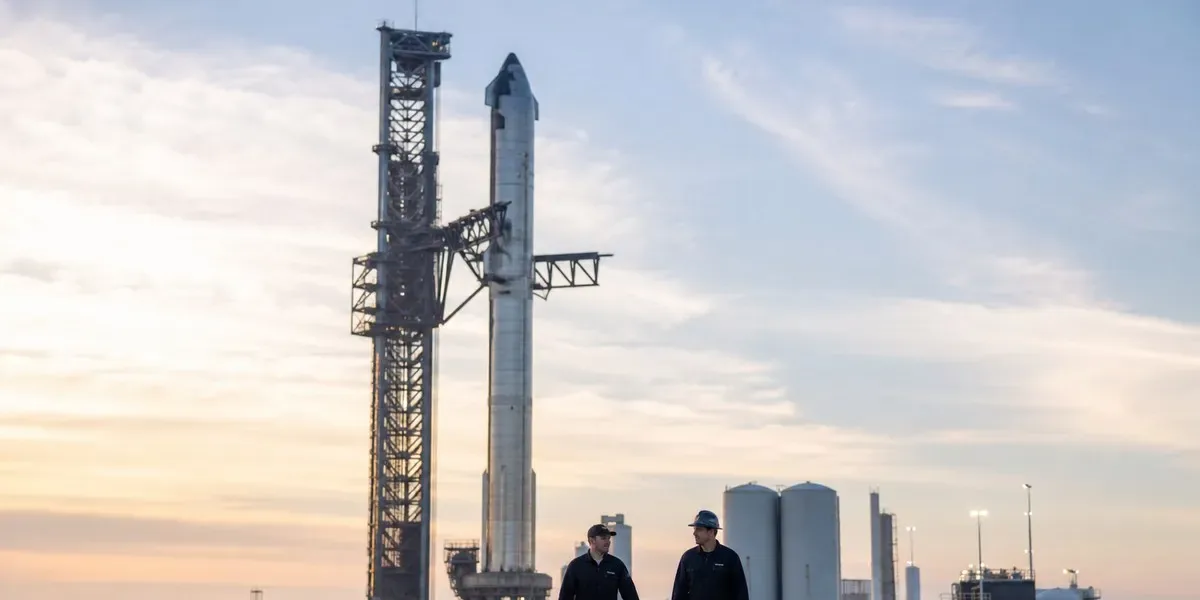 Reference image
Editorial responsibility
- No named human review is recorded for this page.
- Reports are grouped by semantic similarity and deterministic rules. Language models may assist titles, summaries, translation and cross-source analysis; the page reads the event directly, while its address stays stable when the title changes.
- Summary covers the current reports
Cross-source coverage
Reporting timeline
SpaceX to Launch Starship into Orbit for First Time, Carrying 26 Starlink Satellites
SpaceX is expected to launch its giant Starship rocket into orbit for the first time on Monday, in a test flight that could last nearly 10 hours. This milestone may pave the way for routine satellite launches using the rocket. The mission will carry 26 upgraded V3 Starlink satellites, which the company plans to deploy into orbit and integrate into its existing space internet network, which currently includes over 11,000 satellites. Previous Starship space launches deliberately avoided orbit to maximize safety. If successful, this mission could open the door to more orbital flights. The V3 satellites are the first upgraded version to be deployed into orbit; a prior Starship mission also carried V3 satellites, but they were intentionally burned up upon re-entering Earth's atmosphere.
Read sourceSpaceX to Attempt First Orbital Starship Test Flight on Monday with 26 Starlink Satellites
SpaceX is expected to conduct the first orbital test flight of its giant Starship rocket on Monday, according to a report from financial data provider Jin10. The test flight could last nearly 10 hours and marks a critical milestone that may pave the way for routine satellite launches using the rocket. The Starship will carry 26 upgraded V3 Starlink satellites, which SpaceX plans to deploy into orbit and integrate into its existing space internet network of over 11,000 satellites. Previous Starship space missions deliberately avoided entering orbit to maximize safety. If successful, this mission could open the door to more orbital flights. In a prior mission, Starship also deployed V3 Starlink satellites, but those were intentionally burned up upon re-entering Earth's atmosphere as planned.
Read sourceSpaceX to Attempt First Orbital Starship Launch on Monday, Deploying Starlink V3 Satellites
SpaceX plans to conduct the 14th test flight of its Starship spacecraft on Monday, September 28, marking the first attempt to send the vehicle into Earth orbit. The mission aims to deploy 26 next-generation Starlink V3 satellites. According to the report, the spacecraft is expected to fly at an altitude of approximately 275 kilometers for nearly 10 hours, completing about six orbits around Earth, before splashing down in the Pacific Ocean west of Chile. If successful, this flight would represent a critical transition for Starship from the experimental phase to operational status, and could become SpaceX's first revenue-generating mission. The V3 satellites are expected to significantly enhance the overall capacity of the Starlink network.
Read sourceShow 2 older updatesHide older updates
SpaceX prepares to launch Starship rocket into orbit for historic first orbital flight
SpaceX plans to launch its giant Starship rocket early Monday morning, aiming for the vehicle's first orbital flight. The launch window opens at 8:15 AM ET (7:15 AM local time) from SpaceX's Starbase facility in Texas, lasting 75 minutes. The U.S. Federal Aviation Administration (FAA) issued the launch and re-entry permit for the 14th Starship test flight on September 26. During this mission, SpaceX also intends to deploy 26 new Starlink V3 satellites. Starship is critical to SpaceX's expansion strategy, as the company relies on the rocket to grow its Starlink internet business, which is SpaceX's largest and only profitable segment. SpaceX currently operates about 11,000 active satellites in orbit. CEO Elon Musk stated in an August earnings call that it is not far-fetched for Starlink to handle most global internet traffic in countries where it is licensed. SpaceX completed its largest IPO in June and is valued at about $2 trillion. The Starship-Super Heavy system is designed to be fully reusable, aiming to deliver more cargo to orbit at lower cost. Previous 13 test flights did not target orbit; the 14th aims for orbital flight. SpaceX is also preparing Starship for a major NASA test mission next year to return astronauts to the lunar surface. COO Gwynne Shotwell revealed plans for 'space-based supercomputing' with an AI computing satellite launch in 2027. The new V3 satellites, produced in Redmond, Washington, have double the solar array power and offer faster data rates than previous generations.
SpaceX prepares to launch Starship rocket into orbit in historic 14th test flight
SpaceX plans to launch its giant Starship rocket on Monday morning in an attempt to achieve its first orbital flight. The launch window opens at 8:15 a.m. Eastern Time (7:15 a.m. local time) from the company's Starbase facility in Texas, lasting 75 minutes. The U.S. Federal Aviation Administration (FAA) confirmed via email that it issued a launch and reentry permit for the 14th Starship-Super Heavy test flight on September 26. During this mission, SpaceX also intends to deploy 26 new Starlink V3 satellites. Starship is central to SpaceX's growth strategy, particularly for expanding its Starlink internet business, which was the company's only profitable segment as of the second quarter. SpaceX currently operates approximately 11,000 active satellites in orbit. During an August earnings call, CEO Elon Musk stated that it is not inconceivable for Starlink to handle the majority of global internet traffic in countries where it is permitted to operate. SpaceX completed the largest initial public offering in history in August, with a current valuation of about $2 trillion. The Starship-Super Heavy system is designed to be fully reusable, aiming to deliver more cargo to orbit at lower cost. Previous 13 test flights did not target orbit. SpaceX is also preparing Starship for a major NASA test flight next year to return U.S. astronauts to the lunar surface, and COO Gwynne Shotwell revealed plans to launch an 'AI computing satellite' into orbit in 2027 for space-based supercomputing.
Read source