Iran denies pipeline attack, Trump rejects Hormuz proposal as Houthi strikes escalate
Over several days in late September, the Middle East saw escalating military and diplomatic tensions. Houthi forces claimed attacks on Saudi targets, including Aramco facilities, while the Saudi-led coalition intercepted drones and missiles. Iran denied involvement in a pipeline attack, suggesting Israel may be responsible. Former US President Trump rejected an Iranian ceasefire proposal and referred to the Strait of Hormuz as “Trump Strait.” Iran’s foreign minister said the strait’s reopening depends on Iran’s conditions. The US Joint Chiefs of Staff are reassessing options, though no imminent attack is expected.
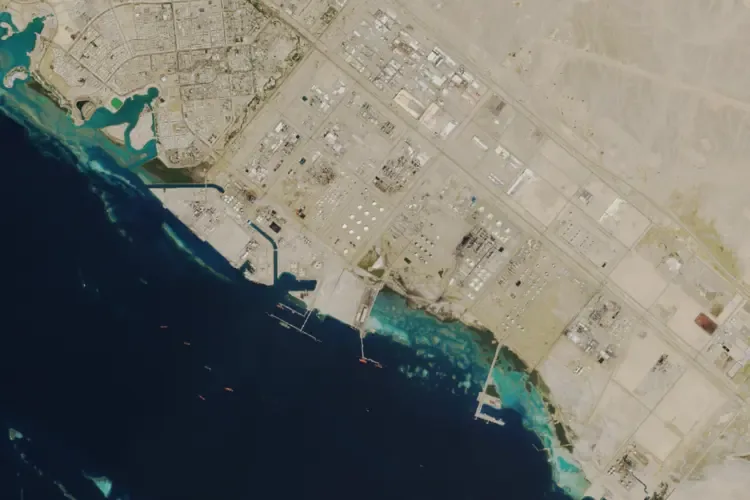 Reference image
Editorial responsibility
- No named human review is recorded for this page.
- Reports are grouped by semantic similarity and deterministic rules. Language models may assist titles, summaries, translation and cross-source analysis; the page reads the event directly, while its address stays stable when the title changes.
- Summary covers the current reports
Cross-source coverage
Common ground
- The Saudi-led coalition's bombing campaign and blockade have caused a humanitarian catastrophe in Yemen, including famine and civilian deaths.
- The Houthis emerged from legitimate grievances against a corrupt government and Saudi aggression, but have committed their own atrocities, including blocking aid and imposing a theocracy.
- The Strait of Hormuz is a critical global chokepoint, and Iran uses threats to exert pressure without necessarily closing it.
- The US and UK arming of the Saudi coalition is indefensible, and the US withdrawal from the JCPOA damaged trust in negotiations with Iran.
- The people of Yemen, Gaza, and Lebanon are trapped between two brutal forces—neither represents their interests.
Points of contention
- Whether the Houthis are primarily a resistance movement or an Iranian-backed proxy militia that overthrew a legitimate government.
- Whether the 13,000 military-age males among Gaza's dead is a useful demographic fact or a misleading proxy that sanitizes mass death.
- Whether the Strait of Hormuz traffic spike indicates market panic and future disruption, or manageable risk and stability.
- Whether both sides in the Yemen war are equally blameworthy, or if the Saudi coalition bears a greater 'hierarchy of responsibility' for starting the war and creating famine.
- Whether criticizing Houthi atrocities while acknowledging Saudi war crimes is balanced analysis or selective outrage.
Blind spots
- Both sides focus on great-power dynamics and proxy warfare, but rarely center the voices and agency of ordinary Yemenis, Gazans, and Lebanese people.
- The discussion lacks concrete proposals for a political settlement that could actually end the conflicts, beyond vague calls for ceasefires and aid access.
- Neither side adequately addresses the role of other regional actors, like the UAE or European powers, in shaping the conflict beyond France's deployment.
- The long-term economic and environmental consequences of a disrupted Strait of Hormuz—such as global recession or oil spills—are not explored.
WorldAttention’s read
This debate reveals a deep divide between a moral framework focused on accountability for who started the wars and a strategic framework focused on data and rational self-interest. Both sides agree that the Saudi-led coalition's bombing and blockade created the humanitarian catastrophe in Yemen, and that the Houthis emerged from legitimate grievances but have become brutal authoritarians. The key disagreement is whether to treat both sides as equally blameworthy or to assign a hierarchy of responsibility to the coalition that lit the match. On the Strait of Hormuz, the regional agent sees a looming crisis signaled by market hedging, while the neutral agent sees manageable risk backed by traffic data. On Gaza, the regional agent rejects demographic proxies as dehumanizing, while the neutral agent defends them as factual. Ultimately, both agree that the people of Yemen, Gaza, and Lebanon are trapped between two brutal forces—one backed by American jets, the other by Iranian missiles—and that a just peace requires a ceasefire, unfettered aid, and a political settlement that sidelines both the Saudi bombers and the Houthi theocracy. The blind spot is that neither side offers a concrete path to that settlement, and the voices of the region's people remain absent from the analysis.
Reporting timeline
Middle East Update: Houthi Drone Intercepted, Israel Strikes Gaza and Lebanon, Iran Denies Pipeline Attack
This compilation of Middle East developments on September 27 covers multiple conflict and diplomatic events. Saudi-led coalition forces intercepted a drone and missile launched by Houthi rebels. Israeli forces conducted strikes in Gaza, causing casualties, and targeted a Hezbollah weapons storage facility in southern Lebanon. Iranian President Pezeshkian denied Iranian or Yemeni involvement in an attack on Saudi oil pipelines, suggesting Israel may have carried it out to escalate tensions. On peace talks, former US President Trump rejected an Iranian ceasefire proposal, and Iran's president stated a loss of trust in negotiations with the US, though he expressed belief that the Hormuz Strait crisis could be resolved through dialogue. Regarding the Strait of Hormuz, Trump referred to it as 'Trump Strait' on social media. Iran's foreign minister said the strait's openness depends on Iran's conditions, while Saudi Arabia's foreign minister stressed freedom of navigation. Oman's foreign minister discussed strait passage with Iran. Other items include Trump's statement that Iran cannot have nuclear weapons, a meeting between Iranian and Saudi foreign ministers, and reports that the US Joint Chiefs of Staff are reassessing options after Trump rejected Iran's proposal, though no imminent attack is expected.
Read sourceMiddle East Tensions: Iran Denies Pipeline Attack, Trump Rejects Strait Proposal
This summary from Jin10 Data covers multiple developments in the Middle East on September 27. In terms of conflict, the Saudi-led coalition intercepted Houthi drones and missiles; Israeli forces struck Gaza and a Hezbollah weapons storage facility in southern Lebanon. Iranian President Pezeshkian denied Iranian or Yemeni involvement in an attack on Saudi oil pipelines, suggesting Israel may be behind it to escalate tensions. On diplomacy, former US President Trump rejected an Iranian ceasefire proposal, and Iran's president stated a loss of trust in negotiations with the US, though he believes the Hormuz Strait crisis can be resolved through talks. Regarding the Hormuz Strait, Trump again referred to it as 'Trump Strait' on social media. Iran's foreign minister said the strait's openness depends on Iran's conditions being met, while Saudi Arabia insisted on freedom of navigation. Iran is awaiting a response from mediators to its proposals. Other developments include Trump stating Iran cannot have nuclear weapons, a meeting between Iranian and Saudi foreign ministers, Iran's denial of planned military action, and discussions between Iraq and the US on exempting Iraqi airports from restrictions on Iranian airlines.
Middle East Tensions: Iran Warns of War Expansion, Houthis Strike Saudi Targets
A compilation of Middle East developments on September 25 highlights escalating conflict and diplomatic efforts. Iran warned that war could expand to the Indian Ocean. Houthi forces claimed attacks on a Saudi military gathering, causing hundreds of casualties, and on a Saudi Aramco facility in Yanbu, as well as a 'sensitive target' in Riyadh. The Saudi-led coalition reported intercepting six ballistic missiles fired by the Houthis. An Israeli source indicated a new strike on Iran is likely. In Syria, an explosion in Daraa killed one. On the diplomatic front, Pakistan's prime minister reiterated commitment to facilitating Iran-US dialogue. Sources reported that the US and Iran are discussing a phased agreement to reopen the Strait of Hormuz and end the US blockade. However, a top Iranian military advisor stated the Strait will never return to its previous state. The US reported about 60 ships passed through the Strait on Wednesday, the highest daily oil volume since early July. Other developments include the UN estimating Gaza reconstruction at $71.5 billion, the US moving seized Iranian oil, the UAE suspending Iran Air flights, and France announcing a military deployment to protect Saudi energy facilities. Colombia announced it will sever diplomatic relations with Iran in 2026.
Read sourceShow 3 older updatesHide older updates
Middle East Tensions: Iran Warns of War Expansion, Houthis Strike Saudi Targets
This compilation from Jin10 Data on September 25 covers multiple developments in the Middle East. Iran warned that the war could expand to the Indian Ocean, while an Israeli source stated that a new strike on Iran is likely only a matter of time. The Houthi group claimed attacks on Saudi military gatherings and Aramco facilities in Yanbu, as well as a sensitive target in Riyadh. The Saudi-led coalition reported intercepting six ballistic missiles. In diplomacy, Pakistan reaffirmed its commitment to facilitating Iran-U.S. dialogue, and sources indicated U.S.-Iran talks on a phased agreement to reopen the Strait of Hormuz. Iran's Supreme Leader military advisor said the Strait will never return to its previous state. The U.S. reported high oil tanker traffic through the Strait. Other events include France deploying forces to protect Saudi energy facilities, the U.S. Senate rejecting a resolution to limit Trump's war powers against Iran, and Colombia announcing it will sever diplomatic relations with Iran in 2026.
Middle East Update: Yemen Fighting, Saudi Air Strikes, Iran Diplomacy, and Gulf Tensions
This compilation of Middle East news from September 22 covers multiple conflict and diplomatic developments. In Yemen, Houthi forces are advancing on Taiz, while the Saudi-led coalition has conducted 157 air and missile strikes across four provinces. Saudi Arabia deployed reconnaissance balloons on the Iraq border. On the diplomatic front, Pakistan and Iran's interior ministers discussed bilateral relations and regional security. The US envoy called for Iran to return to negotiations, while Qatar mediates a potential short-term deal between Washington and Tehran. In the Persian Gulf, a tanker entering the Strait of Hormuz was hit by a projectile, injuring two crew members. Satellite data shows increased Saudi crude loadings. The EU called for more naval assets in the Red Sea. Other developments include Gulf states urging renewed ties with Iran, a US proposal for $50 billion in Middle East energy reconstruction, Iran's plan to sell seized US ships, and the UK agreeing to limited defensive air refueling for Saudi Arabia. Iran's foreign minister is in New York for the UN General Assembly, and the Revolutionary Guard claims readiness for a prolonged conflict.
Read sourceMiddle East Update: Houthi Advances, Saudi Airstrikes, and Iran Diplomacy on September 22
This report compiles multiple developments in the Middle East as of September 22. In Yemen, Houthi forces are advancing on Taiz, reportedly surrounding the area, while the Yemeni government claims to have repelled an attack. The Houthis accuse Saudi Arabia of launching 157 airstrikes across four provinces. Diplomatically, the US envoy states Trump is willing to talk with Iran, and Qatar is mediating a potential short-term deal between Washington and Tehran. In the Persian Gulf, a tanker entering the Strait of Hormuz was hit by a projectile, injuring two crew members. Qatar says LNG operations could partially resume weeks after the strait reopens. The EU calls for more naval assets in the Red Sea. Other developments include Gulf states seeking to restart ties with Iran, Iran's plan to sell seized US ships, and a reported Trump administration plan to allocate $5 billion for Middle East energy reconstruction. Iran's foreign minister is in New York for the UN General Assembly, and the Revolutionary Guard claims readiness for a prolonged war, stating US intelligence centers are within range.