Macron backs Canada’s EU associate membership bid during Saint-Pierre visit
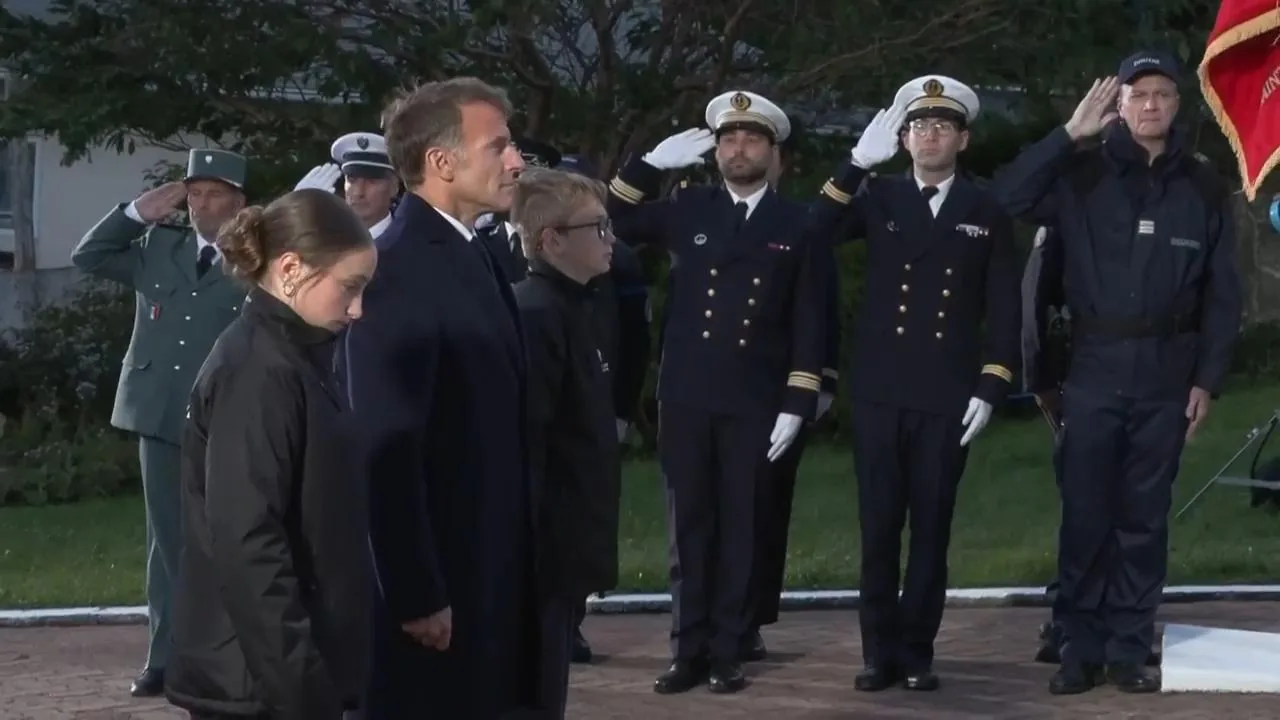
French President Emmanuel Macron and Canadian Prime Minister Mark Carney met in Saint-Pierre and Miquelon on September 20, 2026, where Macron announced France’s support for Canada becoming an associate member of the European Union. The leaders agreed to deepen cooperation on fisheries, security, and energy. The visit, the first by a Canadian prime minister to the territory, signals closer EU-Canada ties amid strained Canada-U.S. relations.
 Reference image
Editorial responsibility
- No named human review is recorded for this page.
- Reports are grouped by semantic similarity and deterministic rules. Language models may assist titles, summaries, translation and cross-source analysis; the page reads the event directly, while its address stays stable when the title changes.
- Summary covers the current reports
Cross-source coverage
Common ground
- The Macron-Carney meeting is a deliberate political signal against Trump's aggressive unilateralism, not just a routine diplomatic event.
- Canada is reacting to US coercion with 50% tariffs, not freely choosing to diversify its partnerships.
- The 'associate membership' proposal is legally vague and faces major institutional hurdles in the EU.
- Both Macron and Carney are using this foreign policy gesture to distract from serious domestic political troubles.
- The people of Saint Pierre and Miquelon were used as a backdrop without their voices being heard.
Points of contention
- Whether Canada is a 'hostage' scrambling under US pressure or a sovereign actor strategically repositioning in a multipolar world.
- Whether this signals a genuine new multipolar order or just the same Western powers rearranging their relationships.
- Whether the fisheries cooperation is a real governance improvement or just a cover for continued exploitation.
- Whether the 'rules-based order' is worth defending when France itself backslides on press freedom and democracy at home.
- Whether this realignment is fragile and temporary or irreversible and foundational.
Blind spots
- The complete silence on what this means for the Global South, especially African fisheries and Caribbean economies affected by French and Canadian policies.
- The lack of attention to Saint Pierre and Miquelon's own residents, who have no real self-governance and were not consulted.
- The failure to consider how Canada's existing USMCA obligations might conflict with deeper EU integration.
- The absence of discussion about France's ongoing colonial structures in the Pacific and the Sahel, which undermine its claims of championing sovereignty.
WorldAttention’s read
This Macron-Carney meeting is a meaningful but fragile political signal—a deliberate rebuke to Trump's bullying and a desperate hedge by two embattled leaders facing domestic crises. Canada is reacting to US coercion, not freely choosing a multipolar future, and the 'associate membership' proposal is legally vague and faces huge hurdles. While the fisheries cooperation includes real governance tools like joint satellite monitoring and binding quotas, the colonial critique is valid: Saint Pierre and Miquelon's people were used as a prop, and the Global South's interests were completely ignored. The real blind spot is that everyone debated the architecture of a new world order while ignoring that the architects are standing on quicksand—Macron's political survival, Carney's electoral vulnerability, and the voices of those who actually pay the price are never in the room. This is a temporary hedge, not a revolution, and it could evaporate overnight when governments change.
Reporting timeline
Macron Backs Canada's Bid for Closer EU Ties, Including Associate Membership
French President Emmanuel Macron announced on September 20th that France supports an agenda to bring Canada and the European Union closer together, backing Canada's bid to become an 'associate member' of the EU. Macron made these remarks during a meeting with visiting Canadian Prime Minister Mark Carney at Saint-Pierre, the capital of the French overseas territory of Saint Pierre and Miquelon. Macron noted that this was the first official visit by a Canadian prime minister to the territory and that the two countries would strengthen cooperation in fisheries, security, and energy. Carney stated that Canada and Europe will build a future-oriented alliance to enhance 'collective resilience.' The announcement signals a significant step in transatlantic relations, potentially reshaping Canada's diplomatic and economic ties with the European bloc.
Read sourceMacron Backs Canada's EU Associate Membership Bid Amid Strained US Ties
French President Emmanuel Macron announced on March 20 that France supports Canada's bid to become an 'associate member' of the European Union, backing the agenda of closer ties between Canada and the EU. Macron made the remarks during a joint press conference with Canadian Prime Minister Mark Carney in Saint-Pierre, the capital of the French overseas territory of Saint Pierre and Miquelon. This marked the first official visit by a Canadian prime minister to the islands. Macron stated that France and Canada would strengthen cooperation in fisheries, security, and energy. Carney said Canada and Europe would build a future-oriented alliance to enhance 'collective resilience.' The announcement follows European Commission President Ursula von der Leyen's March 16 State of the Union address, where she expressed willingness to work with Carney toward making Canada the EU's first associate member. The diplomatic push comes after Canada-US trade talks collapsed in late August, following US President Donald Trump's imposition of 50% tariffs on certain Canadian goods and his repeated suggestions of making Canada the '51st state,' prompting Canada to seek closer economic and security ties with Europe.
Read sourceMacron Supports Closer Canada-EU Ties, Backs Associate Member Status
French President Emmanuel Macron announced on September 20 that France supports the agenda of closer ties between Canada and the European Union, backing Canada's status as an 'associate member' of the EU. Macron made these remarks during a meeting with Canadian Prime Minister Mark Carney in Saint-Pierre, the capital of the French overseas territory of Saint Pierre and Miquelon. Macron noted that this is the first official visit by a Canadian prime minister to the territory. The two leaders agreed to strengthen cooperation in areas such as fisheries, security, and energy. The statement was reported by Xinhua and published by Jin10 Data on September 21.
Read sourceShow 3 older updatesHide older updates
Macron and Carney announce closer alignment on fishing, security, and energy in Saint-Pierre-et-Miquelon
French President Emmanuel Macron and Canadian Prime Minister Mark Carney met in Saint-Pierre-et-Miquelon on September 20, 2026, announcing a 'deep rapprochement' on fishing, security, and energy. Macron highlighted Canadian liquefied natural gas projects as important for Europe amid high fuel price tensions, thanking Carney for responding quickly to concrete proposals. Both leaders emphasized shared values of democracy, rule of law, and strategic autonomy. Carney advocated strengthening collective resilience between Canada and the EU, including secure access to AI, space, semiconductors, critical minerals, and clean energy. He also called on France, Canada, the US, and China to unite forces for safer AI. The meeting occurred days after EU Commission President Ursula von der Leyen proposed making Canada the first associated member of the EU, and in response to a map posted by Donald Trump covering the region with the US flag.
Read sourceMacron Says France Supports Closer EU-Canada Ties and Canada's Associate Membership
French President Emmanuel Macron stated that France supports closer relations between the European Union and Canada, as well as Canada's associate membership in the EU. The statement, reported by financial news outlet Jin10, indicates France's backing for deepening the EU-Canada partnership. The specific conditions or timeline for such an associate membership were not detailed in the brief announcement. This position aligns with broader efforts to strengthen ties between the EU and non-member countries, particularly in the context of geopolitical shifts and trade relations.
Read sourceMacron touts relationship with Canada in Saint Pierre and Miquelon, signaling to Trump
French President Emmanuel Macron is highlighting the relationship with Canada during a visit to the French Atlantic archipelago of Saint Pierre and Miquelon. The visit is seen as a signal to U.S. President Donald Trump, according to Reuters. Macron and Canadian Prime Minister Mark Carney are scheduled to meet in the archipelago. The meeting comes amid reports that Canada and France will develop shared space launch infrastructure, as reported by Bloomberg. The New York Times notes that the French outpost is navigating the spotlight after being plucked from obscurity. The Economist characterizes Macron's actions as a stern message to America. The visit underscores diplomatic dynamics between France, Canada, and the United States.
Read source