Reporting on this entity comes mostly from Western sources (source distribution, not a stance rating).
61%
25%
Western126 · 61%
Regional2 · 1%
Neutral / independent52 · 25%
Eastern25 · 12%
Latest Stories
Periodic recap
What changed for this subject in each tracking window — generated from matched events, delta-first.
· 1 event in window
Direct developments involving von der Leyen remained sparse in this period; the only matched event was the outcome of Bulgaria's presidential runoff, which has no direct link to her remit. Incumbent President Yotova, seen as friendly toward Russia, was projected to defeat pro-Western challenger Gurov in a vote widely viewed as a decision on Bulgaria's foreign policy course. Beyond that, no new developments led or directly joined by von der Leyen appeared in this period.
Incumbent Bulgarian President Yotova was projected to defeat pro-Western challenger Gurov in the presidential runoff, taking roughly 57.4 to 58.2 percent to his 38.6 to 39.6 percent; Gurov conceded on election night.
The runoff was widely viewed as a decision on Bulgaria's foreign policy course regarding the Ukraine war and relations with Moscow, and was overshadowed by drone attacks on commercial ships in the Black Sea.
No new policy moves or statements directly involving von der Leyen appeared in this period.
Earlier recaps
· 2 events in window
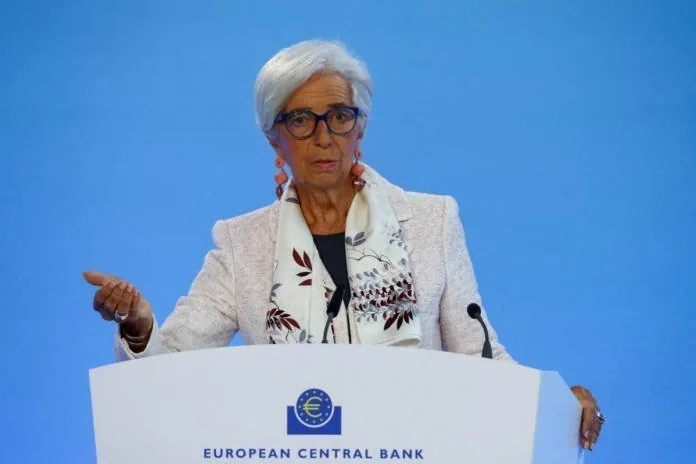
Direct developments involving von der Leyen were limited in this period, with no new policy moves led by her. The most prominent signal came from the European Central Bank: Lagarde announced she will step down early as president on February 7, 2027, bringing eurozone leadership succession onto the agenda sooner. A second matched event carried no usable title or summary, so no specific development could be assessed from it.
· 1 event in window
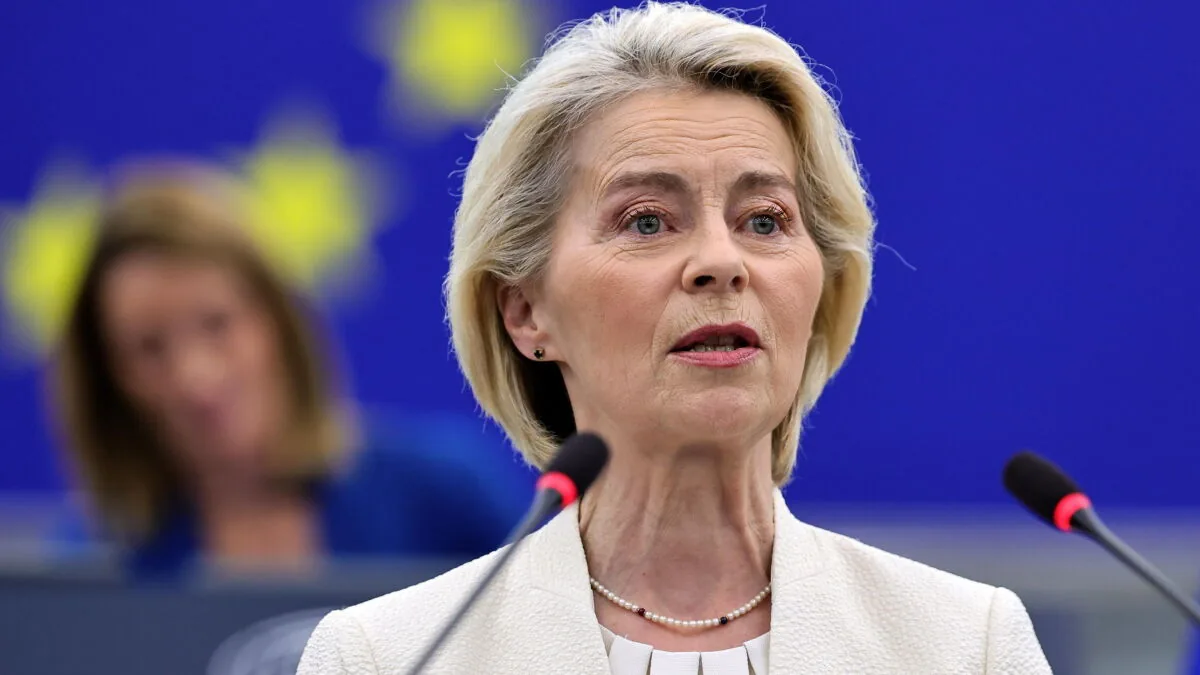
During this period, von der Leyen brought child online safety to the policy forefront by announcing the EU KIDS Act in her 2026 State of the Union address. The proposed regulation would ban children under 13 from social media and require parent-supervised accounts for ages 13 to 15. It also aims to restrict addictive features and AI chatbots for minors, and mandate age verification.
· 2 events in window
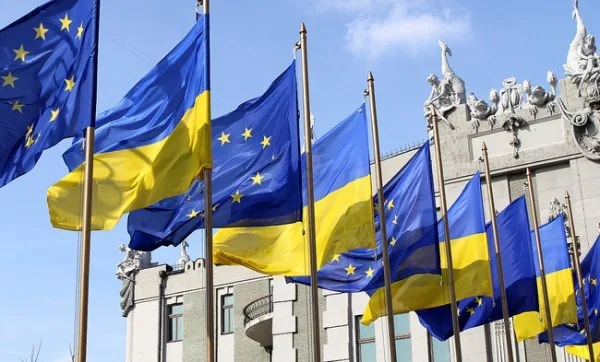
Following the EU-Philippines FTA announcement in the previous period, von der Leyen's agenda shifted to Ukraine aid and internal energy policy coordination. She announced €3.3 billion in EU funding for Ukraine to procure missiles and drones, strengthening its defense capabilities. Meanwhile, French President Macron formally requested the European Commission to relax fuel standards and delay methane rules to address energy price pressures driven by Middle East tensions.
· 1 event in window
Von der Leyen announced that the EU and the Philippines have reached a substantive free trade agreement covering over 94% of tariff lines, with formal signing expected in 2027. The move is seen as an effort to diversify supply chains amid global trade tensions. This follows Macron's endorsement of Canada's EU associate membership bid the previous day, indicating an accelerating EU external trade agenda.
· 1 event in window
French President Macron publicly backed Canada's bid for EU associate membership, a development unfolding as von der Leyen's Commission faces tensions with China over 'Europe First' procurement provisions. Macron announced France's support during a meeting with Canadian Prime Minister Carney in Saint-Pierre and Miquelon, where they also agreed to deepen cooperation on fisheries, security, and energy. There has been no formal response from the Commission level to this proposal.
Tracked events
Events matched to this subject by the tracking pipeline, with signal scores.
European Central Bank President Christine Lagarde will step down on February 7, 2027, roughly eight to nine months before her eight-year term was due to end in October 2027, the ECB announced in Frankfurt. Lagarde said she wants freedom to speak publicly on subjects beyond monetary policy, fueling speculation about a role in France's 2027 presidential campaign. Eurogroup President Kyriakos Pierrakakis has asked eurozone governments to submit successor nominations by November 6, with finance ministers set to discuss candidates on November 9. Klaas Knot and Pablo Hernández de Cos are seen as favorites.
Bulgaria's incumbent President Iliana Yotova, seen as friendly toward Russia, won the presidential runoff on Sunday, defeating pro-Western challenger Andrey Gyurov, according to projections. Yotova was projected to take between 57.4 and 58.2 percent of the vote, with Gyurov at 38.6 to 39.6 percent; he conceded on election night. The runoff followed a first round in which Yotova led with about 34.8 percent to Gyurov's 32 percent amid record-low turnout. The vote was widely seen as a decision on Bulgaria's foreign policy course, particularly regarding the Ukraine war and relations with Moscow, and was overshadowed by drone attacks on commercial ships in the Black Sea.
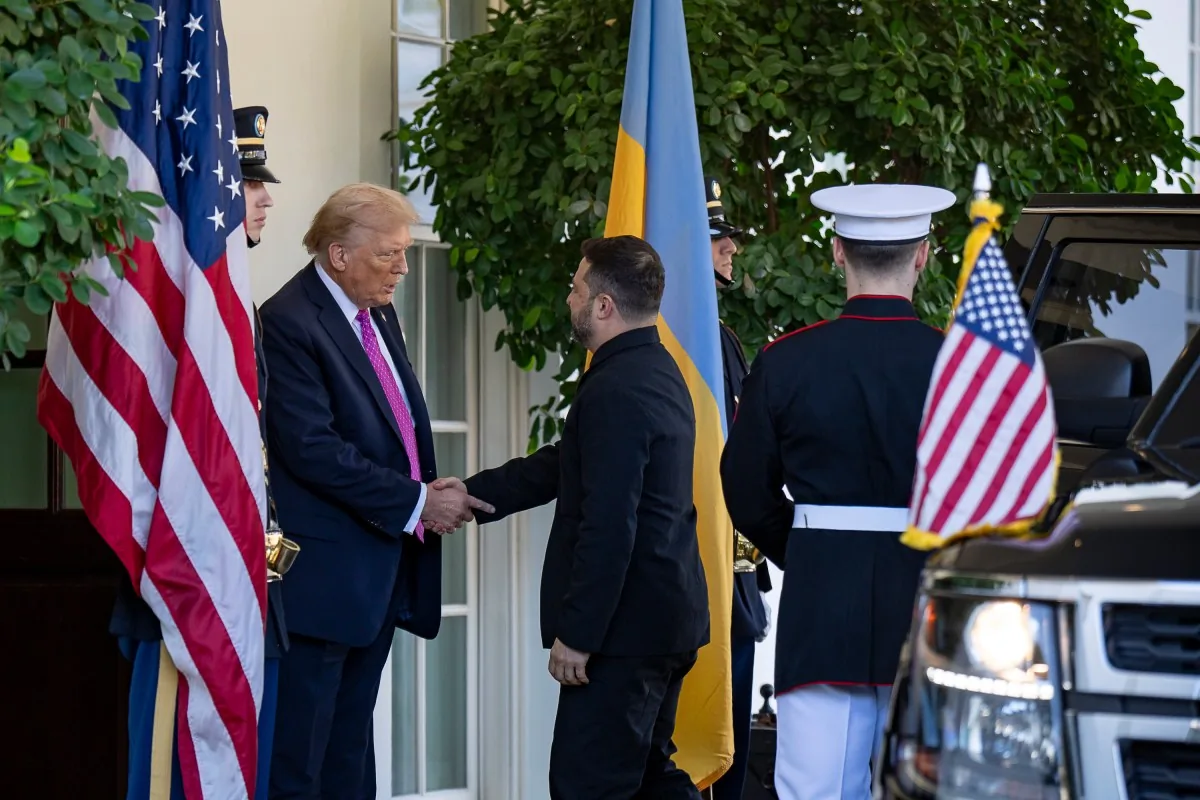
US President Donald Trump called for Ukraine to "get a new president" and demanded President Volodymyr Zelensky stop strikes on Russian oil refineries, following a US-Russia diesel deal that would allow over 300,000 tons of Russian diesel into US and world markets in exchange for sanctions relief. Zelensky, who was not informed of the agreement, called it an "investment in the war" and said he feels betrayed. Ukraine's government rejected Trump's call, European allies rallied behind Zelensky, and Russia continued attacks on Ukraine.
The European Commission proposed the EU KIDS Act on September 17, 2026, banning children under 13 from social media and requiring parent-supervised accounts for ages 13-15. Announced by President Ursula von der Leyen during her State of the Union address, the regulation would also restrict addictive features, personalized ads, and require AI chatbots to be off by default for minors. Age verification via an EU-developed app is planned, but the proposal faces challenges over privacy and enforcement, requiring approval from member states.
The European Union has announced a new €3.3 billion disbursement to Ukraine for missiles and drones, confirmed by European Commission President Ursula von der Leyen and Ukrainian President Volodymyr Zelensky. Separately, the EU Council approved a nearly €3 billion tranche of financial assistance and welcomed a NOK 1 billion grant from Norway. Zelensky also stated that Ukrainian and EU teams will work to accelerate the use of EU funds.
French President Emmanuel Macron has formally requested the European Commission to temporarily ease fuel quality standards, increase biofuel blending in diesel, and delay the EU Methane Regulation by one year. The measures aim to lower energy prices amid Middle East conflict-driven supply disruptions. Macron warned that Strait of Hormuz closure could cut global crude supply by at least 4 million barrels per day. The request marks France's first public opposition to the methane regulation.
The European Union and the Philippines have reached a substantive agreement on a free trade deal, announced on September 22, 2026, by EU Commission President Ursula von der Leyen and Philippine President Ferdinand Marcos Jr. The deal, covering over 94% of tariff lines, aims to diversify supply chains amid US tariff policies. Formal signing is expected in the coming months, with von der Leyen planning to travel to the Philippines in 2027. Civil society groups have raised human rights and environmental concerns.
French President Emmanuel Macron and Canadian Prime Minister Mark Carney met on September 20 in Saint-Pierre-et-Miquelon, announcing a deepening of bilateral ties in fisheries, security, and energy. Macron backed Canada's bid to become an EU "associate member," following European Commission President Ursula von der Leyen's earlier support. The rapprochement comes amid escalating US-Canada trade tensions and US President Donald Trump's expansionist rhetoric, including a map depicting the region under the US flag. Carney also proposed Canada join the UK-led Joint Expeditionary Force.
European Commission President Ursula von der Leyen proposed making Canada the first "associate member" of the EU during her September 16, 2026 State of the Union address. Canadian Prime Minister Mark Carney welcomed the proposal, seeking a "unique alliance" covering defense, energy, AI, critical minerals, and Arctic cooperation. The move follows escalating US-Canada trade tensions and Trump's tariff threats. US President Donald Trump dismissed the idea as "laughable" and warned of severe tariffs if implemented. The undefined status faces EU legal hurdles and requires unanimous member state approval.
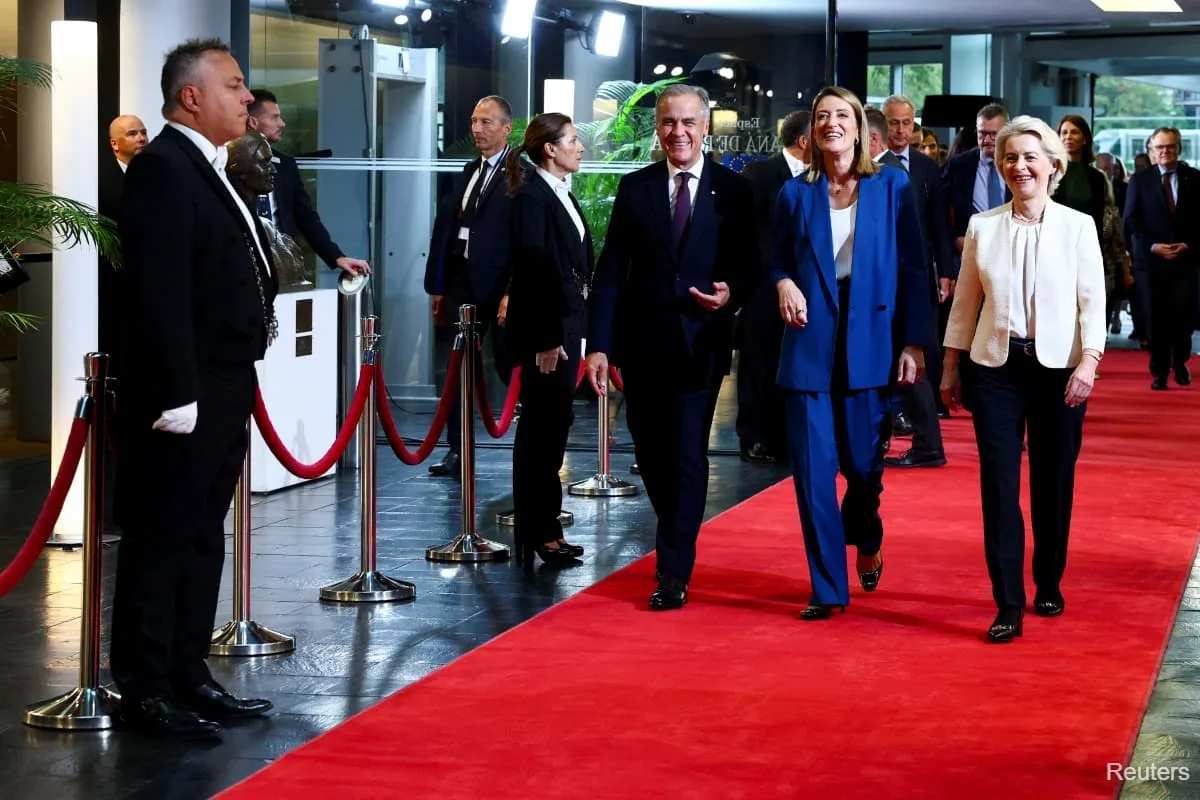
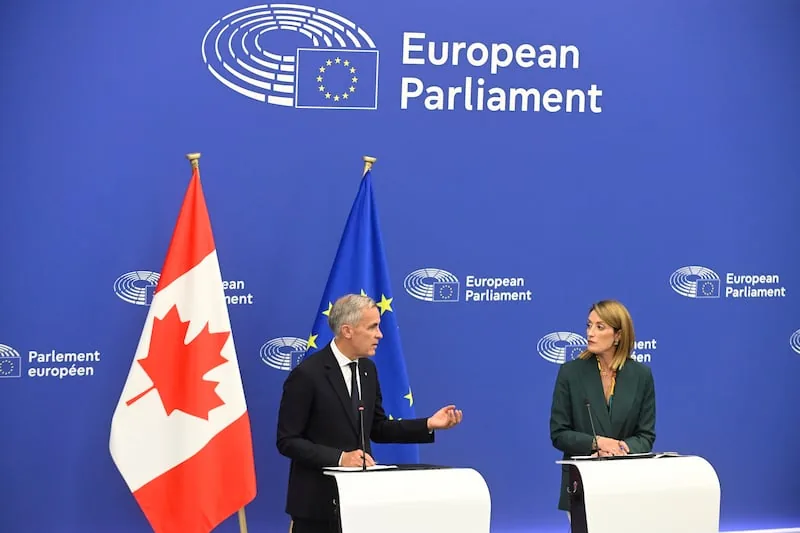
Former U.S. President Donald Trump threatened to impose heavy tariffs on the European Union or halt trade if the EU grants Canada associate member status, calling the idea “ridiculous” and Canada a “terrible trading partner.” The threat follows EU plans to deepen ties with Canada, including potential quasi-membership. Canadian PM Mark Carney is set to address the EU Parliament. The EU stated the partnership is not aimed at any country.
On September 17, China’s Ministry of Commerce expressed high concern over the European Commission’s draft Public Procurement Law, which includes “Europe First” or “Buy European” provisions. Spokesperson He Yadong stated the draft incorporates non-market security criteria that could exclude third-country enterprises. China urged the EU to comply with WTO rules, amend discriminatory clauses, and maintain market openness. China will monitor the legislative process and assess impacts.
European Commission President Ursula von der Leyen announced the EU Kids Act, proposing a ban on social media for children under 13 across the European Union. The draft legislation would restrict 13-to-15-year-olds to parent-supervised "mini-accounts" with a one-hour daily limit, while full accounts require age 15. Platforms must follow "safety-by-design" principles, with non-compliance fines up to 6% of global sales. The proposal now requires approval from EU member states and the European Parliament.
On September 16-17, 2026, global financial markets face a dense calendar of central bank decisions and economic data. The Federal Reserve will announce its interest rate decision and Summary of Economic Projections, followed by Fed Chair Warsh’s press conference. The Bank of England and Bank of Canada also release rate decisions and meeting minutes. The SEC meets to discuss 24-hour trading. Key data includes US retail sales, UK CPI, Eurozone CPI, and US jobless claims.
European Commission President Ursula von der Leyen, in her September 16 State of the Union address to the European Parliament, proposed establishing a European Security Council including non-EU members Ukraine, the United Kingdom, Norway, and Canada. She also called for a new EU security alarm mechanism modeled on NATO Article 4, allowing member states to trigger coordinated responses to hybrid threats. Additional proposals included offering Canada associated EU membership and restricting social media access for children under 13.