Reporting on this entity comes mostly from Western sources (source distribution, not a stance rating).
76%
18%
Western202 · 76%
Regional3 · 1%
Neutral / independent48 · 18%
Eastern14 · 5%
Latest Stories
Periodic recap
What changed for this subject in each tracking window — generated from matched events, delta-first.
· 1 event in window
The only event matched to Carney this period is actually the Court of Arbitration for Sport ruling on Russian hockey eligibility and its fallout for the 2027 World Championship in Germany; the reporting contains no statement or action by Carney himself. Compared with the previous period, there is no confirmable new development involving Carney, and the item's relevance to him is minimal.
The Court of Arbitration for Sport ruled on 30 October 2026 that the IIHF must allow Russian national teams to compete internationally, overturning a four-year suspension imposed after the 2022 invasion of Ukraine.
The ruling throws the May 2027 Ice Hockey World Championship in Germany into doubt: Finland, Sweden, Czechia, Denmark, Norway and Latvia say they will not play Russia, and sponsors are threatening withdrawal.
The German federation and government are weighing options including giving up hosting rights or denying visas; the item was covered by 3 sources and 5 articles and does not involve Carney.
Earlier recaps
· 1 event in window
Only one event tied to Carney appeared in this period, and it is thin: the item carries no title or summary, only a count of 3 sources and 5 articles. Compared with the previous period's legal and administrative developments in the US-Canada tariff dispute, no confirmable new development emerged.
· 2 events in window
This period shifts from diplomatic confrontation to the legal and policy dimensions of the US-Canada trade dispute. The Liberty Justice Center filed the first lawsuit challenging Trump's 50% tariffs on $20bn of Canadian goods, arguing the levies are unlawful, while the administration announced it will lift some tariffs from October 30 ahead of the midterms, adding new levies on carpets and waste products. Unlike the previous period, Carney himself does not feature directly in these events, with coverage centering on US domestic legal challenges and administrative adjustments to the tariff regime.
· 1 event in window
This period centers on a new US-Canada dispute: the US Embassy in Ottawa accused Canadian officials of election meddling ahead of the US midterms, which Carney dismissed, noting the US initiated trade actions first. The clash follows months of tariff tensions and marks a further deterioration in bilateral relations. Compared to the previous period, coverage shifts from Alberta secession to diplomatic confrontation, with Carney's response taking center stage.
· 2 events in window
This period shifts from the military disaster to a political issue: Alberta voted on whether to begin the legal process toward a binding secession referendum, with Carney opposing separation. Meanwhile, follow-up reporting on the CFB Wainwright fire introduced conflicting details, with some outlets reporting a higher death toll and a possible gas explosion, though the cause remains under investigation. Compared to the previous period, Carney's direct political stance now features prominently, though the events are not centered on his personal agenda.
· 1 event in window
One directly-linked event was tracked this period: a major fire at Canadian Forces Base Wainwright in Alberta on October 18 killed four service members and injured dozens. Prime Minister Mark Carney responded, calling it one of the worst peacetime tragedies for the forces on Canadian soil. Compared to the previous period's weakly-linked event, this marks the first direct appearance of Carney in tracked coverage, though the event centers on a military disaster rather than his political agenda.
Tracked events
Events matched to this subject by the tracking pipeline, with signal scores.
Fire at CFB Wainwright kills 4 service members, injures dozens
A deadly fire at Canadian Forces Base Wainwright in Alberta killed four service members and injured dozens, according to statements attributed to Prime Minister Mark Carney. Alberta's premier said 39 people were hospitalized, with at least 19 in critical condition. Federal and provincial officials held a briefing on the incident. Reports differ on the cause and total casualties, with some outlets describing a gas explosion and at least seven dead, while others cite four deaths. The cause remains under investigation.
Officer shot multiple times fends off gunman in antisemitic attack on Ontario synagogue on Yom Kippur
A former soldier shouting an antisemitic threat opened fire outside a synagogue in Belleville, Ontario, on Yom Kippur. A police officer was shot multiple times but fended off the attacker, who later died. Authorities labeled the incident a deliberate hate crime. The suspect had previously blamed Jews for the COVID-19 pandemic and was suing the military over its vaccine policy.
The Court of Arbitration for Sport ruled on 30 October 2026 that the IIHF must allow Russian national teams to compete internationally, overturning a four-year suspension imposed after Russia's 2022 invasion of Ukraine. The decision throws the May 2027 Ice Hockey World Championship in Germany into turmoil: Finland, Sweden, Czechia, Denmark, Norway and Latvia have said they will not play Russia, sponsors are reviewing their commitments, and the German federation initially floated returning hosting rights before ruling it out. The German government is seeking a solution, while the CAS defended its ruling as based on insufficient IIHF evidence.
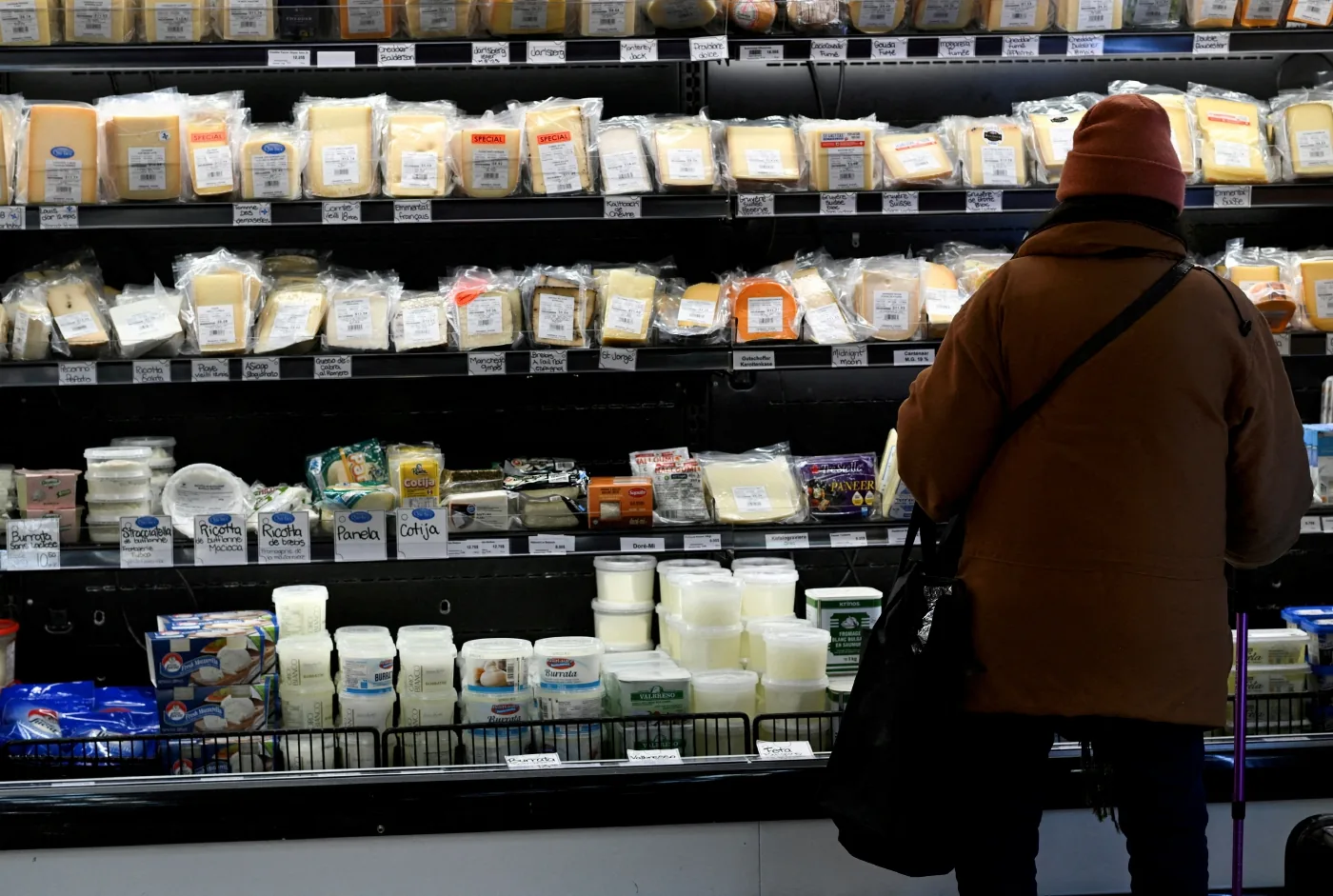
The Liberty Justice Center filed Gellert Global Group Corp. v. Trump in the US Court of International Trade, the first lawsuit challenging President Trump's 50% Section 338 tariffs on roughly $20bn of Canadian goods imposed after US-Canada trade talks broke down in August. The suit, brought for New Jersey cheese importer Gellert Global Group, seeks a ruling that the levies are unlawful, refunds with interest and a preliminary injunction, and asks for class certification covering all affected importers. It argues Section 338 of the 1930 Tariff Act was superseded by Section 301 of the 1974 Trade Act, that the tariffs exceed the statute's discrimination and offset requirements, that a required 30-day waiting period was violated, and that the administration's reading breaches the major questions and nondelegation doctrines. Days later, Trump signed a proclamation exempting some Canadian products while adding others, effective October 30.
The Trump administration announced it will ease some 50% tariffs on Canadian goods from 30 October, two weeks before US midterm elections, after Republican Senator Susan Collins of Maine said she lobbied for the change. Exemptions cover plywood sheets, some paper products, certain machinery, refrigeration equipment and packing crates, while new tariffs will be placed on carpets and waste products. The US imposed the 50% levy on $20bn of Canadian goods after trade talks collapsed in August, prompting Canada to match tariffs dollar for dollar. Collins said the relief helps Maine's blueberry, potato, apple and seaweed producers; Democratic challenger Troy Jackson criticized her. Prime Minister Mark Carney said Canada remains open to a mutually beneficial deal but is willing to wait.
The US Embassy in Ottawa accused Canadian officials of election meddling ahead of November's US midterms, citing meetings with US Democrats and calls for retaliatory tariffs. Prime Minister Mark Carney dismissed the claims, noting the US initiated trade actions first. Ontario Premier Doug Ford denied any interest in interfering. Canada advised its diplomats to avoid appearing with midterm candidates. The dispute follows months of tariff tensions and marks a deterioration in US-Canada relations.
Alberta voters rejected a referendum on separation from Canada, with preliminary results showing more than two-thirds chose to remain part of the country. The vote, called by Premier Danielle Smith after a petition gathered about 300,000 signatures, delivered a decisive defeat to the province's separatist movement and a political boost to Prime Minister Mark Carney. The result came amid a trade war with the United States and repeated suggestions by US President Donald Trump that Canada become the 51st state. Results on nine other referendum questions were still being tallied.
A fast-moving fire at Canadian Forces Base Wainwright in Alberta on Saturday killed four Canadian service members and injured dozens, with at least 19 of 39 hospitalized in critical condition. Maj-Gen Wade Rutland said the blaze covered a kilometre in 30 to 60 seconds after a wind shift. The dead were Sgt Morgan Wong, Pte Shaun Farrell, Pte Aidan Goulding and Pte Hayden Lykkemark, who were training for deployment to Latvia. Prime Minister Mark Carney called it one of the worst peacetime tragedies for the forces on Canadian soil; officials ruled out terrorist activity and said the cause remains under investigation.
US President Donald Trump announced a deal with Russian President Vladimir Putin for Russia to supply over 300,000 tons of diesel immediately, with 500,000 tons in November and one million tons thereafter, alongside temporary sanctions relief until April 2027. The move, aimed at lowering US fuel prices before midterm elections, drew bipartisan criticism over alleged violations of the 2022 Ending Importation of Russian Oil Act, angered Ukrainian President Volodymyr Zelensky, and prompted Trump to call for Ukraine to replace its leadership.
A US ban on approximately $1 billion worth of Canadian imports, including alcoholic beverages, dairy products, whey protein, and motorcycles, has taken effect. The measure, announced by President Donald Trump on September 8, targets Canadian goods in response to what the administration calls "continued discrimination" by Canada on US dairy, automotive, and alcohol products. Canada is not expected to retaliate further, with Prime Minister Mark Carney calling the impact "modest." Trade talks remain stalled.
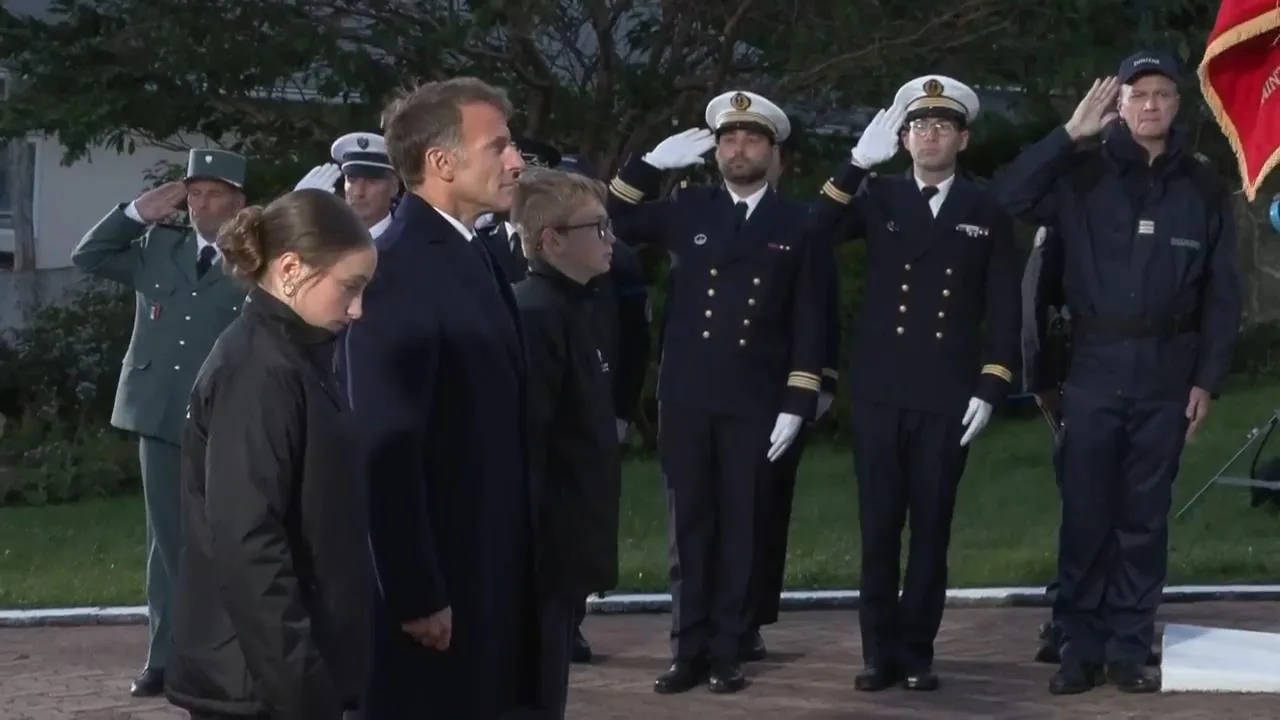
French President Emmanuel Macron and Canadian Prime Minister Mark Carney met on September 20 in Saint-Pierre-et-Miquelon, announcing a deepening of bilateral ties in fisheries, security, and energy. Macron backed Canada's bid to become an EU "associate member," following European Commission President Ursula von der Leyen's earlier support. The rapprochement comes amid escalating US-Canada trade tensions and US President Donald Trump's expansionist rhetoric, including a map depicting the region under the US flag. Carney also proposed Canada join the UK-led Joint Expeditionary Force.
European Commission President Ursula von der Leyen proposed making Canada the first "associate member" of the EU during her September 16, 2026 State of the Union address. Canadian Prime Minister Mark Carney welcomed the proposal, seeking a "unique alliance" covering defense, energy, AI, critical minerals, and Arctic cooperation. The move follows escalating US-Canada trade tensions and Trump's tariff threats. US President Donald Trump dismissed the idea as "laughable" and warned of severe tariffs if implemented. The undefined status faces EU legal hurdles and requires unanimous member state approval.
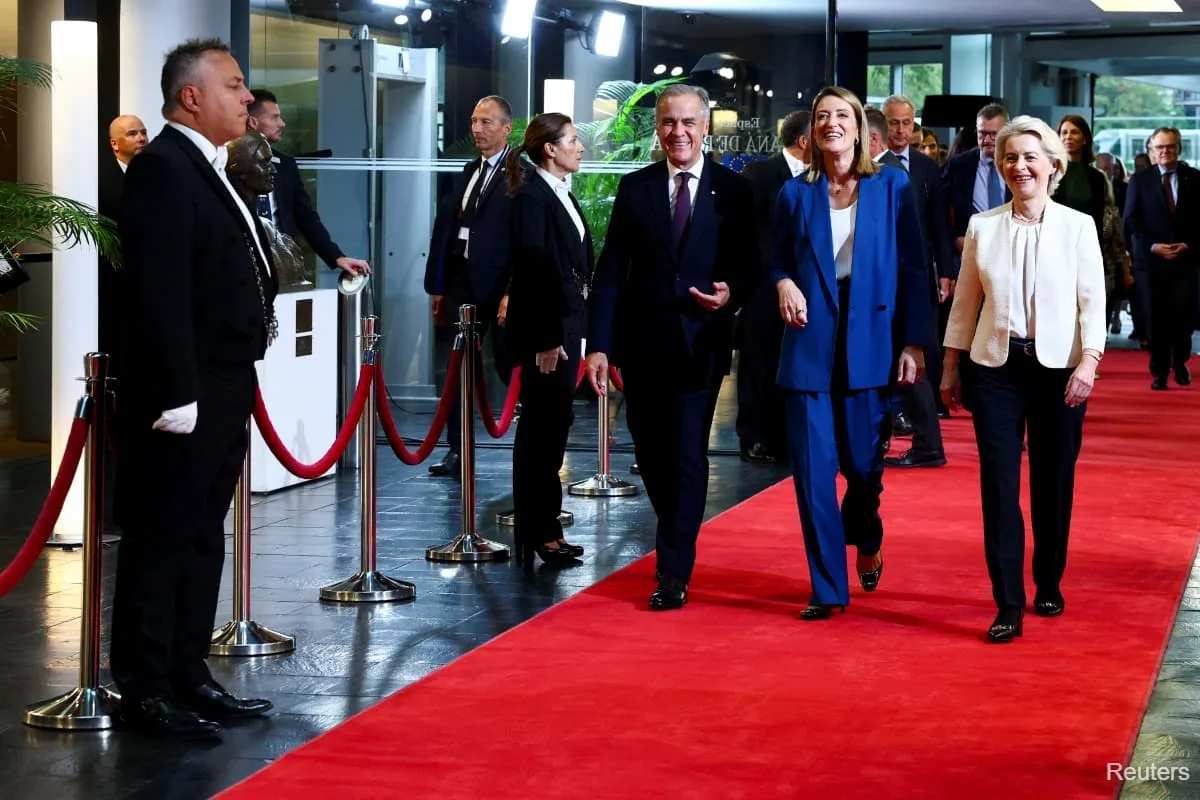
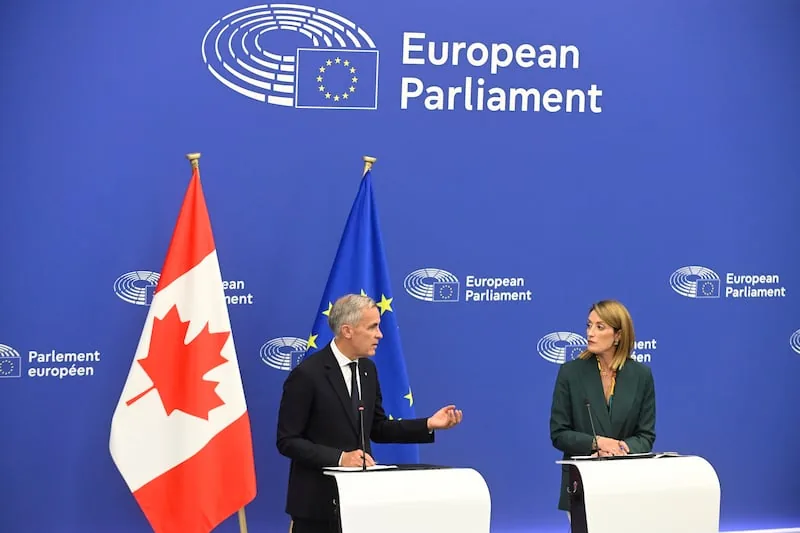
Former U.S. President Donald Trump threatened to impose heavy tariffs on the European Union or halt trade if the EU grants Canada associate member status, calling the idea “ridiculous” and Canada a “terrible trading partner.” The threat follows EU plans to deepen ties with Canada, including potential quasi-membership. Canadian PM Mark Carney is set to address the EU Parliament. The EU stated the partnership is not aimed at any country.
Canadian Prime Minister Carney stated that a mutually beneficial agreement with the United States is possible and that he is prepared to negotiate, but only if the U.S. respects Canada's sovereignty and traditions. He characterized President Trump's remarks as a positive initiative and argued that a stronger, more resilient Canada will be a more effective partner for the U.S. The statements signal a conditional, forward-looking diplomatic posture amid ongoing trade tensions.
On September 16-17, 2026, global financial markets face a dense calendar of central bank decisions and economic data. The Federal Reserve will announce its interest rate decision and Summary of Economic Projections, followed by Fed Chair Warsh’s press conference. The Bank of England and Bank of Canada also release rate decisions and meeting minutes. The SEC meets to discuss 24-hour trading. Key data includes US retail sales, UK CPI, Eurozone CPI, and US jobless claims.
European Commission President Ursula von der Leyen, in her September 16 State of the Union address to the European Parliament, proposed establishing a European Security Council including non-EU members Ukraine, the United Kingdom, Norway, and Canada. She also called for a new EU security alarm mechanism modeled on NATO Article 4, allowing member states to trigger coordinated responses to hybrid threats. Additional proposals included offering Canada associated EU membership and restricting social media access for children under 13.
Canada imposed retaliatory tariffs of up to 50% on $27.6 billion worth of U.S. goods, including steel, aluminum, dairy, and consumer products, after trade talks collapsed. In response, President Trump signed orders banning Canadian dairy, alcoholic beverages, and motorcycle imports, effective September 29, and directed removal of Canadian products from U.S. government procurement programs. The escalating dispute marks a severe deterioration in bilateral relations, with both sides accusing each other of unfair practices and no negotiations scheduled.