Chinese EV Makers Shift Battery Strategy, Reducing Reliance on Dominant Supplier CATL
Chinese electric vehicle makers including Li Auto, Xiaomi, and XPeng are reducing dependence on dominant battery supplier CATL by investing in second-tier manufacturers, forming joint development partnerships, and developing in-house battery capabilities. Li Auto invested 2.65 billion yuan in Sunwoda Power, becoming its second-largest shareholder, while Xiaomi partnered with CALB and Sunwoda for its "Dragon Armor Battery." The shift is driven by cost pressures, as batteries account for 30-40% of vehicle costs, and a desire for supply chain security and product differentiation. CATL's stock has fallen over 35% from its 2026 high, losing more than 700 billion yuan in market value.
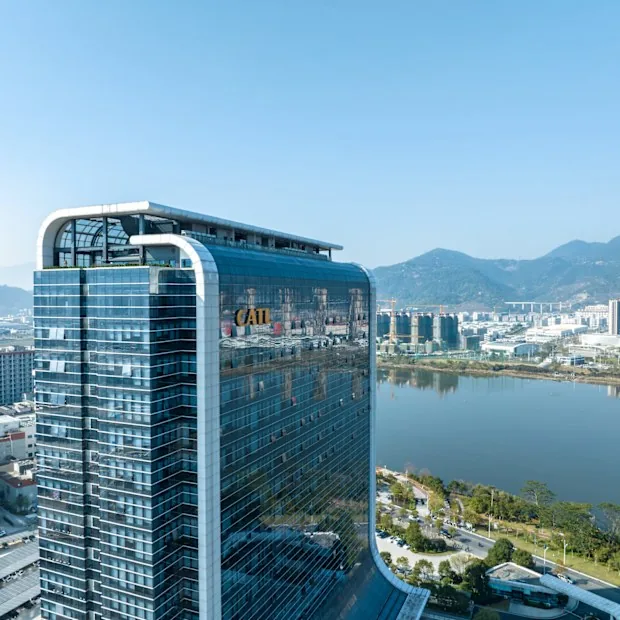 Reference image
Editorial responsibility
- No named human review is recorded for this page.
- Reports are grouped by semantic similarity and deterministic rules. Language models may assist titles, summaries, translation and cross-source analysis; the page reads the event directly, while its address stays stable when the title changes.
- Summary covers the current reports
Cross-source coverage
Common ground
- CATL's dominance in the battery market is real, but it's facing a structural shift as automakers push back against its high margins.
- The $100 billion market cap loss reflects investor concerns about future profitability, not a collapse in battery demand.
- Technology commoditization is narrowing the gap between CATL and second-tier players, which will erode CATL's pricing power over time.
- Geopolitical pressures like the US Inflation Reduction Act and EU tariffs are reshaping global supply chains, forcing CATL to pivot to new markets.
- Automakers like Li Auto and Xiaomi are diversifying or self-developing batteries to reduce dependency on CATL, a rational business move.
Points of contention
- Whether CATL's success was primarily due to state-engineered monopoly or genuine innovation and execution.
- Whether the 'de-CATLization' trend is a sign of Chinese industrial strength (maturation) or weakness (correction of an unsustainable monopoly).
- Whether CATL can maintain its 24% profit margins as automakers gain leverage and build alternatives.
- Whether Western policies like the IRA are legitimate competition tools or protectionist barriers to contain China.
- Whether the 'colonial master' analogy is a valid way to describe CATL's relationship with automakers.
Blind spots
- The human cost of margin compression—workers and suppliers squeezed when automakers struggle to survive.
- The speed of technology commoditization: the gap between CATL and rivals is narrowing faster than most analysts assume.
- The logical inconsistency of being bullish on both CATL and second-tier players like CALB simultaneously, unless market growth absorbs both.
- The historical pattern of dominant suppliers losing pricing power as their customers develop alternatives (e.g., Intel, Qualcomm).
- The possibility that CATL's next-gen technologies (sodium-ion, solid-state) may not be enough to sustain its premium if commoditization accelerates.
WorldAttention’s read
The debate reveals a clear consensus that CATL's monopoly premium is eroding due to automaker pushback, technology commoditization, and geopolitical pressures. While CATL will survive as a major player, its 24% margins are unsustainable as customers like Li Auto and Xiaomi build alternatives. The main disagreements center on whether this shift reflects Chinese industrial maturation or a correction of state-backed dominance, and whether Western policies are legitimate competition or protectionism. Key blind spots include the human impact on workers, the speed of commoditization, and the historical pattern of dominant suppliers losing pricing power. Ultimately, the $100 billion market cap loss signals a repricing of reality: CATL must adapt from a monopolist to a strong competitor, a transition that history shows is rarely smooth.
Reporting timeline
Chinese EV Makers Shift Strategy to Gain Control Over Battery Supply and Development
The article analyzes a growing trend among Chinese electric vehicle (EV) makers to reduce dependence on dominant battery supplier CATL and gain more control over battery technology and supply. It highlights recent moves by Xiaomi, Li Auto, and XPeng in September 2024. Li Auto invested 2.65 billion yuan in battery maker Sunwoda to become its second-largest shareholder and plans to switch to self-developed batteries after initial production. Xiaomi announced a strategic partnership with Sunwoda and CALB for its 'Dragon Armor' battery. XPeng's chairman stated the company will develop its own batteries, though cells will still come from suppliers. The article argues that batteries, which account for 30-40% of vehicle cost and are key to performance differentiation, are no longer a standard procurement item. It notes that over 10 automakers have announced self-developed battery plans by 2024. The analysis suggests that rather than building their own factories, automakers are forming deeper partnerships with second-tier battery makers, leveraging their manufacturing expertise while retaining design and definition control. This shift is attributed to cost pressures, supply chain security, and the need for product differentiation, as well as a desire to take clear responsibility for battery safety and performance. The article concludes that this trend will lead to a rebalancing of the industry, with automakers taking more responsibility for the full battery lifecycle.
Read sourceChinese EV Makers Shift Strategy to Gain Control Over Battery Supply and Development
This analysis from Tencent Stock and Chuangyebang, republished from Snow Leopard Finance, examines a coordinated move by Chinese electric vehicle (EV) makers to reduce dependence on dominant battery supplier CATL. In September 2024, Xiaomi announced a strategic partnership with Sunwoda and CALB for its 'Dragon Armor Battery', while Li Auto invested 2.65 billion yuan to become Sunwoda's second-largest shareholder. Li Auto's upcoming L9 will initially use CATL batteries before switching to its own self-developed cells. XPeng Motors' chairman He Xiaopeng stated the company will develop its own batteries, though cells will still come from suppliers. The article argues this trend, which began in 2022 with automakers like GAC complaining about 'working for CATL', is driven by the need to control costs (batteries are 30-40% of vehicle cost), ensure supply security, and achieve product differentiation. It notes that automakers are not necessarily building their own factories but are forming deeper partnerships with second-tier battery makers like Sunwoda and CALB, who are more willing to engage in custom development. The analysis concludes that this shift redefines industry boundaries, with automakers taking on more responsibility for battery definition and lifecycle quality, which ultimately benefits consumers through better product performance, supply security, and clearer warranties.
Read sourceCATL Is Not TSMC: Battery Giant Faces Valuation Shift as Automakers Bypass Its Supply
This article analyzes the recent decline in CATL's (Ning Wang) market valuation, from a peak of 2.16 trillion yuan in May 2026 to 1.37 trillion yuan four months later, attributing the drop to a new phase of 'de-Ninghua' (reducing reliance on CATL). Unlike previous rounds where automakers sought second and third suppliers for low-end models, the current trend involves automakers like Li Auto and Xiaomi adopting a 'cell direct supply' model. In this model, battery manufacturers supply only bare cells, while automakers handle module packaging, BMS, and thermal management themselves, effectively bypassing CATL. The article argues this shifts CATL's competitive advantage from advanced technology to mere customization capability, weakening its barriers. It compares CATL unfavorably to TSMC, noting that battery technology evolves slowly and requires less capital expenditure, allowing competitors to catch up. The author concludes that CATL's valuation is transitioning from a high-growth tech stock to a cyclical manufacturing stock, as its pricing power and market share face structural erosion.
Read sourceShow 17 older updatesHide older updates
Chinese EV makers reduce reliance on CATL, shifting to self-developed and second-tier batteries
Chinese electric vehicle makers including Li Auto, Xiaomi, and AITO are reducing their dependence on battery giant CATL, moving toward self-developed batteries and second-tier suppliers like CALB, Gotion High-tech, and Sunwoda. The shift comes as automakers face intense price competition and seek to reclaim pricing power from CATL, which has long dominated the market with higher prices and strict supply terms. Li Auto, a decade-long partner, plans to use self-developed batteries in its best-selling i6 model by Q4 2026. Xiaomi launched its self-branded 'Longjia Battery' for new models. CATL's stock fell over 35% from its May 2026 high, losing over 700 billion yuan in market value, despite reporting record net profit of 43.28 billion yuan in H1 2026. Analysts attribute the trend to automakers' desire to reduce costs and avoid being 'strangled' by a single supplier. However, experts note that full self-sufficiency remains difficult, with only BYD achieving it so far. CATL is responding by increasing consumer advertising and investing in client relationships, including a 2.5 billion yuan investment in NIO Energy.
Read sourceChinese automakers reduce reliance on CATL as battery supplier dominance fades
A growing number of Chinese electric vehicle (EV) makers, including Li Auto, Xiaomi, and AITO, are reducing their dependence on CATL, the world's largest battery manufacturer, by developing in-house batteries or partnering with second-tier suppliers. The shift, which began in mid-2026, marks a reversal of years of CATL's near-monopoly pricing and supply control. Li Auto, a decade-long partner, announced it will use self-developed batteries in its i6 model from Q4 2026. Xiaomi launched its 'Longjia' battery brand with cells from CALB and Sunwoda. AITO introduced two secondary suppliers. The trend is driven by intense price competition among automakers, who say CATL's high margins—it posted a record net profit of 43.28 billion yuan in H1 2026—are unsustainable for the industry. CATL's stock has fallen over 35% from its May 2026 high, losing more than 700 billion yuan in market value. Analysts and industry executives quoted in the article view the moves as both a genuine attempt to secure supply and a bargaining tactic to pressure CATL on pricing. CATL has responded by increasing consumer advertising and investing in key clients like NIO, but its long-term dominance faces its most serious challenge yet.
Read sourceChinese automakers reduce reliance on CATL, shift to self-developed and second-tier batteries
Chinese electric vehicle makers, including Li Auto, Xiaomi, and AITO, are increasingly reducing their dependence on CATL, the dominant battery supplier known as 'King Ning.' Li Auto announced it will use self-developed batteries in several models, including the i6, and phase out CATL versions. Xiaomi launched its self-branded 'Long Arm Battery' for the Pengcheng series, supplied by CALB and Sunwoda. AITO plans to add second-tier suppliers. The shift follows years of frustration over CATL's pricing power, supply constraints, and contractual rigidity, which squeezed automaker profits amid industry price wars. CATL's上半年 net profit rose 42% to 43.28 billion yuan, but its stock fell over 35% from a May high, losing more than 700 billion yuan in market value. Automakers are now collaborating with second-tier battery makers to regain bargaining power, though full independence remains challenging. CATL is responding by increasing direct-to-consumer advertising and mending ties with clients like NIO and XPeng.
Read sourceAutomakers Accelerate 'De-Ningde' Push, CATL Faces Valuation Slump
CATL (Contemporary Amperex Technology Co.) has seen its stock price drop sharply, with A+H shares losing over 700 billion yuan in market cap from their 2026 highs, despite reporting strong first-half profits of 43.28 billion yuan. The sell-off is driven by automakers diversifying battery suppliers, a trend dubbed 'de-Ningde-ization.' Key moves include Li Auto switching to Sunwoda for its new L8 model and investing 2.65 billion yuan in Sunwoda Power, and Xiaomi launching its 'Longjia Battery' with batteries from CALB and Sunwoda, excluding CATL. Huawei's HarmonyOS-branded vehicles are also adding second-tier suppliers. Analysts attribute this to automakers seeking to reduce battery costs, which account for 30-40% of vehicle cost, and to gain control over product definition and technology. CATL's market share is under pressure, with its domestic share falling 1.67 percentage points in 2025. Additional headwinds include a new consumption tax on lithium batteries starting September 2026 and the looming threat of solid-state battery technology. Despite the sell-off, some brokerages like Huachuang Securities maintain a positive outlook, citing a 25x PE target price of 514.46 yuan.
Read sourceAutomakers Shift from Battery Buyers to Battery Definers, Reshaping China's EV Power Supply Chain
This analysis from Yibang Power, republished by Tencent Stock, examines a fundamental shift in China's electric vehicle (EV) industry: automakers are moving beyond simply purchasing batteries from suppliers like CATL to actively defining and co-developing battery systems. The article argues this 'de-CATLization' trend, seen with Huawei, Xiaomi, Li Auto, and XPeng, is driven by profit imbalances (battery firms earned 508 billion yuan in H1 2026 vs. automakers' 254 billion) and unclear liability for battery failures. Automakers now aim to take responsibility for battery system definition, quality control, and lifecycle management, partnering with multiple suppliers like CALB, Sunwoda, and EVE Energy. The author contends that technological gaps between battery makers have narrowed, enabling this shift. The ultimate goal, according to the piece, is to make consumers judge EVs by overall vehicle experience rather than battery brand, signaling a new phase of industry maturity where automakers bear greater responsibility for the complete product.
Read sourceChinese automakers seek supply chain control, shifting from battery giants and Huawei partnerships
This analysis from Securities Times reporter Wang Xiaowei examines two landmark shifts in China's new energy vehicle industry. First, automakers are diversifying battery suppliers away from dominant player CATL, with companies like BYD, Geely, and Xiaomi developing in-house batteries to reclaim cost and product control. Second, Seres has restructured its relationship with Huawei, taking back leadership in product definition, branding, and sales for the AITO brand, while Huawei becomes a technology enabler. The article argues both trends reflect a common drive by automakers to regain supply chain dominance and profit share as the industry moves from electrification to an 'intelligent + ecosystem' phase. It notes that CATL's net profit in H1 2026 exceeded the combined profit of 15 major listed automakers, highlighting the profit imbalance. The piece concludes that this evolution is a natural market process, not a conflict, and should ultimately benefit consumers through better products and prices.
21st Century Business Herald Warns Against Zero-Sum Game in EV Battery Supply Shift
This editorial from 21st Century Business Herald analyzes the recent trend of Chinese electric vehicle (EV) makers diversifying their battery supply chains away from dominant supplier CATL, a phenomenon dubbed 'de-CATLing' (qu ning hua). Companies like Seres, XPeng, Li Auto, and Xiaomi are partnering with alternative battery makers such as Gotion High-Tech and EVE Energy. The article argues that while supply chain diversification is normal business practice, the narrative around 'de-CATLing' is being distorted into a zero-sum conflict between automakers and the battery giant. It contends that automakers' low profitability is not primarily due to high battery costs but stems from industry-wide product homogenization and intense price competition. The editorial warns that shifting the price war upstream to battery suppliers could undermine investment in critical battery technologies like fast-charging and safety, potentially compromising vehicle quality and consumer trust. It concludes that the industry's future depends on specialization, technical competition, and quality, not on adversarial supply chain battles.
Read sourceHas CATL's Stock Price Hit Bottom? Analysis of Market Trends and Financial Health
This article from East Money News analyzes whether the stock price of CATL (Contemporary Amperex Technology Co.) has bottomed out after a significant decline. On September 22, CATL shares rose 2.53% to 304.63 yuan, ending a five-day losing streak, after hitting a near one-year low of 295.50 yuan. The article discusses the 'de-Ninghua' trend, where automakers are diversifying battery suppliers to reduce dependence on CATL, driven by profit imbalances in the supply chain. Despite this, CATL remains the global leader with a 43.42% domestic market share in 2025. The company reported strong financials: 2025 revenue of 4237 billion yuan (up 17%) and net profit of 722 billion yuan (up 42%). A 200-400 billion yuan share buyback program is underway. Risks include geopolitical barriers to overseas revenue (30.5% of total) and increased competition. Opportunities lie in energy storage, global capacity expansion (Germany, Hungary, Spain), and battery-swapping services. Analysts like Morgan Stanley and Citigroup maintain positive ratings, with Citigroup setting a target price of 576 yuan. The author advises monitoring overseas production progress, energy storage growth, and technology leadership.
CATL's $100 Billion Market Cap Loss Sparks Automaker Backlash Over Battery Profits
Chinese battery giant CATL has lost over 700 billion yuan (about $100 billion) in market value since its May peak, triggering a wave of 'de-CATL' moves by major automakers. The article reports that CATL's net profit margin of 18.12% in 2025 far exceeded the auto industry's average of 4.1%, leading companies like Li Auto, Xiaomi, and GAC to reduce reliance on CATL by developing in-house batteries or partnering with alternative suppliers like Xinwangda and CALB. CATL has responded by launching consumer-facing marketing campaigns, including a 'non-CATL won't choose' narrative supported by a Nielsen survey showing 40% of Chinese EV buyers prefer CATL batteries. The analysis notes that while CATL's battery quality is widely recognized, its dominant pricing power has strained relationships with automakers facing thin margins. The article concludes that if CATL does not share more profits with partners, it risks long-term damage to its business ecosystem.
Read sourceCATL's Market Cap Loses 10 NIOs as Automakers Revolt Against Battery Giant's Dominance
Chinese battery giant CATL, known as 'King Ning,' has faced a wave of backlash from automakers despite its strong market position. The article reports that CATL's stock price fell over 35% from its May 2025 peak of 467.35 yuan to 297.1 yuan by September 21, 2026, erasing more than 700 billion yuan in market value—equivalent to about 10 NIOs or one BYD. Automakers including Li Auto, Xiaomi, and NIO have announced plans to reduce or end their reliance on CATL batteries, citing profit imbalances. In 2025, CATL's net profit of 72.2 billion yuan exceeded the combined profits of 11 major listed automakers, while the overall auto industry profit margin fell to 4.1%, a decade low. In response, CATL has launched consumer-facing campaigns, including the slogan 'Choose electric cars by battery, recognize CATL,' and released a report showing 40% of Chinese respondents would only choose CATL batteries. The article notes that despite these efforts, many automakers are still pursuing 'de-CATL' strategies due to survival pressures.
Read sourceCATL's market cap loses $100 billion as automakers revolt against battery giant's pricing power
Chinese battery giant CATL has seen its market capitalization shrink by over 700 billion yuan (about $100 billion) since its May peak, as a growing number of automakers pursue 'de-CATL' strategies. The article reports that CATL's stock fell to 297.1 yuan on September 21, down 35% from its all-time high. Automakers including Li Auto, Xiaomi, and Nio have announced plans to reduce reliance on CATL batteries by developing in-house battery technology or partnering with alternative suppliers like Xinwangda and CALB. The revolt stems from severe profit imbalances: while China's auto industry profit margin fell to 4.1% in 2025 and just 1.5% in the first half of 2026, CATL's net profit margin reached 18.12% in 2025 and grew 42% year-on-year in the first half of 2026 to 432.84 billion yuan. CATL has responded by launching consumer-facing marketing campaigns emphasizing battery brand importance, including a Nielsen survey showing 40% of Chinese respondents would only choose CATL batteries. The article notes that despite CATL's strong brand recognition, automakers' survival pressures are driving continued defection.
Read sourceCATL's 'King' Status Questioned as Automakers Diversify Battery Suppliers
This analysis from Wan Dian Research examines the challenges facing CATL (Contemporary Amperex Technology Co. Ltd.), the world's largest battery manufacturer, as its stock price fell to a 2025 low despite record profits. The article argues that CATL's market dominance is being eroded by automakers' efforts to reduce dependence on a single supplier, a trend termed 'de-Ninghua.' Automakers like Xiaopeng, Li Auto, and Xiaomi are diversifying to second-tier battery suppliers such as CALB, Sunwoda, and Gotion High-tech, driven by cost savings of 10-20% and narrowing technology gaps. The analysis notes that CATL's valuation logic is shifting from a high-growth 'Apple of batteries' to a mature 'Foxconn of batteries,' as technical advantages diminish. CATL has launched a record 40 billion yuan share buyback and dividend plan, but the article suggests this may not reverse the trend. The piece concludes that CATL's future depends on achieving a next-generation technological breakthrough, such as solid-state or sodium-ion batteries, to restore its competitive edge and pricing power.
Read sourceCATL's Dominance Challenged as Automakers Seek Battery Independence
This analysis examines why CATL (Contemporary Amperex Technology Co., Limited), despite record profits of 43.3 billion yuan in H1 2023 (daily net profit of 240 million yuan), has seen its market value drop by over 760 billion yuan since August. The article attributes this to automakers' growing 'de-CATL' movement, driven by cost pressures and desire for supply chain control. Key examples include Li Auto planning to switch to self-developed batteries after initial CATL supply, Xiaomi sourcing from CALB and Sunwoda, and BYD's battery supply to FAW Hongqi. The analysis notes that while CATL still holds 46.7% of China's power battery market and maintains technological advantages in safety and consistency, competitors are narrowing the gap in fast-charging and range. Industry experts quoted suggest CATL may need to reconsider pricing strategy, though its founder Zeng Yuqun has warned against price wars. The piece concludes that CATL's real challenge is maintaining its technological edge as rivals offer cheaper, adequate alternatives.
Read sourceCATL's Dominance Challenged as Automakers Seek Battery Independence Amid Profit Squeeze
This article analyzes the paradox of CATL (Contemporary Amperex Technology Co. Ltd., referred to as 'Ning Wang') reporting record profits while its stock price has fallen over 36% from its May high, losing over 760 billion yuan in market value. The core thesis is that automakers, squeezed by thin profit margins (the auto industry's profit rate fell to 3.6%), are increasingly seeking to reduce dependence on CATL, a phenomenon termed 'de-CATL-ization.' Companies like Li Auto, Xiaomi, and Xpeng are diversifying battery suppliers or developing in-house batteries, often partnering with second-tier manufacturers like CALB, Gotion High-tech, and Sunwoda. The article explores the challenges of battery self-development, noting CATL's massive R&D spending and patent moats, but argues that as performance gaps between battery brands narrow, cost pressure is driving automakers to switch. It also highlights competitive threats from BYD's vertically integrated model and its second-generation blade battery. The analysis concludes that while CATL retains a strong market position and consumer brand recognition, its future growth is being re-evaluated by the market as its technological premium erodes and customers seek more control over their supply chains.
Read sourceLi Auto Equips Entire Lineup with Self-Developed Batteries, Setting a New Industry Trend
This article from Ofweek analyzes the growing trend of Chinese automakers developing their own batteries, with a focus on Li Auto. It details Li Auto's journey from joint development with CATL and Xinwangda to full self-development and production of battery packs, now standard on its upcoming i6 model. The analysis explores the motivations behind this strategy, including cost reduction, supply chain control, and the need for technological differentiation in a competitive market. It also highlights significant challenges, such as consumer trust in supplier brands (a NielsenIQ report shows 37.1% of Chinese consumers might abandon a purchase if it doesn't use CATL batteries) and the high upfront investment required. The article presents contrasting views, quoting CATL's chief manufacturing officer Ni Jun arguing that automakers should leave battery making to specialists, while Xiaomi and Xpeng also invest in self-development. It concludes that while risky, self-development is a necessary step for automakers to compete on technology and secure their long-term future, potentially even becoming a new revenue stream through external supply of components like chips and inverters.
Read sourceAnalysis: CATL's High Margins Not Root Cause of EV Industry Profit Squeeze, Internal Competition Is
This analysis argues that the widespread belief that CATL's high profits are squeezing the electric vehicle (EV) industry is misleading. It contends that the real cause of low profitability for Chinese EV makers is intense price competition and product homogenization in the terminal market, not high battery costs. The article notes that CATL, as the dominant battery maker, has refrained from starting a price war, which has helped maintain profit margins for the entire battery industry and given second-tier players like Sunwoda and CALB room to operate. It warns that an aggressive 'de-CATL' strategy by automakers, aimed at reducing dependence on the battery giant, could backfire by weakening battery R&D and innovation. The piece concludes that the path to profitability for EV makers lies in ending destructive internal competition and improving product differentiation, rather than simply squeezing upstream suppliers.
CATL's Profit Soars but Stock Plunges as Automakers Seek Battery Independence
CATL (Contemporary Amperex Technology Co. Ltd.), the world's largest battery maker, reported a 42% net profit increase to 43.3 billion yuan in H1 2023, earning 2.4 billion yuan daily. Despite this, its stock fell 36% from a May high, losing over 760 billion yuan in market cap. The article attributes this to automakers' growing push to reduce dependence on CATL, termed 'de-CATLization.' Automakers like Li Auto, Xiaomi, and Nio are diversifying suppliers (e.g., CALB, Gotion High-tech, Sunwoda) or developing in-house batteries to cut costs and gain supply chain leverage. Industry data shows auto profit margins at 3.6%, far below CATL's 24% battery margin. However, experts note CATL's technological edge, massive R&D spending (221.47 billion yuan in 2025), and patent barriers make it hard to replace. CATL is responding with consumer marketing and price threats. The analysis concludes that while CATL's dominance is challenged, its ability to innovate and maintain quality will determine its future.
Read source