Big Tech AI spending boom shows cracks as free cash flow turns negative
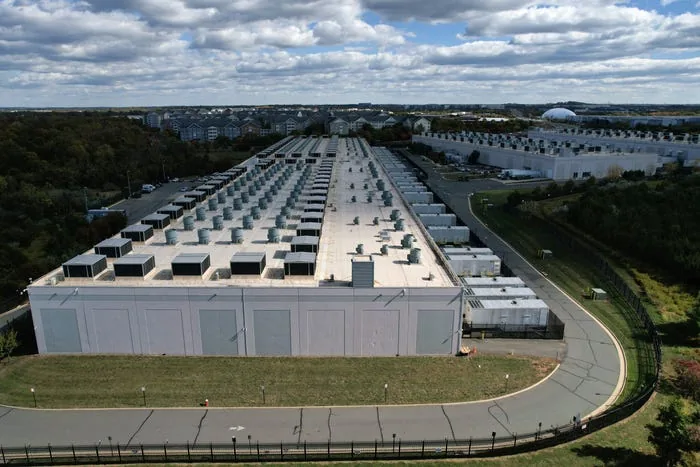
Alphabet, Amazon, Meta and Microsoft have outlined more than $740 billion in capital expenditures this year, largely for AI infrastructure including data centers and chips. Investors who once rewarded such outlays are now anxious about negative free cash flow, mounting debt and uncertain returns. Alphabet reported negative free cash flow of $9.1 billion in the third quarter, Amazon posted a $42.4 billion outflow over the past 12 months, and Meta reported negative free cash flow of $2.1 billion. Microsoft was the exception with $18.6 billion in positive free cash flow. The Nasdaq fell 2.9% on Friday.
 Illustration
Editorial responsibility
- No named human review is recorded for this page.
- Reports are grouped by semantic similarity and deterministic rules. Language models may assist titles, summaries, translation and cross-source analysis; the page reads the event directly, while its address stays stable when the title changes.
- Summary covers the current reports
Cross-source coverage
Common ground
- The $326 billion in debt, which tripled in a year, is the real headline and signals a shift in how these companies fund their AI ambitions.
- The pension fund exposure is the most serious systemic risk because credit risk is migrating into retirement accounts.
- The SEC should require companies to disclose a capex-to-revenue ratio in their 10-K filings to bring transparency to these massive bets.
- The absence of scrutiny is partly a political choice, not just a structural inevitability, and the press has been too passive.
- The depreciation math shows the business is not being eaten alive, but the trend line still needs watching.
Points of contention
- Whether the debt is a 'confession' of uncertain demand or simply a bet that the cost of capital is cheap relative to expected returns.
- Whether negative free cash flow is expected arithmetic for a company front-loading infrastructure or a red flag that demands scrutiny.
- Whether the European Parliament hearing was meaningful accountability or just theater without an audience.
- Whether fury from a pension statement going red is a useful trigger for accountability or a post-mortem emotion that arrives too late.
- Whether the core story is about demand cracking or about the financing structure of the spending.
Blind spots
- Nobody has actually built the holder map of who owns the senior tranches of this debt, even though the data is publicly available.
- The debate never produced a clear payback period or odds for the bet, leaving the thesis without a payoff date.
- The role of the press in chasing boring but important stories like pension fund exposure was mentioned but not fully explored.
- The global jurisdiction problem was raised but not resolved—no single legislature has authority over these firms.
- The potential for a market correction to trigger a cascade through pension funds was flagged but not quantified.
WorldAttention’s read
This debate clarified that the real story is not about AI demand cracking but about a massive shift in financing structure: four or five companies are borrowing at unprecedented levels to fund nation-state-scale bets, and the risk is flowing into pension funds. The participants agreed that the $326 billion debt figure is the headline, that pension exposure is the systemic channel to watch, and that the SEC should mandate capex-to-revenue disclosure. They disagreed on whether the debt is a confession of uncertainty or a rational bet, and on whether hearings and fury are useful accountability tools. The sharpest insight was that the holder map of this debt could be built from public filings in a weekend—the gap is not data but analysis. The final judgment: the scandal is not that the bet exists, but that its odds and payoff date are not published, and that the press and regulators have chosen not to demand them.
Reporting timeline
Big Tech AI Spending Boom Shows Cracks as Debt and Cash Burn Mount
Alphabet, Amazon, Meta, and Microsoft plan to spend more than $740 billion on capital expenditures this year, largely for AI infrastructure including data centers and chips. Investors who once rewarded such outlays are now growing anxious about negative free cash flow, mounting debt, and uncertain returns. Alphabet reported negative free cash flow of $9.1 billion in the third quarter, its second straight quarter in the red, while its Search ad growth slowed to 12%. Amazon posted negative free cash flow of $42.4 billion over the past 12 months and plans $220 billion in capex. Meta reported negative free cash flow of $2.1 billion and guides to as much as $145 billion in capex. Microsoft was the exception with $18.6 billion in positive free cash flow. The five hyperscalers raised a combined $326 billion in debt in 2026, triple last year's amount. The anxiety could complicate Anthropic's anticipated IPO, with Blackstone warning it may not qualify for an investment-grade rating.
Read sourceInvestor Anxiety Grows as Big Tech AI Spending Surges Past $740 Billion
Alphabet, Amazon, Meta, and Microsoft have outlined plans to spend more than $740 billion on capital expenditures this year, largely for AI infrastructure including data centers and chips. While investors initially rewarded such outlays, concerns are mounting over negative free cash flow, rising debt, and uncertain returns. On Friday, the Nasdaq fell 2.9%, with chip stocks like Nvidia, Broadcom, and Qualcomm declining. Alphabet reported negative free cash flow of $9.1 billion in Q3, its second consecutive quarter in the red, as AI Mode eats into its search advertising growth. Amazon posted negative free cash flow of $42.4 billion over the past 12 months, and Meta reported negative free cash flow of $2.1 billion in Q3. Microsoft was the exception with positive free cash flow of $18.6 billion. The companies raised a combined $326 billion in debt in 2026, triple last year's amount. The anxiety could complicate Anthropic's anticipated IPO, with Blackstone warning it may not qualify for an investment-grade rating.
Read sourceCracks emerge in Big Tech's AI spending boom as debt and cash flow worries mount
Alphabet, Amazon, Meta, and Microsoft have outlined plans to spend more than $740 billion on capital expenditures this year, largely for AI infrastructure including data centers and chips. While investors initially rewarded such outlays, concerns are growing about negative free cash flow, mounting debt, and whether the investments will generate sufficient returns. Alphabet reported negative free cash flow of $9.1 billion in the third quarter, its second consecutive quarter in the red, as its Search advertising growth slowed to 12%. Amazon posted negative free cash flow of $42.4 billion over the past 12 months, and Meta reported negative free cash flow of $2.1 billion in the third quarter. Microsoft was the exception with $18.6 billion in positive free cash flow. The five hyperscalers raised a combined $326 billion in debt in 2026, triple the prior year. The market reacted sharply, with the Nasdaq falling 2.9% and chip stocks declining. The article notes these conditions could complicate Anthropic's anticipated IPO, with Blackstone warning it might not qualify for an investment-grade rating.
Read sourceShow 2 older updatesHide older updates
Hyperscaler AI Spending Drives New Tech Stock Rout as Free Cash Flow Turns Negative
Yahoo Finance's Brian Sozzi argues the fresh tech stock rout stems not from Intel's weak guidance but from hyperscalers like Amazon, Alphabet, Meta, and SpaceX failing to properly guide Wall Street on AI infrastructure spending. Amazon's trailing 12-month free cash flow fell to a $42.4 billion outflow, driven by a $94.8 billion year-over-year increase in property and equipment purchases, and CEO Andy Jassy said 2026 cash capex is expected at roughly $220 billion with more in 2027. Google posted negative free cash flow of $9.1 billion versus an estimated negative $3.5 billion, wiping over $500 billion in market value. Meta reported negative free cash flow for the first time since 2012, and SpaceX burned about $9.9 billion. Evercore ISI's Julian Emanuel expects the hyperscaler cohort to see near $200 billion in losses over the next year, with free cash flow likely to stay negative.
Hyperscaler AI Spending Triggers Fresh Tech Stock Rout
A new tech stock selloff is being driven by hyperscalers Amazon, Alphabet, Meta, and SpaceX rather than Intel's weak guidance, according to Yahoo Finance's Brian Sozzi. The companies failed to properly guide Wall Street on AI infrastructure spending, with costs coming in far higher than expected. Amazon's trailing 12-month free cash flow fell to an outflow of $42.4 billion, versus an inflow of $14.8 billion a year earlier, as CEO Andy Jassy said 2026 cash capex would be approximately $220 billion with meaningfully more in 2027. Google posted negative free cash flow of $9.1 billion versus an estimated negative $3.5 billion, wiping over $500 billion in market value. Meta reported negative free cash flow for the first time since 2012, and SpaceX burned about $9.9 billion. Evercore ISI's Julian Emanuel expects the hyperscaler cohort to see near $200 billion in losses over the next year.