Reporting on this entity comes from multiple media camps.
28%
55%
Western78 · 28%
Regional13 · 5%
Neutral / independent150 · 55%
Eastern34 · 12%
Latest Stories
Periodic recap
What changed for this subject in each tracking window — generated from matched events, delta-first.
· 1 event in window
Alphabet's key development this period is Google's official launch of Gemini 4 Argon, its most advanced AI model, after months of delays, shifting the focus from the previous Goldman Sachs report on AI agent consumer markets to concrete product delivery. Due to safety concerns, the model is initially restricted to trusted cyber defenders, with new guardrails implemented, and CEO Sundar Pichai highlighted its frontier performance in cyber defense and software engineering. However, reports of employee skepticism about the model's capabilities clouded the launch and contributed to a decline in Alphabet's stock price.
Google launched Gemini 4 Argon, its most advanced AI model, after months of delays, initially restricted to trusted cyber defenders.
CEO Sundar Pichai highlighted frontier performance in cyber defense and software engineering, with new safety guardrails implemented.
Reports of employee skepticism about the model's capabilities contributed to a decline in Alphabet's stock price, clouding the launch.
Earlier recaps
· 1 event in window
Alphabet's development this period continues the Goldman Sachs research theme, shifting focus from AI infrastructure spending to the consumer market potential of AI agent commerce. A new Goldman Sachs report estimates that AI agents such as Meta Muse and OpenAI Astra could target approximately $2.6 trillion in annual US consumer spending over 3-5+ years, identifying 18 publicly listed companies as potential beneficiaries. The report notes agentic commerce will initially capture existing spending before driving e-commerce growth by reducing transaction friction.
· 1 event in window
Alphabet's direct development this period comes from a Goldman Sachs research report. The report significantly raised its forecast for Big Tech AI infrastructure spending, with Alphabet among the companies cited. It notes that while spending continues to grow rapidly, the growth rate is expected to decelerate, and firms will need to generate substantial AI revenue to justify the investments.
· 1 event in window
Alphabet had no direct company developments this period, with the signal coming from prominent investor Michael Burry significantly increasing short positions against several tech and semiconductor companies. Burry argues the current memory chip shortage is a temporary supply-side dislocation and warns of a violent sell-off as production reverts to conventional chips. This event indirectly affects the overall tech stock environment through semiconductor sector sentiment.
· 3 events in window
Alphabet had no direct company developments this period, with signals coming from macro market pressure and AI infrastructure investment outlooks. Strong US economic data and hawkish Fed signals drove bond yields sharply higher, weighing on tech stocks. Meanwhile, a Brookings Institution paper projected US AI infrastructure investment could reach $10.3 trillion by 2032, highlighting long-term expansion expectations while warning of debt-driven systemic risk.
· 2 events in window
Direct developments for Alphabet were limited this period, with the main signals coming from industry-level AI valuation debates and payment-sector hiring moves. Nvidia's forward P/E fell to a decade low as markets questioned the sustainability of AI hardware profits, a sentiment that could ripple across the AI ecosystem. Meanwhile, Google and Apple both recruited stablecoin talent, signaling growing Big Tech interest in crypto payment infrastructure.
Tracked events
Events matched to this subject by the tracking pipeline, with signal scores.
Meta stock draws unanimous Buy ratings from all 55 analysts, targets up to $900
All 55 analysts covering Meta Platforms rate the stock a Buy, with zero Sell ratings and 7 Hold calls, according to 24/7 Wall St. Analysts cite Q2 2026 revenue of $60.8 billion (up 28% YoY), AI-driven ad growth, and an $18 billion youth-safety legal settlement as catalysts. Price targets range from $775 to $900, implying up to 39% upside. Risks include $130-145 billion in 2026 capex, a 91% free cash flow collapse to $784 million, and youth litigation trials.
President Trump awarded the National Medal of Science to Elon Musk, Jensen Huang, Sergey Brin and Lisa Su, and the National Medal of Technology and Innovation to Michael Dell and Satya Nadella, at a White House innovation summit on October 8, 2026. According to a New Republic analysis cited by TechCrunch, the six awardees collectively donated at least $6 billion to Trump's campaign, inauguration fund, White House ballroom project, pro-Trump super PACs and other Republican initiatives. Nadella received his medal shortly after the administration suspended Microsoft from the H-1B visa program.
Google announced Gemini 4 Argon, its most advanced AI model, after months of delays. The model is positioned as a frontier intelligence system with capabilities in complex workflows, cyber defense, and software engineering. Initial access is restricted to trusted cyber defenders, and the release includes new guardrails amid an ongoing AI safety debate. However, the launch is clouded by reports of internal employee skepticism about the model’s capabilities, which contributed to a slip in Alphabet’s stock price.
Goldman Sachs Global Investment Research released a report estimating that AI agents like Meta Muse and OpenAI Astra could target approximately $2.6 trillion in annual US consumer spending over 3-5+ years. The report identifies 18 publicly listed companies as potential beneficiaries across consumer platforms, retail infrastructure, digital payments, identity security, ticketing, and AI hardware. It notes that agentic commerce will initially capture existing spending before driving e-commerce growth by reducing transaction friction.
Goldman Sachs projects that six major US hyperscale cloud providers (Alphabet, Amazon, Microsoft, Meta, Oracle, SpaceX) will spend $1.73 trillion on AI computing in 2026-2027. To achieve a 15% return on invested capital, these firms need to generate approximately $1.42 trillion in cumulative revenue from 2028 to 2030. The analysis highlights a $276 billion annual depreciation burden and notes $1.69 trillion in cloud backlog orders as support. Risks include $3 trillion in off-balance-sheet commitments and potential GPU price declines.
Google is launching a prototype satellite carrying four of its custom Tensor Processing Units (TPUs) into low Earth orbit on October 1 via a SpaceX Falcon 9 rocket, marking the first in-orbit test of Project Suncatcher. The refrigerator-sized satellite, built with Planet Labs, will test hardware survivability against launch stress, radiation, and thermal challenges. Due to vacuum cooling limits, the system can only operate for about 15 minutes at a time. Google plans a 2027 dual-satellite laser link test and envisions an 81-satellite cluster.
Investor Michael Burry disclosed on September 22 that he has significantly increased short positions in Micron Technology, Nebius, the iShares Semiconductor ETF (SOXX), and Palantir, describing the moves as "quite large." Burry argues the memory chip price surge is a temporary supply dislocation from manufacturers shifting capacity to AI-focused HBM, not structural demand. He warns of a "violent sell-off" as production reverts. Acer CEO Jason Chen's warning of rising Chinese memory output and inventory buildup supports Burry's bearish thesis.
A Brookings Institution study by economist Stijn van Nieuwerburgh projects US investment in data centers and AI infrastructure could reach $10.3 trillion from 2025 to 2032, averaging 3.6% of GDP annually—surpassing past booms in railroads, highways, and electrification. The report warns that much of this spending is debt-financed through less transparent structures, shifting risk from tech company balance sheets and posing systemic financial dangers if AI revenues fall short.
Stronger-than-expected US September PMI data, with the composite index rising to 58.4 (highest since July 2021), triggered a sharp sell-off in US Treasuries, pushing the 10-year yield above 5% for the first time since 2007. This, combined with hawkish comments from Fed Governor Michael Barr, drove market expectations for an October rate hike to around 70%. US stocks fell sharply (Nasdaq -1.13%), European indices declined, and Asian markets also dropped. Oil prices surged, while gold and cryptocurrencies fell.
A surge in AI-driven data center construction is facing growing opposition from communities and regulators across the US, concerned about rising electricity costs, water consumption, and grid strain. A report from Data Center Watch found approximately 45 data center projects worth $68 billion were blocked or delayed in Q2 due to local resistance. Executives from Microsoft, Google, and Amazon addressed these concerns at a New York climate conference, outlining steps to isolate infrastructure costs from consumer bills and improve water efficiency. About 30 US states have introduced legislation on data center siting, power, and water use.
Ireland's Data Protection Commission fined Google €403 million ($463 million) on September 21 for violating the EU's General Data Protection Regulation (GDPR) through its handling of user location data. The six-year inquiry found Google breached lawfulness, fairness, and transparency obligations across three features—Web & App Activity, Location History, and Location Accuracy—between May 2018 and February 2020. The DPC also ordered Google to comply within six months. Google stated the case involves historical policies updated since 2019.
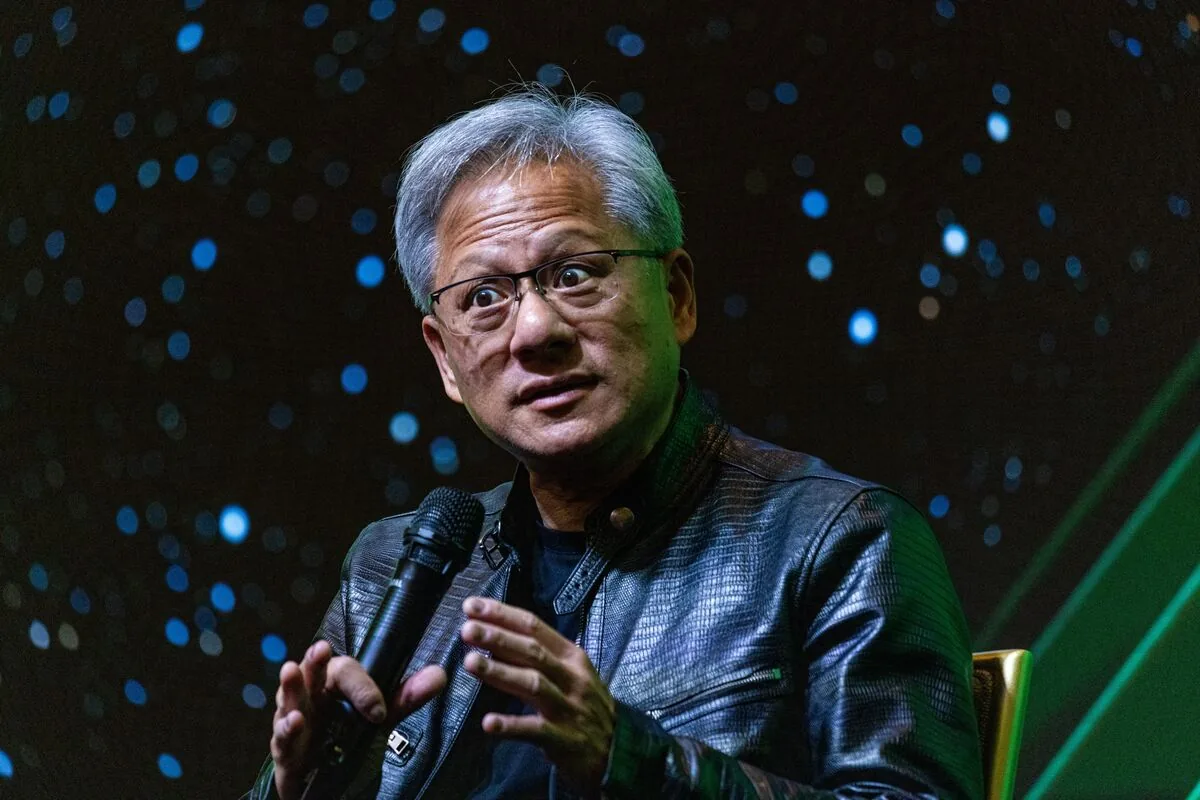
Nvidia’s forward price-to-earnings ratio has fallen below 17, its lowest in over a decade, despite strong revenue and profit growth. CEO Jensen Huang called Nvidia “the world’s first and only growth value stock” at a Goldman Sachs conference. Analysts cite concerns over gross margin compression from rising memory costs, competition from customer-designed AI chips at Meta and Alphabet, and the sustainability of AI capital expenditure. The stock has risen 22% year-to-date, underperforming the Philadelphia Semiconductor Index’s 76% gain.
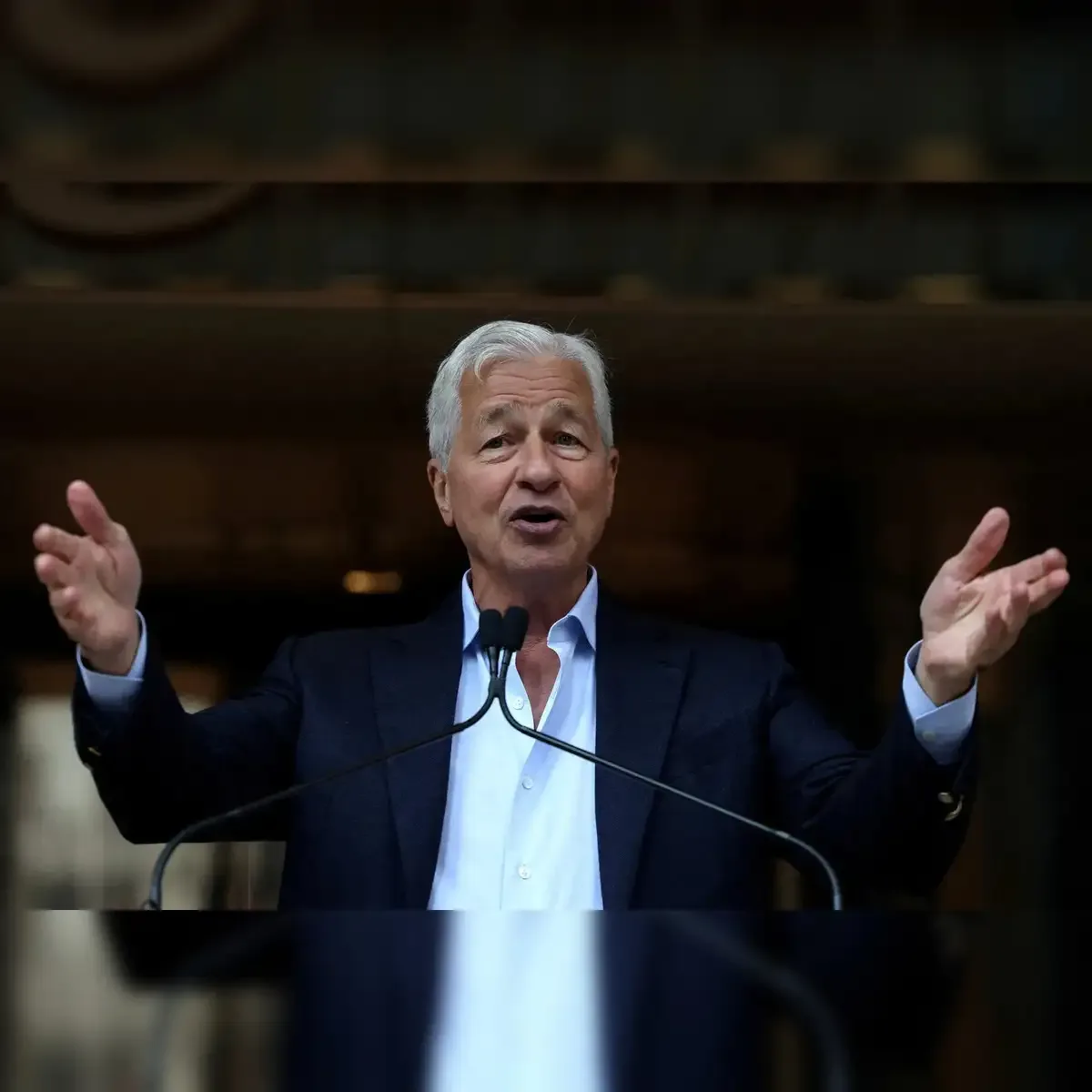
JPMorgan Chase CEO Jamie Dimon stated that spending on AI hyperscale data center ecosystems has more than doubled from about $300 billion last year to roughly $700 billion this year, and could reach $1 trillion next year. He said this surge is boosting GDP by about 1% annually but may also fuel inflation. Dimon described AI as an "incredible technology" that could have a long-term deflationary effect, cautioned against predicting winners too early, and warned that infrastructure spending, remilitarization, and government deficits could push interest rates higher.
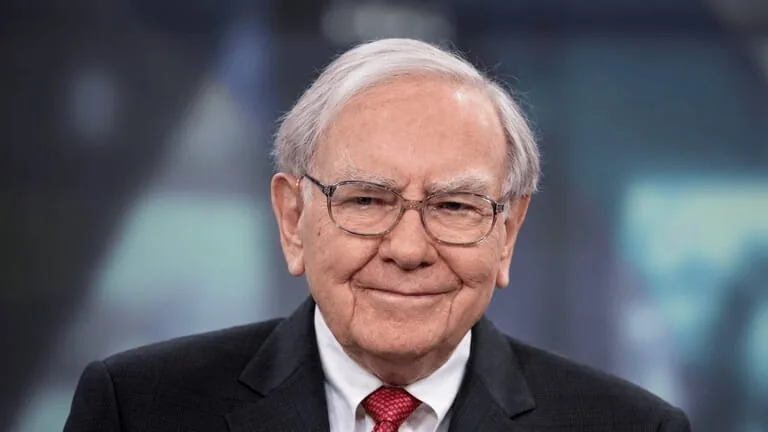
Warren Buffett, 96, stepped down as chairman of Berkshire Hathaway on September 18, 2026, becoming chairman emeritus while remaining on the board. His son Howard Buffett, 71, succeeded him as non-executive chairman. CEO Greg Abel retains authority over operations and capital allocation. Howard's role is to safeguard the company's culture and values. The transition completes a long-planned succession following Abel's appointment as CEO in January 2026.
Apple and Google are hiring for roles requiring stablecoin, tokenized deposit, and blockchain expertise, signaling a strategic shift toward integrating crypto assets into payment infrastructure. Apple posted an Apple Pay Financial Product Strategy Lead role on August 26, seeking knowledge of stablecoins and tokenized deposits for consumer products like Apple Card and Apple Cash. Google is recruiting a Web3 chief architect in Hong Kong for Google Cloud, focusing on institutional clients and compliance with Hong Kong regulations. Neither company has announced plans to issue a stablecoin.
Nvidia is in discussions to invest up to $10 billion as an anchor investor in Anthropic's upcoming initial public offering, which could raise up to $100 billion at a valuation near $2 trillion, potentially making it the largest IPO in history. Anthropic has selected Nasdaq for listing and confidentially filed with the SEC. The IPO is targeted before the U.S. midterm elections in November 2026. Terms remain under negotiation and subject to change.
Anthropic, the AI model maker behind Claude, is preparing to go public in fall 2026, selecting Nasdaq as its exchange with an October target. The IPO could be the world's largest, with bankers discussing a deal raising up to $100 billion at a $2 trillion valuation. The company has raised $130 billion from 300 institutional investors, including Amazon and Alphabet. Despite AI safety concerns and a researcher resignation, institutional demand remains high, and the timeline is unchanged.
Google announced a €13 billion ($15.1 billion) investment in AI data centers across Finland, its largest single investment in Europe, to be deployed through 2028. The deal includes a 22-year power purchase agreement with Fortum for up to 50% of output from the Loviisa nuclear plant, extending its operation to 2050. The project is expected to add €3.6 billion annually to Finland’s GDP and support over 37,000 construction jobs. Finland’s opposition parties warned of potential power supply risks.