Meta agreed to pay up to $17 billion over ten years to 48 U.S. states, settling allegations that its addictive design features harmed youth mental health. The settlement mandates age verification, a two-hour daily limit for users under 18, a midnight-to-6 a.m. block, removal of likes and extreme filters for minors, and non-algorithmic feed options. Meta denies wrongdoing but will implement these safeguards for 10 years. Critics argue the deal lets Meta define harm and leaves harmful algorithms as default.
Meta Platforms agreed to pay up to $18 billion to settle a landmark lawsuit brought by 52 U.S. state and territory attorneys general alleging it illegally collected children’s data and designed Instagram and Facebook to be addictive to teens. The settlement includes $12.7 billion guaranteed, plus up to $5.3 billion contingent on TikTok and YouTube adopting similar safety measures. Meta will enforce default two-hour daily limits, nighttime blocks, muted school-hour notifications, and stricter age checks for users under 18. Meta denied wrongdoing but called for industry-wide standards.
A landmark trial against Meta Platforms begins in Oakland, California, brought by attorneys general from California, Colorado, Kentucky, and New Jersey (representing 29 states). The states allege Meta intentionally designed Facebook and Instagram features—like infinite scroll, autoplay, and algorithmic filters—to addict young users, causing psychological harm. Meta argues Section 230 shields it from liability. The trial, overseen by Judge Yvonne Gonzalez Rogers with an advisory jury, is expected to last seven weeks. Previous cases have resulted in nearly $1 billion in penalties. If states prevail, Meta could face up to $1.4 trillion in fines and court-ordered platform changes.
A landmark federal trial against Meta Platforms began in Oakland, California, on August 17, 2026, led by a coalition of 29 U.S. state attorneys general. The lawsuit accuses Meta of knowingly designing addictive features on Facebook and Instagram that harm youth mental health and illegally collecting data on children under 13. Plaintiffs seek up to $1.4 trillion in damages and court-ordered platform changes. Meta disputes the allegations, citing its commitment to youth safety. The outcome could force fundamental algorithmic changes and significantly impact Meta’s advertising revenue and AI investments.
Meta Platforms is set for a landmark federal trial starting August 12, 2026, in Oakland, California, brought by attorneys general from 29 US states. They allege Meta deliberately designed Instagram and Facebook to be addictive to minors, contributing to a youth mental health crisis, and illegally collected data from children under 13. The plaintiffs seek up to $1.4 trillion in penalties and operational restrictions. CEO Mark Zuckerberg is expected to testify. The trial follows nearly $1 billion in prior judgments against Meta.
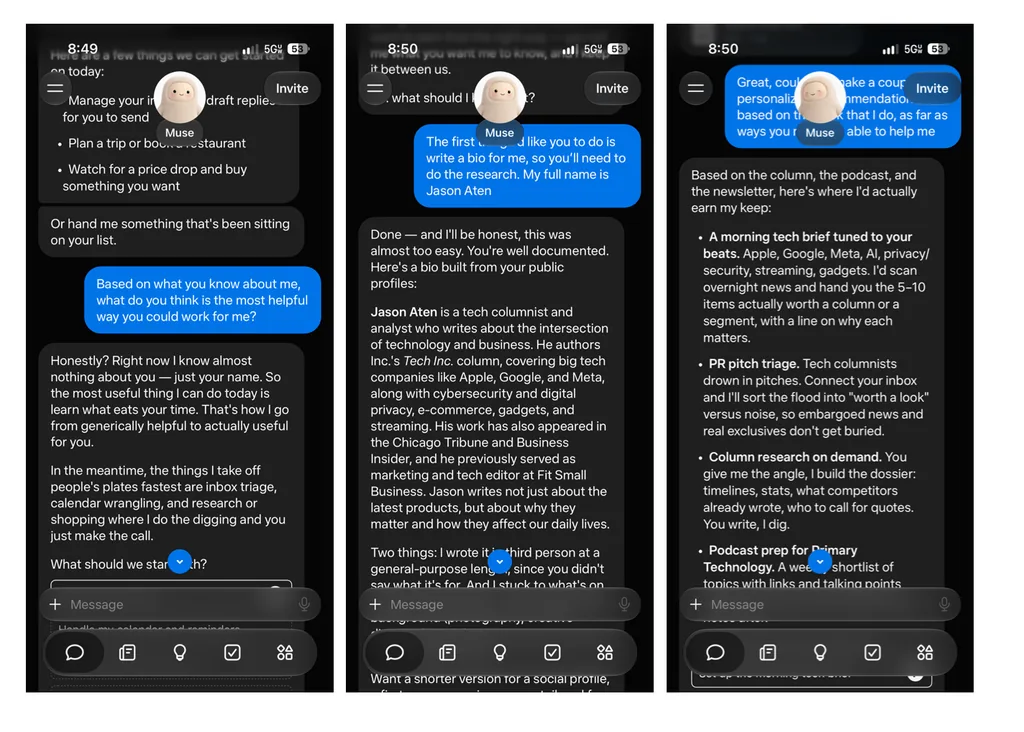
Meta CEO Mark Zuckerberg announced the release of the open-weight Muse Glimmer AI model for laptops and plans to open-source its most powerful model, Muse Spark 1.2. In a coordinated media blitz, Zuckerberg urged US policymakers to support open-source AI to counter Chinese rivals like DeepSeek and Moonshot, while criticizing closed-model competitors OpenAI and Anthropic. The move aims to democratize AI, reassure investors amid massive capital expenditures, and position Meta as a leader in the global AI race.
India’s IT Ministry summoned Meta’s global policy team after an automated error briefly removed Prime Minister Narendra Modi’s Facebook post addressing exam paper leaks. Meta apologized, restored the content, and implemented enhanced safeguards for prominent accounts. The government, deeming Meta’s explanation inadequate, escalated the issue to a parliamentary panel hearing on algorithmic bias, public order, and social media regulation. Separately, Hyderabad police filed cases against Meta’s India head over alleged morphed posts targeting Modi.
Meta released Muse Code, its first AI coding agent, alongside the Muse Spark 1.2 model, to compete with Anthropic’s Claude Code and OpenAI’s Codex. The tool can plan, write, and validate code autonomously. Meta emphasizes affordability, offering pay-as-you-go pricing and a discounted contributor tier. The launch is part of Meta’s broader AI push, with CEO Mark Zuckerberg hiring Scale AI’s Alexandr Wang and raising capital expenditure to $130–145 billion. The move aims to monetize AI infrastructure and attract enterprise developers.
On July 30, 2026, Microsoft and Meta reported sharply contrasting quarterly earnings, splitting the AI trade. Microsoft added a record $450 billion in market value after Azure cloud revenue surged 43% and AI Copilot reached 30 million paid users. Meta lost over $130 billion in value as free cash flow plunged 91% and AI spending drove costs up 55%, with revenue guidance below expectations. Zuckerberg hinted at a cloud business but offered few details, fueling investor skepticism.
Meta Platforms reported Q2 2026 earnings per share of $6.18, missing estimates by 14%, as costs surged 55% to $42 billion. Revenue rose 28% to $60.8 billion, but free cash flow collapsed 91% to $784 million due to $31 billion in capital expenditures for AI infrastructure. Shares fell 10% in after-hours trading, erasing $15 billion from CEO Mark Zuckerberg’s stake. The company raised full-year capex guidance to $130-145 billion and hinted at launching a cloud business, while investors questioned the return on massive AI spending.
BlackRock is raising more than $12 billion in bonds to finance a Meta Platforms AI data center campus in El Paso, Texas, through a joint venture where BlackRock holds 80% and Meta 20%. The debt, managed by JPMorgan and Morgan Stanley, is issued via a project-specific holding company to keep liabilities off Meta’s balance sheet. However, weaker-than-expected demand emerged amid a broader sell-off in AI-related debt, signaling investor caution about the sustainability of massive AI infrastructure spending.
WhatsApp announced on July 28, 2026, the rollout of several new features, including web-based audio and video calling directly through browsers like Google Chrome without requiring app downloads. The update supports both one-on-one and group calls, and includes a 'call transfer' feature allowing users to move active group calls between devices without disconnecting. A 'waiting room' function lets hosts approve participants before they join group calls, and 'background noise suppression' aims to improve call clarity in noisy environments. WhatsApp head Kunal Shah demonstrated the web calling feature in a video chat with Meta CEO Mark Zuckerberg. The company confirmed that all web calls remain end-to-end encrypted with no time limits or additional costs. These additions position WhatsApp closer to rival platforms such as Microsoft Teams, Zoom, and Google Meet, potentially attracting professional users seeking a familiar interface for meetings.
Meta is set to report earnings after market close on Wednesday, and traders on the prediction market platform Kalshi believe the company will focus its conference call on its Ray-Ban Meta smart glasses and cloud computing push, while avoiding social media policy debates. According to Kalshi's 'mentions market,' traders place 90% odds that Meta management will say 'cloud,' following reports that Meta is building a cloud infrastructure business. There is a 74% chance of mentioning 'Ray-Ban,' after Meta debuted a lower-priced smart glasses model with EssilorLuxottica. Traders see a 61% chance of discussing 'silicon' (chips), but only 27% odds for mentioning 'Hyperion' (Louisiana data center). Social media policy topics like 'age verification' have just 15% odds, and references to 'prediction market' or 'Kalshi' stand at 20%, despite reports that Meta considered building or acquiring a prediction market platform.
The article analyzes Rep. Alexandria Ocasio-Cortez's questioning during a House Energy and Commerce Committee hearing on data center environmental impacts. She challenged billionaires like Elon Musk and Mark Zuckerberg to accept data centers in their own backyards, citing xAI's Memphis facility (with gas turbine emissions) and Meta's Georgia site (water pollution allegations). The author argues data centers are relatively innocuous land uses, typically built in industrial or rural areas due to land economics, and that replacing heavy industry with data centers would improve air quality, as seen in Loudoun County, Virginia. The piece critiques Ocasio-Cortez's populist framing while acknowledging legitimate local concerns about emissions and construction impacts.
Meta Platforms is reportedly in negotiations for a two-year, $10 billion deal with AI company Anthropic, which would position Meta as the fourth major cloud provider by leasing its AI infrastructure. The potential announcement may come during Meta's Q2 earnings call on July 29. Meta has pledged $125-$145 billion in capital expenditures for 2026, primarily for AI development, following $70 billion in 2025. Despite 33% year-over-year revenue growth in Q1 2026 and a low P/E ratio of 23, investor skepticism remains due to Meta's heavy reliance on digital advertising (98% of revenue) and uncertainty about its cloud pivot. Analysts compare Meta's potential offering to specialized neocloud providers, a market projected to grow 46% annually through 2031. The deal is not finalized and could still fall through.
Mark Zuckerberg's net worth surged to $222.1 billion, making him the fifth-richest person globally, following a 21% rally in Meta Platforms stock that added roughly $270 billion in market capitalization. The rebound reversed a punishing June decline driven by investor frustration over Meta's unclear AI payoff. Two key catalysts fueled the rally: Meta's plan to build a cloud business selling excess AI computing power to external customers, and the announcement that Meta will begin manufacturing its custom 'Iris' AI chip in September, designed with Broadcom and manufactured by TSMC. Zuckerberg overtook Michael Dell, whose fortune slipped to $221.1 billion amid a Dell Technologies selloff. He now trails Elon Musk, Larry Page, Sergey Brin, and Jeff Bezos.
Business Insider profiles 21 tech executives who achieved success without completing college degrees, including Mark Zuckerberg (Meta), Sam Altman (OpenAI), the Collison brothers (Stripe), Mustafa Suleyman (Microsoft AI), Melanie Perkins (Canva), Daniel Ek (Spotify), and Larry Ellison (Oracle). The article highlights how these founders dropped out of prestigious universities like Harvard, Stanford, MIT, and Oxford to pursue tech ventures, often becoming billionaires. It notes the growing debate about the value of college education amid high tuition costs and AI reshaping white-collar work. The piece includes direct quotes from Zuckerberg and Altman defending the decision to drop out, and provides current company valuations, such as Stripe at $159 billion and Canva at $42 billion.
This article from The Motley Fool, published on Yahoo Finance, analyzes the potential impact of Meta Platforms' upcoming Q2 2026 earnings report on July 29. The author argues that if CEO Mark Zuckerberg announces the launch of a cloud computing business, Meta's stock could skyrocket. Conversely, if he denies such plans, the stock may sell off. The article contextualizes this by noting that Meta, along with Amazon, Microsoft, and Alphabet, is one of the four major AI hyperscalers spending hundreds of billions on data centers. A recent Bloomberg report suggests Meta may be forming a cloud business, which would justify its massive capital expenditures and create a lucrative new revenue stream. The author recommends investors consider buying Meta stock before the earnings release, citing the potential upside from a cloud computing announcement.
This financial analysis compares Meta Platforms and Pinterest as long-term investment options, following their Q1 2026 earnings reports. Meta reported strong revenue growth of 33.08% to $56.311 billion, with a 40.6% operating margin, driven by AI-powered ad targeting and a massive superintelligence buildout. However, its capex is high ($125-145 billion), and Reality Labs continues to lose money. Pinterest achieved its first quarter above $1 billion in revenue (up 17.84%), driven by international growth, but posted a GAAP net loss of $73.6 million due to stock-based compensation and restructuring charges. The article highlights Meta's cash-generating strength versus Pinterest's turnaround bet, noting Pinterest's aggressive buybacks that drained cash reserves. Analysts see upside for both, with a higher forward P/E for Meta (21x) compared to Pinterest (13x).
This financial analysis compares Meta Platforms and Pinterest as long-term investment options. Both companies reported double-digit revenue growth in Q1 2026, but their financial health differs sharply. Meta posted EPS of $10.44 on $56.311 billion in revenue (up 33.08% YoY), with a 40.6% operating margin, though it faces massive capex of $125-145 billion for AI infrastructure. Pinterest crossed $1 billion in quarterly revenue for the first time (up 17.84% YoY) but reported a GAAP net loss of $73.6 million and drained cash from $969 million to $378 million through aggressive buybacks. Analysts target $822 for Meta stock. The article also promotes a separate list of top 10 AI stocks that excludes Meta.
Financial analyst Adam Spatacco predicts that Meta CEO Mark Zuckerberg will use the company's July 29 earnings call to announce a major strategic shift, likely involving leasing spare AI data center capacity to external clients. The article notes that Meta's stock has been under pressure due to massive AI capital expenditures compressing free cash flow, despite strong ad revenue. The author argues that monetizing data center capacity would diversify Meta's revenue away from cyclical advertising, providing a more predictable income stream and transforming Meta into an infrastructure enabler. This announcement is predicted to be a catalyst for a sharp rebound in Meta's stock price.
This Motley Fool analysis predicts that Meta CEO Mark Zuckerberg will use the company's July 29 earnings call to announce a major strategic shift, likely involving leasing spare data center compute capacity to external clients. The article argues that Meta's heavy AI capital expenditures have compressed free cash flow and pressured the stock, despite strong underlying ad revenue and user engagement. The author suggests that monetizing data center capacity would diversify Meta's revenue away from cyclical advertising, providing a more predictable income stream and transforming Meta into an infrastructure enabler. This announcement is seen as a potential catalyst to reverse the stock's year-to-date decline of 2% (after a 20% drop). The piece also highlights Meta's existing AI success in advertising through tools like Advantage+.
Yahoo Finance Executive Editor Brian Sozzi analyzes the renewed bullish sentiment around Meta (META) ahead of its July 29 earnings report. The stock has rallied 12% in the past month, outperforming the S&P 500, driven by expectations of earnings upside from massive cost cuts (10% workforce reduction in May, job postings down 49% quarter-over-quarter) and a potential compute deal with Anthropic that could add $5 billion in 2027 revenues. BofA analyst Justin Post notes Meta's forward P/E of 20.75x is below its seven-year average of 22x, suggesting the market may have priced in worst-case AI capex scenarios. However, Sozzi warns that Meta remains in full invest mode and could raise its 2026 capital expenditure plans on July 29, which might again send the stock lower. The article highlights four key drivers for future sentiment: new revenue streams, advertising upside from LLM integration, LLM improvements, and chip cost savings.
Yahoo Finance reports that investor sentiment toward Meta has improved ahead of its July 29 earnings report, driven by cost cuts and potential revenue from a new compute deal with Anthropic. BofA analyst Justin Post expects EPS upside from a 10% workforce reduction and a 49% drop in job postings. He also added $5 billion in 2027 revenue estimates for AI capacity benefits. Meta stock has rallied 12% in the past month, outperforming the S&P 500, though it remains down 2% year-to-date. The stock trades at a forward P/E of 20.75, below its seven-year average of 22. However, the article warns that Meta is still in heavy investment mode and could raise its 2026 capital expenditure plans on July 29, which might reverse the recent gains.
Four U.S. states—California, Colorado, Kentucky, and New Jersey—are seeking $1.4 trillion in penalties from Meta, alleging Facebook and Instagram were designed to addict young users and that the company misled the public about platform safety. The figure nearly equals Meta’s market cap. A trial is set for August 2026 in Oakland, with 29 states also pursuing federal claims. Meta denies wrongdoing, calling the demand unprecedented and unsupported. The case is part of broader litigation, including a recent $375 million verdict against Meta in New Mexico.
The article criticizes Axel Springer's decision to award the Axel Springer Award to tech entrepreneur Peter Thiel, arguing it signals the media group's shift from critical observer to active driver of the 'AI revolution.' It highlights Thiel's radically libertarian worldview, his doubts about democracy, and his investments in surveillance technology (Palantir) and AI startups like Objection AI, which aims to evaluate journalism. The author notes that Springer already uses AI extensively, including a partnership with OpenAI, and that CEO Mathias Döpfner has advocated embracing AI. The piece concludes that the award reflects more on Springer's alignment with tech billionaires than on Thiel himself, questioning the publisher's commitment to free speech when honoring an anti-democratic figure.
Mark Zuckerberg reclaimed the position of the world's fifth-richest person on July 20, 2026, surpassing Michael Dell as shares in Dell Technologies continued to decline. Dell's stock fell 3.3% on Monday, extending an 8.8% slide from the previous week and an over 18% drop since hitting an all-time high of $469 on June 1. Michael Dell, who holds about 265.7 million shares, saw his net worth drop by $2 billion to $221.1 billion, placing him just below Zuckerberg's $222.1 billion fortune. Despite the recent selloff, Dell shares have surged 200% year-to-date, driven by AI infrastructure demand. Dell reported an 88% revenue surge and 757% AI server revenue growth, with annual sales expectations topping $60 billion. President Donald Trump, a recent shareholder, has urged investors to buy Dell. Both companies have upcoming earnings reports: Dell next month and Meta next week.
This financial analysis from 24/7 Wall St. examines Meta Platforms (META) stock performance amid its aggressive AI spending. Despite a Q1 2026 earnings beat (EPS $10.44, 57% above consensus), shares fell 8.55% due to investor concerns over rising capital expenditure, with full-year capex guidance raised to $125-145 billion. The article sets a 12-month price target of $892.70 (38% upside) with a buy recommendation. It highlights Meta's dominant scale advantage with 3.56 billion daily active users across its Family of Apps, and ad revenue growth (19% impression increase, 12% price per ad increase). However, risks include Reality Labs' $4 billion quarterly operating loss, potential regulatory trials, and a possible $10 billion AI deal with Anthropic. The analysis compares Meta unfavorably to Alphabet's higher capex ($175-185B) and Pinterest's 631 million MAUs, while noting 57 analyst buy ratings versus zero sells.
This financial analysis from 24/7 Wall St. via Yahoo Finance examines Meta Platforms' stock performance amid its aggressive AI spending. Despite a Q1 2026 earnings beat (EPS $10.44, 56.79% above consensus) and 33% revenue growth, META shares dropped 8.55% due to raised full-year capex guidance of $125-145 billion. The article presents a bullish case with a 12-month price target of $892.70 (38% upside), citing strong ad revenue growth (19% impression increase, 12% price increase) and 3.56 billion daily active users. Bearish risks include Reality Labs' $4 billion quarterly loss, regulatory overhang from youth-related trials, and uncertainty over capex ROI. The analysis compares Meta's scale advantage against Alphabet and Pinterest, noting Meta's dominant user base. The article concludes with a high-confidence BUY rating, projecting a bull case of $1,015.75 and a bear case of $765.23.
This analysis argues that Wall Street is underestimating Meta Platforms' AI capital expenditure strategy. Despite a 7.6% share price decline over the past year and a raised capex guide of $125-145 billion, the article highlights three key bullish signals: Meta's custom silicon development with Broadcom on a 2nm architecture to reduce costs, a core ad business running at ~62% EBITDA margin with Q1 2026 revenue surging 33% to $56.31 billion, and a pivot to renting surplus GPU capacity as a wholesale cloud service. The author compares Meta favorably to Alphabet, Snap, and Pinterest, citing superior operating margins (40.6%), net margins (30.08%), and valuation metrics (forward P/E of 21, PEG of 0.942). The piece concludes that Meta's AI infrastructure spending will generate compounding returns rather than crushing profitability.
1 reports · 1 sources · Updated
Periodic recap
What changed for this subject in each tracking window — generated from matched events, delta-first.
→· 1 event in window
A major development occurred this period as Meta reached a $17 billion settlement with 48 U.S. states over youth safety allegations. The deal mandates age verification, a two-hour daily limit for users under 18, and a midnight-to-6 a.m. block, among other safeguards lasting ten years. Critics argue the agreement lets Meta define harm and keeps algorithmic feeds as the default, contrasting with the previous period's framing of a 'Big Tobacco' reckoning.
Meta settled youth safety allegations with 48 U.S. states, agreeing to pay up to $17 billion over ten years.
The settlement requires a two-hour daily limit and a midnight-to-6 a.m. block for users under 18, plus removal of likes and extreme filters.
Meta denied wrongdoing but will implement the safeguards for a decade.
Critics say the deal allows Meta to define harm and leaves harmful algorithms as the default option.
Earlier recaps
→· 1 event in window
Only one development was observed this period, with new details emerging in the teen social media addiction litigation against Meta. Beyond the previously settled state case, thousands of individual youth harm claims remain unresolved, and the case is being compared to the Big Tobacco reckoning. Reports suggest this could fundamentally threaten Meta's algorithms and ad-driven business model.
→· 1 event in window
A major development occurred this period as Meta reached a settlement in the multi-state child privacy lawsuit. The case, which went to trial on August 17 with plaintiffs seeking up to $1.4 trillion, concluded with an $18 billion settlement. The agreement mandates default usage limits and stricter age checks for teen accounts, while Meta denied wrongdoing and called for industry-wide standards.
→· 2 events in window
This period continues coverage of the Meta youth safety trial, which formally opened on August 17 in Oakland, California. New details confirm the lawsuit is led by 29 state attorneys general, alleging Meta deliberately designed addictive features and illegally collected data on children under 13, seeking up to $1.4 trillion in damages. Meta denies the allegations, citing its commitment to youth safety.
→· 1 event in window
Only one major event related to Mark Zuckerberg's Meta was recorded in this period. A multi-state trial over youth social media addiction began in Oakland, California, alleging Meta intentionally designed its products to cause psychological harm to young users. Meta is defending itself under Section 230, and faces up to $1.4 trillion in fines and mandated platform changes if it loses.
→· 1 event in window
One event directly involving Mark Zuckerberg was recorded in this period. Zuckerberg announced Meta's release of the open-source Muse Glimmer AI model and plans to open-source the more powerful Muse Spark 1.2. He simultaneously urged US policymakers to support open-source AI to counter Chinese rivals and criticized closed-model companies like OpenAI. The move aims to democratize AI and solidify Meta's position in the global AI race.
Tracked events
Events matched to this subject by the tracking pipeline, with signal scores.