Apple Launches iPhone Duo Foldable, Triggering Industry Consolidation Race
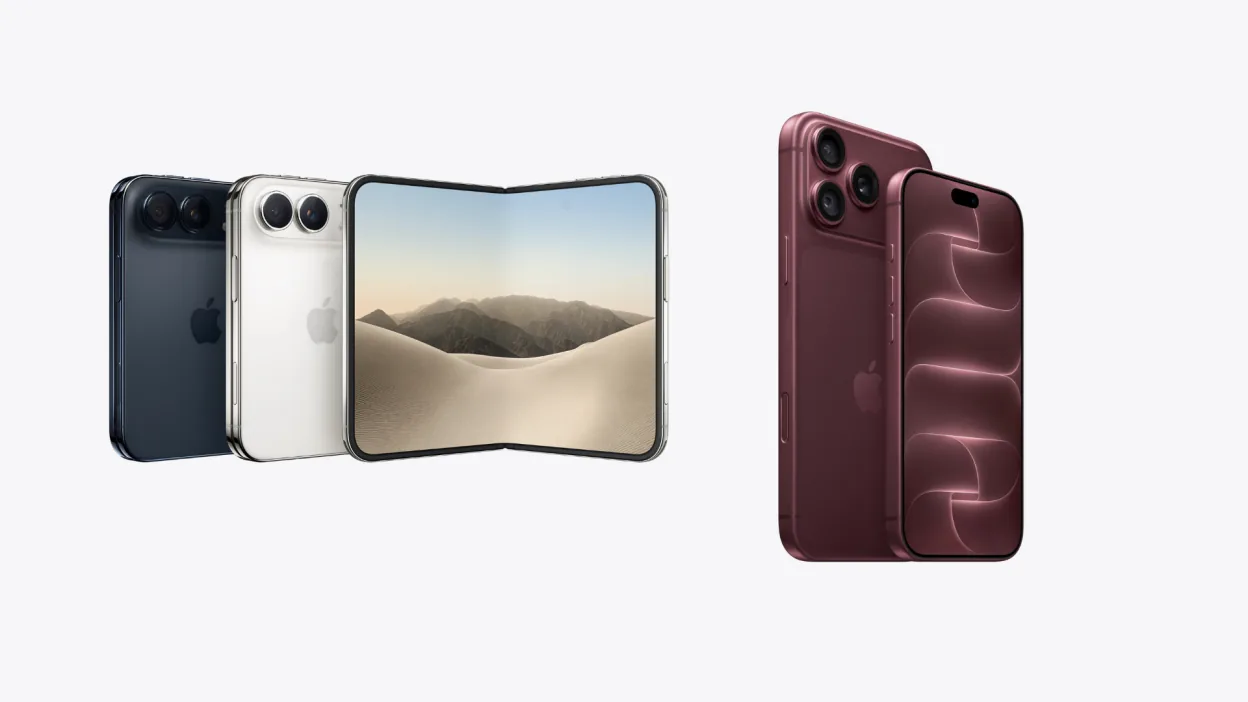
On September 10, 2026, Apple launched its first foldable smartphone, the iPhone Duo, priced from 15,999 yuan in China with a 7.6-inch unfolded display. Counterpoint Research forecasts Apple will capture 25% of the global foldable market in its first year, with Samsung at 38% and Huawei at 22%. The entry is expected to accelerate industry consolidation, with the top five manufacturers projected to command over 85% of the market by 2027. Chinese rivals Huawei, Xiaomi, OPPO, and vivo launched competing models within 72 hours of Apple's announcement.
 Illustration
Editorial responsibility
- No named human review is recorded for this page.
- Reports are grouped by semantic similarity and deterministic rules. Language models may assist titles, summaries, translation and cross-source analysis; the page reads the event directly, while its address stays stable when the title changes.
- Summary covers the current reports
Cross-source coverage
Common ground
- Both sides agree that Chinese suppliers like BOE and Lens Technology have evolved from simple assemblers to co-developers of key technologies.
- There is agreement that the foldable market will grow significantly but remain a premium niche, not a mass-market revolution.
- Both acknowledge that the elimination race will crush smaller Android manufacturers without strong margins, ecosystems, or supply chain control.
- They agree that Apple, Samsung, and Huawei are the main survivors, with different strengths in different markets.
Points of contention
- The Eastern Agent argues Chinese manufacturers have already won on hardware and integration, while the Neutral Agent says Apple leads in chip efficiency, thermal management, and global developer ecosystem.
- The Eastern Agent claims Chinese suppliers now have real pricing power with Apple, but the Neutral Agent insists Apple still squeezes suppliers and captures most value.
- The Eastern Agent says HarmonyOS's app ecosystem is sufficient for Chinese users through mini-programs, while the Neutral Agent argues iOS has far more depth for professional tasks and global revenue.
- The Eastern Agent believes Huawei's state-backed R&D and domestic market give it lasting competitive advantage, while the Neutral Agent says state backing isn't infinite and Huawei's global reach is limited.
Blind spots
- Both sides overlook that the real bottleneck is the component oligopoly—Samsung Display, BOE, TSMC, and SMIC—which profits regardless of who wins the phone market.
- The Eastern Agent downplays Apple's ability to use its massive cash reserves to sustain a price war that Chinese OEMs cannot match.
- The Neutral Agent underestimates how Chinese consumers' reliance on mini-programs (like WeChat) reduces the need for a large app ecosystem, making the 'app gap' less relevant in China.
WorldAttention’s read
This debate shows that the foldable phone market isn't a simple winner-takes-all race. Chinese manufacturers have earned their place through years of hardware innovation and supply chain co-development, especially in China's domestic market where apps like WeChat handle most tasks. But Apple still dominates globally with superior chip efficiency, a vast developer ecosystem, and deep cash reserves to weather price wars. The real winners are likely the component suppliers—BOE, Samsung Display, and TSMC—who profit no matter which brand sells the phones. In the end, the market will split along geographic and ecosystem lines: Apple leads globally, Huawei leads in China, and Samsung holds the middle ground. Smaller players without strong moats will get crushed.
Reporting timeline
Apple Enters Foldable Market with iPhoneDuo, Triggering Industry Elimination Race
On September 10, 2026, Apple launched its first foldable phone, the iPhoneDuo, with a starting price of 15,999 yuan in China and a 7.6-inch unfolded display, completing its iPhone lineup. According to data cited in the article, global foldable phone shipments are projected to grow from 9.1 million units in 2021 to 101.5 million units by 2027, a more than 11-fold increase. Research reports cited by the source indicate that Apple's entry is strategically timed to capture the transition of foldables from a niche high-end segment to mass adoption. The reports argue that the iPhoneDuo will force upgrades in core supply chains including hinge design, UTG glass, and flexible OLED, benefiting leading Chinese suppliers. The analysis further states that competition has shifted from parameter rivalry to a comprehensive battle of ecosystem, experience, and standards, and that Apple's entry will accelerate the elimination of smaller, less prepared manufacturers, strengthening the position of top-tier supply chain companies.
Apple Enters Foldable Phone Market with iPhoneDuo, Triggering Industry Elimination Race
On September 10, 2026, Apple officially launched its first foldable smartphone, the iPhoneDuo, with a starting price of 15,999 yuan in China and a 7.6-inch unfolded display. This marks Apple's completion of its full iPhone form-factor lineup. According to the article citing industry data, global foldable phone shipments are projected to rise from 9.1 million units in 2021 to 101.5 million units by 2027, a more than 11-fold increase over seven years, indicating the sector is entering a phase of rapid adoption. Recent research reports cited in the article argue that Apple's entry is not a catch-up move but a strategic positioning at the inflection point where foldables transition from a high-end niche to mass-market adoption. The reports suggest the iPhoneDuo will force accelerated upgrades across core supply chain components such as hinge design, UTG glass, and flexible OLED displays, allowing leading Chinese suppliers to potentially gain both market share and pricing power by joining Apple's supply chain. The article further notes that the competitive logic in the industry has shifted from 'specification wars' to a comprehensive contest of ecosystem, user experience, and standards, and that Apple's involvement will hasten the elimination of smaller manufacturers with insufficient technological reserves, while strengthening the outlook for top-tier supply chain companies over the medium to long term.
Google Android President Says Platform Often First to See Future as Apple Enters Foldable Market
Google Android ecosystem president Samir Samat commented on Apple's upcoming entry into the foldable smartphone market with the iPhone Duo, stating that it is positive to see more manufacturers recognizing the importance of foldables at a later stage. He noted that Android has been the platform that 'first sees the future,' referencing the earlier launch of Samsung's first foldable phone in 2019. Samat, who uses a Z Fold8, said he often performs productivity tasks on foldable devices before switching to a laptop. Research firm Counterpoint Research predicts Apple could capture about 25% of the foldable market in its first year, rising to 40% by the end of 2027, partly due to ecosystem lock-in. Samat acknowledged that Android foldable app optimization still needs improvement but expressed confidence that growing adoption will incentivize developers, aided by Google's simplified tools. He added that Apple's entry could boost overall category attention and benefit Android competitors.
Show 4 older updatesHide older updates
Apple Enters Foldable Phone Market with iPhone Duo, Triggering Industry Shakeout
According to a research report from Shenzhen Hanting Think Tank, Apple is set to release its dual-screen foldable phone, the iPhone Duo, in 2026, marking its long-awaited entry into the foldable smartphone market. The report states that this move breaks Apple's prolonged absence from the segment and signals the start of an 'ultimate elimination round' for the industry. Currently, the foldable market is dominated by Huawei, Samsung, Xiaomi, and OPPO, but the report notes severe technological homogeneity and disappointing shipment volumes. Apple's strong ecosystem integration and high-end user base are expected to accelerate the exit of smaller manufacturers. The report forecasts that by 2027, the top five foldable phone makers (CR5) will command over 85% of the global market, significantly increasing industry concentration.
Read sourceApple Enters Foldable Phone Market as Huawei, Xiaomi Launch New Models in 2026
In September 2026, the foldable smartphone market saw intense competition as Huawei, Xiaomi, and Apple launched new devices within 72 hours. Huawei released the Mate XT2 tri-fold phone at 19,999 yuan, selling out in one minute; Xiaomi introduced its first mid-fold phone, the 18 Fold, starting at 10,999 yuan; and Apple debuted its first foldable, the iPhone Duo, with resale prices reaching 49,999 yuan. Counterpoint Research forecasts 2026 global foldable shipments will exceed 27.5 million units, up over 20% year-on-year, with cumulative shipments expected to surpass 100 million. However, data shows foldable users open the inner screen only 3.1 times daily on average, and 76% never use the hinge stand feature. Analysts cited in the article note that Apple's entry will accelerate market maturation, push supply chain improvements, and shift competition from hardware specs to software ecosystem and AI integration. The article explores whether foldables can transition from niche to mainstream, with AI-powered multitasking seen as a key driver. Challenges remain including high repair costs (2,500-5,000 yuan for inner screens), software fragmentation, and user habit inertia.
Apple Enters Foldable Market; Chinese Rivals Face New Competition in Premium Segment
This analysis from NetEase Finance examines Apple's entry into the foldable smartphone market with the iPhone Duo, priced from 15,999 yuan. The article argues that while Chinese manufacturers like Huawei, Xiaomi, OPPO, and vivo have pioneered various foldable form factors over seven years, Apple's arrival validates the category as a premium segment. Counterpoint Research forecasts Apple will capture 25% of the global foldable market in its first year, with Samsung at 38% and Huawei at 22%. The piece highlights that foldable penetration remains low at 2% of the overall smartphone market in 2026, but Apple's entry is expected to drive supply chain investment and cost reductions. Key challenges include high component costs (DRAM prices rose 80% in Q2 2026), crease reduction, and software ecosystem development. The article concludes that the foldable market's maturity depends on transitioning from hardware novelty to practical AI-enhanced productivity tools.
Apple enters foldable phone market; Chinese rivals face new competition
Apple has entered the foldable smartphone market with the iPhone Duo, priced from $1,599 to $2,649, marking its first entry into the category after seven years of development. The article, published on NetEase Finance, analyzes the competitive landscape for Chinese manufacturers including Huawei, Xiaomi, OPPO, vivo, and Honor. Counterpoint Research forecasts that by end of 2026, Apple will capture 25% of the global foldable market, with Samsung at 38% and Huawei at 22%. The article notes that foldable phone penetration remains low at about 2% of the overall smartphone market in 2026, but Apple's entry is expected to drive supply chain investment and potentially raise penetration above 3% by 2027. Chinese brands have differentiated through various form factors (tri-fold, mid-fold, wide-fold), AI integration, and hinge technology. The analysis suggests that Apple's entry validates the premium category but does not guarantee dominance, as Chinese manufacturers have built technical advantages in hinges, software adaptation, and AI features.