Strong US PMI Data and Hawkish Fed Comments Trigger Bond Yield Surge, Stocks Fall
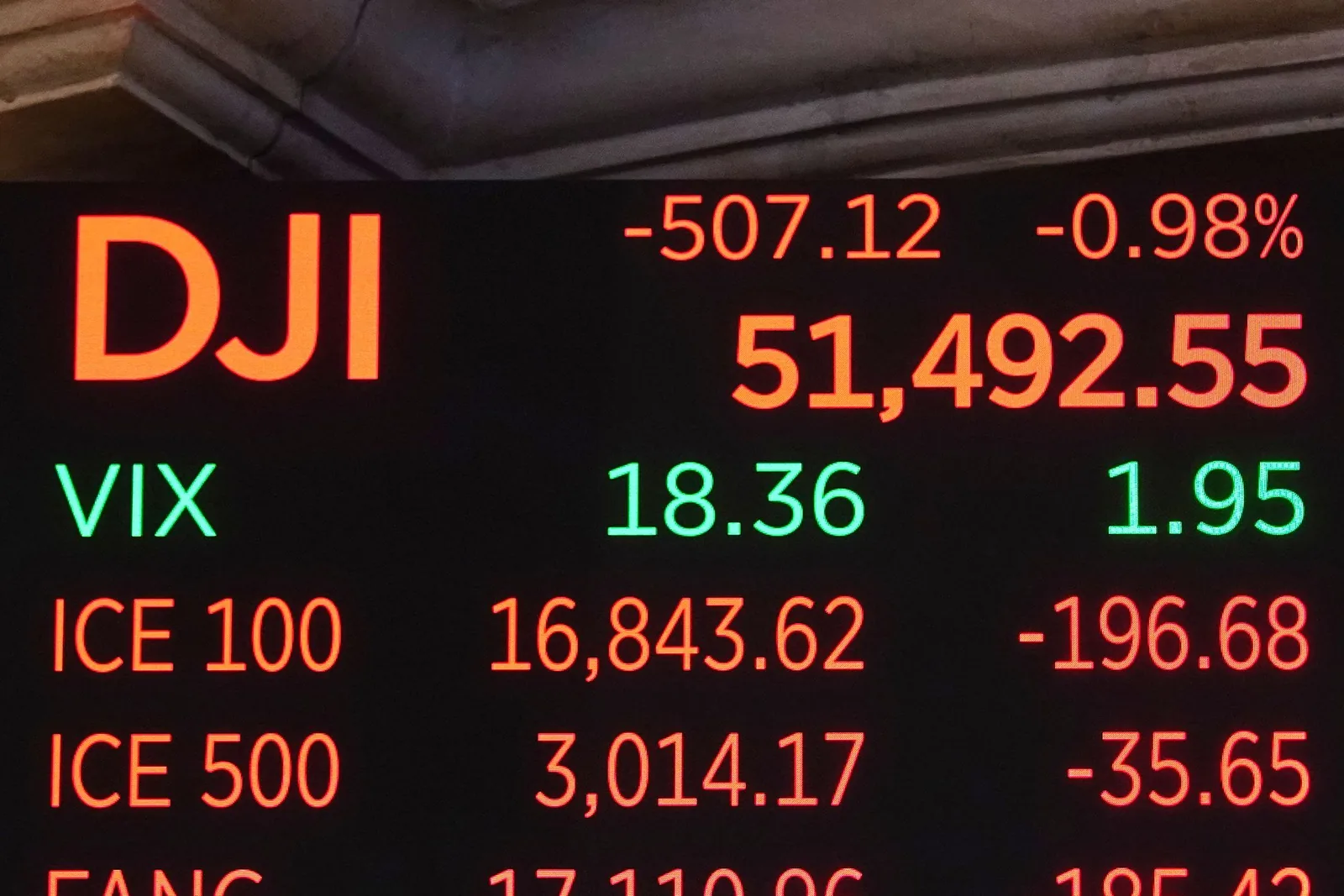
Stronger-than-expected US September PMI data (Composite 58.4, a 62-month high) and hawkish comments from Federal Reserve Governor Michael Barr drove a sharp selloff in Treasuries, pushing the 10-year yield to 5.135%, its highest since July 2007. The Nasdaq fell 1.13%, ending a four-day winning streak. Market expectations for a Fed rate hike at the October meeting rose to about 75% before easing to 68.6%. The dollar strengthened, gold fell below $4,300, and energy stocks rose on higher oil prices.
 Illustration
Editorial responsibility
- No named human review is recorded for this page.
- Reports are grouped by semantic similarity and deterministic rules. Language models may assist titles, summaries, translation and cross-source analysis; the page reads the event directly, while its address stays stable when the title changes.
- Summary covers the current reports
Cross-source coverage
Common ground
- Both sides agree the US fiscal deficit at 6%+ with full employment is unsustainable and a genuine vulnerability.
- Both agree the AI agent disruption is a structural shift that threatens intermediaries like Expedia and Airbnb, and it's a cross-border issue.
- Both acknowledge that China's regulatory framework on AI is more proactive than the US, creating some predictability for businesses.
- Both recognize that the 2021 tech crackdown in China was a blunt instrument that caused unnecessary uncertainty and market damage.
Points of contention
- Neutral Agent sees the US PMI of 58.4 as a sign of strong growth, while Eastern Agent calls it a 'fever' from fiscal steroids and unsustainable debt.
- Neutral Agent argues China's 28 months of negative PPI is a demand crisis similar to Japan's 1990s, while Eastern Agent insists it's deliberate supply-side reform to consolidate industries.
- Neutral Agent views the US selloff as a rational correction in a transparent market, while Eastern Agent sees it as a symptom of structural cracks in a declining system.
- Eastern Agent claims China's managed economy avoids whipsaw cycles, but Neutral Agent points to high volatility in Chinese equities and the Golden Dragon Index's 60% drop.
Blind spots
- Both sides underplay how AI agent disruption could bypass all intermediaries globally, not just US or Chinese platforms, creating a universal challenge.
- Neither fully addresses the risk that China's proactive AI regulation might stifle innovation, not just provide predictability.
- The debate overlooks how US student debt and gig economy precarity compare to China's youth unemployment, missing a direct social stability comparison.
- Both ignore the potential for coordinated global regulatory responses to AI, instead framing it as a US vs. China competition.
WorldAttention’s read
This debate reveals two fundamentally different views of the same data. The US selloff is either a rational correction in a strong economy or a warning sign of fiscal and monetary traps. China's economic challenges are either a managed transition or a demand crisis masked by rhetoric. Both systems have real vulnerabilities: the US faces a fiscal reckoning and regulatory vacuum on AI, while China struggles with opaque markets and regulatory overreach. The key blind spot is that AI agent disruption is a universal governance challenge that neither country is fully prepared for, and both sides treat it as a competitive advantage rather than a shared problem. Ultimately, the US market correction is transparent and cyclical, while China's selloff reflects deeper structural uncertainty—but neither is immune to the coming shifts in technology and global capital flows.
Reporting timeline
Strong PMI Data Sparks Bond Rout, Dollar Rises, Gold Falls Below $4,300
Stronger-than-expected US PMI data for September, with the composite index rising to 58.4, the highest since July 2021, has reignited market expectations of further Federal Reserve interest rate hikes. The 10-year US Treasury yield surged past 5.00%, and the 5-year yield hit its highest since 2007. The dollar index jumped 0.6% to a July high, while spot gold fell 1.71% to $4,286.30, breaking below $4,300. The Nasdaq ended a four-day winning streak, falling 1.13%, with small-cap stocks leading declines. The article attributes the market moves to a repricing of higher-for-longer Fed policy, stronger growth expectations, and rising term premiums. It also notes that AI agent concerns are disrupting travel stocks like Expedia and Airbnb, while benefiting companies like Palantir and Meta. Additionally, oil prices rebounded on Middle East tensions, and US diesel export policy uncertainty caused price divergence between US and European diesel futures.
Read sourceUS Stocks Fall as Strong PMI Data and Hawkish Fed Remarks Push Yields Higher
US stocks declined on Wednesday, with the Nasdaq Composite falling 1.13% from record highs, as strong PMI data and hawkish comments from Federal Reserve Board member Michael Barr drove a sharp rise in Treasury yields. The S&P 500 fell 0.75% and the Dow dropped 0.68%. The 10-year Treasury yield briefly touched 5.135%, its highest since July 2007, while the 5-year yield exceeded 5% for the first time since 2007. Market expectations for a Fed rate hike at the October meeting rose to about 75% after the data, before easing to 68.6% later. Technology stocks were pressured, with Nvidia, Apple, and Amazon all declining. AI agent concerns weighed on travel platforms Expedia and Airbnb, which fell nearly 8% after a warning from Goldman Sachs. Quantum computing stocks gained after IonQ demonstrated a real-time quantum error correction decoder. Energy stocks rose as oil prices rebounded on geopolitical tensions. The Nasdaq China Golden Dragon Index fell 1.43%, with Baidu plunging 32.87%. In company news, TSMC is reportedly planning to raise wafer prices by 3-6% from January 2027, McDonald's announced $8.5 billion in franchisee support, and Anthropic's CEO said the company will slow AI development due to safety concerns.
Read sourceUS stocks fall as strong PMI data reignites rate hike fears; AI agent Muse hits travel shares
US stock indices closed lower on Wednesday as stronger-than-expected PMI data and hawkish comments from Federal Reserve Governor Michael Barr fueled a sharp selloff in Treasuries, with the 10-year yield hitting its highest since July 2007. The S&P 500 fell 0.75%, the Nasdaq dropped 1.13% ending a four-day winning streak, and the Dow lost 0.68%. The September S&P Global Composite PMI rose to 58.4, a 62-month high, while the Manufacturing PMI hit 57.0, a 52-month peak. Inflation pressures increased as input costs rose at the fastest pace since October 2022. Market pricing for a 25-basis-point rate hike at the October Fed meeting rose to about 75% before easing to 68.6%. Tech and chip stocks declined, with Nvidia down 1.47% and SK Hynix down 3.12%. Meta's AI agent Muse sparked concerns about disintermediation in travel booking, sending Expedia and Airbnb down nearly 8%. Energy stocks rose as oil prices rebounded on geopolitical tensions. Quantum computing stocks gained after IonQ demonstrated a real-time quantum error correction decoder. The Nasdaq China Golden Dragon Index fell 1.43%, with Baidu plunging 32.87%.
Read sourceShow 2 older updatesHide older updates
Wall Street Falls as Bond Yields Surge; Nasdaq Drops Over 1% from Record
U.S. stocks closed lower on Wednesday, with the Nasdaq Composite falling 1.13% from its two-day record high, as a surge in Treasury yields pressured technology shares. The selloff was triggered by stronger-than-expected PMI data and hawkish comments from Federal Reserve Governor Michael Barr. The S&P 500 Composite PMI hit 58.4, a 62-month high, while manufacturing PMI reached 57.0, a 52-month peak. Inflation pressures also rose, with input costs at their highest since October 2022. Market expectations for a Fed rate hike at the October meeting rose to about 75% before settling at 68.6% per the CME FedWatch Tool. The 10-year Treasury yield briefly touched 5.135%, its highest since July 2007. Among major stocks, Nvidia fell 1.47%, Apple dropped 0.8%, and Google-A lost 3.8%. Meta's AI agent Muse sparked concerns about disintermediation in travel booking, sending Expedia and Airbnb down nearly 8%. Energy stocks rose as oil prices rebounded on fading hopes for U.S.-Iran nuclear talks. The U.S. dollar strengthened, pressuring gold miners. The Nasdaq China Golden Dragon Index fell 1.43%, with Baidu plunging 32.87%. In corporate news, TSMC is reportedly raising wafer prices 3-6% from January 2027; McDonald's announced $8.5 billion in franchisee support; Anthropic CEO said the company will slow AI development due to safety risks; and Novo Nordisk reported that its CagriSema drug achieved superior weight loss compared to tirzepatide in a Phase 3 trial.
Read sourceWall Street Falls as Bond Yields Surge; Tech Stocks Drop on Hawkish Fed, Strong Data
U.S. stocks closed lower on Wednesday, with the Nasdaq Composite falling over 1% from its record high, as a surge in Treasury yields weighed on technology shares. The selloff was triggered by stronger-than-expected September PMI data, which showed the U.S. private sector expanding at its fastest pace in over five years and rising input costs. The data, along with hawkish comments from Federal Reserve Board Governor Michael Barr, who stated that further policy adjustments may be needed to curb inflation, pushed market expectations for a rate hike at the October FOMC meeting to as high as 75%. The 10-year Treasury yield briefly topped 5.1%, its highest since July 2007. The selloff was broad-based, with major tech stocks like Nvidia, Apple, and Amazon declining. The energy sector was a rare bright spot, rising on higher oil prices amid renewed geopolitical tensions. The article also covers several company-specific developments, including Meta's AI agent 'Muse' impacting travel stocks, IonQ's quantum computing announcement, and Anthropic's CEO stating the company will slow AI development due to safety concerns.