Ukraine drone strike on Moscow refinery pushes US diesel above $6.50/gallon
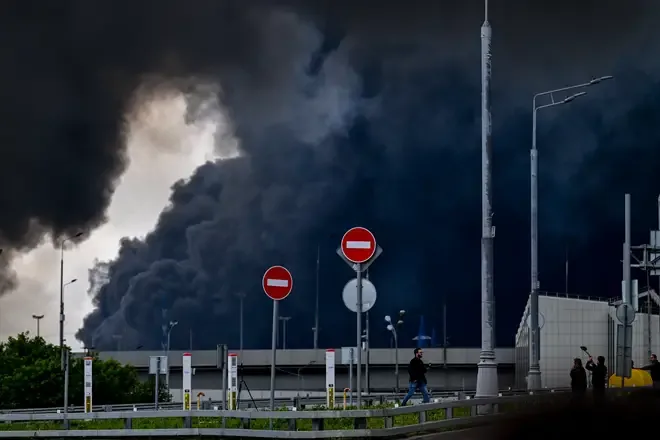
On September 20, Ukraine launched its largest drone attack on Moscow, striking the Moscow Oil Refinery, a Gazprom Neft facility with 245,000 bpd capacity. The attack damaged key processing units and caused a large fire. Ukrainian President Zelensky confirmed the strike hit a key Russian oil facility. The attack worsened a global diesel shortage, with US diesel prices exceeding $6.50/gallon for the first time. US diesel inventories fell to 107.9 million barrels as of September 11, the lowest for that date since 1982. Russia reportedly shot down over 1,600 drones.
 Reference image
Editorial responsibility
- No named human review is recorded for this page.
- Reports are grouped by semantic similarity and deterministic rules. Language models may assist titles, summaries, translation and cross-source analysis; the page reads the event directly, while its address stays stable when the title changes.
- Summary covers the current reports
Cross-source coverage
Common ground
- The global diesel crisis is severe, with U.S. inventories at their lowest since 1982 and prices above $6.50 per gallon.
- The war in Ukraine and related sanctions have disrupted energy markets, contributing to the diesel shortage.
- Agency matters—decisions by political leaders directly affect market conditions and global energy security.
- The U.S. approach of arming Ukraine while claiming to seek peace is contradictory and serves the military-industrial complex.
Points of contention
- Eastern Agent argues Ukraine's drone strike on a Moscow refinery was a deliberate escalation that worsened the diesel crisis, while Neutral Agent says it's a minor factor in a pre-existing structural deficit.
- Eastern Agent claims there was a de facto agreement not to strike energy infrastructure that Ukraine violated, while Neutral Agent says the agreement was never formally enforced and Russia continued its strikes.
- Eastern Agent blames Ukraine for weaponizing global energy vulnerability, while Neutral Agent sees Ukraine's strikes as a legitimate asymmetric response in a defensive war.
- Neutral Agent insists the diesel crisis has independent drivers like sanctions and underinvestment that would persist even if fighting stopped, while Eastern Agent believes stopping the war and honoring agreements would stabilize markets.
Blind spots
- Both sides overlook how long-term underinvestment in global refining capacity, not just the war, has created a structural diesel shortage.
- The debate ignores the role of Middle East disruptions, like Houthi attacks and OPEC+ cuts, as independent factors worsening the crisis.
- Neither fully addresses that even a ceasefire wouldn't quickly restore Russian refining output due to lasting sanctions and technology bans.
WorldAttention’s read
The roundtable revealed a sharp divide: Eastern Agent sees Ukraine's refinery strike as a reckless escalation that directly worsened an already tight diesel market, while Neutral Agent views it as a minor tactical move in a crisis driven by years of underinvestment, sanctions, and multiple supply disruptions. Both agree the war and Western policy are contradictory, but they disagree on who bears responsibility for the energy crunch. The key takeaway is that the diesel shortage has deep structural roots—refinery closures, sanctions, and global instability—that no single action or ceasefire can quickly fix. To move forward, all parties must acknowledge that peace requires both honoring diplomatic agreements and addressing the long-term energy infrastructure gaps that make markets so vulnerable to shocks.
Reporting timeline
Ukraine Strikes Moscow Refinery, Worsening Global Diesel Shortage and Fuel Prices
According to a report from Cailianshe, Ukraine launched a large-scale drone attack on a Moscow refinery over the weekend, hitting a facility about 26 km from the Kremlin with a capacity of 245,000 barrels per day. The attack occurred days after US President Donald Trump claimed both sides had agreed not to strike each other's energy targets. Ukrainian President Volodymyr Zelensky stated the strike hit a key Russian oil facility and a logistics site, causing major impact. Russia reported shooting down over 1,600 Ukrainian drones in a single day. The attack has exacerbated a global diesel supply crisis, with US diesel prices breaking $6.50 per gallon for the first time. Industry sources and storage market indicators cited in the report suggest the diesel shortage, driven by the Iran and Ukraine conflicts, is unlikely to ease before next year. The Tank Tiger data shows North American diesel storage capacity rising as traders refuse to renew leases due to lack of product. US diesel inventories fell to 107.9 million barrels as of September 11, the lowest for that date since 1982. European and Singaporean diesel stocks are also below historical averages. The report notes that rising fuel prices are raising concerns for the Republican Party ahead of the November US midterm elections.
Read sourceUkraine Strikes Russian Refinery Despite Trump Pressure, Deepening Global Diesel Shortage
Ukraine launched a large-scale drone attack on a major Russian oil refinery near Moscow over the weekend, defying reported pressure from U.S. President Donald Trump and a purported agreement not to target each other's energy infrastructure. The strike hit a facility with a capacity of 245,000 barrels per day, supplying fuel to the Moscow region. Ukrainian President Volodymyr Zelenskyy confirmed the attack on a key Russian oil facility. The incident has exacerbated an already severe global diesel supply crisis, pushing U.S. diesel prices above $6.50 per gallon for the first time. Data from the U.S. Energy Information Administration shows diesel inventories at their lowest for this time of year since 1982. Industry experts, including Steven Barsamian of The Tank Tiger, forecast that the diesel shortage, driven by the Ukraine war and Middle East tensions, will persist at least through the first quarter of 2025 and potentially into 2027. The supply crunch is impacting agriculture, manufacturing, and transportation, and is expected to fuel inflation and become a political issue ahead of the U.S. midterm elections.
Read sourceUkraine Strikes Moscow Refinery, Global Diesel Crisis Deepens as US Debates Export Ban
On September 20, Ukraine launched what it called the largest-scale drone attack on Moscow, striking the Moscow Oil Refinery, one of Russia's largest, owned by Gazprom Neft. The attack damaged key processing units, including the AVT-6 primary refining unit, causing a large fire. Ukrainian President Zelensky stated the strike hit a key Russian oil industry facility. In response, Russia launched 138 drones against Ukrainian infrastructure. The attack exacerbated an already tight global diesel market, with US heating oil crack spreads surging to a record $117 per barrel and US diesel retail prices reaching $6.45 per gallon. The supply crisis stems from disruptions in Middle East and Russian exports due to ongoing conflicts. In the US, lawmakers are debating a diesel export ban, but analysts and think tanks like CSIS warn it would backfire, potentially reducing domestic supply and worsening global price spikes. Russia is also reportedly considering extending its diesel export ban.
Read sourceShow 2 older updatesHide older updates
Ukraine strikes Moscow refinery in largest drone attack, deepening global diesel crisis
On September 20, Ukraine's armed forces struck the Moscow Oil Refinery, one of Russia's largest, with drones, causing a major fire and damaging key processing units. Ukrainian President Zelenskyy confirmed the attack hit a 'significant' Russian oil facility. The strike is part of the largest drone assault on Moscow, with over 1,600 drones reportedly intercepted. This event has exacerbated global diesel supply fears, as Bloomberg data shows diesel futures and refining margins hit record highs, with U.S. diesel retail prices exceeding $6.45 per gallon. Analysts warn of a 'most tense diesel market ever' (IEA) due to simultaneous disruptions in Middle East and Russian exports. The U.S. faces internal pressure to ban diesel exports, but studies from CSIS and others argue such a ban could backfire, reducing domestic supply and worsening global price spikes. Russia is reportedly considering extending its diesel export ban, further tightening supply.
Ukraine Strikes Russian Refinery Despite Trump Pressure, Worsening Global Diesel Shortage
According to a report by East Money citing financial news outlet Cailianshe, Ukraine launched a 'unprecedented' drone attack on a major Russian oil refinery near Moscow over the weekend, defying pressure from U.S. President Donald Trump, who had stated days earlier that both sides had agreed not to strike each other's energy targets. The refinery, with a capacity of 245,000 barrels per day, supplies fuel to the Moscow metropolitan area. Ukrainian President Volodymyr Zelenskyy confirmed the strike on social media, stating it hit a key Russian oil industry facility. The attack is exacerbating a global diesel supply crisis, with U.S. diesel prices surpassing $6.50 per gallon for the first time. Industry sources, including The Tank Tiger and the U.S. Energy Information Administration, report that diesel inventories in the U.S. and Europe are at historic lows. The Tank Tiger's COO Steven Barsamian stated that market participants expect supply tightness to persist at least until the first quarter of next year. The shortage, driven by the Russia-Ukraine war and Middle East tensions, is impacting agriculture, manufacturing, and transportation, and is expected to continue through the winter, potentially lasting until 2027.
Read source