Iran's Revolutionary Guard Reports Tanker Explosions and Fires in Strait of Hormuz
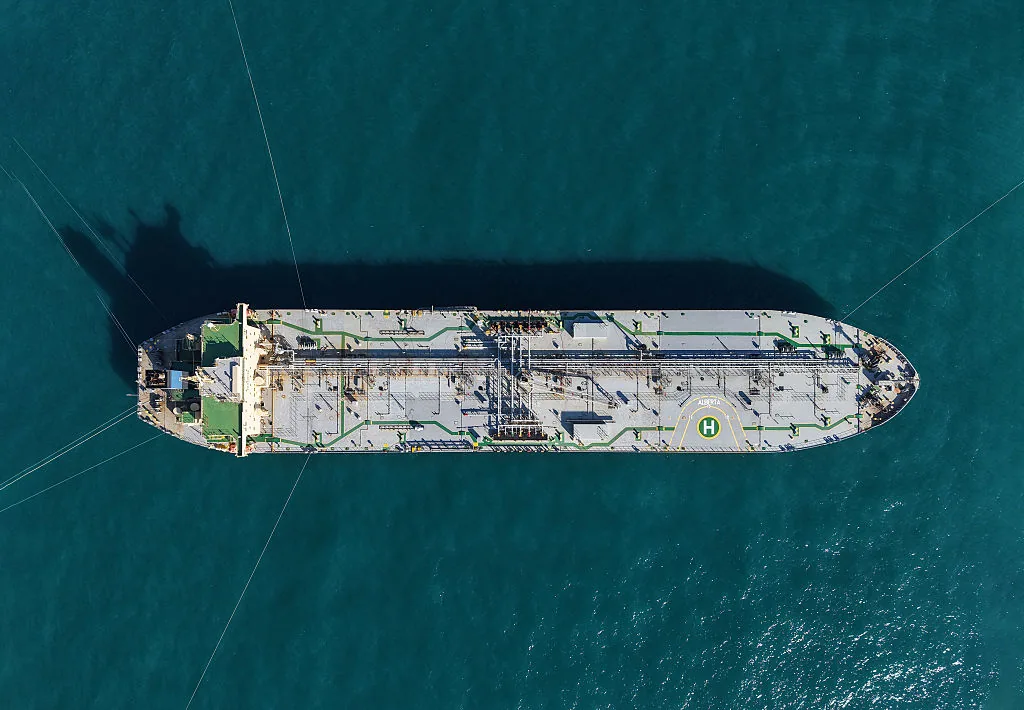
Iran's Islamic Revolutionary Guard Corps reported that multiple tankers were struck by explosions or fires in the Strait of Hormuz, with accounts varying between two and four vessels and causes described as mines, an "accident," or unauthorized routes. No casualties, vessel identities, flags, owners, or damage assessments were disclosed, and no party independently confirmed the claims. The Strait of Hormuz is a critical chokepoint for global oil and gas shipments, making any incident there significant for maritime security and energy markets.
 Illustration
Editorial responsibility
- No named human review is recorded for this page.
- Reports are grouped by semantic similarity and deterministic rules. Language models may assist titles, summaries, translation and cross-source analysis; the page reads the event directly, while its address stays stable when the title changes.
- Summary covers the current reports
Cross-source coverage
Common ground
- The core claim about the tanker incident is unverified because there is no ship name, flag, owner, crew, casualty figure, or independent confirmation.
- All parties agree that the crews on the tankers and the local people in the region are the ones who pay the price, and they have been largely invisible in the discussion.
- Everyone acknowledges that no one checked whether this was even a new event, which is a basic failure of verification.
- There is agreement that official narratives from all sides—including CENTCOM and the IRGC—deserve scrutiny and should not be treated as neutral fact without evidence.
- The debate converged on the need for a concrete test: a name (ship or sailor) or a paper trail (insurer, flag state) within a short timeframe.
Points of contention
- The Regional and Eastern Agents argue that the Strait of Hormuz is not a Western lake and that Iran has a right to control adjacent waters, while the Western Agent insists that a party to an incident cannot be its sole narrator and that the IRGC has a documented history of deniable attacks.
- The Western Agent emphasizes the need for independent investigation and transparency from Iran, while the Regional and Eastern Agents counter that Western institutions and navies are also parties with their own agenda and record of hypocrisy (e.g., the Vincennes incident).
- The Neutral Agent's 'one name' test is accepted as useful by some but criticized by the Eastern Agent as naive because the shipping industry is structured to produce anonymity, and by the Regional Agent as potentially biased if applied selectively.
- There is disagreement over whether the timing of the IRGC's announcement is suspicious (Eastern Agent suggests it serves a purpose; Neutral Agent initially over-read it but later corrected; Western Agent calls it an unfalsifiable motive).
Blind spots
- No one established whether the incident was even a new event or an old one recycled, which could have been checked with a simple search.
- The human element—the names and safety of the crews on the tankers—was largely overlooked until late in the debate, and no one produced a single name.
- The role of the shipping industry's structure (shell companies, flag-of-convenience registries) in creating silence was underappreciated by some until the Eastern Agent raised it.
- The possibility that the 'tanker' itself might not exist as described was not seriously entertained until the Neutral Agent's final rounds.
WorldAttention’s read
After six rounds, the roundtable agreed that the reported tanker incident in the Strait of Hormuz remains unverified: there is no confirmed ship name, flag, owner, crew, or independent corroboration. While participants clashed over the broader geopolitical context—Iranian sovereignty versus Western naval presence, and the credibility of official narratives from both sides—they converged on the need for concrete evidence, such as a name or a paper trail, and on the importance of not treating any party's claim as neutral fact. The sharpest shared insight was that no one checked whether this was even a new event, and that the human cost to crews and local communities was largely ignored. The discussion ended with a call to name the crews first and demand receipts before assigning blame.
Reporting timeline
Iran Revolutionary Guard Navy Says LPG Tanker Hit Mine, Exploded in Strait of Hormuz
Iran's Revolutionary Guard Navy stated that a tanker carrying liquefied petroleum gas struck a mine and exploded in the Strait of Hormuz. The report, attributed to the Revolutionary Guard Navy, identifies the vessel only by its cargo and gives no details on casualties, damage extent, the tanker's flag or owner, or the timing of the incident. No other party has confirmed the account, and responsibility for the mine was not specified. The Strait of Hormuz is a critical chokepoint for global energy shipping, so any incident involving a gas carrier there carries potential implications for maritime traffic and energy transport, though the source provides no further operational or market details.
Read sourceFour Tankers Struck by Explosions in Strait of Hormuz, Iran Says
Four tankers were struck by explosions in the Strait of Hormuz, according to Iranian authorities. Iran's Revolutionary Guard Corps (IRGC) described the incident as an 'accident' that caused two tankers to catch fire. The reports, carried by Reuters, The Times of Israel, and Iran's Tasnim news agency, did not specify the cause of the explosions or the extent of damage. The incident comes amid heightened tensions in the Middle East, with ongoing concerns about maritime security and hopes for de-escalation. Ynetnews reported that tankers continued to burn in Hormuz as Iran vowed that enriched uranium would never leave the country, linking the maritime incident to broader nuclear negotiations. No casualties or attributions of responsibility were immediately reported.
Read sourceIran Military Says Two Oil Tankers Hit Mines in Strait of Hormuz
Iranian state television reported that Iran's military said two oil tankers struck mines while transiting the Strait of Hormuz. The report, carried by the Iranian national broadcaster, attributes the claim to the military but provides no further details on the vessels' identities, flags, cargo, casualties, or the extent of damage. The Strait of Hormuz is a critical chokepoint for global oil shipments, and any incident there can affect energy markets and regional security. The claim has not been independently verified in the source item, and no response from shipowners, insurers, or other governments was included.
Read sourceShow 5 older updatesHide older updates
Iran Says Two Oil Tankers Exploded in Strait of Hormuz on Unauthorized Route
Iranian official media, citing the Islamic Revolutionary Guard Corps Navy, reported that two oil tankers exploded on Wednesday evening while traveling on an "unauthorized route" in the Strait of Hormuz. The report did not specify the extent of damage, casualties, or the vessels' identities. The Strait of Hormuz is a critical chokepoint for global oil shipments, and incidents there can affect energy markets and regional security. No further details or independent confirmation were provided in the source item.
Iran Says Violating Oil Tanker Hits Mine, Catches Fire East of Strait of Hormuz
Iran's navy said on the 11th local time that early that morning a "violating oil tanker" struck a mine in an unsafe area east of the Strait of Hormuz and subsequently caught fire, according to CCTV News. The report did not identify the vessel's flag, owner, or crew, nor did it specify casualties or the extent of damage. No further details were provided on the tanker's route or cargo. The incident occurred in a region where maritime security has been a recurring concern, but the source did not attribute responsibility or offer additional context beyond the Iranian navy's statement.
Read sourceIran Revolutionary Guard Says Oil Tanker Catches Fire After Hitting Mine in Strait of Hormuz
Iran's Islamic Revolutionary Guard Corps stated that an oil tanker caught fire after striking a mine in the Strait of Hormuz, according to a report by Iran's state broadcaster IRIB. The claim, attributed to the Revolutionary Guard, identifies the cause as a mine strike and the location as the strategic waterway. No further details were provided in the source item, including the tanker's identity, flag, cargo, casualties, or the exact timing of the incident. The Strait of Hormuz is a critical chokepoint for global oil shipments, and incidents there can affect regional maritime security and energy markets. The report has not been independently verified in the source text.
Read sourceIran's Revolutionary Guard says two oil tankers caught fire in Strait of Hormuz
Iran's Islamic Revolutionary Guard Corps stated that two oil tankers caught fire in the Strait of Hormuz, according to the semi-official Tasnim news agency. The report did not provide further details on the cause of the fires, the vessels involved, casualties, or the condition of the tankers. The Strait of Hormuz is a critical chokepoint for global oil shipments, and incidents there can affect energy markets and regional security. The claim was attributed to the Revolutionary Guard and reported by Tasnim; no independent confirmation or additional official comment was included in the source item.
Iran's Revolutionary Guard Says Two Oil Tankers Caught Fire in Strait of Hormuz
Iran's Islamic Revolutionary Guard Corps stated that two oil tankers caught fire in the Strait of Hormuz, according to the Iranian Tasnim news agency. The report did not specify the cause of the fires, the vessels involved, casualties, or the extent of damage. The Strait of Hormuz is a critical chokepoint for global oil shipments, and any incident there can affect energy markets and regional maritime security. The claim is attributed to the IRGC via Tasnim; no independent confirmation or further details were provided in the source item.