South Korea Recalls Ambassador to Ukraine Over North Korean POW Transfer Dispute
South Korea recalled its ambassador to Ukraine after President Zelensky publicly disclosed at the UN General Assembly that two captured North Korean soldiers had been transferred to Seoul. Seoul claims Ukraine violated a secret confidentiality agreement, while Kyiv denies any such deal existed. The soldiers, captured in Russia's Kursk region in January 2025 as part of a North Korean contingent supporting Russian forces, had expressed a desire to go to South Korea. The recall marks a significant diplomatic escalation between the two nations.
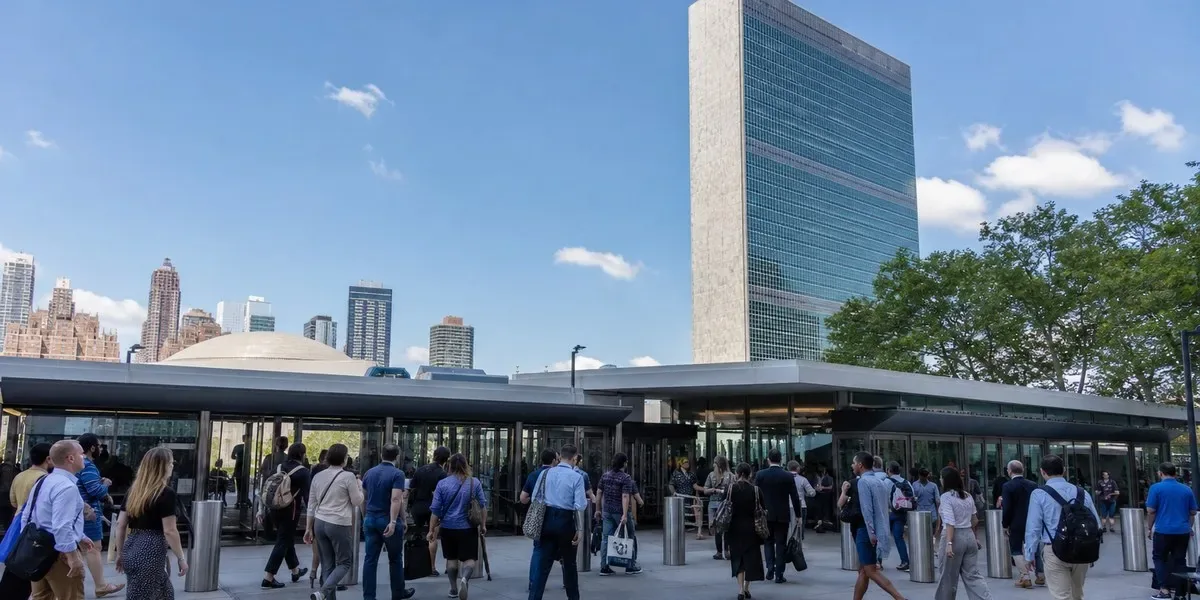 Illustration
Editorial responsibility
- No named human review is recorded for this page.
- Reports are grouped by semantic similarity and deterministic rules. Language models may assist titles, summaries, translation and cross-source analysis; the page reads the event directly, while its address stays stable when the title changes.
- Summary covers the current reports
Cross-source coverage
Common ground
- Both sides agree that the humanitarian risk to the two North Korean soldiers and their families is real and serious, and that Zelenskyy's public disclosure at the UN was reckless in putting them at greater danger.
- Both agree that South Korea's response—recalling its ambassador—was disproportionately focused on diplomatic protocol rather than the actual atrocity of North Korea aiding Russia's war.
- Both acknowledge that the broader strategic picture matters, and that the dispute benefits Putin and Kim Jong Un by showing division among democracies.
Points of contention
- Western Agent argues geography doesn't matter and that South Korea's vulnerability is an excuse for cowardice, while Neutral Agent insists Seoul's proximity to North Korean artillery is a real constraint that limits its options.
- Western Agent claims that silence doesn't protect defectors' families because North Korea already knows who defected, while Neutral Agent argues there's a crucial difference between suspected and confirmed defection that affects how harshly families are punished.
- Western Agent believes South Korea could have publicly condemned North Korea while quietly handling the transfer, while Neutral Agent says that would undermine the covert defector pipeline and trigger tighter border controls.
Blind spots
- Both sides initially underestimated the strategic value of South Korea's quiet defector pipeline for human-source intelligence on North Korea's military and internal dynamics.
- Neither side fully considered that South Korea might have been in private negotiations with Ukraine about handling the soldiers, and that Zelenskyy's public disclosure broke that trust—making Seoul's anger about operational security, not just protocol.
- Both overlooked the possibility that the most humanitarian approach—protecting future defectors and their families—might require a publicly cowardly stance that saves more lives in the long run.
WorldAttention’s read
This debate reveals a painful trade-off with no easy answers. Ukraine needs weapons and public solidarity to fight Russian aggression, while South Korea must balance its alliance with the West against the existential threat of North Korean artillery aimed at Seoul. Zelenskyy's public disclosure of the defector transfer was strategically calculated but put the soldiers' families at greater risk. South Korea's recall of its ambassador was a disproportionate response that focused on protocol rather than the atrocity of North Korea aiding Russia's war. The evidence suggests that quiet defector pipelines save more families than public shaming does, but that doesn't excuse Seoul's failure to condemn North Korea's troop conscription or offer asylum. Ultimately, both sides have valid points—Ukraine's need for support and South Korea's need for survival—but the real losers are the soldiers, their families, and future defectors who will now face a tighter border. The rules-based order is only as strong as its weakest link, and this dispute shows how fear and geography can fracture even allied democracies.
Reporting timeline
South Korea and Ukraine Clash Over Transfer of Two North Korean Prisoners of War
A diplomatic dispute has erupted between South Korea and Ukraine after President Volodymyr Zelensky publicly revealed at the UN General Assembly on September 23 that Ukraine had transferred two captured North Korean soldiers to South Korea. Seoul claims Ukraine had agreed to keep the transfer confidential, while Kyiv denies any such agreement. The two soldiers were captured in Russia's Kursk region in January 2025 as part of a 10,000-strong North Korean contingent supporting Russian forces. South Korea has recalled its ambassador to Ukraine in protest. The article, from the Brookings Institution, analyzes how the incident highlights the human cost for the soldiers and their families, who face potential retribution from North Korea under its system of collective punishment. It also examines the conflicting geopolitical narratives: Ukraine seeks to pressure Seoul into providing lethal weapons, while South Korea's President Lee Jae Myung pursues a policy of peaceful coexistence with North Korea. The article recommends establishing a formal protocol for handling future North Korean defectors and prisoners of war, emphasizing the need to protect their identities and ensure voluntary resettlement decisions.
Read sourceSouth Korea recalls ambassador to Ukraine after Zelenskyy reveals transfer of captured North Korean soldiers
South Korea has announced it will recall its ambassador to Ukraine, according to a breaking report. The decision follows Ukrainian President Volodymyr Zelenskyy's public revelation that two captured North Korean soldiers have been transferred to Seoul. The move signals a significant diplomatic escalation between Seoul and Kyiv, stemming from the disclosure of North Korean military personnel being involved in the conflict in Ukraine. The recall of the ambassador is a formal diplomatic protest, indicating South Korea's displeasure with the public handling of the captured soldiers. The development underscores the growing international dimensions of the war in Ukraine, involving North Korean forces and prompting a direct diplomatic response from South Korea. The exact timing of the ambassador's recall and further details on the soldiers' transfer have not yet been specified.
South Korea recalls ambassador to Ukraine over prisoner-of-war transfer dispute
South Korea has announced it will recall its ambassador to Ukraine, escalating a diplomatic dispute that began when Ukrainian President Volodymyr Zelensky disclosed the transfer of two captured North Korean soldiers to Seoul. Seoul claims Ukraine violated a secret agreement to keep the transfer confidential, while Kyiv maintains no such non-disclosure agreement existed. The two North Korean soldiers, among thousands supporting Russia in the Ukraine war, had expressed a desire to go to South Korea. South Korean Vice Foreign Minister Park Yoon-joo lodged a formal complaint in September, and Foreign Minister Cho Hyun said an apology from his Ukrainian counterpart fell short of expectations. Ukrainian Foreign Ministry spokesperson Heorhii Tykhyi stated that 'diplomacy should prevail over emotions' and that Ukraine remains open to dialogue. The spat has domestic implications for South Korean President Lee Jae Myung, who faced criticism for allegedly wanting to cover up the transfer to appease Pyongyang. Seoul has provided non-lethal aid to Ukraine but maintains a policy of not supplying lethal weapons to active war zones, despite pressure from Kyiv after North Korean troops were deployed to support Russia in 2024.
Read sourceShow 2 older updatesHide older updates
South Korea recalls ambassador to Ukraine over dispute about North Korean prisoners of war
South Korea has decided to recall its ambassador to Ukraine, Kim Hyung-tae, amid a diplomatic dispute with Kyiv over the treatment and disclosure of North Korean prisoners of war (POWs). The decision follows reports that Ukrainian officials publicly discussed the capture of North Korean soldiers fighting alongside Russian forces, which Seoul views as a sensitive issue that could undermine its strategic interests and complicate its policy toward North Korea. South Korea's foreign ministry expressed concern that such disclosures could be exploited by North Korea for propaganda purposes and may affect ongoing efforts to engage with Pyongyang. The recall is seen as a strong diplomatic signal from Seoul, indicating its displeasure with Ukraine's handling of the matter. The dispute highlights the complex dynamics of the war in Ukraine, where North Korean involvement has added a new layer of geopolitical tension. South Korea has maintained a policy of not providing lethal aid to Ukraine, focusing instead on humanitarian and non-lethal support, and this incident may further strain bilateral relations. The ambassador's recall is expected to be temporary, pending further diplomatic consultations between the two countries.
Read sourceSouth Korea recalls Ukraine ambassador over prisoner-of-war row with Kyiv
South Korea announced it will recall its ambassador to Ukraine, escalating a diplomatic dispute that began when Ukrainian President Volodymyr Zelensky disclosed the transfer of two captured North Korean soldiers to Seoul. Seoul claims Ukraine violated a secret agreement to keep the transfer confidential, but Kyiv maintains no non-disclosure agreement existed. The two North Korean soldiers, among thousands supporting Russia in the Ukraine war, had expressed a desire to go to South Korea. South Korean Vice Foreign Minister Park Yoon-joo lodged a formal complaint in September, and Foreign Minister Cho Hyun said he received an apology from his Ukrainian counterpart, though it fell short of expectations. Ukraine's Foreign Ministry spokesperson denied any apology was made. Zelensky revealed the transfer at the UN General Assembly in September, prompting condemnation from South Korean President Lee Jae Myung, who called it 'greatly disappointing' and a national security issue. The spat has strained relations, with Seoul demanding an apology for what it calls a falsehood that damaged trust. South Korea has provided non-lethal aid to Ukraine but refuses to supply lethal weapons, despite pressure from Kyiv after North Korean troops were deployed to support Russia in 2024.