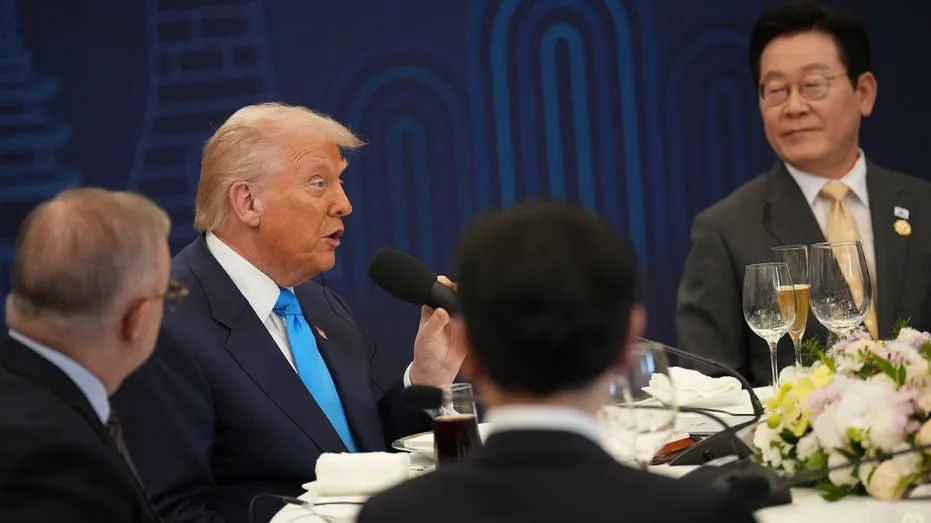
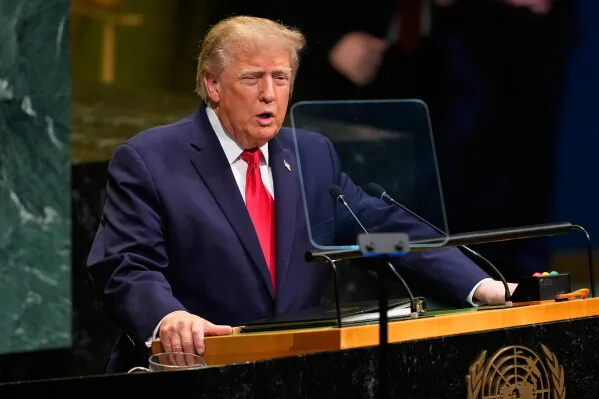
On August 16-17, 2026, U.S. President Donald Trump ordered the Pentagon to significantly scale back joint military exercises with South Korea, citing Seoul’s refusal to help denuclearize Iran and the drills’ “hostile signal” to North Korea. Trump cited his good relationship with Kim Jong-un, despite North Korea’s recent missile tests and continued state of war. The 11-day exercise involving 18,000 South Korean troops was designed to boost readiness. The move shifts U.S.-South Korea defense ties and may open dialogue with Pyongyang.
President Donald Trump announced on Truth Social that he ordered the Pentagon to substantially reduce joint military exercises with South Korea, citing his "very good relationship" with North Korean leader Kim Jong Un and Seoul's refusal to join U.S. actions against Iran. The annual Ulchi Freedom Shield exercise proceeded as planned with 46,500 troops. Experts criticized Trump's characterization, noting North Korea's expanding nuclear arsenal and missile tests. The move underscores deteriorating U.S.-South Korea relations under Trump, including tariffs and immigration raids, and may undermine deterrence on the Korean Peninsula.
South Korea’s football association (KFA) faces multiple crises: a parliamentary hearing where former KFA President Chung Mong-joon and coach Hong Myung-bo apologized for the national team’s group-stage exit at the 2026 World Cup; a police raid over alleged irregularities in Hong’s reappointment; and a bribery scandal involving payments for sexual services for foreign referees in 2011-2012. Public outrage, presidential criticism, and death threats against Hong have intensified, prompting government investigations and pledges of reform.
On August 5, 2026, Kim Yo Jong, sister of North Korean leader Kim Jong Un, warned Japan after its navy conducted a live-fire test of a U.S.-supplied Tomahawk cruise missile on July 29. She accused Japan of becoming a "war state" and blamed the U.S. for enabling the test. Kim announced North Korea would establish additional military options. The next day, North Korea launched a short-range ballistic missile into the Sea of Japan, escalating tensions.
The Seoul Central District Court sentenced former South Korean President Yoon Suk Yeol to 18 months in prison, suspended for three years, for making false statements during his 2022 presidential campaign. The court ruled that his lies about his relationship with a fortune teller and a past introduction of a defense attorney to a tax official under investigation may have affected voters' fair judgment. Yoon denied the charges and plans to appeal. If upheld, the ruling could force his conservative People Power Party to return approximately 40 billion won ($27 million) in government-reimbursed election expenses. Yoon was removed from office in April 2025 after his brief martial law declaration in December 2024 triggered a major political crisis. He faces multiple other criminal trials, including a life sentence for rebellion and a seven-year sentence for sidestepping cabinet deliberation before declaring martial law.
During South Korean President Lee Jae Myung’s visit to Silicon Valley for an AI summit, Samsung and SK Hynix announced multibillion-dollar strategic partnerships and long-term supply deals with US tech giants including Nvidia, OpenAI, Anthropic, and Broadcom. The agreements, totaling up to $950 billion, cover memory chip supply, foundry services, and AI data center buildouts. These deals follow South Korea’s $880 billion investment plan to strengthen AI leadership, with US companies driving 80-90% of underlying orders.
Nvidia and South Korea’s SK Group formalized a strategic partnership valued at over $500 billion, including a long-term memory supply deal with SK Hynix and plans to build a 2-gigawatt AI data center in South Korea using Nvidia’s Vera Rubin systems. Nvidia also invested $1 billion in Naver for an AI data center. The collaboration aims to bolster AI infrastructure for sovereign and enterprise AI across Asia-Pacific, with the first data center expected online by 2027.
French President Emmanuel Macron will co-chair the 'Lumière Summit' on September 7, 2026, in Saint-Paul-de-Vence, France, alongside South Korean President Lee Jae-myung. The summit, described as a 'Davos for cinema,' will gather 150 guests including top executives from major American studios, streaming platforms, movie theaters, and independent filmmakers. The event aims to address unprecedented challenges facing the global cinema industry, including a 40% drop in theater attendance since 2019, competition from streaming platforms and social networks, and technological disruptions from artificial intelligence. CNC President Gaëtan Bruel highlighted the threat of platforms like YouTube potentially becoming the 'Spotify of audiovisual.' The summit will focus on creation in a world of technological change, financing international co-productions, and the future of movie theaters and independent cinema. France, the world's third-largest cinema market behind China and the US, seeks to reinforce its commitment to the 7th art and announce concrete economic partnerships and strategic initiatives.
French President Emmanuel Macron will co-chair the 'Lumière Summit' on September 7, 2026, in Saint-Paul-de-Vence, alongside South Korean President Lee Jae-myung. The summit, described as a 'Davos of cinema,' will gather 150 guests including top executives from major American studios, streaming platforms, movie theaters, and independent filmmakers. The event aims to address unprecedented challenges facing the cinema industry, including a 40% decline in global theater attendance since 2019, competition from streaming platforms and social networks, and technological disruptions from artificial intelligence. CNC President Gaëtan Bruel highlighted the need for a new global governance of the sector. The summit will focus on creation amid technological change, financing international co-productions, and the future of movie theaters and independent cinema. France, as the world's third-largest cinema market behind China and the US, seeks to reaffirm its commitment to the 7th art.
The South Korean government under President Lee Jae-myung has formally announced a major policy shift towards North Korea, moving away from demanding denuclearisation as a primary prerequisite and instead prioritizing peace talks. Unification Minister Chung Dong-young stated that if Pyongyang halts its nuclear arsenal development, it will receive 'tangible compensation' from Seoul. The minister assessed that the upcoming meeting between US President Donald Trump and Chinese leader Xi Jinping this autumn will be crucial for resuming inter-Korean negotiations. Additionally, the arrival of new US Ambassador Michelle Steel in late July may provide further diplomatic momentum. In a related social policy change, the term 'defectors from the North' will be replaced with 'people with northern roots' to emphasize integration. Despite the shift, Pyongyang continues to view its nuclear arsenal as a security guarantor and considers South Korea its greatest threat. Analysts expect a positive reaction from North Korea to Seoul's conciliatory approach.
The article reviews South Korea's cultural highlights from the 2026 FIFA World Cup, despite the team's early elimination. Korean-American singer EJAE performed the official anthem 'DNA' with Andrea Bocelli at the opening ceremony. The main focus is the controversy surrounding coach Hong Myung-bo, who benched star players Son Heung-min and Lee Jae-sung, leading to public outrage, death threats, and his resignation. President Lee Jae-myung called for an investigation into the Korea Football Association, with a parliamentary hearing scheduled. The article contrasts this with the 2002 World Cup success under Guus Hiddink, highlighting the intense national pride Koreans have for football.
South Korean President Lee Jae Myung is facing criticism for selling his personal residence and providing a mortgage to the buyer, an arrangement that allowed the buyer to defer payment of 60% of the purchase price. Critics accuse him of undermining the spirit of his own housing policies, which are intended to curb speculative real estate practices and promote affordability. The transaction has sparked political controversy, with opponents arguing it reflects a conflict of interest and hypocrisy given the president's stated policy goals. The article, published by The Business Times on July 21, 2026, highlights the growing scrutiny of Lee's personal financial dealings amid broader debates over housing inequality in South Korea.
South Korean President Lee Jae Myung is facing criticism for selling his personal residence and providing the buyer with a generous mortgage, which opponents say undermines the spirit of his own housing policies. The transaction allowed the buyers to complete the sale while postponing payment of 60% of the purchase price. The controversy has sparked political backlash, with accusations that the president's actions contradict his administration's efforts to cool the housing market and promote affordability. The article, published by The Business Times Singapore on July 21, 2026, highlights the growing scrutiny over Lee's personal financial dealings and their potential impact on his political standing.
South Korean President Lee Jae Myung faces criticism for selling his home and providing the buyer a generous mortgage, which opponents say undermines the spirit of his own housing policies. The transaction allowed the buyers to complete the purchase while postponing payment of 60% of the price. The controversy, reported by The Business Times Singapore on July 21, 2026, has sparked political backlash and accusations of hypocrisy against the president, who has championed housing affordability reforms.
South Korean President Lee Jae Myung is facing criticism for selling his personal residence and providing the buyer with a mortgage that allowed them to defer 60% of the purchase price. Critics accuse him of undermining the spirit of his own housing policies, which aim to curb speculative real estate practices and promote affordability. The transaction has sparked political backlash, with opponents arguing it contradicts the president's stated commitment to housing market reform. The article, published by The Business Times on July 21, 2026, highlights the controversy surrounding the deal and its potential impact on public trust in Lee's administration.
South Korean President Lee Jae Myung has stated that swift measures are needed to address growing concerns over leveraged investment products, which are being criticized for amplifying wild swings in the South Korean stock market. The article, published by The Business Times on July 21, 2026, highlights increasing anxiety about market volatility linked to these financial instruments. President Lee's comments signal potential regulatory action to curb the destabilizing effects of leveraged products on the country's equity markets.
South Korean President Lee Jae Myung has stated that swift measures are needed to address growing concerns over leveraged investment products, which are being criticized for amplifying volatility in the South Korean stock market. The article, published by The Business Times on July 21, 2026, highlights increasing worries about wild swings in the market. President Lee's comments come amid broader scrutiny of financial instruments that may exacerbate market instability. The report notes that leveraged products have drawn criticism for their role in magnifying price fluctuations, prompting calls for regulatory action to stabilize the market.
This analysis argues that any future Trump-Kim summit will begin with North Korea in a far stronger negotiating position than in 2018-2019. Kim Jong Un has declared his nuclear arsenal permanent, secured a ratified strategic partnership with Russia (including military and economic support), and hosted Xi Jinping's first visit to Pyongyang in seven years. These developments reduce North Korea's dependence on Washington for sanctions relief and normalization. The article suggests Kim's goal is not formal recognition as a nuclear state but practical concessions: a freeze on weapons development, sanctions relief, reduced allied exercises, and a peace declaration that leaves the arsenal intact. South Korean President Lee Jae-myung has floated a similar freeze-for-relief framework, which Trump reportedly found plausible. The author concludes that Washington has not yet adjusted its approach to these new realities.
This analysis argues that a potential future Trump-Kim summit would begin with North Korea in a far stronger negotiating position than in 2018-2019. Key factors include Xi Jinping's first Pyongyang visit in seven years (June 2026), a ratified Russia-North Korea strategic partnership providing economic and military support, and Kim Jong Un's declaration that his nuclear arsenal is permanent. The article contends that Washington's old leverage—sanctions relief and normalization—is diminished, as Pyongyang now seeks practical recognition as a nuclear state without formal designation. A freeze on weapons development in exchange for sanctions relief, rather than denuclearization, is emerging as the likely bargaining framework, with South Korean President Lee Jae-myung floating a similar proposal reportedly discussed with Trump.
SK Hynix, a South Korean memory-chip maker, surpassed a $1 trillion market capitalization on May 27, 2026, driven by surging demand for high-bandwidth memory (HBM) chips used in AI servers and accelerators. The company joins Samsung Electronics and Micron in the trillion-dollar club, with SK Hynix commanding 57% of global HBM revenue. The milestone highlights South Korea’s pivotal role in the AI supply chain and reflects investor enthusiasm for AI-linked semiconductor stocks, despite potential risks from labor disputes at rival Samsung.
This Op-Ed by Juan Cole analyzes a hypothetical global energy crisis triggered by an illegal war on Iran launched by Israel and the US in February 2026. In response, Iran blockaded the Strait of Hormuz, removing 11-13% of global petroleum supply and causing severe fuel shortages and price spikes worldwide. The crisis disproportionately affects Asia and Europe, with countries like the Philippines declaring national emergencies, South Korea facing economic cataclysm, and Bangladesh suffering refinery closures and power outages. Even the US and Europe face significant disruptions, with airlines cutting flights and consumers paying record prices. The author argues this event marks a watershed moment, akin to the 'twilight of petroleum,' forcing a rapid but painful shift away from fossil fuels. The article draws parallels to the 1970s oil crises but emphasizes the unique severity and potential long-term structural changes in the global economy, including stagflation. It highlights the geopolitical repercussions, such as diplomatic tensions between South Korea and Israel, and underscores the vulnerability of nations heavily reliant on Hormuz transit routes.
South Korean President Lee Jae Myung reaffirmed his commitment to maintaining close cooperation with the United States following a high-level meeting with US Treasury Secretary Scott Bessent. The diplomatic engagement took place amid challenging international conditions, with President Lee emphasizing the deep trust and strategic partnership between the two nations. In a statement posted on the social media platform X, Lee described South Korea and the US as each other's most important partners for mutual growth, highlighting their joint effort to create opportunities despite global uncertainties. During the discussions, key economic issues were addressed, including the management of critical minerals and the implementation of existing investment agreements. Treasury Secretary Bessent also shared insights via X, confirming that the talks focused on strengthening economic ties and executing collaborative frameworks. Both leaders expressed a strong determination to further develop bilateral economic cooperation. This interaction underscores the ongoing alignment between Seoul and Washington on security and economic fronts, reinforcing their alliance as a cornerstone of regional stability and prosperity in the face of evolving geopolitical dynamics.
Japanese Prime Minister Sanae Takaichi is scheduled to visit South Korea for a two-day trip starting Tuesday, aiming to strengthen bilateral ties through a summit with South Korean President Lee Jae-myung. The meeting will take place in Andong, North Gyeongsang Province, which is President Lee's hometown. This engagement is part of ongoing shuttle diplomacy efforts between the two nations, involving mutual visits by their leaders. Key agenda items include enhancing cooperation on economic security and addressing regional affairs. Discussions are expected to consider recent developments in U.S.-China summit talks and the ongoing conflict in Iran. The Japanese government announced the plans on Thursday, highlighting the importance of this diplomatic exchange in fostering better relations and collaborative strategies on critical international issues. The visit underscores the commitment of both leaders to maintain open dialogue and coordinate responses to geopolitical challenges affecting East Asia and beyond.
Micron Technology (NASDAQ: MU) shares recovered approximately 3.2% on Wednesday, reversing a previous 3.6% decline triggered by concerns over a potential windfall profits tax in South Korea. The initial drop was caused by remarks from South Korean President Lee Jae Myung's chief of staff, who suggested taxing excess profits from AI-related companies to fund a national dividend. However, market sentiment shifted as investors recognized the low probability of this proposal affecting Micron. Analysts note that Micron does not manufacture chips in South Korea, making it an unlikely target for such legislation. Furthermore, the proposal originated from an informal social media post rather than official legislative channels, leaving its scope and definition vague. Despite the recent volatility, Micron remains attractive to some investors, trading at a price-to-earnings ratio of 35 with projected earnings growth of 75% for the following year. While the stock bounced back on clarified risk assessments, The Motley Fool notes that Micron was not included in their current list of top ten recommended stocks, suggesting investors weigh these factors carefully before making purchase decisions.
US President Donald Trump has arrived in Beijing for a critical three-day summit with Chinese President Xi Jinping, scheduled from May 13 to May 15, 2026. Accompanied by US business leaders and Treasury Secretary Scott Bessent, Trump aims to address pressing bilateral issues, including trade tariffs, the status of Taiwan, and the future of artificial intelligence. The visit follows preparatory talks in Seoul between Bessent and Chinese Vice Premier He Lifeng, which were described as constructive. Key agenda items include Trump's demand for China to 'open up' its markets and ongoing tensions stemming from previous trade wars. Additionally, discussions are expected to cover geopolitical concerns such as the Iran conflict. This meeting marks a significant diplomatic engagement, recalling their previous encounters in 2017, 2018, and 2019, where trade and North Korean denuclearization were central themes. The summit represents a pivotal moment for US-China relations, with both nations seeking to navigate economic competition and strategic disagreements while potentially expanding cooperation in specific sectors.
United States and Chinese officials conducted last-minute trade discussions at Incheon Airport in South Korea to establish the agenda for the upcoming summit between President Donald Trump and President Xi Jinping in Beijing. Led by US Treasury Secretary Scott Bessent and Chinese Vice Premier He Lifeng, the talks followed separate meetings with South Korean President Lee Jae Myung. Analysts characterize these interactions as exploratory efforts to gauge each other's positions rather than attempts to secure immediate breakthroughs. The Beijing summit, scheduled for Thursday and Friday, marks the first face-to-face meeting between the two leaders in over six months. Key topics expected to dominate the agenda include stabilizing bilateral ties, potential Chinese purchases of American agricultural and energy products, and US restrictions on semiconductor exports. Additionally, both nations are considering extending a truce on rare earth export restrictions. Although the ongoing conflict involving Iran is a significant global issue, President Trump stated that it would not be a primary focus of the discussions, asserting that the US has the situation under control.
US President Donald Trump has arrived in Beijing on May 13, 2026, for a highly anticipated three-day summit with Chinese President Xi Jinping. The visit, scheduled to last until May 15, aims to address critical bilateral issues including trade tensions, the status of Taiwan, and the future of artificial intelligence. Trump has indicated he will urge China to 'open up' its markets further, accompanied by a delegation of US business leaders. Prior to the summit, US Treasury Secretary Scott Bessent and Chinese Vice Premier He Lifeng held constructive talks in Seoul to prepare the groundwork for economic cooperation. This meeting marks a significant diplomatic engagement following a trade war initiated last year, where Trump imposed widespread tariffs. While the US maintains it does not support Taiwanese independence, China is expected to press for stronger opposition to separatist movements. The summit also follows their previous face-to-face meeting in Busan in 2025. Key agenda items include resolving ongoing trade disputes, discussing geopolitical concerns such as the Iran war, and establishing frameworks for AI governance, highlighting the complex and multifaceted nature of current US-China relations.
Trade negotiators from the United States and China, led by US Treasury Secretary Scott Bessent and Chinese Vice Premier He Lifeng, have commenced talks in Seoul. These discussions aim to prepare for the upcoming summit between President Donald Trump and President Xi Jinping, scheduled for May 13-15 in Beijing. The agenda includes reviewing bilateral trade developments and addressing the ongoing war in Iran, which has triggered an oil crisis affecting global markets. The White House is pressuring China to help reopen the Strait of Hormuz and join US-led escort operations, having sanctioned Chinese refiners processing Iranian crude. Meanwhile, He Lifeng met with South Korean President Lee Jae Myung to discuss regional stability, including tensions on the Korean Peninsula and Seoul's efforts to restore ties with Beijing. This diplomatic engagement highlights South Korea's role as a mediator amidst intensifying US-China rivalry. The conflict in the Middle East has exposed vulnerabilities in energy-dependent economies like South Korea, which relies heavily on imports through the Strait of Hormuz. The outcome of these preliminary talks is expected to set the tone for the historic leaders' summit.
Senior officials from the United States and China commenced a new round of trade negotiations in Seoul, South Korea, serving as a precursor to US President Donald Trump’s upcoming visit to Beijing. The talks, held at Incheon International Airport, are led by Chinese Vice-Premier He Lifeng and US Treasury Secretary Scott Bessent. This marks the seventh round of negotiations since Trump’s return to office and the reignition of global tariff disputes. Unlike previous multi-day sessions, these discussions are expected to conclude quickly before Bessent joins Trump in China. Key agenda items include Chinese purchases of US agricultural products and aircraft, as well as Beijing’s export controls on critical minerals. Additionally, the ongoing US-Israeli conflict with Iran and its impact on global shipping and commodity prices are expected to be discussed, following recent US sanctions on entities facilitating Iranian oil shipments to China. Trump’s visit, accompanied by major US tech and business leaders, represents the first by a US president to China in over eight years, aiming to stabilize economic ties between the two largest economies.
South Korea has cancelled scheduled sanitary audits of Brazilian beef processing plants, effectively halting Brazil's eighteen-year effort to access the lucrative South Korean market. According to a memo from Brazil’s agricultural attaché in Seoul, the cancellation stems from Seoul's decision to prioritize technical inspections for agricultural products over livestock in 2026, with no new dates established. This development creates a significant setback for Brazilian exporters, who viewed South Korea as a critical alternative market amid tightening restrictions elsewhere. China recently imposed a safeguard quota with high tariffs on Brazilian beef imports exceeding 1.1 million tons, while the European Union simultaneously excluded Brazil from its third-country list for animal products due to antimicrobial compliance issues. With domestic production covering only 40% of its annual 600,000-ton consumption, South Korea remains a key import destination. However, the indefinite suspension of audits leaves Brazilian beef facilities in limbo. Industry leaders warn that without this Asian backup plan, Brazilian beef exports could decline by up to 10% in 2026, compounding the pressure from simultaneous trade barriers in Europe and China.
1 reports · 1 sources
Periodic recap
What changed for this subject in each tracking window — generated from matched events, delta-first.
→· 1 event in window
During this period, Lee Jae-myung-related developments remain tangentially connected. U.S. President Donald Trump ordered a reduction in joint military exercises with South Korea, with the focus on the U.S. and South Korean governments and militaries. Lee Jae-myung is not mentioned in the reports. Similar to the previous period, this event is a tangential match with no new developments directly involving Lee.
Trump ordered the Pentagon to substantially reduce joint military exercises with South Korea, citing his "very good relationship" with Kim Jong Un and Seoul's refusal to join U.S. actions against Iran.
The annual Ulchi Freedom Shield exercise proceeded as planned with 46,500 troops.
Experts criticized Trump's characterization, noting North Korea's expanding nuclear arsenal and missile tests, and warned the move may undermine deterrence on the Korean Peninsula.
Earlier recaps
→· 1 event in window
During this period, only one tangentially related event concerning Lee Jae-myung was recorded. U.S. President Donald Trump ordered a significant reduction in joint military exercises with South Korea, citing Seoul's refusal to help denuclearize Iran and the drills' "hostile signal" to North Korea. The main actors are the U.S. and South Korean governments and militaries; Lee Jae-myung is not mentioned in the reports, suggesting a tangential match.
→· 1 event in window
During this period, only one event related to Lee Jae-myung was recorded, though its direct relevance is questionable. The event centers on the Korea Football Association's multiple crises following the World Cup failure and historical scandals, including a parliamentary hearing, a police raid, and bribery allegations. The main actors are KFA officials, the coach, and government bodies; Lee Jae-myung is not mentioned in the reports, suggesting a tangential match.
→· 1 event in window
During this period, only one event related to Lee Jae-myung was recorded, though its direct relevance is questionable. The event involves Kim Yo Jong warning Japan over a Tomahawk missile test, followed by a North Korean ballistic missile launch. The main actors are North Korea and Japan; Lee Jae-myung is not mentioned in the reports, suggesting a tangential match.
→· 1 event in window
During this period, only one financial regulatory event related to Lee Jae-myung was recorded. South Korea's Financial Services Commission announced a temporary ban on new single-stock leveraged ETF listings and raised the minimum deposit requirement for such products to curb market volatility. The policy change occurred against a backdrop of a sharp drop in the KOSPI and record-high borrowed investments by retail investors, though its direct relevance to Lee Jae-myung remains unclear.
→· 1 event in window
During this period, only one major economic cooperation event related to Lee Jae-myung was recorded. Nvidia and SK Group announced a strategic AI partnership valued at over $500 billion, involving a long-term memory supply deal and the construction of a large-scale AI data center in South Korea. The collaboration aims to strengthen AI infrastructure in the Asia-Pacific region, though the event's direct relevance to Lee Jae-myung remains unclear.
Tracked events
Events matched to this subject by the tracking pipeline, with signal scores.