Oil prices plunge as Saudi pipeline restart and Iran diplomacy ease supply fears
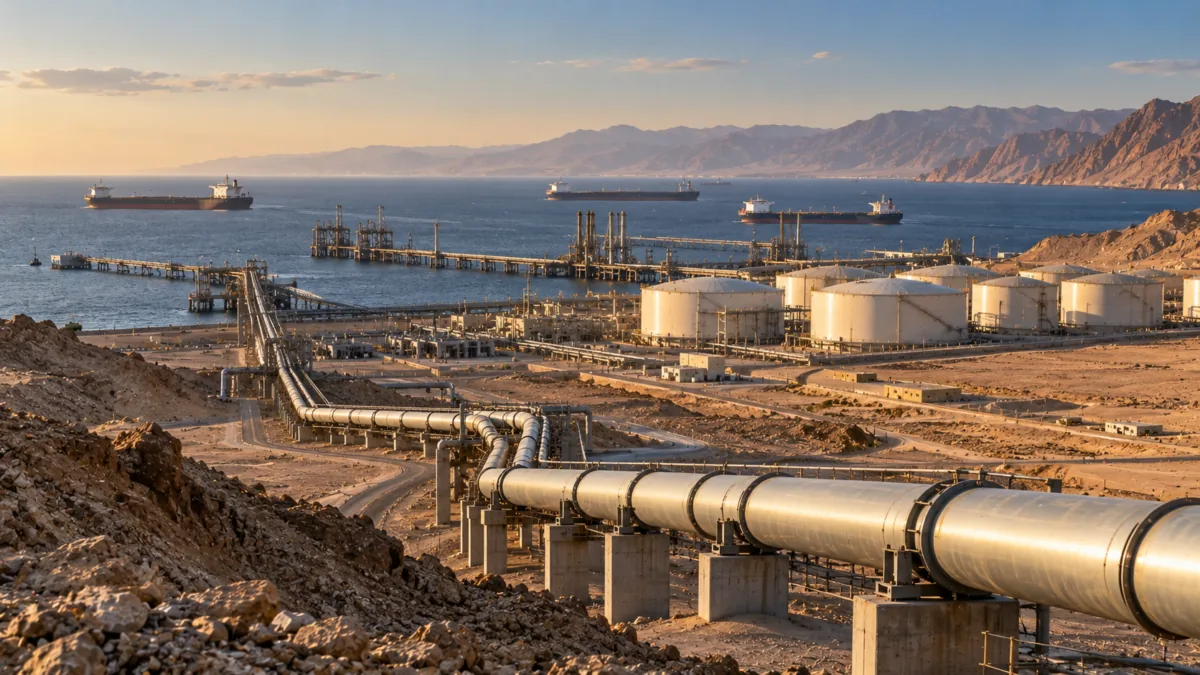
International oil prices fell sharply on September 22, with WTI crude dropping over 3% and Brent crude over 2%, reversing earlier gains. The decline was driven by reports that Saudi Arabia is restarting its east-west pipeline and preparing to resume crude exports from Yanbu port, alongside an Iranian official stating the delegation has full authority to restore diplomatic contact with the US in New York. These developments suggest potential increases in global oil supply, easing market fears of a major Middle East conflict escalation.
 Illustration
Editorial responsibility
- No named human review is recorded for this page.
- Reports are grouped by semantic similarity and deterministic rules. Language models may assist titles, summaries, translation and cross-source analysis; the page reads the event directly, while its address stays stable when the title changes.
- Summary covers the current reports
Cross-source coverage
Common ground
- All three agree that the 8% oil price drop was partly driven by technical factors like thin trading and algorithmic reactions, not just real supply changes.
- Everyone acknowledges that Yemeni civilian deaths are a tragic moral catastrophe that the global system largely ignores.
- There is agreement that Saudi-Iran normalization talks brokered by China are a significant development in the region.
- All participants recognize that the oil market is not a purely neutral mechanism and carries political weight.
Points of contention
- The Regional Agent insists the oil price drop is inseparable from the human cost in Yemen, while the Neutral Agent argues moral outrage doesn't explain market mechanics.
- The Eastern Agent sees the price drop as a symptom of a multipolar shift away from US dominance, but the Neutral Agent calls this overblown and points to Saudi Arabia's continued dollar ties.
- The Regional Agent and Eastern Agent clash over whether Pakistan-Iran energy deals are strategic diversification or just desperate survival moves.
- The Neutral Agent claims the selloff was mainly algorithmic overreaction to keywords, while the others argue those algorithms reflect biased political assumptions.
Blind spots
- None of the participants fully address how ordinary Yemeni families experience these events beyond abstract moral or strategic frameworks.
- The debate overlooks the role of other major oil consumers like India and Japan in shaping market dynamics.
- There is little discussion of how climate change and the global energy transition might alter these regional power calculations in the near future.
- The impact of internal political dynamics within Saudi Arabia, Iran, or Yemen on these events is largely ignored.
WorldAttention’s read
After five rounds, the core disagreement remains: the Regional Agent sees the oil price drop as a moral failure of a colonial system that values barrels over lives, the Neutral Agent insists it was a technical correction in a thin market driven by algorithms, and the Eastern Agent frames it as a symptom of a real but incomplete multipolar shift away from US dominance. All three agree that Yemeni deaths are a tragedy, that Saudi-Iran talks matter, and that the market isn't neutral. But they can't agree on which lens—moral, technical, or geopolitical—best explains what happened. The truth is that all three perspectives capture part of the same complex reality: the price move was a technical event, the human cost is a moral catastrophe, and the regional power shifts are real but often overstated. No single framework tells the whole story, and pretending otherwise misses the full picture.
Reporting timeline
Oil Prices Plunge as Iran President Heads to UN, Saudi Strikes Yemen
International oil prices experienced a sharp drop on September 22, with WTI crude falling over 3% and Brent crude over 2%, reversing earlier gains of more than 1%. The decline comes amid easing market fears of a major Middle East conflict escalation. Iran's President Pezeshkian traveled to New York for the UN General Assembly, where he is scheduled to speak on September 23. Meanwhile, Saudi warplanes reportedly struck a residential building in the Red Sea port of Mukha, Yemen, killing six people including two children and a woman, according to Houthi-controlled media. The attack follows Houthi forces capturing Mukha earlier in September. Saudi Arabia has not commented. Analysts at TD Securities noted that crude exports through the Strait of Hormuz have increased and Middle East oil transport has recovered to about 80% of pre-Iran-conflict levels, suggesting Iran's leverage may be diminished unless a major escalation occurs. Oil prices have fallen for four consecutive sessions, also pressured by expectations that Saudi Arabia's east-west pipeline may partially resume operations within days.
Read sourceOil Prices Plunge as Iran President Heads to UN, Saudi Strikes Hit Yemen
International oil prices experienced a sharp reversal on September 22, with WTI crude falling over 3% and Brent crude dropping over 2% after earlier gains of more than 1%. The price swing occurred amid multiple Middle East developments. Iranian President Pezeshkian traveled to New York for the UN General Assembly, where he is scheduled to speak on September 23. Separately, Saudi warplanes conducted airstrikes on the Red Sea port city of Mukha in Yemen's Taiz province, killing six people including two children and one woman, according to Houthi-controlled media. The strikes follow Houthi forces capturing Mukha earlier in September, escalating conflict between the Houthis and the Saudi-backed Yemeni government. Oil prices have fallen for four consecutive trading days, driven by expectations that Saudi Arabia's east-west pipeline may partially resume operations within days and by rising crude exports through the Strait of Hormuz. TD Securities senior commodity strategist Ryan McKay noted that Middle East crude shipments have returned to about 80% of pre-conflict levels, suggesting Iran's leverage over the strait may be diminished unless a major escalation occurs.
Read sourceOil prices fall as Saudi Arabia may resume exports and Iran signals diplomatic push with US
International oil prices continued to decline on September 22, with WTI crude falling below $89 per barrel, down 2.88% on the day, and Brent crude dropping over 2% to $94.45 per barrel. The drop was driven by reports that Saudi Arabia is preparing to resume crude oil exports from the Yanbu port later on Tuesday, potentially increasing supply. Additionally, an Iranian official stated that the Iranian delegation has been fully authorized to advance the restoration of diplomatic contact with the United States during meetings in New York, raising the possibility of eased sanctions and increased Iranian oil exports. These developments suggest a potential increase in global oil supply, putting downward pressure on prices.
Read sourceShow 3 older updatesHide older updates
WTI crude oil futures fall 3% as Saudi Arabia restarts pipeline exports
Oil prices fell sharply on Tuesday, with WTI crude oil futures dropping 3% to $89.576 per barrel and Brent crude futures falling 2% to $94.318 per barrel. The decline was triggered by news that Saudi Arabia is restarting its east-west pipeline and preparing to resume crude exports from the Yanbu port later on Tuesday, according to trade sources. The move is expected to increase global oil supply, putting downward pressure on prices.
WTI and Brent crude oil prices drop $1.50 on report Saudi Arabia seeks to restore pipeline capacity
WTI and Brent crude oil prices experienced a sharp short-term decline of $1.50 per barrel, with WTI trading at $96.94 and Brent at $101.41. The drop follows reports that Saudi Arabia is working to restore half the capacity of a key oil pipeline within days. The report suggests a potential increase in oil supply, which is pressuring prices downward. The exact pipeline and the cause of its reduced capacity are not specified in the source. The market is reacting to the prospect of additional crude supply entering the market from one of the world's largest oil producers, which could alleviate some supply tightness.
Saudi Arabia reportedly seeks to restore half of key oil pipeline capacity within days
According to a report by Cailian Press on September 16, Saudi Arabia is reportedly seeking to restore half of the capacity of a key oil pipeline within days. This development led to a sharp decline in international crude oil prices in the short term. As of the time of reporting, WTI crude oil futures fell 4.07% to $96.654 per barrel, while Brent crude oil futures dropped 3.91% to $104.498 per barrel. The report attributes the price drop to the news of the potential capacity restoration, though the specific pipeline and the cause of its previous capacity reduction are not detailed in the source text.