Ukraine strikes Moscow refinery; EU proposes three-year Russia sanctions extension
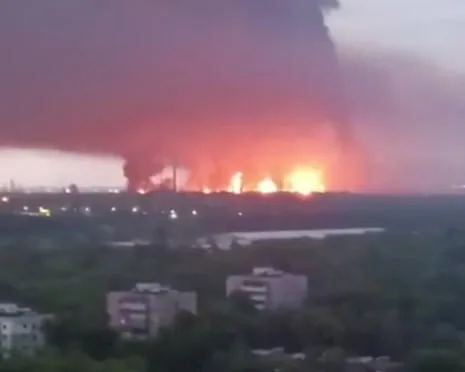
Over 24 hours ending September 22, Ukrainian drone strikes halted a Moscow refinery and hit targets in Russia, while Russian forces attacked Odesa port facilities and a cargo ship, and struck infrastructure in Poltava. The IAEA warned of nuclear safety risks at Zaporizhzhia. The EU proposed extending sanctions on Russia for up to three years. Ukraine estimated export losses could reach $4.8 billion by year-end due to port attacks.
 Illustration
Editorial responsibility
- No named human review is recorded for this page.
- Reports are grouped by semantic similarity and deterministic rules. Language models may assist titles, summaries, translation and cross-source analysis; the page reads the event directly, while its address stays stable when the title changes.
- Summary covers the current reports
Cross-source coverage
Common ground
- Both sides agree the conflict is a war of attrition where neither can claim clear victory.
- Both agree the sanctions regime has significant loopholes, with countries like India and China exploiting them.
- Both acknowledge civilians near Zaporizhzhia face real nuclear risks regardless of who is shelling.
- Both agree the war will likely end in exhaustion and a frozen conflict, not a military breakthrough.
- Both recognize the Global South is structurally realigning energy trade away from the West toward Russia.
Points of contention
- Neutral Agent argues Russia's economy is bleeding slower but still unsustainable, while Regional Agent says Russia's adaptation and political will give it an edge.
- Regional Agent claims Ukraine's economy is entirely dependent on borrowed Western money, while Neutral Agent says Western aid keeps Ukraine viable.
- Neutral Agent sees the Global South's actions as arbitrage, while Regional Agent views them as a permanent shift in global order.
- Regional Agent believes European political unity will crack before Russian authoritarian resilience, but Neutral Agent says Russia's economic contradictions are more acute.
- Neutral Agent says Russia is burning through irreplaceable Soviet stockpiles, while Regional Agent argues Russia can sustain its pace longer than Western patience.
Blind spots
- Neither side fully addresses how the war's debt and reconstruction costs will impact Ukraine's long-term sovereignty.
- Both overlook the role of non-state actors, like private military contractors or cyberattacks, in shaping the conflict's trajectory.
- The debate ignores the environmental and humanitarian toll beyond nuclear risks, such as landmines and water contamination.
- Neither considers how a potential Trump presidency or EU election shifts could abruptly alter aid dynamics.
WorldAttention’s read
This debate reveals a war stuck in a grinding stalemate where both sides are making risky bets—Russia on outlasting European political will despite a strained wartime economy, and Ukraine on steady Western aid while its debt and dependency grow. The Global South's pivot to Russia is more than just arbitrage; it's a structural energy realignment that weakens sanctions over time. Yet Russia's economic cracks—19% interest rates, a 40% sovereign wealth fund drawdown, and 600,000 casualties—show it's bleeding slower, not winning. The conflict won't end with a clear victory or sanctions collapse, but with both sides too exhausted to keep fighting and too proud to admit defeat. The off-ramp is mutual exhaustion, and neither side is honest enough to say that yet.
Reporting timeline
Russia-Ukraine Conflict: Nuclear Risks, Drone Strikes, EU Sanctions, and Oil Market Moves
This compilation covers the latest 24 hours of the Russia-Ukraine conflict as of September 22. Military actions include Ukrainian forces striking key Russian targets, a Moscow refinery halted by a Ukrainian drone attack, Russian drone strikes on Ukrainian infrastructure in Poltava, and Russian attacks on a cargo ship and port facilities in Odesa. The IAEA warns of continued nuclear safety risks at the Zaporizhzhia nuclear plant due to nearby attacks. On sanctions, the EU is proposing a three-year extension of sanctions against Russia. Former President Trump expressed concern over diesel prices and hopes Russian oil can re-enter the market. Hungary has asked the US to delay sanctions on Russian oil purchases. India is studying US tariff measures on Russian oil buyers. The US is seeking to phase out Russian uranium imports. EU diplomats continue discussions on extending sanctions. Other developments include Russia extending its diesel export ban beyond September, exempting grain export tariffs until year-end, and increasing diesel exports to Central Asia in August. Ukraine's President Zelensky met with CIA Director Ratcliffe in Ireland. Ukraine's Finance Ministry estimates export losses of up to $4.8 billion by year-end due to Russian attacks on ports and infrastructure.
Read sourceRussia-Ukraine Conflict: Latest 24-Hour Developments on Sept 22 Include Nuclear Risks and Sanctions
This summary covers the latest 24 hours of the Russia-Ukraine conflict as of September 22, compiled by financial data platform Jin10. On the battlefield, Ukraine's armed forces reported striking multiple important enemy military targets, while Russia's defense ministry claimed attacks on a cargo ship in Odesa port, logistics centers, warehouses, and Ukrainian ports. The International Atomic Energy Agency warned that frequent attacks near the Zaporizhzhia nuclear power plant continue to pose nuclear safety risks. A Moscow refinery reportedly stopped operations after a Ukrainian drone strike on September 20. In Poltava, a local governor said Russian drones hit critical infrastructure. On sanctions, the EU is proposing to extend sanctions on Russia for up to three years, with further discussions scheduled. Former US President Trump expressed concern about rising diesel prices and hopes Russian oil can enter the market. Hungary requested the US to delay sanctions on Russian oil purchases. India is studying US tariff measures on Russian oil buyers. The US is seeking to phase out Russian uranium before a full import ban. Other developments include Russia exempting grain export tariffs until year-end and potentially extending a diesel export ban beyond September. Russia is working with Turkey to ensure Black Sea shipping safety. Ukrainian President Zelensky reportedly met with CIA Director Ratcliffe in Ireland. Ukraine's finance ministry estimated export losses could reach $4.8 billion by year-end due to Russian attacks on ports and infrastructure.
Read sourceRussia Strikes Data Center, Drone Hits Tanzanian Ship; EU Allocates €3.3 Billion to Ukraine
The latest 24-hour update on the Russia-Ukraine conflict reports multiple military developments. The Russian Ministry of Defense stated its forces struck a large military data center in Ukraine and took control of Rozovka in the Zaporizhzhia region. A Russian drone attack hit a Tanzanian-flagged vessel en route to a Ukrainian port, killing one and injuring three crew members. Ukrainian officials reported explosions near the Poland border, though border checkpoints were undamaged. Polish military confirmed no airspace violations. An oil refinery in Russia's Yaroslavl region suspended crude oil processing after a drone attack. Russian forces also struck two dry cargo ships carrying military supplies in Odesa. In diplomatic developments, Russian Foreign Minister Lavrov said Russia-US dialogue has yielded no substantive results, and the Kremlin stated new US sanctions will make a peace agreement harder. The National Bank of Ukraine may lower its 2026 GDP growth forecast to 1.1%-1.2%. European Commission President von der Leyen announced €3.3 billion will be allocated to Ukraine for missiles and drones.
Show 2 older updatesHide older updates
Russia-Ukraine Conflict: Drone Incursions, Black Sea Strikes, and Ceasefire Talks in 24-Hour Update
This compilation covers the latest 24-hour developments in the Russia-Ukraine conflict as of September 16. Key military incidents include a drone incursion into Lithuanian airspace intercepted by NATO jets, a drone attack on a gas station in Kyiv, and a Russian frigate nearly colliding with a Danish helicopter, prompting Denmark to summon the Russian ambassador. The Russian Ministry of Defense reported hitting two ships in the Black Sea, including a cargo ship and a ferry carrying military supplies in the Ukrainian port of Chornomorsk, and attacking the Yahodin border crossing in Volyn Oblast. Russian Tu-95MS strategic bombers flew over neutral waters of the Barents and Norwegian Seas. Ukrainian President Zelensky stated Russia continues to attack Ukraine's energy sector and critical infrastructure, while Ukrainian forces achieved results at the Cizran oil refinery and hit targets in the Black Sea region. The Ukrainian Foreign Minister reported over 500 locomotives destroyed or damaged by Russian strikes and called for allied locomotive support. On peace negotiations, Ukraine expressed willingness for an energy ceasefire with Russia. Russian Foreign Minister Lavrov stated Russia is willing to make reasonable compromises but will not stop fighting during negotiations. The Kremlin views a US proposal for a ceasefire on energy targets as a good idea, linking it to potential sanctions relief and lower global energy prices. Zelensky indicated Ukraine is prepared for de-escalation measures if partners ensure Russia's sincerity and long-term reliability. Other developments include a planned meeting between Lavrov and US Secretary of State Rubio at the UN General Assembly, active negotiations on a prisoner exchange, and the Danish Defense Minister clarifying no NATO Article IV or V consultations are planned regarding the frigate-helicopter incident.
Read sourceRussia-Ukraine Conflict: Drone Incursions, Black Sea Strikes, and Ceasefire Signals on September 16
This compilation from Jin10 details the latest 24-hour developments in the Russia-Ukraine conflict as of September 16. Key military events include a drone incursion into Lithuanian airspace intercepted by NATO fighters, a drone attack on a Kyiv gas station, and a near-collision between a Russian frigate and a Danish helicopter. The Russian Ministry of Defense reported hitting two ships in the Black Sea, including a cargo ship and a ferry carrying military supplies in the Ukrainian port of Chornomorsk, and attacking the Yahodin border crossing. Ukrainian President Zelensky stated that Russia continues to target Ukraine's energy sector and critical infrastructure, while noting successful tests of a new interceptor drone and strikes on a Russian oil refinery. On the diplomatic front, Ukraine expressed willingness for an energy ceasefire with Russia, while Russia's Foreign Minister Lavrov indicated a willingness for reasonable compromises but stated fighting would not stop during negotiations. The Kremlin viewed a US proposal for a ceasefire on energy targets favorably, contingent on sanctions relief. Other developments include a planned meeting between Lavrov and US Secretary of State Rubio, active negotiations on a prisoner exchange, and the Danish Defense Minister's decision not to seek NATO consultations over the frigate-helicopter incident.