Peru Central Bank Cuts 2026 Growth Forecast to 3.2% on Stronger El Niño Impact
Peru's central bank, led by Governor Julio Velarde, revised its 2026 GDP growth forecast downward from 3.4% to 3.2%, citing stronger-than-expected El Niño impacts on fisheries and agriculture. The bank also raised its 2026 inflation forecast to 4.2% and cut its 2027 growth outlook to 3.0%. The fiscal deficit forecast improved to 1.5% of GDP.
 Illustration
Editorial responsibility
- No named human review is recorded for this page.
- Reports are grouped by semantic similarity and deterministic rules. Language models may assist titles, summaries, translation and cross-source analysis; the page reads the event directly, while its address stays stable when the title changes.
- Summary covers the current reports
Cross-source coverage
Common ground
- All participants agree that Peru's economy faces a challenging combination of slowing growth and rising inflation, with the 2026 inflation forecast of 4.2% being a key concern.
- Everyone acknowledges that climate shocks, particularly El Niño, are having a real impact on Peru's agriculture and fisheries sectors.
- There is agreement that Peru's central bank is in a difficult position, having to balance inflation control against supporting growth.
- All sides recognize that the fiscal deficit narrowing from 1.8% to 1.5% shows some fiscal discipline.
Points of contention
- Neutral Agent argues the 2026 inflation forecast is primarily due to domestic factors like currency depreciation and energy costs, while Eastern and Regional Agents insist climate shocks are the main driver.
- Eastern Agent sees China's Belt and Road investments as offering genuine choice and cooperation, while Regional Agent views them as just another form of resource extraction.
- Regional Agent frames the situation as 'climate colonialism' where the Global North caused the crisis, but Neutral Agent says this ignores Peru's own policy choices and the narrowing deficit.
- Eastern Agent claims the global financial system is rigged against developing nations, but Neutral Agent counters that Peru's central bank has credibility and is making deliberate choices.
Blind spots
- All participants focused on fitting Peru into their own ideological narratives, often overlooking the specific data from the central bank's own forecasts.
- The debate largely ignored the urban poor in Lima, who spend a large share of income on food and are hit hardest by 4.2% inflation.
- No one adequately addressed how Peru's currency depreciation connects to global commodity markets and investor sentiment beyond climate or geopolitics.
- The voices and traditional knowledge of Peru's indigenous and campesino communities were mentioned but not deeply explored as a practical solution.
WorldAttention’s read
Peru's central bank is signaling a deliberate choice to fight inflation over growth, as shown by the 2026 inflation forecast of 4.2% alongside a growth downgrade and narrowing deficit. While climate shocks from El Niño are real and hurt fisheries and agriculture, the two-year-out inflation forecast points to persistent domestic pressures like currency weakness and energy costs, not just weather. The debate revealed that everyone was too quick to fit Peru into pre-existing narratives—whether about climate justice, multipolar geopolitics, or monetary credibility. The real story is that Peru's policymakers are walking a tightrope, and the key signal to watch is the sol exchange rate, not just GDP. Ultimately, the human impact on both rural communities and urban poor must be centered, and Peru's government needs to listen to its own people rather than just foreign interests.
Reporting timeline
Peru Cuts 2026 Growth Forecast to 3.2% as El Niño Impact Exceeds Expectations
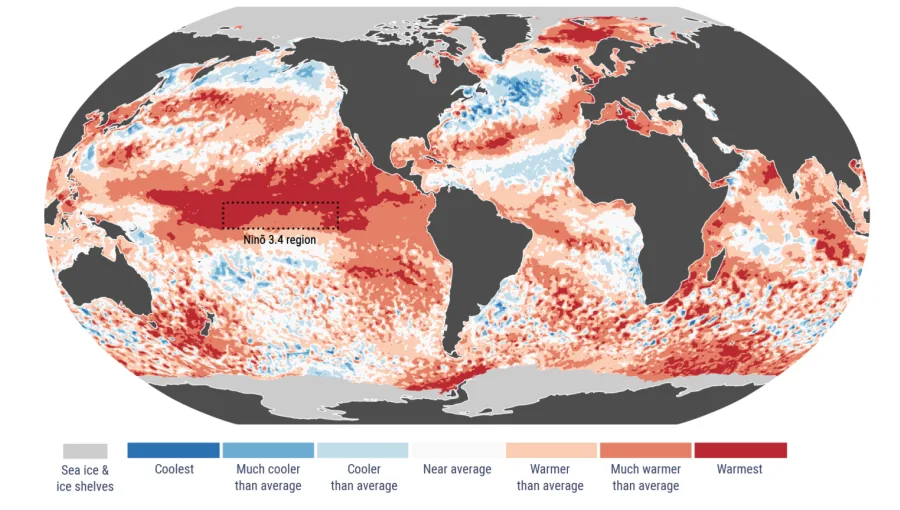
Peru's central bank governor, Julio Velarde, announced on August 18 that the country's 2026 economic growth forecast has been revised downward from 3.4% to 3.2%, citing the impact of the El Niño phenomenon as more severe than previously anticipated. Speaking during a presentation of the September 2026 inflation report, Velarde noted an increased probability of stronger climate events, leading to a lowered growth projection for the primary sector, particularly fisheries and agriculture. Concurrently, the central bank raised its 2026 inflation forecast to 4.2% and also downgraded the 2027 growth outlook from 3.2% to 3.0%. The article explains that El Niño refers to the large-scale abnormal warming of sea surface temperatures in the equatorial Pacific Ocean, which often triggers climate anomalies across the globe. In the context of global warming, strong El Niño events not only heighten the risk of extreme weather but also generate long-term effects by disrupting agricultural production, commodity prices, and global supply chains.
Peru Central Bank Cuts 2026 Growth Forecast to 3.2% on Stronger El Niño Impact
On October 18, Peru's Central Reserve Bank Governor Julio Velarde announced a downward revision of the country's 2026 economic growth forecast from 3.4% to 3.2%, citing greater-than-expected impacts from the El Niño phenomenon. Speaking during the presentation of the September 2026 inflation report, Velarde noted an increased probability of more intense climate events, leading to a lowered growth projection for the primary sector, particularly fisheries and agriculture. The bank also raised its 2026 inflation forecast to 4.2% and cut its 2027 growth outlook from 3.2% to 3.0%. The article explains that El Niño refers to persistent abnormal warming of sea surface temperatures in the equatorial Pacific Ocean, which can cause global climate disruptions. Under global warming, strong El Niño events not only heighten extreme weather risks but also have long-term effects on agricultural production, commodity prices, and global supply chains.
Peru Cuts 2026 Economic Growth Forecast to 3.2% Due to Stronger El Niño Impact
On September 18, Peru's Central Reserve Bank Governor Velarde announced a downward revision of the country's 2026 economic growth forecast from 3.4% to 3.2%, citing stronger-than-expected impacts from the El Niño phenomenon. Speaking while presenting the September 2026 inflation report, Velarde noted that the likelihood of more intense climate events has increased, leading to lowered growth expectations for the primary sector, particularly fisheries and agriculture. The central bank also revised its 2026 inflation forecast upward to 4.2% and cut the 2027 economic growth forecast from 3.2% to 3.0%. The El Niño phenomenon, characterized by abnormal warming of equatorial Pacific sea surface temperatures, is known to trigger climatic anomalies globally. The report warns that strong El Niño events, compounded by global warming, increase risks of extreme weather and have long-term impacts on agricultural production, commodity prices, and global supply chains.
Show 5 older updatesHide older updates
Peru Central Bank Lowers 2026 Growth Forecast to 3.2% on El Niño Impact
On September 18, Peru's Central Reserve Bank Governor Velarde announced a downward revision of the country's economic growth forecast for 2026, from 3.4% to 3.2%. The revision was attributed to the impacts of the El Niño weather phenomenon, which have exceeded initial expectations. Speaking during the presentation of the September 2026 inflation report, Velarde stated that the likelihood of more intense climate events has increased, prompting the central bank to lower its growth outlook for the primary sector, particularly fisheries and agriculture. The forecast adjustment reflects the direct economic vulnerability of these sectors to adverse weather conditions. The information was reported by Xinhua and summarized by Jin10 Data.
Read sourcePeru's Central Bank Raises 2026 Inflation Forecast to 4.2% from Previous 3.8%
Peru's central bank has revised its inflation forecast for 2026 upward to 4.2%, according to a report from financial news source Jin10. This new projection is higher than the bank's previous estimate of 3.8%. The forecast indicates persistent inflationary pressures in the Peruvian economy over the medium term. The central bank's updated outlook suggests that price growth may remain above its target range, potentially influencing future monetary policy decisions. The revision reflects the bank's assessment of ongoing economic conditions and inflationary trends within the country.
Peru's central bank forecasts 2026 fiscal deficit of 1.5% of GDP, down from prior 1.8% estimate
Peru's central bank has released a revised fiscal forecast, projecting the country's fiscal deficit will reach 1.5% of GDP in 2026. This new estimate is lower than the bank's previous forecast of 1.8%. The revision indicates an improved outlook for Peru's public finances, though the forecast remains subject to economic conditions. The central bank's updated projection provides a key indicator for investors and policymakers monitoring Peru's fiscal trajectory.
Read sourcePeru's Central Bank Forecasts 3.2% GDP Growth for 2026, Down from Previous Estimate
Peru's Central Bank has released updated economic forecasts for 2026 and 2027. The bank predicts GDP growth of 3.2% in 2026, a downward revision from the previous estimate of 3.4%. The fiscal deficit is expected to narrow to 1.5% of GDP in 2026, lower than the prior forecast of 1.8%. However, inflation is projected to rise to 4.2% in 2026, up from the earlier estimate of 3.8%. For 2027, the central bank expects GDP growth to moderate to 3.0%. These projections were reported by Financial News Agency on September 19th.
Read sourcePeru Central Bank Cuts 2026 GDP Growth Forecast to 3.2% from 3.4%
Peru's central bank has revised its economic growth forecast for 2026 downward, now projecting a GDP growth rate of 3.2%. This is lower than the previous estimate of 3.4%, indicating a more cautious outlook for the country's economy. The adjustment reflects the central bank's updated assessment of economic conditions, though the specific reasons for the downgrade were not detailed in the brief report. The forecast remains a key indicator for investors and policymakers monitoring Peru's economic trajectory.