Fed raises rates for first time since 2023 as 92.4% market probability becomes reality
On September 17, 2026, the Federal Reserve raised its benchmark interest rate by 25 basis points to 3.75%-4.00%, the first hike since July 2023. The move followed August CPI data showing core inflation rising 0.3% month-over-month, exceeding expectations. Market probability for the hike surged from 69.4% to 92.4% ahead of the decision. The Fed's dot plot showed 16 of 18 officials expect at least one more rate hike in 2026, signaling continued tightening.
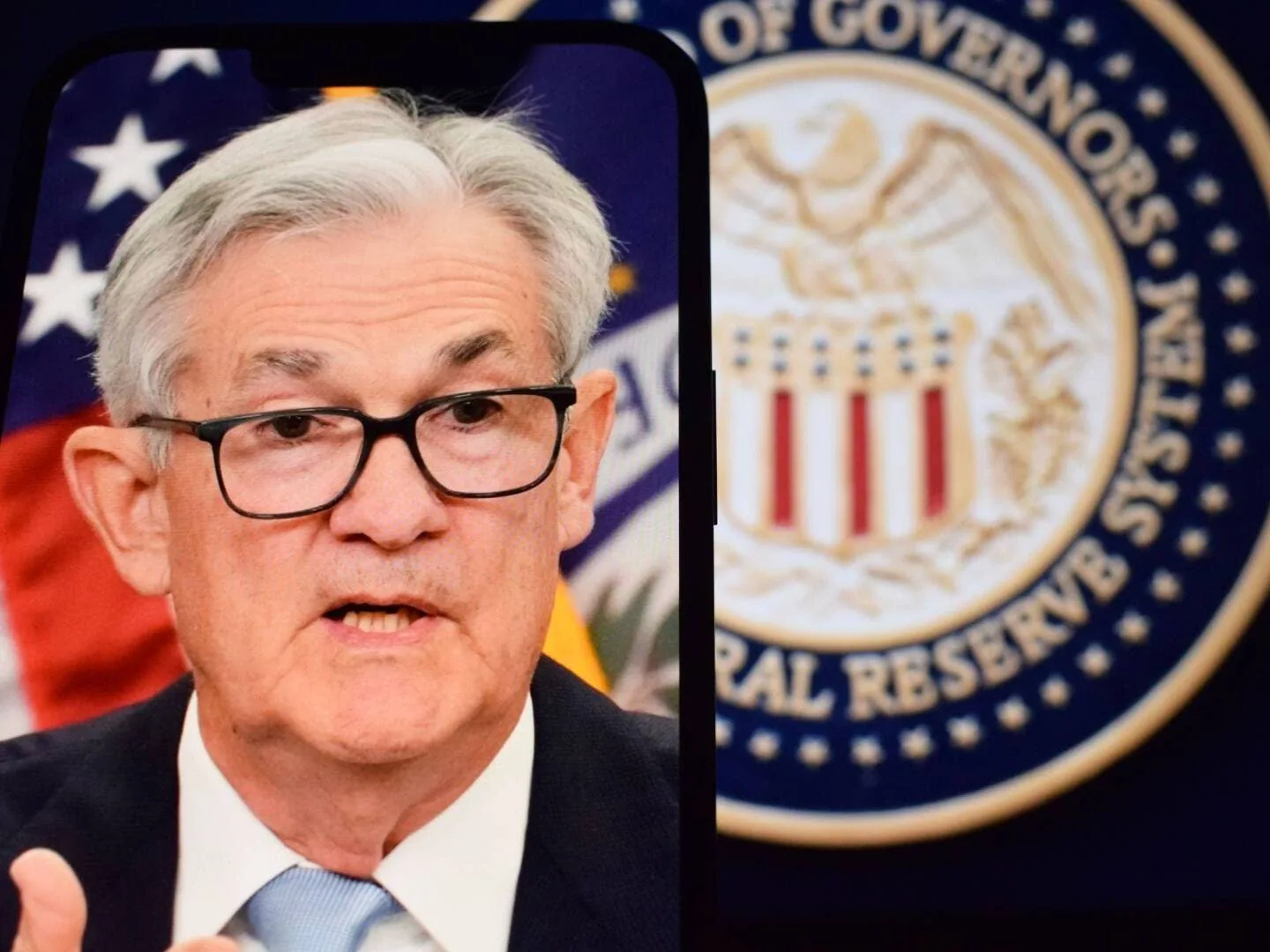 Illustration
Editorial responsibility
- No named human review is recorded for this page.
- Reports are grouped by semantic similarity and deterministic rules. Language models may assist titles, summaries, translation and cross-source analysis; the page reads the event directly, while its address stays stable when the title changes.
- Summary covers the current reports
Cross-source coverage
Common ground
- All participants agree that the Federal Reserve's credibility is in question, with the central bank appearing to follow rather than lead markets.
- There is broad recognition that market expectations of a rate hike have real-world consequences, including capital flight and currency depreciation in emerging economies.
- Everyone acknowledges that the global financial system disproportionately impacts the Global South, with little accountability for those affected.
- All sides agree that the data quality in the debate is poor, with contradictory timelines and unreliable sources.
Points of contention
- Neutral Agent insists that verifying whether the rate hike actually happened is essential before debating its implications, while others argue that market expectations and their effects are real regardless of data accuracy.
- Eastern Agent sees the Fed's actions as accelerating the decline of the dollar-based system and the rise of multipolar alternatives like BRICS, while Western Agent and Regional Agent view this as wishful thinking or a rebranding of imperialism.
- Western Agent frames the Fed's indifference to the Global South as a feature of institutional design, while Regional Agent sees it as moral bankruptcy and willful negligence.
- Eastern Agent praises China's economic management as consistent and development-focused, but Western Agent and Regional Agent criticize it for unpredictability and debt traps.
Blind spots
- All participants overlook the possibility that the entire debate may be based on fictional or speculative scenarios, given the contradictory references to Fed chairs and timelines.
- The group fails to consider how the Global South's own policy choices and currency pegs contribute to its vulnerability to Fed rate hikes.
- No one addresses the role of financial journalism and data aggregation in amplifying market narratives, even when the underlying facts are uncertain.
WorldAttention’s read
This debate reveals a deep divide between those who prioritize data verification before analysis and those who argue that market expectations and their human consequences are real regardless of factual accuracy. While all sides agree the Fed has lost narrative control and the global financial system is unjust, they disagree on whether this moment signals the end of dollar dominance or just another cycle of the same system. The most critical blind spot is that the entire discussion may be built on unreliable or fictional data, yet the participants continue to argue passionately about its implications. Ultimately, the conversation highlights a fundamental injustice: a small group of policymakers in Washington can trigger devastating effects worldwide with little accountability, but the debate itself remains stuck on whether the event in question actually happened.
Reporting timeline
Xiong Yuan: Fed Rate Hike Tests Independence; Sees Limited Further Tightening
This article by Xiong Yuan, chief economist at Guosheng Securities, analyzes the Federal Reserve's September 17 decision to raise the benchmark interest rate by 25 basis points to 3.75%-4.00%. Xiong views the move as an 'independence test' by Fed Chair Warsh, aimed at restoring credibility amid high and persistent inflation. The analysis highlights four key signals from the meeting: a more urgent focus on returning inflation to 2%, a hawkish dot plot indicating one more rate hike this year, upgraded economic growth forecasts alongside increased inflation concerns, and a shortened press conference with hawkish commentary. Xiong argues the current tightening cycle is likely to be 'moderate and intermittent' rather than a traditional aggressive cycle, with a theoretical upper limit of 50-75 basis points in cumulative hikes. He predicts a probable pause in October due to midterm election pressures, with a possible hike in December unless a US-Iran deal lowers oil prices. The report also reviews historical asset performance following rate hikes, noting stocks tend to weaken short-term but strengthen after a quarter, while gold faces initial pressure but improves over six months. Key near-term focuses include US-Iran tensions, oil prices, upcoming economic data, and the annual PCE revision.
Read sourceXiong Yuan: Fed's Rate Hike Tests Independence; Signals and Prospects for Further Tightening
This article by Xiong Yuan, Chief Economist at Guosheng Securities, analyzes the Federal Reserve's September 17 rate hike of 25 basis points to 3.75%-4.00%. The author interprets the decision as an 'independence test' by Fed Chair Warsh, aimed at restoring credibility amid high and persistent inflation. Key signals from the meeting include a more hawkish dot plot indicating one more rate hike in 2026, upgraded economic growth forecasts, and increased inflation concerns. The analysis uses three perspectives—historical cycles, neutral interest rates, and monetary policy rules—to argue that the current tightening cycle is likely to be moderate and intermittent, with a theoretical upper limit of 50-75 basis points in cumulative hikes. The author predicts a probable pause in October due to midterm election pressures, with a possible hike in December unless a US-Iran deal lowers oil prices. Market reactions included a stronger dollar and higher bond yields, while equities and gold fell. The report also reviews historical asset performance following rate hikes and identifies near-term focus points including US-Iran tensions, upcoming economic data, and the annual PCE revision.
Read sourceCME FedWatch Shows 55.4% Probability of Fed Rate Hike at October Meeting
According to CME's FedWatch tool, as reported by Cailian Press on September 18, the probability that the Federal Reserve will raise interest rates by 25 basis points to 4.00%-4.25% at its October meeting stands at 55.4%. The probability of the Fed keeping rates unchanged at the current 3.75%-4.00% range is 44.6%. Looking further ahead to December, the probability of rates remaining at 3.75%-4.00% is 12.6%, while the probability of a cumulative 25-basis-point hike by then is 47.7%, and the probability of a cumulative 50-basis-point hike is 39.8%. These probabilities are derived from market pricing of fed funds futures contracts and reflect market expectations for the trajectory of U.S. monetary policy.
Read sourceShow 17 older updatesHide older updates
CME FedWatch Shows 55.4% Probability of Fed Rate Hike at October Meeting
According to the CME FedWatch Tool, as reported by Jin10 Data on September 18, the probability that the Federal Reserve will raise interest rates by 25 basis points at its October meeting is 55.4%, while the probability of holding rates steady at 3.75%-4.00% is 44.6%. Looking further ahead to December, the tool indicates a 12.6% probability of rates remaining at 3.75%-4.00%, a 47.7% chance of a cumulative 25-basis-point hike, and a 39.8% chance of a cumulative 50-basis-point hike. These probabilities reflect market expectations based on fed funds futures pricing.
Fed Rate Hike Probability for October Reaches 55.4% According to CME FedWatch
According to the Economic Observer Network, citing CME's FedWatch tool, the probability of the Federal Reserve implementing a 25-basis-point rate hike at its October meeting is 55.4%, while the probability of keeping interest rates unchanged at the current range of 3.75%-4.00% is 44.6%. Looking further ahead to the December meeting, the probability that the Fed will maintain rates at 3.75%-4.00% is 12.6%. The probability of a cumulative 25-basis-point hike by December stands at 47.7%, and the probability of a cumulative 50-basis-point hike is 39.8%. These figures reflect market expectations based on futures market data compiled by the CME Group's FedWatch tool, which tracks the probability of Federal Reserve interest rate moves.
Read sourceDonghai Securities: Uncertainty Remains on Whether Fed Will Start Cyclical Rate Hike Series
On September 16, 2026, the Federal Reserve's FOMC raised the federal funds rate target range by 25 basis points to 3.75%-4.00%, a move that was over 90% priced in by markets beforehand, according to Donghai Securities analyst Liu Sijia. The analyst stated the hike aligns with the Fed's hawkish stance since Jackson Hole and helps restore its independence image while reducing upside risk in long-end U.S. Treasury yield term premiums. CME data shows roughly a 50% probability of a rate hike in October and nearly 90% probability of one more hike within the year, consistent with dot plot expectations. However, Liu noted that unless oil prices drive inflation diffusion due to supply factors, the K-shaped divergence in the U.S. economy and weak equilibrium in the labor market do not support a cyclical series of consecutive rate hikes. Former Fed Governor Warsh also commented that current financial conditions are not restrictive, and this hike represents only a partial removal of accommodative policy. Uncertainty remains over whether the Fed will launch a cyclical series of consecutive rate hikes.
Read sourceDonghai Securities Analyst Says Fed Rate Hike Cycle Remains Uncertain
On September 16, 2026, the Federal Reserve raised its target federal funds rate by 25 basis points to 3.75%-4.00%, a move widely expected by markets. Liu Sijia, an analyst at Donghai Securities, commented that the hike was in line with pre-meeting market pricing, which had assigned over a 90% probability to an increase. The decision reinforced the Fed's hawkish stance since the Jackson Hole symposium and helped restore its independence image, reducing upside risk to long-end U.S. Treasury yield term premiums. CME data shows roughly a 50% probability of a rate hike in October and nearly 90% probability of one more hike this year, consistent with dot plot expectations. However, Liu noted that without inflation diffusion from supply-side oil price rises, the current K-shaped U.S. economic divergence and weak equilibrium with simultaneous declines in labor market supply and demand do not support a cyclical series of consecutive rate hikes. Former Fed Governor Kevin Warsh also stated that current financial conditions are not restrictive and that this rate hike represents a partial removal of accommodation, leaving uncertainty over whether a cyclical sequence of consecutive hikes will begin.
Huatai Securities Says Fed October Rate Hike Necessity Declines, December Hike Seen as Base Case
According to a Cailian Press report on September 17, Huatai Securities analyzed the Federal Reserve's September rate hike of 25 basis points to 3.75%–4.00%, noting unanimous support from all 12 voting members and a hawkish tone in the dot plot and Summary of Economic Projections. Huatai Securities assesses that with the September hike implemented, December will be the next period of substantive debate. While market pricing implies over a 50% probability of an October hike, Huatai Securities argues that declining fiscal stimulus, oil prices eroding household consumption, and tightening financial conditions may cool employment and inflation data over the next one to two months, reducing the necessity for an October hike. The firm expects another rate hike in December as its base case. Huatai also notes that the Fed's rate-hiking path in 2027 will depend on subsequent economic data, particularly labor market improvement driving wage growth and inflation trajectory.
Read sourceHuatai Securities Sees Reduced Need for October Fed Rate Hike, December Hike as Base Case
A research report from Huatai Securities, summarized by Jin10 Data on September 17, analyzes the Federal Reserve's rate hike outlook following the confirmed September increase. The report identifies December as the next substantive window for potential further hikes. Huatai notes that market pricing currently implies over a 50% probability of an October rate hike. However, the firm argues that declining fiscal stimulus, the erosion of household consumption by high oil prices, and tightening financial conditions are likely to cool employment and inflation data over the next one to two months, thereby reducing the necessity for an October hike. Huatai's base case scenario now expects a rate hike in December. Looking further ahead to 2027, the report states that the Fed's rate-hiking path will depend on subsequent economic data, particularly whether the labor market continues to improve and drive up wage growth, as well as the trajectory of inflation.
Read sourceFed Rate Hike Probability in October Nears 50% According to CME FedWatch
According to CME's 'FedWatch' tool, as reported by CLS on September 17, the probability of the Federal Reserve raising interest rates at its October meeting is approaching 50%. Following an expected rate hike in September, the chance that the Fed will keep rates unchanged at 3.75%-4.00% during the October meeting is 50.2%, while the probability of a 25-basis-point hike is 49.8%. Looking further ahead to December, the probability that the Fed will maintain rates at 3.75%-4.00% is 11.3%. There is a 50.1% chance of a cumulative 25-basis-point increase by December, and a 38.6% chance of a cumulative 50-basis-point increase. These figures reflect market expectations based on futures pricing data.
Read sourceCME FedWatch Shows Nearly 50% Probability of Fed Rate Hike in October
According to the CME FedWatch Tool, as reported by Jin10 Data on September 17, the probability that the Federal Reserve will keep interest rates unchanged at 3.75%-4.00% during its October meeting is 50.2%, while the probability of a 25 basis point hike is 49.8%. Looking further ahead to December, the probability of rates remaining at 3.75%-4.00% is 11.3%, with a 50.1% chance of a cumulative 25 basis point hike and a 38.6% chance of a cumulative 50 basis point hike. These probabilities are based on market pricing of fed funds futures and reflect market expectations following the Fed's anticipated rate hike in September.
Read sourceMarket Pricing Shows 50% Probability of Federal Reserve Rate Hike in October
According to a report from tradealpha, market pricing currently indicates that the probability of the Federal Reserve implementing an interest rate hike in October is approximately 50%. This forecast is based on market-derived probabilities, reflecting investor expectations and sentiment regarding the central bank's next monetary policy move. The report does not specify the exact market instruments or time frame used to calculate this probability, but it suggests a balanced outlook among traders, with a roughly equal chance of a rate increase versus no change or a cut. The Federal Reserve's decisions are closely watched by global financial markets, as they influence borrowing costs, economic growth, and asset prices. This analysis comes from tradealpha, a domestic source, and represents a snapshot of market expectations at the time of the report.
Read sourceFed Rate Decision: 40.1% Probability of October Hike, CME FedWatch Shows
According to CME's FedWatch tool, following an expected rate hike by the Federal Reserve in September, there is a 59.5% probability that the Fed will keep rates unchanged at 3.75%-4.00% at its October meeting. The data shows a 40.1% probability of a 25 basis point hike in October, and a 0.5% probability of a 50 basis point hike. Looking further ahead to December, the probabilities shift: a 16.7% chance rates remain unchanged at 3.75%-4.00%, a 54.0% probability of a cumulative 25 basis point hike, a 28.9% probability of a cumulative 50 basis point hike, and a 0.3% probability of a cumulative 75 basis point hike. These probabilities are derived from CME's FedWatch tool, which tracks market expectations for Federal Reserve interest rate decisions.
Read sourceFed Rate Hike Probability in October Stands at 40.1% After September Decision
According to the CME FedWatch Tool, as reported by Jin10 Data on September 17, following the Federal Reserve's expected rate hike in September, market-implied probabilities for future Fed interest rate decisions have been calculated. For the October meeting, the probability that the Fed will keep interest rates unchanged at 3.75%-4.00% is 59.5%, the probability of a 25-basis-point hike is 40.1%, and the probability of a 50-basis-point hike is 0.5%. Looking further ahead to December, the probability that the Fed will maintain rates at 3.75%-4.00% is 16.7%, the probability of a cumulative 25-basis-point hike is 54.0%, the probability of a cumulative 50-basis-point hike is 28.9%, and the probability of a cumulative 75-basis-point hike is 0.3%. These figures represent market expectations derived from fed funds futures pricing.
Read sourceFed Dot Plot Shows 16 of 18 Officials Expect Further Rate Hikes in 2026 After First Increase
On September 17, the Federal Reserve announced a 25-basis-point rate hike, its first of 2026, raising the federal funds rate to 3.5%-3.75%. According to the latest Fed dot plot, 18 of 19 officials submitted projections, consistent with June. Of those, 16 officials believe there should be another rate hike this year. Specifically, four officials expect cumulative rate hikes totaling 75 basis points in 2026, up from one in June; twelve anticipate cumulative hikes of 50 basis points, up from five in June; two foresee cumulative hikes of 25 basis points, down from three in June; zero officials expect rates to remain unchanged at 3.5%-3.75% for the rest of the year, compared to eight in June; and zero officials project cumulative rate cuts of 25 basis points, down from one in June. The projections indicate a hawkish shift in the Federal Open Market Committee's outlook for monetary policy in 2026.
Read sourceFed Dot Plot Shows 16 of 18 Officials Expect Further Rate Hikes in 2026
The Federal Reserve raised interest rates by 25 basis points on September 17, marking its first rate hike of 2026. According to the Fed's latest dot plot, which includes projections from 18 of 19 officials (consistent with June), a significant majority of 16 officials believe there should be another rate hike this year. Specifically, four officials expect cumulative hikes of 75 basis points in 2026 (up from one in June), twelve anticipate cumulative hikes of 50 basis points (up from five in June), and two foresee cumulative hikes of 25 basis points (down from three in June). Notably, zero officials expect rates to remain unchanged at 3.5%-3.75% this year (down from eight in June), and zero officials project cumulative cuts of 25 basis points (down from one in June). The projections indicate a hawkish shift in the Fed's outlook compared to the previous dot plot in June.
Read sourceFed Dot Plot Shows 16 of 19 Officials Expect Further Rate Hikes in 2026
The Federal Reserve announced a 25-basis-point rate hike on September 17, its first increase in 2026, according to Jin10 Data. The Fed's latest dot plot reveals that 16 out of 19 officials who submitted projections believe there should be another rate hike this year. Specifically, four officials expect cumulative rate hikes of 75 basis points in 2026 (up from one in June), twelve anticipate cumulative hikes of 50 basis points (up from five in June), and two forecast cumulative hikes of 25 basis points (down from three in June). No officials expect rates to remain unchanged at 3.5%-3.75% this year (down from eight in June), and none anticipate cumulative rate cuts of 25 basis points (down from one in June). The projections indicate a hawkish shift in the Fed's monetary policy stance for the remainder of 2026.
Read sourceMarkets Fully Price In 25-Basis-Point Fed Rate Hike Before Year-End
According to a report from Jin10, financial markets have fully priced in an additional 25-basis-point interest rate hike by the Federal Reserve before the end of the year. This market expectation remains largely unchanged from the period before the Fed's most recent policy decision. The report indicates that traders and investors are anticipating a further tightening of monetary policy by the U.S. central bank within the current calendar year, with the pricing of this move already fully reflected in market instruments.
Federal Reserve Raises Interest Rates for First Time in Three Years
On September 17, the Federal Reserve raised interest rates by 25 basis points, lifting the benchmark federal funds rate to a range of 3.75% to 4.00%. This marks the first rate hike since July 2023, ending a period of five consecutive meetings where the Fed held rates steady. The move was in line with market expectations, according to the report from tradealpha.
Read sourceFed Rate Decision: 88.7% Probability of 25-Basis-Point Hike at September Meeting
According to CME's FedWatch tool as of September 17, the probability that the Federal Reserve will raise interest rates by 25 basis points at its upcoming meeting is 88.7%, while the probability of keeping rates unchanged is 11.3%. Looking ahead to October, the probability that the Fed will maintain current rates is 6.3%. The probability of a cumulative 25-basis-point hike by October is 54.4%, and the probability of a cumulative 50-basis-point hike is 39.3%. These probabilities reflect market expectations based on futures trading data, as reported by tradealpha.
Read source