Blue Origin Valuation Reaches $140 Billion in First External Funding Round
Blue Origin, Jeff Bezos' space company, has raised $10 billion in its first-ever external funding round, achieving a $140 billion valuation. The round is oversubscribed, with Bezos personally contributing $2 billion, bringing his total investment to $30 billion since 2000. The company projects revenue growth from $800 million in 2025 to over $30 billion by 2030, driven by rocket launches, satellite communications, and AI satellite services. The funding marks a shift from sole reliance on Bezos to broader market financing.
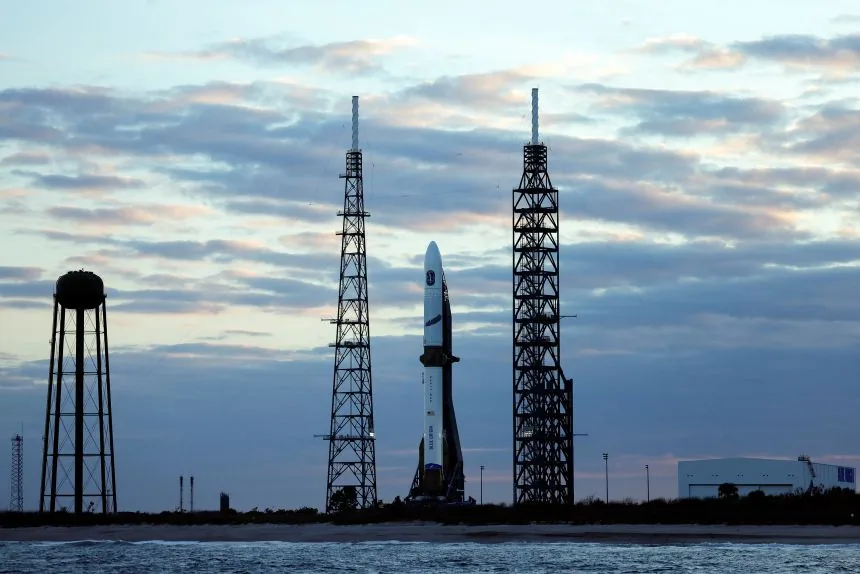 Reference image
Editorial responsibility
- No named human review is recorded for this page.
- Reports are grouped by semantic similarity and deterministic rules. Language models may assist titles, summaries, translation and cross-source analysis; the page reads the event directly, while its address stays stable when the title changes.
- Summary covers the current reports
Cross-source coverage
Common ground
- The $140 billion Blue Origin valuation is a symptom of deeper governance failures, not just a market signal.
- Current space governance institutions like the ITU and UNCOPUOS are underfunded and structurally biased toward wealthy nations and corporations.
- The Global South lacks meaningful input into space rules and benefits from privatized space infrastructure on unequal terms.
- The US government's single-provider bottleneck in heavy launch is a policy failure that drives the valuation.
- Democratic oversight of space governance is critically weak, allowing a handful of actors to shape humanity's future in space.
Points of contention
- Whether the valuation is primarily a rational market bet on redundancy or a sign of a rigged system favoring billionaires.
- Whether the ITU's first-come, first-served system is a functional governance mechanism or a captured tool for wealthy actors.
- Whether private space investment inherently creates dependency for the Global South or can deliver benefits through proper regulation.
- Whether the core problem is wealth concentration and tax policy or the lack of international capacity-building for poorer nations.
- Whether the Pentagon's need for a second supplier justifies privatizing a global commons or is a separate issue from space governance.
Blind spots
- All participants initially underestimated how deeply the valuation is tied to institutional and policy failures, not just market logic or billionaire egos.
- The debate overlooked the role of public space agencies like NASA and ESA in shaping the current privatization landscape.
- There was insufficient discussion of concrete solutions, such as how to strengthen the ITU or create equitable data-sharing agreements.
- The potential for new technologies or alternative governance models (e.g., international cooperatives) to bypass billionaire control was not explored.
- The specific impact on non-space sectors, like agriculture or disaster response in the Global South, was mentioned but not deeply analyzed.
WorldAttention’s read
This debate revealed that Blue Origin's $140 billion valuation is not just about rockets or billionaire ambition—it's a symptom of a broken system where democratic institutions have failed to govern space as a global commons. The US government created a single-provider bottleneck in heavy launch by underfunding its own capabilities and outsourcing to SpaceX, and investors are betting on a premium to fix that. But the deeper issue is that space governance bodies like the ITU and UNCOPUOS are underfunded and structurally biased toward wealthy nations and corporations, leaving the Global South as a customer rather than a partner. All sides agree that the real fight isn't about which billionaire wins, but about building democratic control over space—strengthening international institutions, ensuring equitable access to orbital slots and data, and giving every nation a real seat at the table. Until that happens, every benefit from privatized space risks becoming a new form of dependency, and the $140 billion is just a price tag on our collective failure to act.
Reporting timeline
Blue Origin CEO Says First External Funding Round Oversubscribed, Attracts Strong Investor Interest
Blue Origin CEO Dave Limp stated at the Trump administration's 'Hello, USA' tech summit in Washington D.C. that the company's first-ever external funding round has not yet closed but is attracting significant investor interest, describing it as 'oversubscribed.' Limp expressed surprise at the high level of investor acceptance of the space industry, noting that investors recognize the near-infinite potential of commercial activities in space, which he said explains the round's success. The Wall Street Journal reported last week that the company has raised $10 billion at a $140 billion valuation, with founder Jeff Bezos contributing $2 billion in this round and having invested a cumulative $30 billion since the company's founding in 2000. Limp did not confirm the final amount or Bezos's specific investment.
Bezos Invests $30 Billion in Blue Origin, Valuing Space Firm at $140 Billion
Jeff Bezos has invested a total of $30 billion in Blue Origin since founding the company in 2000, including a recent $2 billion injection, according to disclosed documents. The investment has helped Blue Origin grow into a major space enterprise with about 15,000 employees. The $2 billion commitment is part of Blue Origin's first external funding round, which has raised $10 billion with oversubscription, valuing the company at $140 billion. Bezos, with a net worth of $275 billion as of late September, funds Blue Origin by selling Amazon stock. The company, which had $800 million in revenue in 2025, projects $1.4 billion in revenue this year and over $30 billion by 2030, partly from satellite communications and rocket launches. Blue Origin faces competition from SpaceX and others, but aims to close the gap with its New Glenn rocket. CEO Dave Limp has focused on accelerating mission execution and technology development. Bezos stated that the space industry has room for multiple successful companies.
Read sourceBezos Invests $30 Billion in Blue Origin; Company Valued at $140 Billion
According to a report from Tencent Stock on September 25, Amazon founder Jeff Bezos has invested approximately $30 billion in Blue Origin since founding the company in 2000, focusing on rockets, satellite communications, and space business. The Wall Street Journal reviewed documents showing Blue Origin is conducting its first external investor funding round, having raised about $10 billion, giving the company a valuation of $140 billion. Blue Origin employs about 15,000 people and plans to significantly increase commercial revenue. Company documents project 2025 revenue at about $800 million, rising to $1.4 billion in 2026, and exceeding $30 billion by 2030. Future growth is expected to rely on rocket launches, satellite communications, and AI satellite business. The New Glenn heavy reusable rocket is seen as a key project to catch up with SpaceX in the commercial space sector.
Read sourceShow 17 older updatesHide older updates
Bezos Invests $30 Billion in Blue Origin; Company Valued at $140 Billion
According to a September 25 report citing documents reviewed by the Wall Street Journal, Amazon founder Jeff Bezos has invested approximately $30 billion in Blue Origin since founding the company in 2000. The space company, which develops rockets, satellite communications, and space business, is currently conducting its first external fundraising round, having raised about $10 billion at a valuation of $140 billion. Blue Origin employs about 15,000 people and plans to significantly increase commercial revenue. Company documents show 2025 revenue of about $800 million, with a forecast of $1.4 billion in 2026 and over $30 billion by 2030. Future growth is expected to come from rocket launches, satellite communications, and AI satellite business. The New Glenn heavy reusable rocket is seen as a key project to catch up with SpaceX in the commercial space sector.
Read sourceBlue Origin Valuation Hits $140 Billion in First External Funding Round, Report Says
According to a report from Caixin, Blue Origin, the rocket company founded by Jeff Bezos, has raised $10 billion in its first-ever external funding round, pushing its valuation to $140 billion. The round is oversubscribed and may exceed the initial $10 billion target. Bezos personally invested $2 billion in this round, bringing his total investment in the company to $30 billion. The article, citing reports, reveals Blue Origin's financial targets: approximately $800 million in revenue for 2025, $1.4 billion for 2026, and a goal of over $30 billion annually by 2030. Much of this growth is expected from rocket launches, satellite internet, and planned AI satellite services. The company recently launched TeraWave, a satellite communications network with 5,408 satellites, with deployment starting in late 2027. However, Blue Origin faces a setback after a New Glenn rocket exploded during a static fire test on May 28, 2025, destroying the rocket and damaging the launch pad. The investigation traced the anomaly to a main oxygen valve on a BE-4 engine. The company aims to resume New Glenn flights by the end of 2025, but customers remain cautious about this timeline.
Read sourceBlue Origin Valuation Rises to $140 Billion in First External Funding Round
Blue Origin, the rocket company founded by Jeff Bezos, has raised $10 billion in its first external funding round, pushing its valuation to $140 billion, according to a report on September 25. The round is oversubscribed and may exceed the initial $10 billion target. Bezos personally invested $2 billion, bringing his total investment in the company to $30 billion. The article, citing reports, reveals Blue Origin's financial targets: $800 million in revenue for 2025, $1.4 billion for 2026, and a goal of over $30 billion annually by 2030, driven by rocket launches, satellite internet, and AI satellite services. The company is restructuring under CEO Dave Limp, pausing suborbital tourism flights to focus on NASA projects and key technologies. However, a static fire test explosion of its New Glenn rocket on May 28 damaged the launch pad and destroyed the rocket. An investigation traced the failure to a main oxygen valve on a BE-4 engine. Blue Origin aims to resume New Glenn flights by the end of 2025, but customer AST SpaceMobile remains cautious about that timeline.
Read sourceBlue Origin Valuation Reaches $140 Billion in First External Funding Round
Blue Origin, the rocket company founded by Jeff Bezos, has raised $100 billion in its first external funding round, pushing its valuation to $140 billion, according to reports. The round is oversubscribed and may exceed its initial target. Bezos personally invested $20 billion, bringing his total investment to $300 billion. The company disclosed financial targets, projecting 2025 revenue of $8 billion, 2026 revenue of $14 billion, and a goal of $300 billion in annual revenue by 2030, driven by rocket launches, satellite internet, and AI satellite services. Blue Origin is also restructuring, pausing its New Shepard suborbital flights for at least two years to focus on lunar landing capabilities and NASA contracts. However, the company faces a setback after a New Glenn rocket exploded during a static fire test in May, damaging the launch pad. An investigation traced the failure to a main oxygen valve on a BE-4 engine. Blue Origin aims to resume New Glenn flights by the end of 2025, but customers remain cautious about the timeline.
Read sourceBlue Origin Raises $10 Billion at $140 Billion Valuation to Challenge SpaceX
Blue Origin has completed its first external funding round, raising $10 billion at a company valuation of approximately $140 billion, according to a September 24 report by The Wall Street Journal cited by Wall Street News. Founder Jeff Bezos personally contributed an additional $2 billion in this round, bringing his total investment since the company's founding in 2000 to about $30 billion. The funding provides Blue Origin with capital to compete with SpaceX and supports an ambitious revenue growth plan. The company projects 2025 revenue of about $800 million, rising to $1.4 billion this year, and forecasts revenue exceeding $30 billion by 2030—a more than 37-fold increase. This growth is expected to come from rocket launch services, a satellite communications business that has yet to launch any equipment, and a planned AI satellite constellation. The report notes that Blue Origin's New Glenn heavy rocket program was paused after a May explosion at a Florida launch pad. The funding marks a shift from sole reliance on Bezos to broader market financing.
Blue Origin Raises $10 Billion at $140 Billion Valuation to Challenge SpaceX
Blue Origin has completed its first external funding round, raising $10 billion at a company valuation of approximately $140 billion, according to a September 24 report by The Wall Street Journal cited by Wall Street News. Founder Jeff Bezos personally contributed an additional $2 billion in this round, bringing his total investment since the company's founding in 2000 to about $30 billion. The funding provides a rare public valuation for the private space company and reveals aggressive financial projections: Blue Origin reported 2025 revenue of about $800 million, expects 2025 revenue to reach $1.4 billion, and forecasts revenue exceeding $30 billion by 2030. This growth is expected to come from rocket launch services, a satellite communications business that has not yet launched any equipment, and a planned AI satellite constellation. The capital will support Blue Origin's efforts to compete directly with Elon Musk's SpaceX, particularly through its reusable New Glenn heavy rocket, though operations were paused after a rocket explosion in May. The funding marks a shift from sole reliance on Bezos' funding to broader market-based financing.
Read sourceBlue Origin Raises $10 Billion at $140 Billion Valuation to Challenge SpaceX
Blue Origin has completed its first external funding round, raising $10 billion at a company valuation of approximately $140 billion, according to a September 24 report by The Wall Street Journal cited by Wall Street News. Founder Jeff Bezos personally contributed an additional $2 billion in this round, bringing his total investment since the company's founding in 2000 to about $30 billion. The funding provides Blue Origin with capital to compete with SpaceX and supports an ambitious revenue growth plan. The company projects 2025 revenue of $800 million, rising to $1.4 billion this year, and forecasts revenue exceeding $30 billion by 2030. This growth is expected to come from rocket launch services, a satellite communications business that has not yet launched any equipment, and a planned AI satellite constellation. The company's New Glenn heavy-lift rocket, which has completed three missions, is currently grounded after a May explosion at a Florida launch pad. The funding round marks a shift from sole reliance on Bezos to broader market-based financing.
Read sourceBlue Origin Raises $10 Billion at $140 Billion Valuation, Targets SpaceX Competition
Blue Origin has completed its first external funding round, raising $10 billion at a company valuation of approximately $140 billion, according to a Wall Street Journal report cited by 华尔街见闻. Founder Jeff Bezos contributed an additional $2 billion in this round, bringing his total investment since the company's founding in 2000 to about $30 billion. The funding provides Blue Origin with capital to challenge SpaceX across multiple fronts, including rocket launch services, satellite communications, and an AI satellite network. The company projects aggressive revenue growth: $800 million in 2025, $1.4 billion in 2026, and over $30 billion by 2030—a more than 37-fold increase. Key to this forecast is the New Glenn heavy-lift rocket, though operations were paused after a May explosion at a Florida launch pad. The funding marks a shift from sole reliance on Bezos to broader market-based financing.
Blue Origin Valuation Reaches $140 Billion in First External Funding Round
Blue Origin, Jeff Bezos' rocket company, has raised $100 billion in its first external funding round, pushing its valuation to $140 billion, according to reports on Friday. The round is oversubscribed and may exceed the initial $100 billion target. Bezos personally invested $20 billion, bringing his total investment to $300 billion. The company disclosed rare financial data: 2025 revenue of approximately $800 million, projected 2026 revenue of $1.4 billion, and a target of over $30 billion by 2030, driven by rocket launches, satellite internet, and AI satellite services. However, Blue Origin faces a setback after a New Glenn rocket exploded during a static fire test on May 28, 2026, destroying the rocket and damaging the launch pad. The cause was traced to a main oxygen valve in a BE-4 engine. CEO Dave Limp is restructuring operations, including pausing New Shepard flights for at least two years to focus on lunar lander development. The company aims to resume New Glenn flights by end of 2026, but customer AST SpaceMobile remains cautious about this timeline.
Read sourceBlue Origin Valuation Hits $140 Billion in First External Funding Round
Blue Origin, the rocket company founded by Jeff Bezos, has reached a valuation of $140 billion during its first-ever external funding round, which has raised $10 billion and is oversubscribed. Bezos personally invested $2 billion in this round, bringing his total investment to $30 billion. The company's financial targets were disclosed: 2025 revenue of approximately $800 million, 2026 revenue of about $1.4 billion, and a goal of $30 billion in annual revenue by 2030, driven by rocket launches, satellite internet, and AI satellite services. However, Blue Origin faces a major setback after a New Glenn rocket exploded during a static fire test on May 28, 2026, at Cape Canaveral. The investigation traced the anomaly to a main oxygen valve on a BE-4 engine. The company aims to resume New Glenn flights by the end of 2026, but customer AST SpaceMobile remains cautious about this timeline. Blue Origin has also suspended its New Shepard suborbital flights for at least two years to focus on lunar lander development.
Blue Origin Valuation Reaches $140 Billion in First External Funding Round
Blue Origin, the rocket company founded by Jeff Bezos, has reached a valuation of $140 billion during its first-ever external funding round, which has raised $10 billion and may exceed that target. Bezos personally invested $2 billion in this round, bringing his total investment to $30 billion. The company's 2025 revenue is approximately $800 million, with projections of $14 billion in 2026 and over $30 billion by 2030, driven by rocket launches, satellite internet, and AI satellite services. Blue Origin plans to deploy 5,408 TeraWave satellites starting in Q4 2027. However, the company faces a setback after a New Glenn rocket exploded during a static fire test on May 28, 2026, due to a BE-4 engine main oxygen valve failure. CEO Dave Limp has paused suborbital tourism flights for at least two years to focus on NASA projects and key technologies. The company aims to resume New Glenn flights by end of 2026, though customer AST SpaceMobile remains cautious about this timeline.
Jeff Bezos invested $30 billion in Blue Origin since 2000 to rival SpaceX
In an exclusive report, The Wall Street Journal reveals that Jeff Bezos has invested $30 billion in Blue Origin since its founding in 2000. This extraordinary financial commitment from the Amazon founder underscores his ambition to build a company that can compete directly with SpaceX in the commercial space industry. The investment figure highlights the scale of Bezos' personal dedication to Blue Origin, which has been developing rockets and spacecraft for orbital and lunar missions. The report positions Blue Origin as a key rival to Elon Musk's SpaceX, which has dominated the private space sector with its reusable rockets and Starlink satellite network. The $30 billion figure represents one of the largest personal investments in a single company by an individual founder.
Read sourceBezos Invests $30 Billion in Blue Origin; Company Valued at $140 Billion
According to a report from tradealpha citing documents reviewed by the Wall Street Journal, Amazon founder Jeff Bezos has invested approximately $30 billion into Blue Origin since founding the company in 2000. The space venture is currently conducting its first external funding round, having raised about $10 billion, giving it a valuation of $140 billion. Blue Origin employs around 15,000 people and plans to significantly increase commercial revenue. Company documents show 2025 revenue of about $800 million, projected to reach $1.4 billion in 2026 and exceed $30 billion by 2030. Future growth is expected to come from rocket launches, satellite communications, and AI satellite services. The New Glenn heavy-lift reusable rocket is seen as a key project to close the gap with SpaceX in the commercial space sector.
Read sourceBezos Invests $300 Billion in Blue Origin; Company Valued at $140 Billion
According to a report by 格隆汇 on September 25, citing documents reviewed by the Wall Street Journal, Amazon founder Jeff Bezos has invested approximately $300 billion in Blue Origin since founding the company in 2000. The investment has been used to develop rockets, satellite communications, and space business. Blue Origin is currently conducting its first external funding round, having raised about $10 billion, giving the company a valuation of $140 billion. The company employs around 15,000 people and plans to significantly increase commercial revenue. Company documents project 2025 revenue of about $800 million, rising to $1.4 billion in 2026, and potentially exceeding $30 billion by 2030. Future growth is expected to be driven by rocket launches, satellite communications, and AI satellite business. The New Glenn heavy reusable rocket is seen as a key project to catch up with SpaceX, with Blue Origin aiming to narrow the gap in the commercial space sector.
Read sourceBezos Invests $30 Billion in Blue Origin; Valuation Hits $140 Billion
According to a report from Jin10 Data on September 25, Amazon founder Jeff Bezos has invested approximately $30 billion into Blue Origin since founding the company in 2000, focusing on rockets, satellite communications, and space business. The Wall Street Journal reviewed documents showing Blue Origin is conducting its first external investor funding round, having raised about $10 billion, giving the company a valuation of $140 billion. Blue Origin employs around 15,000 people and plans to significantly increase commercial revenue. Company documents show 2025 revenue of about $800 million, projected to reach $1.4 billion in 2026, and exceed $30 billion by 2030. Future growth depends on rocket launches, satellite communications, and AI satellite business. The New Glenn heavy reusable rocket is seen as key to catching up with SpaceX. Blue Origin aims to narrow the gap with SpaceX in commercial spaceflight.
Read sourceBlue Origin Raises Over $10 Billion in First External Funding Round at $140 Billion Valuation
Blue Origin, the space company founded by Jeff Bezos, has completed its first round of external capital financing, raising over $100 billion (target $100 billion) at a $140 billion valuation, according to a Wall Street Journal report cited by tradealpha. Bezos personally contributed $2 billion to the round. Documents on the company's revenue show that Bezos has invested a total of $30 billion in Blue Origin since 2000. The company reported $800 million in revenue for 2025 and an estimated $1.4 billion in revenue so far in 2026. Blue Origin projects its revenue will exceed $30 billion by 2030.
Read sourceJeff Bezos Has Invested $30 Billion in Blue Origin Since 2000, WSJ Reports
According to a report by the Wall Street Journal, Jeff Bezos has invested a total of $30 billion in his space company, Blue Origin, since its founding in 2000. The figure, attributed to the Wall Street Journal by Chinese financial news outlet Jin10, highlights the significant personal financial commitment Bezos has made to the aerospace venture over more than two decades. Blue Origin competes with other private space firms, including Elon Musk's SpaceX, in the commercial spaceflight and satellite launch market. The investment sum underscores Bezos's long-term bet on space exploration and the development of reusable rocket technology.