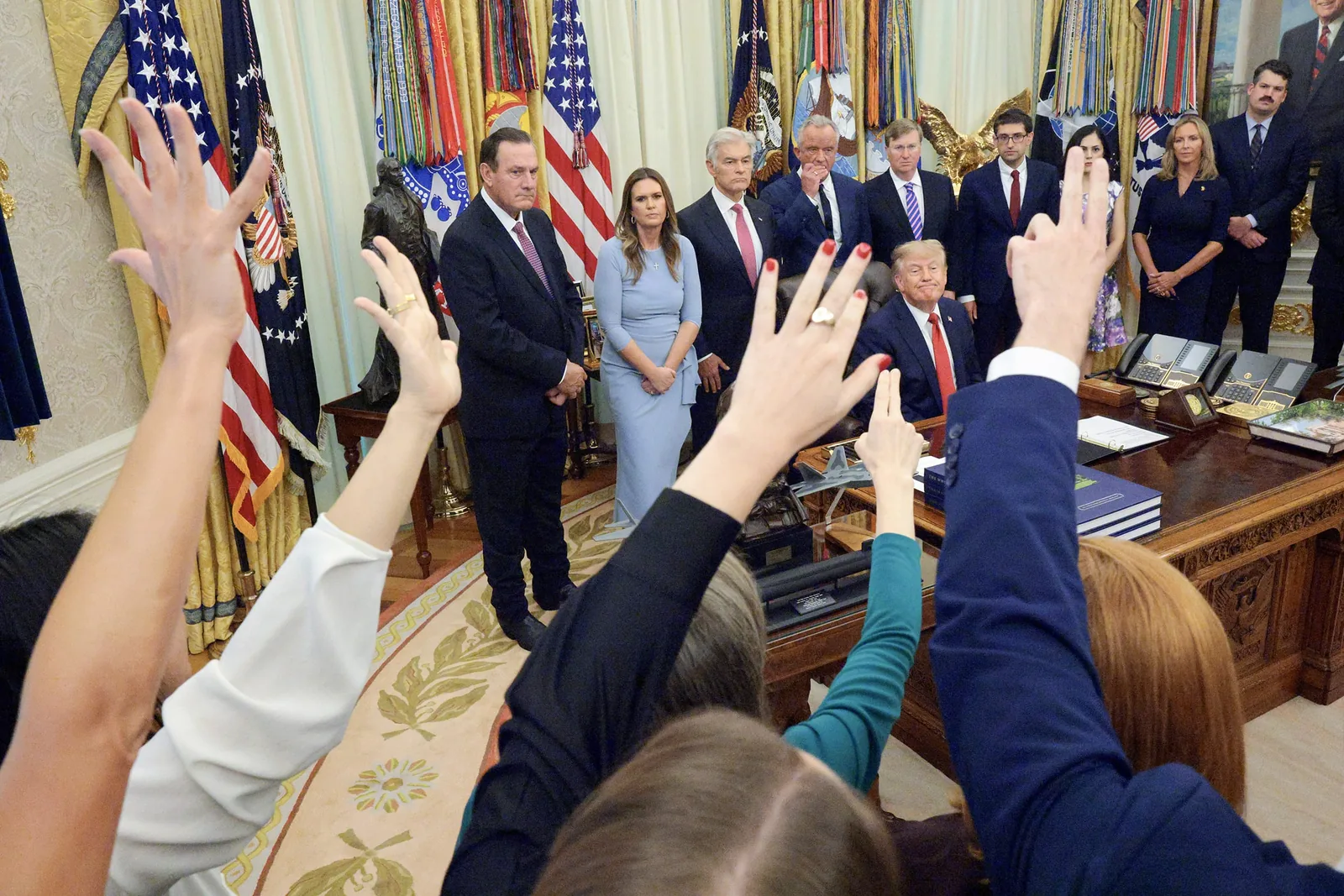
Army Secretary Dan Driscoll resigned effective September 3, 2026, following months of tension with Defense Secretary Pete Hegseth. Driscoll, who served since February 2025, championed acquisition reform including the FUZE program. His departure leaves the Army effectively leaderless after Hegseth fired the Army Chief of Staff in April. Hegseth is considering Pentagon spokesperson Sean Parnell as a replacement.
The Pentagon temporarily rescinded its newly published clinical guidance for a mandatory testosterone-deficiency screening policy for U.S. service members aged 30 and older, a U.S. official confirmed on Thursday. The guidance, posted on September 2, 2026, was removed the next day for updates, with interim guidance remaining in effect. The policy aimed to improve readiness by screening men and women for hormonal issues during annual health assessments.
The Defense Health Agency issued new guidance on September 2, 2026, requiring annual clinical screening for hormonal dysregulation in female service members during the Periodic Health Assessment. The directive addresses conditions like RED-S, perimenopause, and menopause, using validated screening tools. For women aged 35 and older with symptoms, providers must refer them to midlife-transition specialists or the DHA's Midlife Telehealth Hub. This expands on previous mandatory testosterone testing for male service members.
The Iran war escalated after U.S. strikes killed 18 people in Iran, including four at a wedding near the Strait of Hormuz, with dozens wounded. Iran retaliated with missile and drone attacks on U.S. assets in Bahrain, Jordan, Kuwait, and Iraq. The UN Secretary-General condemned the attacks and called for a ceasefire. Independent groups documented over 3,600 deaths in Iran since the conflict began, including 1,701 civilians, while the U.S. reported 18 military personnel killed.
A Department of Defense Inspector General audit published August 31, 2026, reveals the Pentagon’s Defense Health Agency failed to safeguard electronic health records of 25 senior officials and media figures. Of 2,600 users who accessed their records, 1,103 (42%) were not on an approved whitelist or watchlist, and none were investigated. The IG warns this may violate HIPAA and threaten national security.
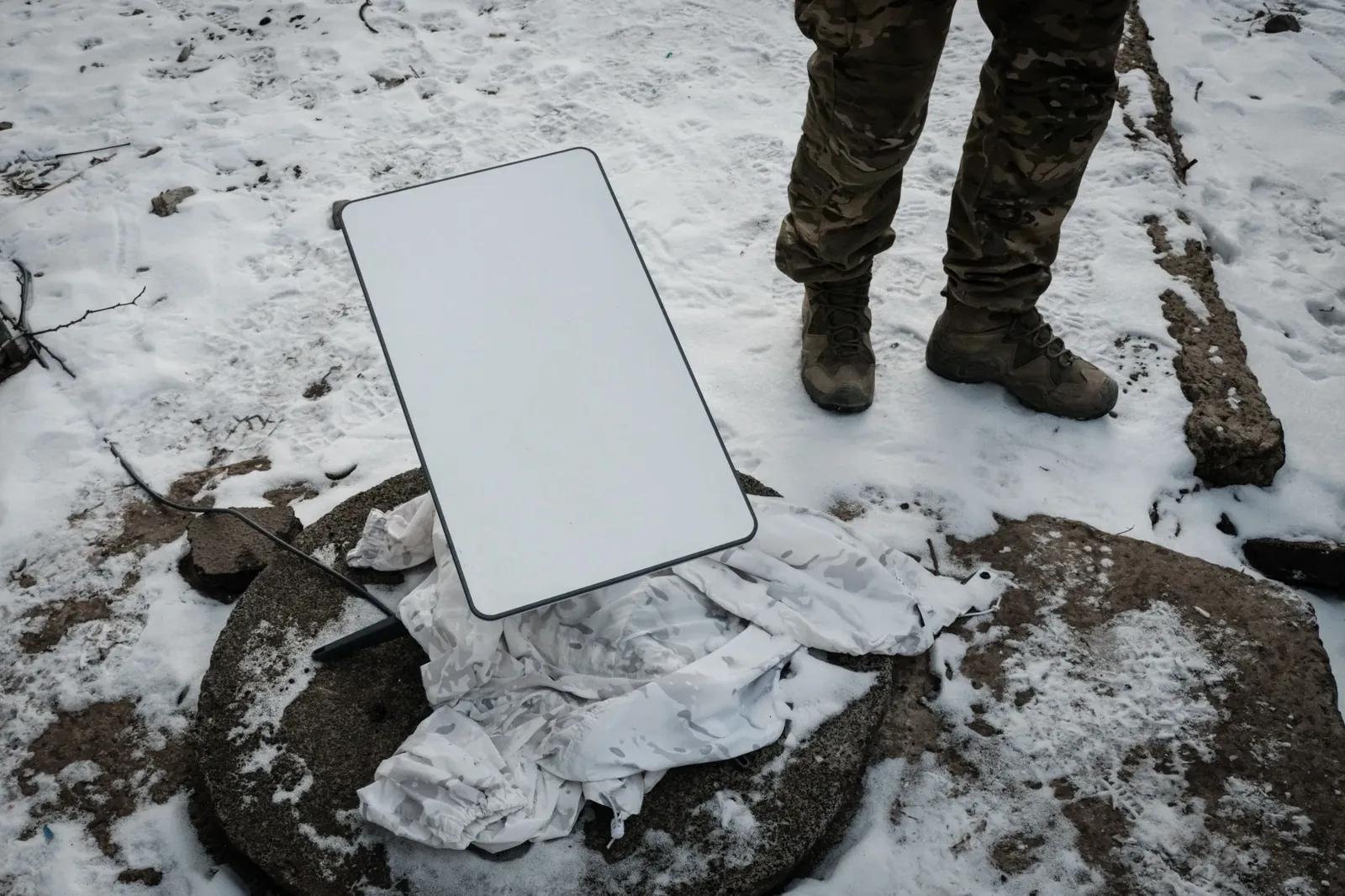
The U.S. Department of Defense launched OpenAI's ChatGPT Mil on its GenAI.mil platform on August 31, 2026, for work involving controlled unclassified information (CUI). Accredited at Impact Level 5, the platform also added Google Gemini and Starshield AI's Grok for Government. GenAI.mil has attracted over 1.7 million unique users in nine months and serves over 3 million personnel. The Navy and Marine Corps mandated transition by April 30. The Army's XVIII Airborne Corps used it to produce an exercise operations order in six weeks, down from six to nine months.
The U.S. Defense Department announced framework agreements with General Dynamics and Lockheed Martin to triple Patriot and quadruple THAAD interceptor production over seven-year contracts, subject to congressional funding. The surge follows severe stockpile depletion from conflicts with Iran and Ukraine, with a CSIS report estimating 65% of Patriot and 38% of THAAD interceptors expended. The diminished inventory reduces U.S. readiness against peer adversaries like China.
The U.S. Army has extended the deployment of roughly 2,000 soldiers from the 82nd Airborne Division in the Middle East to a full year, citing "operational requirements." The division, initially deployed in March amid escalating tensions, is part of a surge following the start of the Iran war, which has now lasted over six months with over 50,000 U.S. troops in the region. The extension affects headquarters, artillery, air defense, and aviation units.
A U.S. Air Force judge, Lt. Col. Michael Schrama, ordered Khalid Sheikh Mohammed, the alleged mastermind of the September 11, 2001 attacks, and three co-defendants to stand trial before a military tribunal at Guantanamo Bay, Cuba, starting June 5, 2028. The judge rejected a prosecution proposal for a January 2027 start, citing insufficient time for pretrial motions. The trial follows a 2024 plea deal revoked by then-Defense Secretary Lloyd Austin.
The Pentagon has removed all public reports from the independent Director, Operational Test & Evaluation (DOT&E) office, citing concerns that foreign adversaries could use AI to analyze vulnerabilities. Congressional leaders, including Sen. Elizabeth Warren and Rep. Donald Norcross, are demanding answers, citing legal obligations to publish the reports. The move follows a 74% staff cut and nearly 80% budget reduction ordered by Defense Secretary Pete Hegseth in May 2026, ahead of a proposed $1.5 trillion defense budget. Critics warn the cuts reduce oversight for unproven projects like the Golden Dome Missile Defense System, which could cost up to $4.4 trillion.
In late August 2026, the Pentagon confirmed refrigeration outages at seven U.S. military commissaries across the continental United States, including bases in California, New Mexico, Rhode Island, Arkansas, Wyoming, Georgia, and Arizona. The disruptions spoiled frozen food and limited sales to dry goods. Social media speculation suggests possible intentional interference with internet-connected refrigeration systems, but the Defense Department declined to confirm the cause or link between incidents. Technicians are working on repairs.
A federal judge in California ruled that the Pentagon’s attempt to blacklist AI company Anthropic violated the First Amendment, blocking the Department of Defense’s designation of the firm as a supply chain risk. The decision, a legal setback for the Trump administration, allows Anthropic to resume business with federal agencies. The case highlights tensions between national security measures and constitutional protections for technology companies.
The Pentagon under Defense Secretary Pete Hegseth is overhauling the military newspaper Stars and Stripes, removing its publisher and firing senior editors for insubordination, while installing an active-duty officer as deputy without consultation. Senate Democrats have launched a probe, citing threats to editorial independence. The moves are part of broader efforts to control military media coverage, restrict journalist access, and eliminate what the Pentagon calls "woke distractions," amid an unpopular overhaul and the ongoing war on Iran.
The US Army is disbanding its experimental drone battalion in Europe less than a year after its creation in November 2025, which was tasked with learning from Ukrainian drone operations. The battalion will revert to its airborne infantry mission after Exercise Saber Junction in August-September 2026. The decision aligns with Acting Chief of Staff Gen. LaNeve’s “Army Azimuth” roadmap, which prioritizes countering enemy stand-off weapons. Meanwhile, the Pentagon continues expanding drone capabilities, including a new multinational task force by US Central Command.
President Donald Trump signed a memorandum directing the U.S. Navy to replace the Electromagnetic Aircraft Launch System (EMALS) with older steam catapults on future Gerald R. Ford-class carriers, starting with the USS Doris Miller (CVN-81). The first three carriers retain EMALS. Trump has long criticized EMALS, despite Navy reports of higher launch rates and lower maintenance. Experts estimate the redesign will cost billions, cause delays, and face resistance from Navy officials and industry. Steam catapult production lines have been dormant for nearly 20 years.
On August 16-17, 2026, U.S. President Donald Trump ordered the Pentagon to significantly scale back joint military exercises with South Korea, citing Seoul’s refusal to help denuclearize Iran and the drills’ “hostile signal” to North Korea. Trump cited his good relationship with Kim Jong-un, despite North Korea’s recent missile tests and continued state of war. The 11-day exercise involving 18,000 South Korean troops was designed to boost readiness. The move shifts U.S.-South Korea defense ties and may open dialogue with Pyongyang.
The Pentagon declared the M18 and M17 handguns, military versions of the SIG Sauer P320, safe and reliable after a review prompted by a 2025 airman death from an alleged uncommanded discharge. Army officials traced all investigated incidents to the trigger being pulled, blaming online misinformation. The civilian P320 faces over 100 lawsuits linked to injuries and deaths, but military versions include a manual safety. Over 400,000 pistols are in service across U.S. armed forces.
The Pentagon, under Defense Secretary Pete Hegseth, revoked former Air Force Secretary Frank Kendall’s security clearance, alleging he disclosed classified information about Air Force One’s capabilities—specifically regarding a Qatari-donated Boeing 747—to media outlets. Kendall, who served under Biden, expressed bewilderment, claiming he avoided revealing classified details. The move continues the Trump administration’s pattern of stripping clearances from former Biden officials.
The U.S. military awarded RTX unit Raytheon a $22.9 billion, seven-year contract to boost Tomahawk cruise missile production from 60 to over 1,000 annually. The deal, announced by Acting Navy Secretary Hung Cao, aims to replenish depleted stocks after arms supplies to allies and use in the Iran conflict. It formalizes a February framework agreement and is part of broader Trump administration efforts to secure multi-year defense contracts, including for Patriot and THAAD systems.
Multiple sailors aboard the USS Abraham Lincoln have attempted to go overboard as the carrier’s deployment stretches beyond eight months with no return date. Families report exhaustion, rationed food, broken amenities, and fear of career repercussions. Over 200 family members met with acting Navy Secretary Hung Cao in San Diego. Vice Adm. Joseph Cahill acknowledged the strain, while Defense Secretary Pete Hegseth dismissed accounts as “fake news.” The Navy has not disclosed the number of self-harm incidents.
President Donald Trump announced on Truth Social that he ordered the Pentagon to substantially reduce joint military exercises with South Korea, citing his "very good relationship" with North Korean leader Kim Jong Un and Seoul's refusal to join U.S. actions against Iran. The annual Ulchi Freedom Shield exercise proceeded as planned with 46,500 troops. Experts criticized Trump's characterization, noting North Korea's expanding nuclear arsenal and missile tests. The move underscores deteriorating U.S.-South Korea relations under Trump, including tariffs and immigration raids, and may undermine deterrence on the Korean Peninsula.
On August 14, 2026, the Pentagon signed two seven-year framework agreements with Boeing and RTX to expand production of critical components for the Standard Missile-3 (SM-3), the U.S. Navy's primary ship-launched ballistic missile interceptor. The deals cover avionics and ejector assemblies for the SM-3 Block IB and Block IIA variants, used with the Aegis system. Demand surged after combat use in April 2024 against Iranian missiles and subsequent operations. A CSIS analysis estimated the SM-3 inventory at 414 as of December 2025, with wartime expenditures between 130 and 250 missiles, warning replenishment will take years.
The U.S. Marine Corps launched new service-level training at Twentynine Palms, California, teaching troops to counter small combat drones using standard infantry weapons like M27 rifles, shotguns, and grenade launchers, plus electronic anti-drone systems. The three-day exercise involved Marines from the 1st and 2nd Marine Divisions, simulating drone threats from 20 meters. This initiative, part of the Pentagon’s $1.1 billion Drone Dominance program, was accelerated by the war in Ukraine, where drones have caused heavy casualties. The Corps also established a robotics integration group and stockpiled specialized ammunition.
The U.S. Army designated Camp Grayling in Michigan and four other sites—including Dugway Proving Ground (Utah), Yuma Proving Ground (Arizona), Camp Shelby (Mississippi), and a site in Morocco—as national drone test ranges open to private industry. The initiative aims to accelerate drone and counter-drone technology development to compete with China, featuring year-round testing across multiple domains and a dedicated electromagnetic warfare test event simulating Ukraine war conditions. Companies can access ranges via an online portal without prior government partnerships.
The U.S. Department of Defense will launch a three-year pilot program in September 2026 to reimburse active-duty service members for cryopreserving sperm or eggs before deployment to hazardous zones or extended separation from partners. Mandated by the fiscal 2025 National Defense Authorization Act, the program covers up to $500/year for sperm and $10,000/year for egg preservation. Eligible troops include those receiving hazardous duty pay orders or separated from a partner for 180+ days. The DoD will study the program's cost, popularity, and impact on readiness.
On August 12, 2026, the Department of the Air Force announced an expedited reinstatement process for service members involuntarily separated in 2021 for refusing the COVID-19 vaccine. The new process runs medical certifications and board actions in parallel, cutting an average 30-day delay, and assigns dedicated case managers. Only about 3% of 8,700 eligible troops have opted to return. The program, extended until April 2027, follows a Pentagon directive and a January 2025 executive order.
The Pentagon awarded a $3.4 million grant to Rosalind Franklin University and Old Dominion University to develop a non-invasive urine test detecting biomarkers for bone-stress injuries in military recruits. Affecting up to 8% of recruits and costing the DoD $100 million annually, the four-year project aims to enable early diagnosis, reduce severe fractures, and improve readiness. Researchers will study recruit cohorts with gender-specific analyses, building on prior studies showing recruits are more prone to leg and pelvis fractures.
The Pentagon reduced religious self-identification codes for U.S. service members from over 200 to 30, consolidating many faiths into broader categories. The Marine Corps ordered personnel to update records by September 30, 2026. The change, part of Secretary of Defense Pete Hegseth’s overhaul of military religious programs, aims to help chaplains understand unit composition. Critics note it follows Hegseth’s removal of chaplain rank insignia and scrapping of the Army Spiritual Fitness Guide.
The U.S. Department of Defense awarded Lockheed Martin a record $58.6 billion contract to produce PAC-3 MSE interceptor missiles over seven years (2026-2032), aiming to triple production capacity by 2030. The deal, centered on Lockheed’s Camden, Arkansas plant, will add 650 jobs and follows a $35 billion THAAD contract. The Pentagon cited urgent demand due to stockpile depletion from conflicts in Ukraine and Iran, with fewer than 1,000 Patriot interceptors remaining. Lockheed is investing $8-9 billion to modernize over 20 U.S. facilities.
On August 10, 2026, in Manila, U.S. Undersecretary of Defense Elbridge Colby declared the U.S. is "digging in" to maintain a favorable balance of power in the Indo-Pacific, emphasizing a strategy of "deterrence by denial" along the First Island Chain. He called for allies to invest more in their own defense, seeking "partners, not protectorates," to counter concerns about U.S. reliability. The remarks follow a July confrontation at Second Thomas Shoal and precede a planned Xi Jinping visit to the U.S. Colby’s tour also includes Indonesia, Thailand, and Cambodia.
12 reports · 3 sources · Updated
Periodic recap
What changed for this subject in each tracking window — generated from matched events, delta-first.
→· 2 events in window
Pentagon developments this period centered on the rapid issuance and withdrawal of hormone screening policies for service members. The Defense Health Agency issued new guidance on September 2 expanding hormonal dysregulation screening to female troops, but the next day temporarily rescinded the previously published mandatory testosterone screening guidance for service members aged 30 and older, citing the need for updates. The two moves occurred in quick succession, indicating that related policies remain in flux.
The Defense Health Agency issued new guidance requiring annual hormonal dysregulation screening for female service members, with referral pathways for symptomatic women aged 35 and older.
The Pentagon temporarily rescinded the September 2 mandatory testosterone screening guidance for troops aged 30 and older the following day, stating it will be updated while interim guidance remains in effect.
Earlier recaps
→· 3 events in window
Pentagon developments this period centered on internal management gaps, AI deployment, and munitions production increases. An Inspector General audit revealed the Defense Health Agency failed to safeguard senior officials' health records, raising compliance and security concerns. Meanwhile, the GenAI.mil platform launched ChatGPT Mil and other tools, attracting over 1.7 million users and markedly accelerating military documentation processes. Additionally, the Pentagon signed framework agreements with defense contractors to significantly boost Patriot and THAAD interceptor production in response to stockpile depletion.
→· 3 events in window
Pentagon-related activity increased markedly this period, spanning a military trial order, a transparency dispute, and a senior leadership departure. A Guantanamo military judge ordered the 9/11 mastermind to stand trial in June 2028, rejecting prosecutors' request for an earlier date. Meanwhile, the Pentagon faced congressional scrutiny over the removal of public weapons-testing reports, and the Army Secretary resigned amid ongoing leadership turmoil.
→· 1 event in window
Pentagon-related developments this period were minimal, with only one indirectly connected event. Multiple US energy companies are advancing multibillion-dollar investments in Venezuela, while US officials discuss Venezuela's exit from OPEC. The direct link to the Pentagon remains unclear, though the matter may involve strategic shifts in geopolitics and energy security.
→· 1 event in window
Pentagon developments this period shifted to a domestic logistics incident. The Pentagon confirmed refrigeration outages at seven U.S. military commissaries across the continental United States, spoiling frozen food. Social media speculation suggests possible intentional interference with internet-connected refrigeration systems, but the Defense Department declined to confirm the cause or link between incidents.
→· 1 event in window
Pentagon developments shifted this period from military exercises to a domestic legal dispute. A federal judge blocked the Pentagon's attempt to blacklist AI company Anthropic, ruling the move violated the First Amendment. The decision marks a legal setback for the Trump administration, allowing the firm to resume business with federal agencies.
Tracked events
Events matched to this subject by the tracking pipeline, with signal scores.