Pentagon awards RTX $20.7 billion contract to nearly double AMRAAM missile production
The Pentagon awarded RTX (Raytheon) a contract potentially worth $20.7 billion on September 25, 2025, to produce Advanced Medium-Range Air-to-Air Missiles (AMRAAMs). The five-year contract with two optional years aims to nearly double production to record levels, following a February framework agreement targeting at least 1,900 missiles annually. The joint procurement by the U.S. Air Force, Navy, and allied nations is part of the Pentagon's Arsenal of Freedom campaign to rebuild munitions stockpiles. Congress has not yet fully funded the deal.
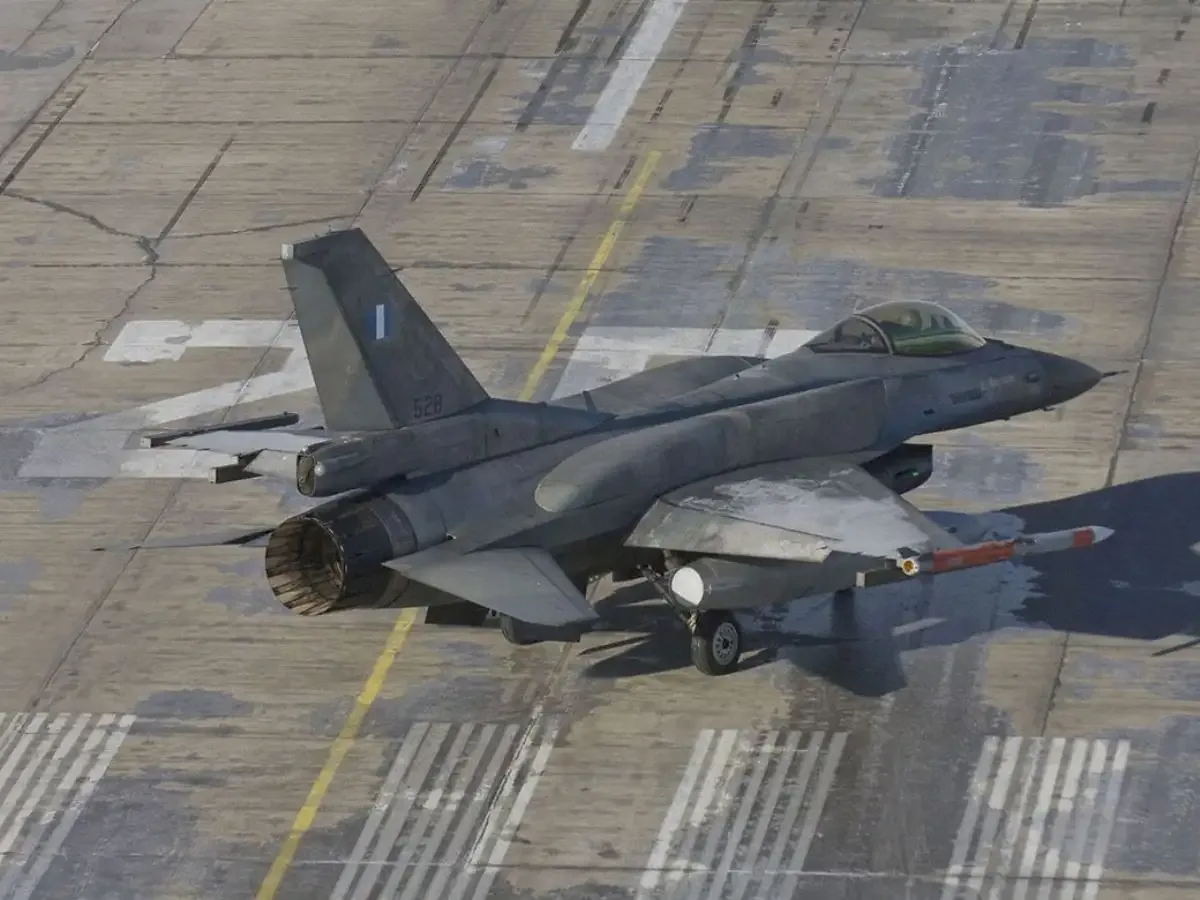 Reference image
Editorial responsibility
- No named human review is recorded for this page.
- Reports are grouped by semantic similarity and deterministic rules. Language models may assist titles, summaries, translation and cross-source analysis; the page reads the event directly, while its address stays stable when the title changes.
- Summary covers the current reports
Cross-source coverage
Common ground
- Both sides agree the $20.7 billion AMRAAM contract is a necessary response to depleted stockpiles and real threats like China's missile buildup.
- There is agreement that the supply chain is fragile, especially the single supplier for seeker components and rocket motors, which is a critical bottleneck.
- Both acknowledge that Congress hasn't fully funded the contract, creating uncertainty for production planning.
- Both agree the AMRAAM is a proven, effective system, but its 1990s design raises questions about long-term relevance.
- Both recognize that once production lines are built, they create political and economic constituencies that make them hard to shut down.
Points of contention
- The Neutral Agent sees the contract as a rational response to a clear threat, while the Western Agent views it as a panic buy driven by strategic mismanagement.
- The Western Agent argues the contract locks in a permanent production infrastructure that perpetuates conflict, but the Neutral Agent insists the threat drives production, not the other way around.
- The Neutral Agent calls air defense systems inherently defensive, while the Western Agent says they enable an offensive U.S. posture globally.
- The Western Agent claims the contract lacks transparency and accountability, but the Neutral Agent says unit costs are publicly available and exact quantities are withheld for operational security.
- The Neutral Agent believes the AIM-260 replacement will eventually shut down AMRAAM production, but the Western Agent argues the line will stay open for allied sales and upgrades.
Blind spots
- Neither side fully addresses whether the U.S. is buying the right missile for the Pacific theater, where longer-range and faster missiles may be needed against China's next-gen AAMs.
- The debate overlooks the role of diplomacy and de-escalation as alternatives to simply building more weapons.
- The potential for directed energy or electronic warfare to make AMRAAMs obsolete before the contract finishes is mentioned but not deeply explored.
- The political economy of jobs in swing states and how that locks in production is acknowledged but not fully integrated into the strategic analysis.
WorldAttention’s read
This $20.7 billion AMRAAM contract is a necessary but flawed response to real threats and depleted stockpiles. Both sides agree the supply chain is fragile, Congress hasn't fully funded it, and the missile's 1990s design may be outdated. The core disagreement is whether this is a rational move to counter China or a panic buy that locks in a permanent production infrastructure, making it harder to choose peace. The blind spots include whether we're buying the right missile for the Pacific, the lack of focus on diplomacy, and the risk of new technologies making AMRAAMs obsolete. Ultimately, this contract reflects institutional decay and political incentives as much as strategic need, and the real test will be whether the U.S. can transition to next-gen systems when the time comes.
Reporting timeline
Pentagon Awards RTX $20.7 Billion Contract for AMRAAM Missile Production
The Pentagon announced on September 28 a contract potentially worth $20.7 billion awarded to RTX (Raytheon) on September 25 to build Advanced Medium-Range Air-to-Air Missiles (AMRAAM). The five-year contract, with two optional years, aims to ramp up production of the AIM-120 missile used by U.S. Navy and Air Force aircraft and for ground-based interceptors like NASAMS. RTX stated the funding would accelerate AMRAAM production to record levels, following a February framework agreement to boost annual output to at least 1,900 missiles. The contract supplies the USAF, Navy, and potential foreign military sales. The article details three AMRAAM variants (B, C, D models), with the latest SIP III upgrade fielded in March 2024 and future SIP IV/V upgrades planned. The missile is used by 40 nations on 11 platforms including F-16, F-35, and Eurofighter Typhoon. The article also notes the AMRAAM's role in Ukraine's NASAMS air defense systems, with Ukraine operating more than 10 systems, and mentions Japan's plans to co-produce AMRAAMs.
Pentagon awards Raytheon up to $20.7 billion to nearly double AMRAAM production
The Defense Department has awarded Raytheon a multiyear contract worth up to $20.7 billion to build Advanced Medium-Range Air-to-Air Missiles (AMRAAMs), nearly doubling production. The five-year contract, which includes two option years, is part of the Pentagon's Arsenal of Freedom campaign to bolster weapons production. It was awarded Sept. 25 and announced Sept. 28, 2026, with RTX, Raytheon's parent company. The award is a joint buy by the Air Force, the Navy, and allies. Michael Duffey, under secretary of defense for acquisition and sustainment, said the award strengthens the ability to equip the Joint Force and allies with a proven air-to-air capability. The $20.7 billion ceiling dwarfs a previous $3.5 billion contract from July 2025. The Pentagon thanked Congress for multiyear procurement authority but noted Congress hasn't yet funded the full deal, which Reuters called provisional. Industry executives have warned contractors may hold off on investments until lawmakers act. The award comes as the Pentagon works to rebuild munitions stockpiles drawn down by the war with Iran. The contract follows five framework agreements Raytheon signed in February, which set long-term production targets. Neither the Pentagon nor RTX specified how many missiles the new contract buys. RTX said it nearly doubled production of AMRAAM and other munitions in 2025 compared with 2024 and is exploring international co-production. The Pentagon is also preparing to build AMRAAM's successor, the AIM-260 Joint Advanced Tactical Missile, via a framework deal with Lockheed Martin.
Read sourceJUST IN: Raytheon lands a $20,700,000,000.00 Pentagon contract to ramp AMRAAM missile production to record levels.
Raytheon has been awarded a $20.7 billion Pentagon contract to ramp up production of AMRAAM (Advanced Medium-Range Air-to-Air Missile) missiles to record levels. The contract, announced via a Polymarket post, represents a significant investment in U.S. defense capabilities, aiming to increase the stockpile of these critical air-to-air weapons. The exact timeline and production targets were not specified in the announcement, but the scale of the funding indicates a major expansion of manufacturing capacity for the missile system, which is used by the U.S. military and allied nations.
Read sourceShow 2 older updatesHide older updates
Pentagon Awards Raytheon $20.7 Billion Contract to Produce AMRAAM Missiles
The Pentagon has awarded a $20.7 billion contract to Raytheon, a subsidiary of RTX, for the production of Advanced Medium-Range Air-to-Air Missiles (AMRAAM). The contract, reported by tradealpha, represents a significant defense procurement deal. The AMRAAM is a key weapon system used by the U.S. military and allied forces for air combat. The award underscores ongoing U.S. investment in missile capabilities and defense readiness. No further details on delivery timelines or specific variants were provided in the report.
Read sourcePentagon Awards $20.7 Billion Contract to RTX's Raytheon for AMRAAM Missiles
The Pentagon has awarded a $20.7 billion contract to Raytheon, a subsidiary of RTX, for the production of Advanced Medium-Range Air-to-Air Missiles (AMRAAM). The contract, reported by financial data provider Jin10, represents a significant procurement action for the U.S. Department of Defense, ensuring continued production of the key air-to-air weapon system. The AMRAAM is a critical component of U.S. and allied air combat capabilities, used by multiple branches of the U.S. military and international partners. The award underscores ongoing U.S. investment in advanced missile technology and air superiority. No further details on delivery schedules or specific variants were provided in the initial report.