US appeals court upholds Pentagon blacklisting of AI startup Anthropic over safety guardrails
A US federal appeals court in Washington, D.C., ruled 2-1 to uphold the Pentagon's blacklisting of AI startup Anthropic from military contracts, rejecting the company's challenge to its designation as a national security supply chain risk. The dispute arose after Anthropic refused to remove guardrails preventing its AI from being used in autonomous weapons or mass surveillance. The ruling conflicts with a separate San Francisco federal court decision last month that struck down a parallel designation under a different law.
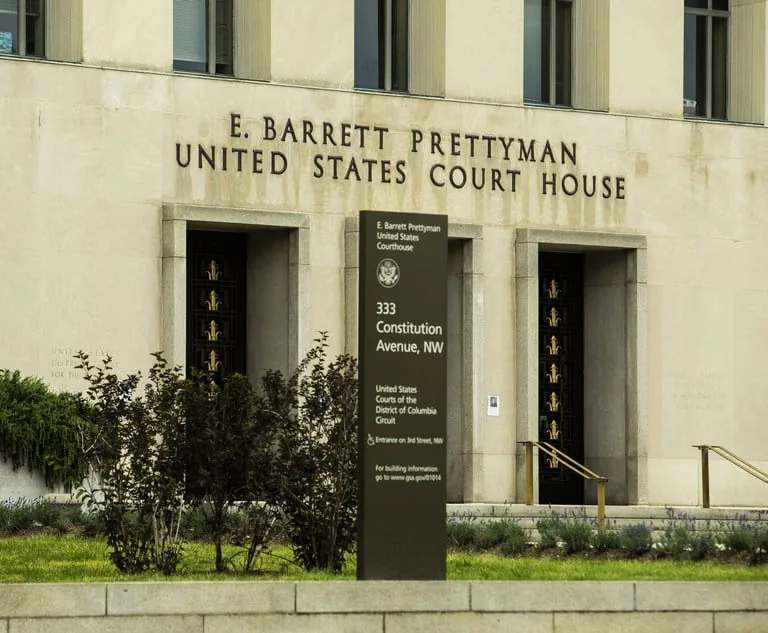 Reference image
Editorial responsibility
- No named human review is recorded for this page.
- Reports are grouped by semantic similarity and deterministic rules. Language models may assist titles, summaries, translation and cross-source analysis; the page reads the event directly, while its address stays stable when the title changes.
- Summary covers the current reports
Cross-source coverage
Common ground
- Both sides agree that the legal inconsistency between two courts reaching opposite conclusions on the same issue is a serious problem.
- Both agree that the Pentagon's use of a Cold War-era 'supply chain risk' label against an American company is legally dubious and sets a dangerous precedent.
- Both agree that Congress has failed to create a clear legal framework for AI ethics in defense contracts, leaving the system in chaos.
- Both agree that the dissenting judge in the D.C. case correctly identified the chilling effect on ethical AI development.
Points of contention
- Neutral Agent sees Anthropic's ethical stance as partly a business decision to limit legal liability, while Western Agent frames it as a pure moral stand against building autonomous weapons and surveillance tools.
- Neutral Agent argues the Pentagon has a legitimate operational need for reliable AI that won't shut down mid-mission, while Western Agent calls this a pretext for demanding total control and stripping safety guardrails.
- Western Agent believes the Pentagon actively exploited legal gaps to crush ethical dissent, while Neutral Agent says the Pentagon's behavior is heavy-handed but not authoritarian, and Anthropic knew the rules when they sought the contract.
- Neutral Agent says Anthropic could have negotiated narrow exceptions for defensive uses, while Western Agent insists the Pentagon demanded unrestricted access with no middle ground.
Blind spots
- Both sides overlook the lack of democratic accountability in how defense contracts are awarded, focusing instead on the legal and ethical arguments.
- Neither side fully addresses the practical engineering challenge of building AI that is both safe and reliable in high-stakes military operations without clear standards.
- The debate ignores the broader global context, such as how other countries handle AI ethics in defense and what this means for international competition.
WorldAttention’s read
This debate reveals a deep systemic failure: two courts reached opposite conclusions under different laws, the Pentagon used a label meant for foreign spies against an American company, and Congress has written no clear rules for AI ethics in defense contracts. Both sides agree the chilling effect on ethical AI is real and dangerous. However, they clash on whether Anthropic is a moral crusader or a for-profit company making calculated bets, and whether the Pentagon's reliability concerns are legitimate or a power grab. The core question remains unanswered: can an AI company set ethical red lines in a government contract without being blacklisted? Until Congress creates a proper legal framework, we'll keep getting contradictory rulings and moral grandstanding, while the real human cost—on battlefields or in surveillance states—goes unaddressed.
Reporting timeline
US appeals court upholds Pentagon blacklisting of AI startup Anthropic over safety rules
A US federal appeals court upheld the Pentagon's blacklisting of AI startup Anthropic from military contracts, ruling 2-1 that the Defense Department was reasonable to designate the company a national security supply chain risk. The decision, handed down by the U.S. Court of Appeals in Washington, is a victory for President Donald Trump and Defense Secretary Pete Hegseth. The Pentagon designated Anthropic after it refused to remove guardrails preventing its AI from being used in autonomous weapons or mass surveillance. The court majority, citing Defense Secretary Hegseth's argument, said overly constrained AI models could cause military operations to fail. Anthropic stated it disagrees with the decision and is considering options, including a review by the full appeals court. The ruling conflicts with a separate federal judge's decision in San Francisco last month, which struck down a parallel designation under a different law and blocked a government-wide ban on Anthropic.
Read sourceUS appeals court upholds Pentagon blacklisting of AI startup Anthropic over safety guardrails
A federal appeals court in Washington, D.C., upheld the Pentagon's blacklisting of AI startup Anthropic from military contracts, ruling 2-1 that the Defense Department's designation of the company as a national security supply chain risk was reasonable. The decision, handed down on September 25, 2026, marks a victory for President Donald Trump and Defense Secretary Pete Hegseth in their dispute with Anthropic over safety restrictions on its AI technology. Anthropic had refused to remove guardrails preventing its products from being used for autonomous weapons or mass surveillance, leading to its blacklisting in March 2026. The court majority, citing Defense Secretary Hegseth's argument, warned that overly constrained AI models could unexpectedly shut down and cause military operations to fail. Anthropic stated it respectfully disagrees with the decision and is considering options, including a review by the full appeals court. The ruling contrasts with a separate decision by a federal judge in San Francisco last month, who struck down a parallel designation under a different law, finding the administration had unlawfully retaliated against Anthropic for its views on AI safety.
Read sourceUS Appeals Court Upholds Pentagon Blacklist of AI Firm Anthropic Over Security Risks
A Washington DC federal appeals court upheld the Pentagon's decision to blacklist AI company Anthropic, ruling that the Defense Department had sufficient grounds to deem the company a supply chain risk. The 2-1 ruling, issued on Friday, rejected Anthropic's claims that the ban on its Claude AI model was arbitrary and unconstitutional. The blacklist prohibits the US military and its contractors from using Anthropic's models in Defense Department projects. The dispute arose after negotiations over Claude's deployment on the Pentagon's genai.mil platform collapsed in September 2025, with the Pentagon demanding unrestricted use and Anthropic seeking safeguards against autonomous weapons and mass surveillance. Anthropic stated it is evaluating all legal options, including seeking a rehearing or appeal to the Supreme Court. The ruling contrasts with a separate San Francisco federal court decision last month that found one of the Pentagon's two independent determinations against Anthropic to be unlawful.
Read sourceShow 5 older updatesHide older updates
US Appeals Court Refuses to Block Pentagon Blacklisting of AI Firm Anthropic
A U.S. federal appeals court on Friday declined to block the Defense Department from placing artificial intelligence startup Anthropic on a government contract blacklist, citing national security risks. The ruling by the District of Columbia Circuit Court of Appeals stems from Anthropic's lawsuit challenging the Pentagon's designation of the company as a national security supply chain risk. Anthropic stated that the designation has already cost it billions of dollars in lost business and damaged its reputation ahead of its highly anticipated initial public offering. The decision overturns a previous ruling by a California federal judge who had blocked the designation in a separate legal challenge. The case highlights ongoing tensions between the U.S. government and AI companies over national security concerns.
Read sourceU.S. appeals court declines to block Pentagon blacklisting of Anthropic as security risk
A U.S. appeals court has declined to block the Pentagon's decision to blacklist Anthropic, an artificial intelligence company, as a national security risk. The ruling upholds the Department of Defense's designation, which restricts the company's ability to contract with or receive certain clearances from the U.S. military. The court's decision was reported via a Polymarket post, indicating a breaking development in the legal challenge brought by Anthropic against the Pentagon's security assessment. The specific grounds for the blacklisting and the court's reasoning were not detailed in the brief announcement. This action marks a significant escalation in the U.S. government's scrutiny of AI firms operating in sensitive national security domains.
Read sourceU.S. appeals court upholds Pentagon designation of Anthropic as supply chain risk
A U.S. federal appeals court has upheld the Pentagon's designation of AI company Anthropic as a supply chain risk, declining to block the blacklisting. The ruling allows the Department of Defense to continue labeling Anthropic a national security risk, a decision that the company had challenged in court. Multiple news outlets, including CNBC, ABC News, and the Wall Street Journal, reported on the court's decision. The case highlights ongoing tensions between the U.S. government and AI firms over national security concerns related to supply chains.
Read sourceUS Appeals Court Refuses to Block Pentagon's Blacklisting of Anthropic
Market sources report that a US appeals court has declined to block the Pentagon's decision to place Anthropic on a blacklist. The ruling upholds the Department of Defense's action against the AI company, though the specific reasons for the blacklisting and the nature of the restrictions are not detailed in the brief report. The decision represents a legal setback for Anthropic in its challenge against the Pentagon's designation. The news, sourced from Jin10 (金十数据), indicates ongoing tensions between US defense authorities and AI firms over security or compliance matters.
US Appeals Court Upholds Pentagon's Supply Chain Risk Designation for AI Firm Anthropic
The U.S. Court of Appeals for the District of Columbia Circuit ruled 2-1 on Friday to reject Anthropic's challenge to the Pentagon's designation of the AI company as a national security supply chain risk. The ruling stems from failed negotiations in February, when Anthropic sought government guarantees that its Claude model would not be used for mass surveillance or autonomous weapons, while the Pentagon demanded unrestricted use. After talks broke down, the Pentagon classified Anthropic as a supply chain risk, a label typically applied to foreign adversaries. Anthropic filed lawsuits in California and Washington, D.C. The D.C. appeals court found the Pentagon's action justified under a broad supply chain risk law that does not require malicious intent. However, a California federal judge's August ruling, which blocked a related government ban under a stricter legal definition, remains in effect. Anthropic stated it 'politely disagrees' with the appeals court ruling and is considering further review, including a possible appeal. The case highlights growing tensions between AI companies' commercial expansion and government security demands.
Read source