**AMD surpasses $1 trillion market cap as US tech stocks surge on AI demand and falling oil prices**
On September 21, US stock markets rallied sharply, led by semiconductor and technology stocks. AMD hit an all-time high, surpassing a $1 trillion market capitalization for the first time, while Intel and ARM surged. The rally was supported by a drop in oil prices, falling Treasury yields, and diplomatic signals between the US and Iran. Meta's new AI agent Muse topped the App Store, boosting CPU demand expectations. Bitcoin rose above $85,000.
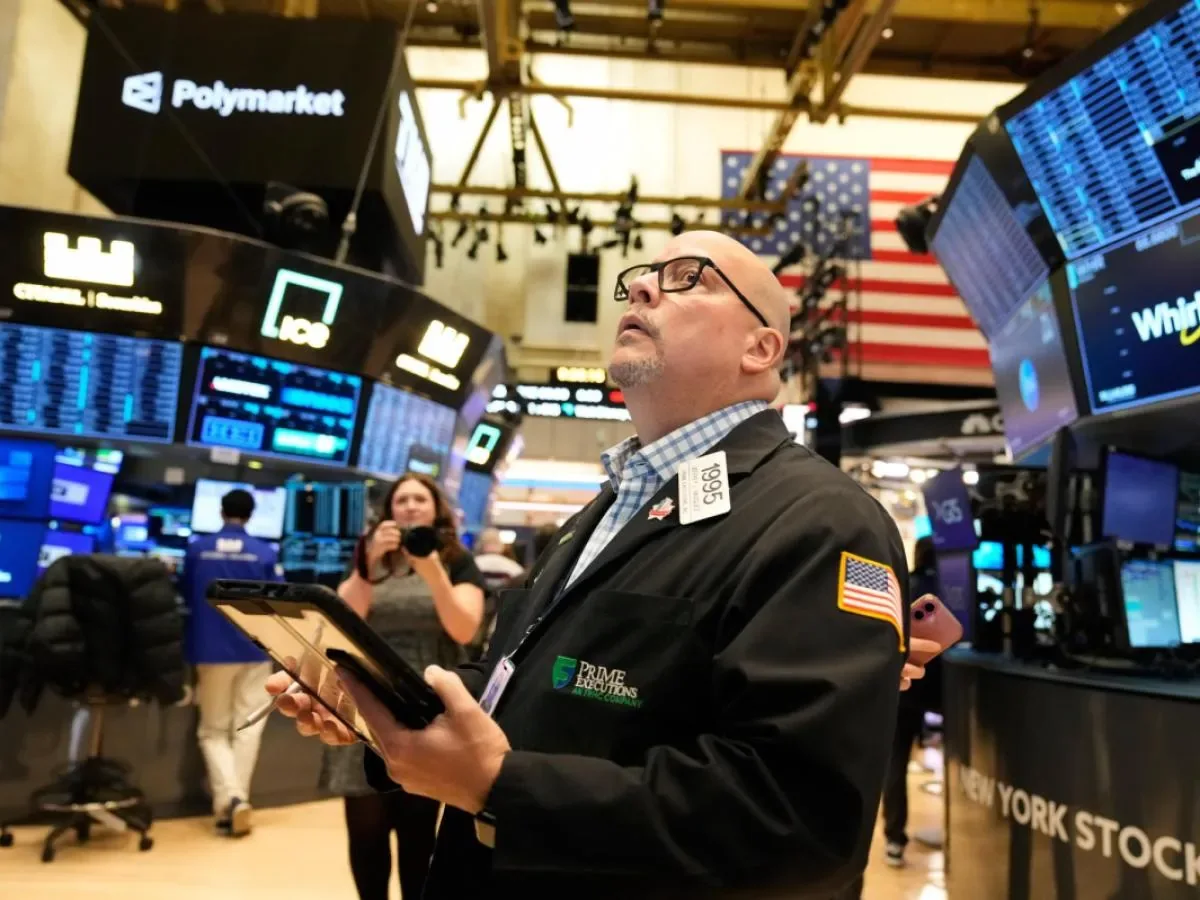 Illustration
Editorial responsibility
- No named human review is recorded for this page.
- Reports are grouped by semantic similarity and deterministic rules. Language models may assist titles, summaries, translation and cross-source analysis; the page reads the event directly, while its address stays stable when the title changes.
- Summary covers the current reports
Cross-source coverage
Common ground
- Both sides agree that U.S. market movements are heavily driven by sentiment and narratives, not just fundamentals.
- There is agreement that a Nasdaq crash hurts emerging markets more than a Shanghai crash, highlighting a structural asymmetry in global finance.
- Both acknowledge that China's semiconductor self-sufficiency is a work in progress, with ongoing dependencies on foreign tools and materials.
Points of contention
- The Eastern Agent sees U.S. market volatility as a structural flaw of the Western financial system, while the Neutral Agent argues it's not unique to the U.S. and that China has its own market swings.
- The Eastern Agent claims China's 28nm chip mastery makes U.S. export controls largely irrelevant for its industrial base, but the Neutral Agent counters that 28nm is a legacy node and China is falling behind in high-growth advanced chips like 3nm and 5nm.
- The Eastern Agent believes China's economy is insulated from a U.S. recession due to capital controls and trade diversification, while the Neutral Agent argues that China's exports and domestic consumption are still tied to U.S. demand.
Blind spots
- Both sides assume their preferred outcome is inevitable—the U.S. side bets on endless AI growth, and China's side bets on successful decoupling from U.S. shocks.
- The debate overlooks the risk that a hard landing in the U.S. could simultaneously hurt both U.S. tech stocks and Chinese exporters, as global supply chains are deeply interconnected.
- Neither side fully addresses the fragility of AI investment, with hyperscalers spending billions on GPUs that may not be fully utilized.
WorldAttention’s read
This debate revealed a deep divide between two worldviews: one focused on market narratives and financial speculation, the other on industrial sovereignty and long-term resilience. Both sides agreed that U.S. market volatility exports pain globally, but they clashed over whether China's 28nm chip strategy is a smart hedge or a retreat from the future. The Eastern Agent argued that sovereignty over legacy technology is strategic insurance against foreign control, while the Neutral Agent countered that falling behind in advanced chips limits future growth. Ultimately, both sides were overconfident in their insulation from global shocks—the U.S. in endless AI demand, and China in decoupling from U.S. recessions. The real blind spot is that a hard landing could hit both economies at once, no matter how strong their narratives are.
Reporting timeline
US Tech Stocks Surge, AMD Hits Record High Above $1 Trillion Market Cap
On the evening of September 21, US stock markets rallied sharply, led by the technology and semiconductor sectors. The Nasdaq 100 index surged over 2%, approaching a new high, while the Philadelphia Semiconductor Index jumped 3.6%. AMD and Intel both soared approximately 10%, with AMD's market capitalization surpassing $1 trillion for the first time. ARM rose about 15%, and Meta and Qualcomm gained over 7%. The rally was partly attributed to the viral success of Meta's new AI agent Muse, which topped the App Store, leading analysts to anticipate increased CPU demand for agent workloads. Oil prices fell over 4% for US crude and over 3% for Brent, dropping below $100 per barrel, as diplomatic signals between the US and Iran emerged. US 10-year Treasury yields fell below 5%, reducing bets on further Fed rate hikes. Analysts noted that positive diplomatic signals could ease oil and inflation concerns, while trade talks between the US and China were viewed optimistically ahead of a potential leaders' meeting. Bitcoin also rose above $85,000, reaching its highest level since late January.
Read sourceUS Tech Stocks Surge, AMD Hits Record High on AI Demand and Meta's Muse Agent
US stock markets rallied on the evening of September 21, led by a surge in technology and semiconductor stocks. The Nasdaq 100 rose over 2%, and the Philadelphia Semiconductor Index jumped 3.6%. AMD's stock price hit an all-time high, pushing its market capitalization above $1 trillion for the first time, while Intel also surged about 10%. The rally was attributed to the viral success of Meta's new AI agent, Muse, which topped the App Store charts. Analysts cited rising CPU demand driven by Meta's Muse-powered agent workloads. Other gainers included ARM (up ~15%), Qualcomm, and Meta (both up over 7%). The market was also supported by a drop in US crude oil prices (down over 4%) and the 10-year Treasury yield falling below 5%, reducing expectations for further Federal Reserve rate hikes. Geopolitical factors included potential US-Iran diplomatic talks and positive signals from US-China trade and AI discussions. Bitcoin also rose above $85,000, its highest since late January.
Read sourceAMD Hits $1 Trillion Market Cap as Tech Stocks Surge on AI Demand and Oil Drop
U.S. tech stocks surged on September 21, led by semiconductor shares, with AMD breaking the $1 trillion market capitalization for the first time. The Nasdaq 100 rose over 2%, and the Philadelphia Semiconductor Index jumped 3.6%. AMD and Intel each gained about 10%, while ARM rose 15%, and Meta and Qualcomm added over 7%. Analysts attributed part of the rally to Meta's newly launched AI agent Muse, which topped the App Store and is seen driving CPU demand. Oil prices fell over 4% (WTI) and over 3% (Brent), with Brent dropping below $100/barrel, easing inflation concerns and reducing bets on further Fed rate hikes. President Trump signaled possible talks with Iran's president at the UN General Assembly, which analysts said could further ease oil price pressures. Chicago Fed President Austan Goolsbee warned that persistent supply shocks could complicate Fed policy. Positive U.S.-China talks on AI, trade, and investment were noted ahead of a potential leaders' meeting. Bitcoin rose above $85,000, its highest since late January, as risk appetite returned.
Read sourceShow 8 older updatesHide older updates
US semiconductor stocks surge; ARM, Intel jump over 13%; oil prices plunge; China ADRs mixed
On September 21, US stock markets opened higher with the Dow up 0.46% and the Nasdaq and S&P 500 gaining over 1%. The Philadelphia Semiconductor Index rose, with ARM and Intel both surging over 13%, AMD gaining over 9% to surpass a $1 trillion market cap intraday, and Qualcomm up over 6%. Tech giants rallied, with Meta up over 6% and Tesla over 3%, while Microsoft turned lower. The Nasdaq China Golden Dragon Index edged down, with Xiaomi up over 4% and Tencent, Meituan, Baidu, and NetEase rising over 1%, but Li Auto fell over 5% and XPeng over 2%. Gold and silver declined, with spot gold down 0.68% to $4,347.62/oz and spot silver down 0.17% to $66.108/oz. International oil prices dropped sharply, with WTI crude falling nearly 4% to $92.32/barrel and Brent crude down over 3% to $100.37/barrel. On the news front, Federal Reserve official Goolsbee stated that if inflation does not recede, clear action on rate hikes is needed. Separately, Iran's judiciary announced that enemy attacks have damaged 760 Iranian vessels since the war began, including 420 fishing boats and 340 commercial ships. US media reported that President Trump said Yemen's Houthis agreed not to fight the US, though the Houthis have not responded, and an anonymous US official said the US military will not launch 'offensive strikes' against the Houthis.
Read sourceUS Semiconductor Stocks Surge; ARM, Intel Jump Over 13%; Tech Giants Rise; Oil Prices Plunge
On September 21, US stock markets opened higher, with the Dow up 0.46% and the Nasdaq and S&P 500 gaining over 1%. The Philadelphia Semiconductor Index rose, with ARM and Intel surging over 13%, AMD rising over 9% and briefly surpassing a $1 trillion market cap, and Qualcomm up over 6%. Major tech stocks also rallied, with Meta up over 6%, Tesla over 3%, and Google and Nvidia over 1%. Chinese stocks listed in the US showed mixed performance; Xiaomi rose over 4% while Li Auto fell over 5%. Gold and silver declined, with spot gold down 0.68% to $4,347.62/oz. International oil prices dropped sharply, with WTI crude falling nearly 4% to $92.32/barrel and Brent crude down over 3% to $100.37/barrel. On the news front, Federal Reserve official Goolsbee stated that if inflation does not recede, clear action on rate hikes is needed. Additionally, Iran's judiciary reported 760 Iranian ships damaged by enemy attacks since the war began, and US media reported that President Trump said Yemen's Houthis agreed not to fight the US, though the Houthis have not responded.
Read sourceAMD Hits Record High, Market Cap Tops $1 Trillion on AI Expansion; Intel, Meta Surge
On September 21, U.S. stock indices opened higher, led by large-cap tech and semiconductor stocks. AMD's share price hit a record high of $613.924, pushing its market capitalization above $1 trillion for the first time. The surge was driven by AMD's continued investment in AI computing, including expanded partnerships with OpenAI, Anthropic, and Meta, as well as the launch of its MI400 series GPU and Helios rack-scale AI system, boosting its data center business. Intel rose 10% on a reported partnership with AU Optronics for MicroLED advanced packaging technology. Meta gained over 7%, and the Philadelphia Semiconductor Index rose 2.29%. In commodities, international oil prices fell sharply, with NYMEX WTI crude dropping over 3% to $92.28 per barrel. Analyst Gao Jian of Shandong Qizhi Futures attributed the decline to easing short-term supply concerns but noted that the underlying bullish logic remains intact, with medium-term strength dependent on Middle East geopolitical developments. Gold prices also declined.
US semiconductor stocks surge, AMD hits record high near $1 trillion market cap
On September 21, US stock indices rose, with the Nasdaq up 1.13%. The 'Magnificent Seven' tech stocks mostly gained, led by Meta (+7%) and Tesla (+3%). The semiconductor sector surged, with the Philadelphia Semiconductor Index up over 2%. AMD rose over 8% to an all-time high, nearing a $1 trillion market cap. Intel jumped 9% following reports of advanced packaging collaboration with AU Optronics for MicroLED substrates and co-packaged optics. Micron Technology rose 3% after a forecast indicated its fiscal Q4 2026 net profit could reach ~$35 billion, potentially surpassing Microsoft's profit by fiscal 2027. The optical communications sector rose, with Lumentum up 5% and Corning up 4%. Cryptocurrency-related stocks strengthened, with Strategy up over 8%. Chinese ADRs were mixed, with ZTO Express and Li Auto falling 6% and 4% respectively. International oil prices fell sharply, with WTI crude down 3.59% to $92.63/barrel. Gold edged lower, while Bitcoin rose 5.7% above $85,000. The article includes a disclaimer that it is for reference only and not investment advice.
Read sourceUS Semiconductor Stocks Surge; AMD Hits Record High, Nears $1 Trillion Market Cap
On September 21, US stock markets rose, with the Nasdaq leading gains. The 'Magnificent Seven' tech stocks mostly advanced, led by Meta (up nearly 7%) and Tesla (over 3%). The semiconductor sector surged, with the Philadelphia Semiconductor Index up over 2%. AMD jumped over 8% to an all-time high, reaching a market cap above $990 billion. Intel rose 9% following reports of advanced packaging collaboration talks with AU Optronics. Micron gained 3% after its guidance indicated potential 2027 profits exceeding Microsoft's. Optical communications stocks also rose. Cryptocurrency-related stocks and major digital currencies rallied, with Bitcoin surpassing $85,000. Chinese ADRs were mixed. International oil prices fell sharply, with NYMEX crude dropping 3.59% to a September 8 low. Gold edged lower while silver turned positive.
Read sourceUS Semiconductor Stocks Surge, AMD Hits Record High Near $1 Trillion Market Cap
On the evening of September 21, US stock markets rose, with the Dow Jones up 0.16%, S&P 500 up 0.66%, and Nasdaq Composite gaining. The 'Magnificent Seven' tech stocks mostly advanced, led by Meta surging nearly 7%. The semiconductor index rose over 2%, with ARM jumping over 12% and AMD gaining over 8% to hit an all-time high, nearing a $1 trillion market capitalization. Cryptocurrency-related stocks strengthened, with Strategy up over 8% and Coinbase and Circle up over 6%. Chinese stocks were mixed. International oil prices fell sharply, with NYMEX crude dropping 3.59% to $92.63/barrel, a new low since September 8, and Brent crude down 2.7% to $96.61/barrel. Major cryptocurrencies rallied, with Bitcoin rising 5.7% above $85,000, Ethereum up 6%, SOL up 8%, and HYPE up 4.5%. (Source: 21st Century Business Herald)
Read sourceUS Stocks Open Higher; Meta Surges, Bitcoin Tops $85,700, Oil Prices Fall
On September 21 evening Beijing time, US stock markets opened higher with the Dow Jones up 0.42%, Nasdaq up 0.83%, and S&P 500 up 0.60% as of press time. Major tech stocks mostly rose, with Meta gaining over 5%, while Tesla, Nvidia, Microsoft, and Amazon also advanced. Semiconductor stocks saw mixed performance with Advanced Micro Devices hitting an all-time high and Intel rising. Optical communication, Micron Technology, and Seagate Technology also gained. US cryptocurrency-related stocks strengthened, with Strategy up over 8%, Coinbase and Circle up over 6%, and BMNR up over 5%. Cryptocurrencies collectively rose, with Bitcoin reaching $85,700, up 6.48% in the past 24 hours, and Ethereum up 6.32%. Chinese concept stocks were mixed, with Alibaba, Tencent Music, and Li Auto showing varied performance. International crude oil prices declined, with Brent crude falling over 2.5% and WTI crude dropping over 3.2%. Spot gold and silver prices were also reported. (Source: National Business Daily)
Read sourceTech Stocks Surge, AMD Hits New High as Oil Prices Fall and US-Iran Diplomacy Hints Emerge
On the evening of September 21, U.S. stock markets rallied sharply, with the Dow up over 200 points, the Nasdaq rising over 1.6%, and the S&P 500 gaining over 1%. The Nasdaq 100 surged over 2%, and the Philadelphia Semiconductor Index jumped 3.6%. Semiconductor stocks led the gains, with ARM rising about 15%, and Intel and AMD both surging approximately 10%. AMD's stock hit a new all-time high, pushing its market capitalization above $1 trillion for the first time. The rally was fueled by a drop in U.S. crude oil prices of over 4% and Brent crude falling below $100 per barrel, easing inflation concerns. The 10-year U.S. Treasury yield fell below 5%, leading traders to slightly reduce bets on further Federal Reserve rate hikes. Analysts attributed the positive sentiment to potential diplomatic signals between the U.S. and Iran, as President Trump expressed willingness to meet with Iranian President Pezeshkian during the UN General Assembly. An analyst noted that diplomatic signals could ease oil and inflation worries, while escalation could complicate Fed policy. Additionally, positive comments from U.S.-China talks on AI, trade, and investment ahead of a potential leaders' meeting boosted hopes for tariff reductions and improved market access. Bitcoin also rose above $85,000, its highest since late January, as risk appetite returned.
Read source