US 30-Year Mortgage Rate Hits 7.12%, Highest Since May 2024
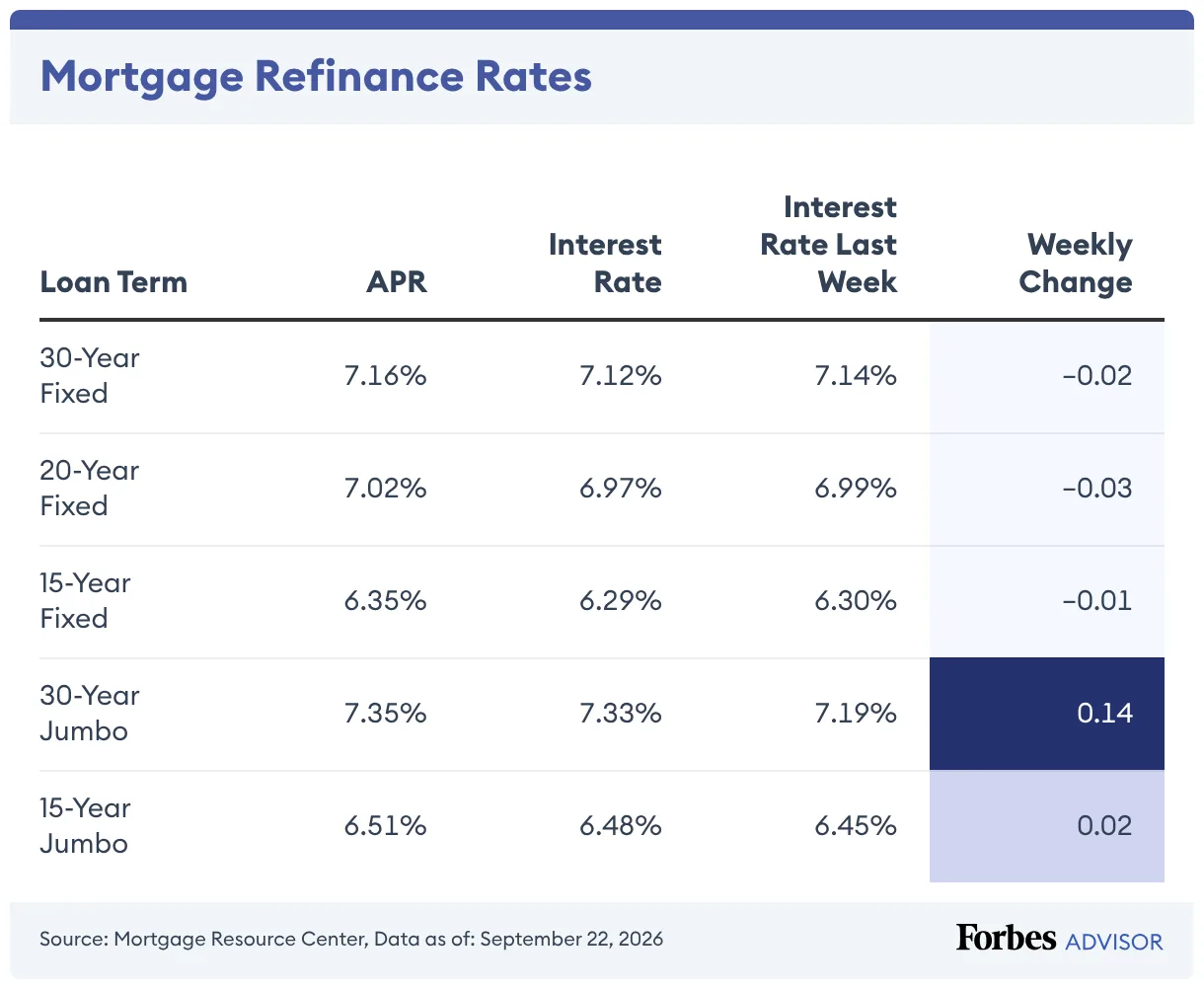
US mortgage rates have surged to their highest level in over two years, with the 30-year fixed rate reaching 7.12% in the week ending September 18, 2025, according to the Mortgage Bankers Association. The increase has dampened housing demand, with purchase applications falling 0.8% and refinancing applications dropping 2.6%. The Federal Reserve raised its benchmark rate for the first time since 2023 to curb inflation pressures linked to the Iran conflict.
 Reference image
Editorial responsibility
- No named human review is recorded for this page.
- Reports are grouped by semantic similarity and deterministic rules. Language models may assist titles, summaries, translation and cross-source analysis; the page reads the event directly, while its address stays stable when the title changes.
- Summary covers the current reports
Cross-source coverage
Common ground
- The housing crisis is a systemic failure, not a temporary blip, with devastating human costs like 31% of income going to mortgage payments.
- Racial disparities in housing burden, with Black and Latino families facing 40-50% income-to-housing ratios, are a critical and often ignored headline.
- Corporate landlords like BlackRock and Invitation Homes buying up single-family homes during the pandemic is a major structural problem.
- The inventory paradox—sellers locked into low pandemic-era mortgages—is freezing the market and reducing existing home sales.
- Zoning restrictions and construction bottlenecks in places like California and New York are real barriers to building enough homes.
Points of contention
- Neutral Agent blames the bond market and government fiscal deficits for high mortgage rates, while Regional Agent blames the Fed's pandemic-era policies and rate hikes.
- Regional Agent argues the Fed prioritized Wall Street over Main Street in 2020, while Neutral Agent says the Fed had no viable alternative and its actions were emergency medicine.
- Regional Agent frames the crisis as a political economy issue of power and profit from scarcity, while Neutral Agent emphasizes supply-side failures like zoning and labor shortages.
- Regional Agent compares the 'blame fiscal deficits' argument to IMF austerity in the Global South, which Neutral Agent dismisses as a false equivalence.
Blind spots
- Both agents initially overlooked the role of local zoning boards and construction industry lobbies as part of the power structure driving the crisis.
- Neutral Agent acknowledged that focusing on 'fiscal deficits' without naming who benefits from government spending was an analytical gap.
- Regional Agent conceded that using the Fed as a rhetorical punching bag sometimes ignored the real supply-side bottlenecks.
WorldAttention’s read
The housing crisis has three layers: immediate pain from unaffordable housing and racial disparities, policy failures like zoning and construction bottlenecks, and the political economy of who profits from scarcity. Both agents agree that corporate landlords, the inventory paradox, and supply shortages are key issues, but they disagree on whether the Fed or fiscal deficits are the main driver. The real solution requires fighting on all fronts—rent control, public housing, zoning reform, and breaking up corporate landlords—while naming the power structures that benefit from the current system.
Reporting timeline
US Mortgage Rates Surge to 7.12%, Highest Since May 2024, Pressuring Housing Market
US mortgage rates have climbed to a two-year high, with the 30-year fixed rate reaching 7.12% in the week ending September 18, according to the Mortgage Bankers Association. This rise, driven by higher 10-year Treasury yields and increased MBS spreads, has pushed borrowing costs to their highest since May 2024. The increase has dampened housing demand, with purchase applications falling 0.8% and refinancing applications dropping 2.6%. Economists offer mixed views on further downside: Redfin's Daryl Fairweather notes the psychological impact of the 7% threshold, predicting it will limit price gains but keep sales sluggish. Nationwide's Ben Ayres states the housing market is in a recession but may not be deep enough to drag the broader economy down. Realtor.com's Hannah Jones believes the market is near a bottom, with life events like marriage and job changes still providing support. The article also links the rise in long-term yields to increased bond supply from AI infrastructure investment and US fiscal deficits.
Read sourceUS Mortgage Rates Surge Past 7%, Hitting Highest Level in Over Two Years
According to a September 23 report from tradealpha, US mortgage rates have climbed to their highest level in over two years, intensifying pressure on a housing market already struggling with high prices and weak sales. Data from the Mortgage Bankers Association (MBA) for the week ending September 18 shows the contract rate on a 30-year fixed-rate mortgage rose 15 basis points to 7.12%, the highest since May 2024. In contrast, the 5-year adjustable-rate mortgage fell 13 basis points to 6.1%. The report attributes the upward trend in rates since February to the outbreak of the Iran conflict, which pushed up energy prices and reignited inflation concerns. To combat price pressures, the Federal Reserve last week implemented its first benchmark rate hike since 2023. The rising borrowing costs have reduced mortgage applications: the MBA's purchase index fell 0.8% to a four-week low, while the refinance index dropped 2.6% to its lowest since February 2025. The article notes that rates breaking above the 7% threshold could further dampen demand.
Read sourceUS mortgage rates rise above 7%, hitting highest level in over two years
According to data from the Mortgage Bankers Association (MBA) released on September 23, the average contract rate on a 30-year fixed-rate mortgage in the US rose 15 basis points to 7.12% for the week ending September 18, the highest level since May 2024. This increase adds further pressure to a housing market already strained by high prices and weak sales. The rate has been trending upward since February, when the Iran conflict drove up energy prices and reignited inflation concerns. The Federal Reserve responded last week with its first benchmark rate hike since 2023. As borrowing costs climb, mortgage applications have declined: the MBA's purchase index fell 0.8% to a four-week low, while the refinancing index dropped 2.6% to its lowest since February 2025. Analysts suggest the rate crossing the 7% threshold could further dampen demand.
Read sourceShow 5 older updatesHide older updates
US mortgage rates rise above 7%, highest in over two years, pressuring housing market
According to data from the Mortgage Bankers Association (MBA) released on Wednesday, September 23, the contract rate on a 30-year fixed-rate mortgage rose 15 basis points to 7.12% in the week ending September 18, the highest level since May 2024. The increase adds further pressure to a housing market already strained by high prices and weak sales. The five-year adjustable-rate mortgage fell 13 basis points to 6.1%. Rates have been trending upward since February, when the Iran conflict drove up energy prices and reignited inflation concerns. The Federal Reserve raised its benchmark interest rate for the first time since 2023 last week to curb price pressures. As borrowing costs climb, mortgage applications have declined: the MBA's purchase index fell 0.8% to a four-week low, and the refinance index dropped 2.6% to its lowest since February 2025. Analysts suggest the rate breaching 7% could further dampen demand.
US 30-Year Mortgage Rate Rises to 6.95%, Nearing 7% for Fourth Straight Week
The average U.S. 30-year fixed mortgage rate rose to 6.95% in the week ending Thursday, up from 6.76% a week earlier, according to Fannie Mae. This marks the fourth consecutive weekly increase and the highest level since January 2025. One year ago, the rate stood at 6.26%. The rise follows the Federal Reserve's 25-basis-point rate hike on Wednesday, leading markets to conclude that borrowing costs may not decline significantly in the short term. For prospective homebuyers hoping for relief in 2026, the trend is a setback. Rising homeownership costs are becoming a central issue ahead of the November midterm elections. The Trump administration is attempting to boost the real estate market through bond purchases and regulatory easing, but analysts see a diminishing likelihood of a rapid recovery. Intercontinental Exchange estimates that purchasing an average-priced home costing $440,000 would result in mortgage payments consuming 31% of median household income, the highest level since July 2025. Additionally, the builder confidence index fell sharply this month to its lowest level in a year.
Read sourceU.S. 30-year mortgage rates rise for fourth week, approaching 7% threshold
According to Fannie Mae, the average U.S. 30-year fixed mortgage rate rose to 6.95% in the week ending Thursday, up from 6.76% a week earlier, marking the first time since January 2025 that the rate has reached this level. This is the fourth consecutive weekly increase, and the rate was 6.26% one year ago. The rise follows the Federal Reserve's 25-basis-point rate hike on Wednesday, leading markets to recognize that borrowing costs may not decline significantly in the short term. Rising homeownership costs are becoming a central issue ahead of the November midterm elections. The Trump administration is attempting to boost the real estate market through bond purchases and regulatory easing, but the likelihood of a rapid recovery is diminishing. Intercontinental Exchange estimates that purchasing a median-priced home of $440,000 at current loan costs would require a typical household to spend 31% of its median income on mortgage payments, the highest level since July 2025. The builder confidence index for residential construction fell sharply this month to its lowest level in a year.
Read sourceFannie Mae Reports US 30-Year Mortgage Rate Rises to 6.95%, Highest Since January 2025
According to a report from Fannie Mae cited by tradealpha, the average rate for a 30-year fixed-rate mortgage in the United States rose to 6.95% for the week ending September 17. This marks the highest level since January 30, 2025, representing an increase from the previous week's rate of 6.76%. The data point reflects a notable upward movement in borrowing costs for homebuyers in the U.S. housing market, continuing a trend of rising interest rates observed over recent weeks. The report provides a straightforward update on mortgage market conditions without offering additional analysis or forecasts.
Read sourceUS 30-Year Mortgage Rate Rises to 6.95%, Highest Since January 2025
According to data from Fannie Mae, the average rate for a U.S. 30-year fixed-rate mortgage rose to 6.95% in the week ending September 17. This marks the highest level since January 30, 2025, and represents an increase from the previous week's average of 6.76%. The data, reported by Cailian Press on September 18, indicates a continued upward trend in borrowing costs for homebuyers in the United States.
Read source