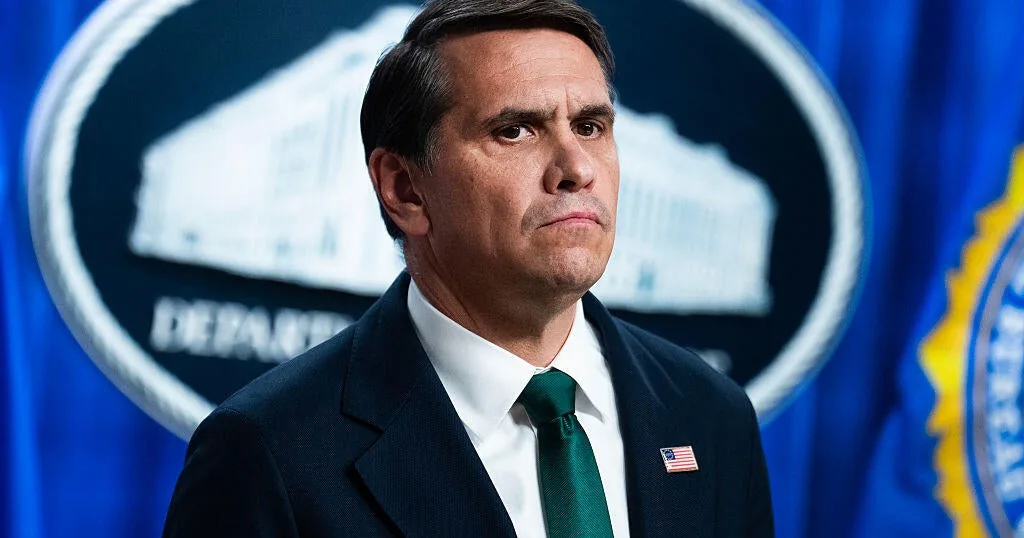
Army Secretary Dan Driscoll resigned effective September 3, 2026, following months of tension with Defense Secretary Pete Hegseth. Driscoll, who served since February 2025, championed acquisition reform including the FUZE program. His departure leaves the Army effectively leaderless after Hegseth fired the Army Chief of Staff in April. Hegseth is considering Pentagon spokesperson Sean Parnell as a replacement.
The Trump administration has petitioned the U.S. Supreme Court to permit the United States Postal Service to enforce new restrictions on mail-in ballot handling ahead of the November midterm elections. The Department of Justice filed an emergency request to lift a lower court's block on the USPS plan, arguing it prevents fraud and ensures efficiency. Critics say the rules suppress turnout. The high court's decision could significantly affect voting access nationwide.
A federal judge in Maryland blocked President Trump’s latest executive order restricting birthright citizenship, which targeted children of non-citizen parents, including those involved in “birth tourism.” Judge Deborah Boardman ruled the order “almost certainly unconstitutional,” citing the Supreme Court’s precedent in *Trump v. Barbara*. The preliminary injunction temporarily halts enforcement, marking a legal setback for the administration’s immigration policy as the case proceeds toward higher courts.
Chevron announced a $7 billion investment over five years to more than double its oil production in Venezuela to approximately 600,000 barrels per day. The expansion follows new agreements granting Chevron additional Orinoco Belt acreage and improved fiscal, commercial, and legal terms. The U.S. energy giant currently produces about 290,000 bpd in Venezuela, all exported to the United States.
The Trump administration is developing new rules to close a loophole that lets Chinese AI labs remotely access advanced Nvidia chips hosted in overseas data centers, particularly in Thailand, bypassing direct export controls. This escalation in US-China tech competition targets indirect access methods and could impact Nvidia sales and cloud provider compliance costs.
A U.S. Postal Service whistleblower has warned that a rushed, minimally tested IT system for mail-in ballots, built to implement a Trump executive order, could reject entire batches of ballots if a single barcode fails to scan, potentially preventing millions from voting. Senator Richard Blumenthal released the report, which also alleges USPS defied court orders to continue development. The system was built in three months instead of the typical year and faces legal challenges.
A federal judge in California ruled that the Pentagon’s attempt to blacklist AI company Anthropic violated the First Amendment, blocking the Department of Defense’s designation of the firm as a supply chain risk. The decision, a legal setback for the Trump administration, allows Anthropic to resume business with federal agencies. The case highlights tensions between national security measures and constitutional protections for technology companies.
The U.S. Supreme Court, in a 6-3 conservative majority ruling, lifted a lower court’s nationwide injunction on former President Donald Trump’s executive order restricting mail-in voting. The order directs the Postal Service to deny ballots to voters not on federal lists and tasks DHS with citizenship verification. The Court ruled Democratic-led states sued prematurely, leaving the order’s legality unresolved. Dissenting justices warned of voter disenfranchisement. Democratic officials from 23 states and D.C. vowed to continue legal challenges, calling the order an unconstitutional power grab ahead of the midterm elections.
Dr. Adam Kalkstein, a tenured geography professor at the U.S. Military Academy at West Point, was fired after refusing an order to remove all references to human-caused climate change from his curriculum. The directive, issued by Brigadier General Shane Reeves in September 2025, was part of a broader Trump administration effort to purge climate acknowledgment from military institutions. Kalkstein, a conservative Republican, filed a First Amendment lawsuit in the Southern District of New York, arguing the order defied science and harmed national security, particularly regarding Arctic resource competition.
On August 21, 2026, President Trump announced a 90-day tariff exemption for up to 300,000 metric tons of imported ground beef, aiming to curb record-high U.S. beef prices near $7 per pound. Importers committed to selling at 25% below market rates. The move responds to a drought-shrunken cattle herd and rising food costs ahead of midterm elections. It drew backlash from cattle producers and Republican senators, who argue it undermines domestic ranchers and food safety.
The Trump administration has temporarily halted all immigrant visa applications and appointments globally to train officers on new financial self-sufficiency requirements. The pause affects family-based and employment-based permanent residency applicants, aiming to prevent immigrants from becoming public charges. This escalation follows a previous 75-country visa ban overturned by a federal judge. The duration and exemptions remain unclear, impacting thousands of applicants worldwide.
The Kennedy Center board, appointed by President Trump, voted on August 13, 2026, to inscribe "Restored and Renovated by President Donald J. Trump" on the facade and rename the plaza after him, defying a federal court order that had mandated removal of his name. The board also voted to close the center for two years of renovations. Democratic Rep. Joyce Beatty, who won the original lawsuit, condemned the move as a circumvention of the ruling. A federal judge has set an August 18 deadline for the board to report on plans.
Canadian Prime Minister Mark Carney and U.S. President Donald Trump held last-minute negotiations to avoid 50% U.S. tariffs on $20 billion of Canadian exports, including hockey sticks and liquor, set for a Wednesday deadline. The tariffs, invoked under the rarely-used Section 338 of the Tariff Act of 1930, were paused for three days after progress toward a deal. The dispute stems from U.S. allegations of Canadian trade discrimination in alcohol, autos, and dairy. Existing tariffs already cover Canadian steel, aluminum, and lumber.
The Trump administration is preparing to revoke up to 200,000 B1 (business) and B2 (tourism) visas issued between 2016 and 2026 to foreigners who have sought or are seeking asylum in the U.S. This would be the largest mass visa revocation in U.S. history, targeting individuals who entered on non-immigrant visas and later filed for asylum. The State Department, in coordination with DHS, plans to announce the move, which is expected to face legal challenges. Critics warn it could leave many in legal limbo and undermine due process.
The U.S. Postal Service finalized a rule on August 24, 2026, requiring states to use unique barcodes and provide voter lists for mail-in ballots, based on President Trump’s March executive order. Despite multiple lower court blocks, the Supreme Court temporarily lifted the hold, allowing parts of the rule to proceed. Voting rights groups warn the restrictions could disenfranchise millions ahead of the midterm elections. The case continues on appeal, with further legal challenges expected.
On August 16-17, 2026, U.S. President Donald Trump ordered the Pentagon to significantly scale back joint military exercises with South Korea, citing Seoul’s refusal to help denuclearize Iran and the drills’ “hostile signal” to North Korea. Trump cited his good relationship with Kim Jong-un, despite North Korea’s recent missile tests and continued state of war. The 11-day exercise involving 18,000 South Korean troops was designed to boost readiness. The move shifts U.S.-South Korea defense ties and may open dialogue with Pyongyang.
On August 20, 2026, former US President Donald Trump declared a major escalation in economic pressure against Iran, calling it "economic D-Day" and "unprecedented economic warfare." Citing Iran's failure to reach a nuclear deal, Trump warned of severe consequences for any country providing Iran economic or trade support, signaling a broad secondary sanctions campaign. The announcement, made in San Francisco, marks a return to maximum pressure tactics with potential global economic implications.
Disney-owned ABC filed a First Amendment lawsuit against the FCC and the Trump administration, alleging a retaliatory campaign triggered by a Jimmy Kimmel joke about Melania Trump. The FCC ordered early license renewals for eight ABC stations, which ABC claims is unconstitutional punishment for editorial content. The lawsuit seeks to block the FCC’s review, escalating tensions between the administration and major media over free speech and regulatory pressure.
VoteVets, a non-profit supporting Democratic veteran candidates, launched a 10-day billboard campaign on August 24, 2026, in 10 U.S. cities near military installations. Over 1,000 billboards feature President Trump and Defense Secretary Hegseth, linking the ongoing Iran conflict—which began with U.S.-led strikes on February 28, 2026—to rising gas and grocery prices, disrupted Strait of Hormuz oil shipments, and a national debt over $40 trillion. The campaign runs until September 2, 2026.
Anthropic, the AI company behind Claude, is taking early steps toward an IPO, with CFO Krishna Rao leading preliminary investor meetings focused on its technology and market position, but not specific financials. The company confidentially filed with the SEC in June 2026 and recently closed a funding round at a $965 billion valuation. Some investors project a $2 trillion+ IPO valuation, citing annualized revenue potentially reaching $100–$120 billion. Risks include higher pricing than OpenAI, U.S. export controls, and DoD litigation.
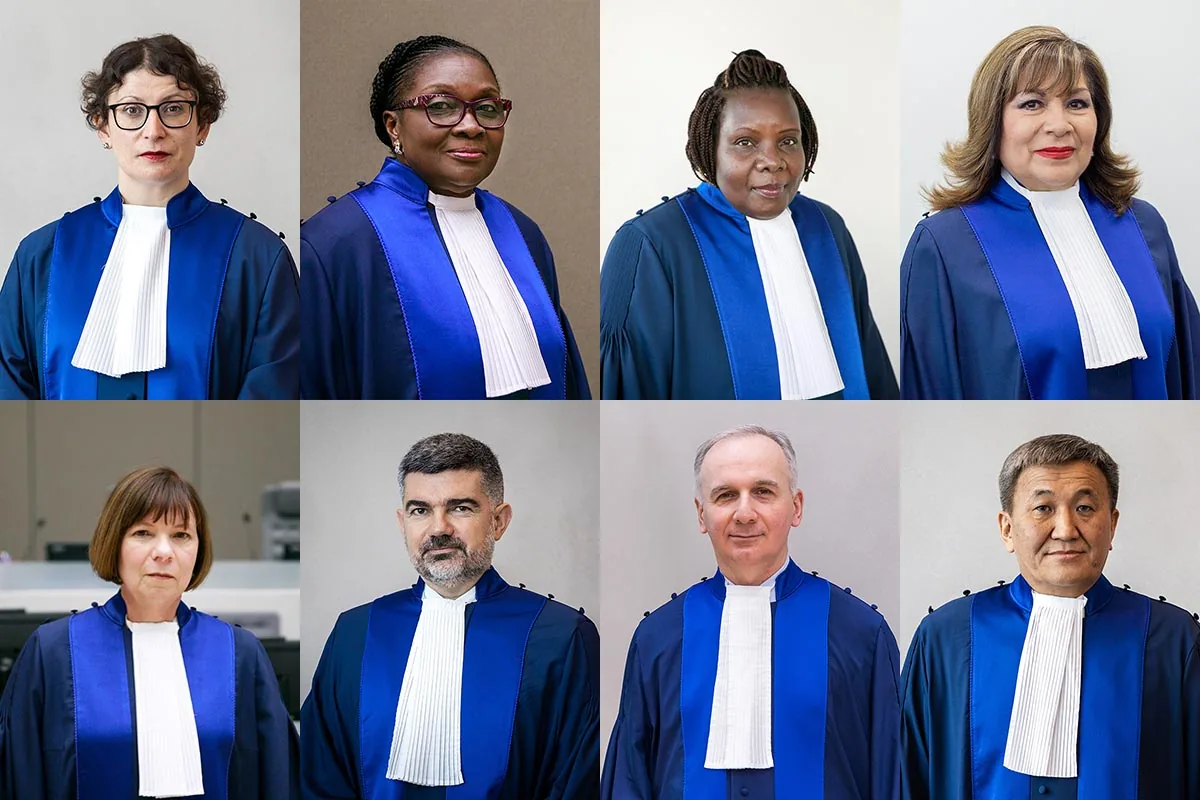
On August 18, 2026, the United States imposed sanctions on International Criminal Court (ICC) President Tomoko Akane (Japan) and Senior Trial Lawyer Abdoulaye Seye (Senegal), citing their involvement in investigations into Israeli officials over alleged war crimes in Gaza. Secretary of State Marco Rubio called the ICC a “corrupt and politicised” court. The ICC condemned the move as a “flagrant attack” on judicial independence. Israel’s Prime Minister Netanyahu applauded the sanctions. The Netherlands, EU, and Japan voiced support for the ICC. The U.S. also urged other nations to withdraw from the court.
A U.S. federal appeals court upheld a halt on former President Donald Trump's $400-600 million White House ballroom project, ruling it required congressional approval. The project, which involved demolishing the historic East Wing and included a bunker and drone port, was deemed beyond executive authority. Trump has appealed to the Supreme Court, arguing national security necessity. The case tests executive power limits and historic preservation.
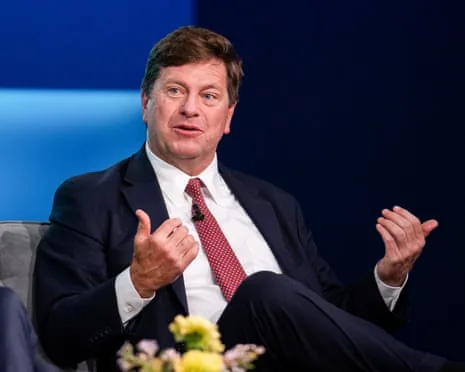
President Donald Trump has selected Dr. Heidi Overton, a White House domestic policy aide and physician, to lead the U.S. Food and Drug Administration (FDA). If confirmed by the Senate, Overton would replace Marty Makary, who resigned after clashes with the administration. The nomination faces strong bipartisan criticism, particularly from Republican senators over her role in vaccine policy and conservative health stances. The FDA has lost over 3,000 staff and faces trust and politicization challenges.
President Donald Trump signed a memorandum directing the U.S. Navy to replace the Electromagnetic Aircraft Launch System (EMALS) with older steam catapults on future Gerald R. Ford-class carriers, starting with the USS Doris Miller (CVN-81). The first three carriers retain EMALS. Trump has long criticized EMALS, despite Navy reports of higher launch rates and lower maintenance. Experts estimate the redesign will cost billions, cause delays, and face resistance from Navy officials and industry. Steam catapult production lines have been dormant for nearly 20 years.
On August 19, 2026, the U.S. national debt exceeded $40 trillion for the first time, more than doubling in a decade from $19.4 trillion. Driven by pandemic stimulus, tax cuts, rising health and social security costs, and interest payments nearing $1.2 trillion annually, the debt now represents nearly 125% of GDP. The milestone has raised concerns about fiscal sustainability, higher borrowing costs, and potential future crises, with the Treasury announcing increased long-term bond buybacks to manage yields.
The U.S. Supreme Court ruled on June 25, 2025, that the Trump Administration can end Temporary Protected Status (TPS) for approximately 330,000 Haitians and 4,000 Syrians, overturning a lower court block. Subsequently, a federal judge in Boston lifted the last legal barrier to ending TPS for about 5,000 Ethiopians, following the Supreme Court’s precedent that federal courts cannot review TPS decisions. These actions, part of broader TPS revocations for 13 countries, affect over a million immigrants and risk deportation for many who have lived in the U.S. for years.
A federal judge blocked FBI Director Kash Patel and the Trump administration’s plan to move FBI headquarters from the aging J. Edgar Hoover Building to the Ronald Reagan Building in Washington, D.C. The ruling, favoring Maryland and Prince George’s County, found the decision violated federal site-selection laws and congressional mandates. The judge ordered restoration of plans to build a new complex in Greenbelt, Maryland, though Congress has not yet approved funding. The dispute, ongoing for nearly two decades, continues.
On August 12-13, 2026, President Trump signed a presidential memorandum creating a program that allows vetted U.S. private companies to conduct offensive cyber operations, including surveillance and system disruption, against transnational criminal organizations, particularly ransomware groups. Overseen by DHS and DOJ, the program requires firms to meet security standards, post escrow, and obtain approval for each operation. Operations risking loss of life or armed attack are prohibited, though a classified annex allows exceptions. This marks a shift from information-sharing to active disruption.
The Pentagon, under Defense Secretary Pete Hegseth, revoked former Air Force Secretary Frank Kendall’s security clearance, alleging he disclosed classified information about Air Force One’s capabilities—specifically regarding a Qatari-donated Boeing 747—to media outlets. Kendall, who served under Biden, expressed bewilderment, claiming he avoided revealing classified details. The move continues the Trump administration’s pattern of stripping clearances from former Biden officials.
U.S. envoy Jared Kushner held a rare, over-two-hour meeting with Hamas political chief Khalil al-Hayya in Cairo on August 16, 2026, joined by mediators from Egypt, Qatar, and Turkey. The talks aim to salvage a U.S.-backed 15-point ceasefire roadmap requiring Hamas to disarm and Israel to withdraw from Gaza. Israeli Prime Minister Netanyahu has rejected the plan, while regional powers condemn Israel’s stance. A ceasefire since October 2025 remains fragile amid mutual violations and resumed Israeli airstrikes.
28 reports · 9 sources · Updated
Periodic recap
What changed for this subject in each tracking window — generated from matched events, delta-first.
→· 2 events in window
The Trump administration escalated a dispute over election rules to the Supreme Court this period, while its energy policy saw a major commercial breakthrough in Venezuela. The Justice Department filed an emergency request asking the justices to lift a lower court's block on USPS mail-in ballot restrictions, injecting legal uncertainty into voting procedures ahead of the midterms. Separately, Chevron announced a $7 billion investment to boost Venezuelan production to 600,000 barrels per day under new agreements with Caracas.
The Justice Department filed an emergency Supreme Court request to let USPS enforce new mail-in ballot restrictions before the midterms, arguing the rules prevent fraud and improve efficiency.
A lower court had blocked the plan, and critics say the rules suppress turnout; the high court's decision will directly affect voting access nationwide.
Chevron announced a $7 billion, five-year investment to more than double its Venezuelan oil output to roughly 600,000 barrels per day, up from the current 290,000 bpd.
The expansion follows new agreements granting Chevron additional Orinoco Belt acreage and improved fiscal, commercial, and legal terms; all Venezuelan output is exported to the U.S.
Earlier recaps
→· 2 events in window
The Trump administration faced new legal developments on immigration and technology policy. A federal judge blocked its latest executive order restricting birthright citizenship, ruling it almost certainly unconstitutional. In the technology sector, the U.S. Department of Justice backed OpenAI in a copyright lawsuit, arguing that AI training should be considered fair use.
→· 3 events in window
The Trump administration became embroiled in two major controversies over the past day. U.S. forces launched a direct strike on Iranian military assets near the Strait of Hormuz, marking a significant escalation in regional tensions. Domestically, a whistleblower warned that a new, hastily deployed mail-in ballot system, built to implement a Trump executive order, has critical flaws that could disenfranchise millions of voters in the midterm elections.
→· 1 event in window
The Trump administration saw a senior personnel change as Army Secretary Dan Driscoll resigned after months of friction with Defense Secretary Pete Hegseth. Driscoll, who had served since February 2025 and championed acquisition reform, leaves the Army's leadership further depleted. Hegseth is considering Pentagon spokesperson Sean Parnell as a replacement.
→· 1 event in window
This period saw the Trump administration drive a major energy diplomacy pivot. Multiple US energy giants are finalizing deals to invest billions in rebuilding Venezuela's oil fields, while the US negotiates for a large stake in the country's oil reserves. Concurrently, Venezuela has discussed leaving OPEC with US officials. These developments signal a breakthrough in US-Venezuela energy relations, potentially reshaping global oil markets.
→· 1 event in window
This period saw the Trump administration announce a temporary tariff exemption to combat record-high beef prices. On August 21, the President declared a 90-day tariff exemption for imported ground beef, with importers committing to sell at 25% below market rates. The move, aimed at addressing drought-shrunken cattle herds and rising food costs ahead of the midterm elections, drew immediate backlash from cattle producers and some Republican senators.
Tracked events
Events matched to this subject by the tracking pipeline, with signal scores.