Trump appoints DNI Jay Clayton as AI czar, unveils White House task force goals
President Donald Trump has appointed Director of National Intelligence Jay Clayton as the White House AI czar, leading a newly formed "Super Intelligence Force" task force. The Wall Street Journal reported exclusively that Clayton unveiled the task force's goals and members. The move signals a formalization of AI policy coordination within the executive branch, placing a top intelligence official in charge of the initiative.
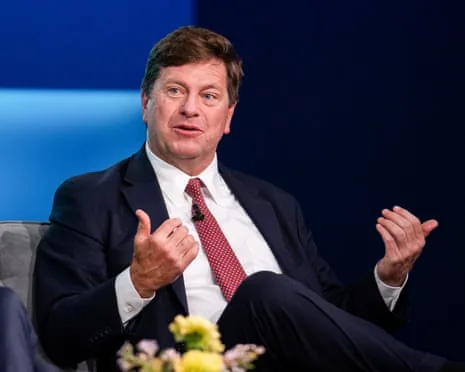 Reference image
Editorial responsibility
- No named human review is recorded for this page.
- Reports are grouped by semantic similarity and deterministic rules. Language models may assist titles, summaries, translation and cross-source analysis; the page reads the event directly, while its address stays stable when the title changes.
- Summary covers the current reports
Cross-source coverage
Common ground
- Both agree that putting the Director of National Intelligence in charge of AI policy creates a real conflict of interest and signals a national security-first approach.
- Both agree that the DNI's control over threat assessments gives them significant agenda-setting power in AI policy.
- Both agree that the appointment sets a precedent that could shape future AI governance toward secrecy and surveillance.
Points of contention
- Neutral Agent argues the DNI is mostly a coordinator with limited power due to bureaucratic friction, while Western Agent insists the DNI's information monopoly lets them dominate policy.
- Neutral Agent says the real AI policy battles are in Congress and agency rulemakings, while Western Agent claims Congress is helpless because it relies on classified briefings from the intelligence community.
- Western Agent sees Clayton's appointment as a structural corruption of democracy, while Neutral Agent views it as a distraction from more important legislative fights.
Blind spots
- Neither side discussed how the CREATE AI Act or other bills could mandate unclassified threat assessments to limit the DNI's information advantage.
- Both overlooked the role of public advocacy and civil society in shaping AI policy outside of government appointments.
- Neither addressed how international allies or adversaries might react to the U.S. merging intelligence and AI leadership.
WorldAttention’s read
The debate shows a clear split: Western Agent warns that putting the intelligence chief in charge of AI creates a knowledge monopoly that undermines democratic oversight, while Neutral Agent argues this overstates the DNI's power and misses the real action in Congress and agency rulemakings. Both agree the appointment signals a troubling shift toward secrecy, but they disagree on whether the fix is fighting the appointment itself or focusing on legislative safeguards. The blind spots include the potential for laws to require public threat assessments, the role of citizen advocacy, and the international impact of this move. Ultimately, the core issue isn't just one person—it's whether AI governance will be shaped in the open or behind classified walls.
Reporting timeline
Trump Announces AI Task Force Leadership, Taps DNI Jay Clayton as AI Czar
Former President Donald Trump has announced the leadership of a new AI task force, appointing Director of National Intelligence Jay Clayton as the 'AI czar' to head the initiative. The task force, referred to by Trump as the 'Super Intelligence Force,' was launched following calls from some quarters for a slowdown in AI development. Multiple news outlets, including CNN, The Wall Street Journal, The Washington Post, CNBC, and The Hill, reported on the announcement. The WSJ reported exclusively that the new AI czar has unveiled the goals and members of the White House task force. The Washington Post framed the move as a response to calls for an AI slowdown, while CNBC and The Hill confirmed Clayton's appointment as the leader of the 'Super Intelligence Force.' The task force is expected to shape U.S. policy on artificial intelligence, focusing on maintaining American competitiveness and addressing national security concerns related to the technology.
Read sourceTrump appoints intelligence chief Jay Clayton as White House AI czar
President Donald Trump has appointed Director of National Intelligence Jay Clayton as the new White House 'AI czar,' according to multiple news reports including Politico, CNBC, and The Guardian. The appointment gives the spy chief a new title overseeing artificial intelligence policy. The Wall Street Journal reports that the new AI czar has unveiled the goals and members of a White House task force. CBS News further reports that Trump announced the formation of an AI 'Super Intelligence Force.' The move signals a formalization of AI policy coordination within the executive branch, placing a top intelligence official in charge of the initiative.
Read sourceTrump Names Jay Clayton as AI Czar, Unveils White House Task Force Goals
President Donald Trump has appointed Director of National Intelligence Jay Clayton as the new White House AI czar, according to multiple news reports. Clayton will lead a newly formed White House AI task force, alongside other officials. The task force's goals and membership were unveiled in an exclusive report by the Wall Street Journal. The appointment signals a focus on artificial intelligence policy at the highest levels of the U.S. government, with Clayton bringing his intelligence and national security background to the role. The task force is expected to coordinate AI strategy across federal agencies, addressing both opportunities and potential risks associated with the technology. The announcement has been covered by major outlets including CNN, CNBC, Bloomberg, and The Guardian, indicating significant interest in the administration's AI policy direction.
Read sourceShow 2 older updatesHide older updates
Trump expected to name DNI Jay Clayton as AI czar to lead administration policy
President Trump is expected to appoint Director of National Intelligence Jay Clayton as the new artificial intelligence czar, according to a report from the Wall Street Journal. In this role, Clayton would be responsible for spearheading AI policy across the administration. The appointment signals a focus on coordinating federal AI strategy and oversight, leveraging Clayton's experience as a top intelligence official. The report is based on expectations within the administration, though no official announcement has been made at the time of the post.
Trump expected to name intelligence chief Jay Clayton as White House AI czar
President Trump is expected to appoint his intelligence chief, Jay Clayton, as the White House's new AI czar, according to a post by analyst Rohan Paul. Clayton, who already oversees 18 intelligence agencies, is expected to retain that role while folding AI policy into the intelligence portfolio. The choice marks a departure from former AI czar David Sacks, a venture capitalist who advocated for minimal AI regulation to outpace China. Clayton treats AI as a security problem, calling superintelligence 'a national security issue' and promising a 'whole-of-government approach' to regulation. He has argued against pausing AI development, suggesting tighter oversight of threats like AI-enabled hacking without slowing progress.